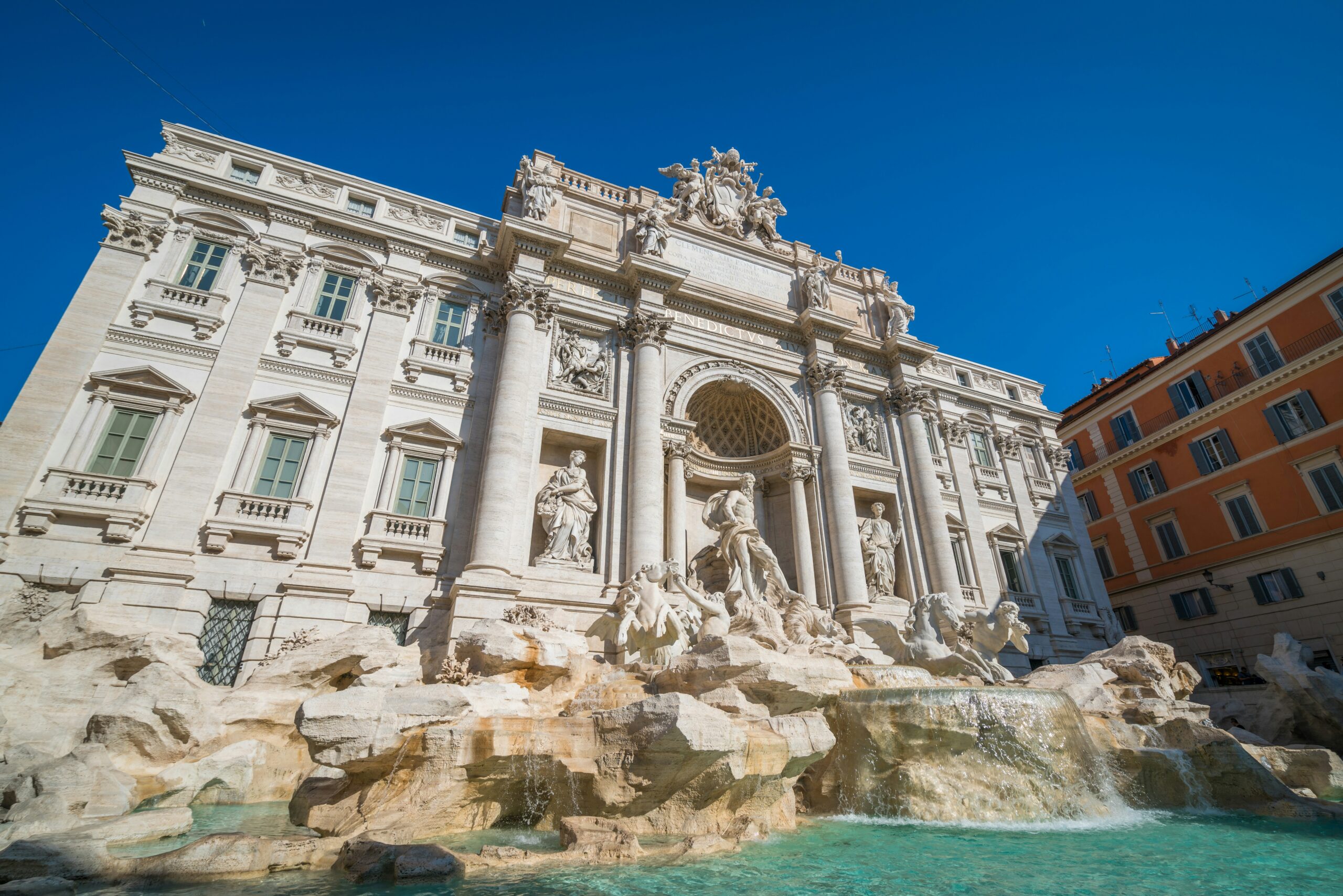
Trevi Fountain Rome: Best Time to Visit, Crowd Strategy, and What Actually Works
Trevi Fountain Rome is one of those landmarks that can either feel magical or frustrating depending almost entirely on timing. I learned that the hard way. My first visit was around midday, and even though the fountain itself was spectacular, the square felt so packed that I barely had room to stop, breathe, and actually enjoy what I was looking at.
When I came back early the next morning, the whole place felt transformed. The water sounded louder, the marble looked softer, and the crowd pressure had disappeared. That contrast is exactly why this guide matters. Trevi Fountain is not hard to visit, but it is surprisingly easy to visit badly. This page is built to help you experience it the smarter way.
Why People Search for Trevi Fountain Rome
Most travelers looking up Trevi Fountain Rome are not asking whether it is famous. They already know it is. What they really want to know is when to go, how to avoid the worst crowd waves, whether the coin toss is still worth doing, how the new access rules work, and how to combine the fountain with other major stops in central Rome without wasting time.
Quick Summary
- Trevi Fountain is in a public square, but from 2026-02-02 a €2 fee applies to tourists and non-residents who want to enter the inner basin area between 09:00 and 22:00.
- The best low-stress timing is still early morning, especially before the city fully wakes up.
- Late evening gives you the most atmospheric lighting, but not always the lightest crowd level.
- The nearest practical metro stop is Barberini, with a short walk into the historic center.
- The smartest central route is Spanish Steps → Trevi Fountain → Pantheon.
Key Information
| Square access | Public square, open-air access |
| Inner basin access | €2 for tourists and non-residents, valid daily from 09:00 to 22:00 |
| Address | Piazza di Trevi, 00187 Rome, Italy |
| Nearest metro | Metro Line A, Barberini, about 5 minutes on foot |
| Best time for photos | Early morning for cleaner frames; late evening for mood and lighting |
| Best visit style | Short scenic stop, photo stop, or part of a central Rome walking route |
Why Trevi Fountain Still Feels Bigger Than a Normal Photo Stop
A lot of famous landmarks are visually strong for about thirty seconds, and then the effect starts to flatten. Trevi Fountain does not really work that way. Even when the square is crowded, the monument keeps its force because the whole composition is oversized, theatrical, and full of movement. It is not just a fountain sitting in a square. It feels like part sculpture, part architecture, part performance.
What makes it even more interesting is that the site is not only symbolic. It is tied to the ancient Aqua Virgo aqueduct tradition, so the water here is not some decorative modern gimmick. The official Trevi Fountain site explicitly foregrounds that long historical continuity, and that is one reason the place still carries more weight than many travelers expect. It is beautiful, but it is also infrastructural memory made visible.
What It Actually Feels Like at Different Times of Day
The experience of Trevi Fountain changes fast. In the middle of the day, it can feel like a wall of phones, shoulders, and noise. If you are unlucky, you may end up spending more time trying to find a place to stand than actually looking at the fountain itself. That is why some people leave saying it was beautiful but stressful.
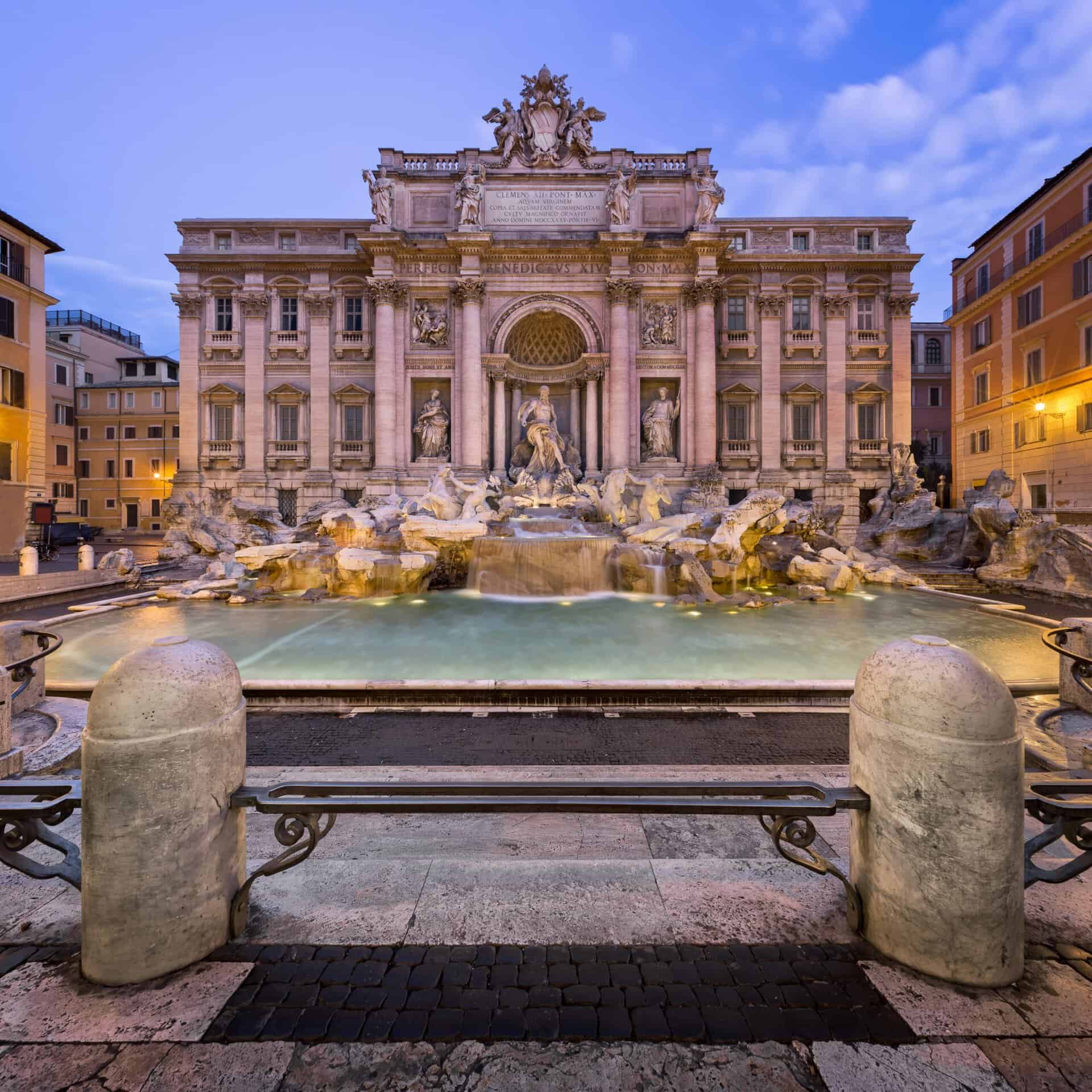
Early morning is different. The square feels less compressed, the white stone picks up softer color, and the monument finally has room to breathe. I always tell people this: Trevi Fountain is one of the easiest places in Rome to improve simply by shifting your schedule by a few hours.
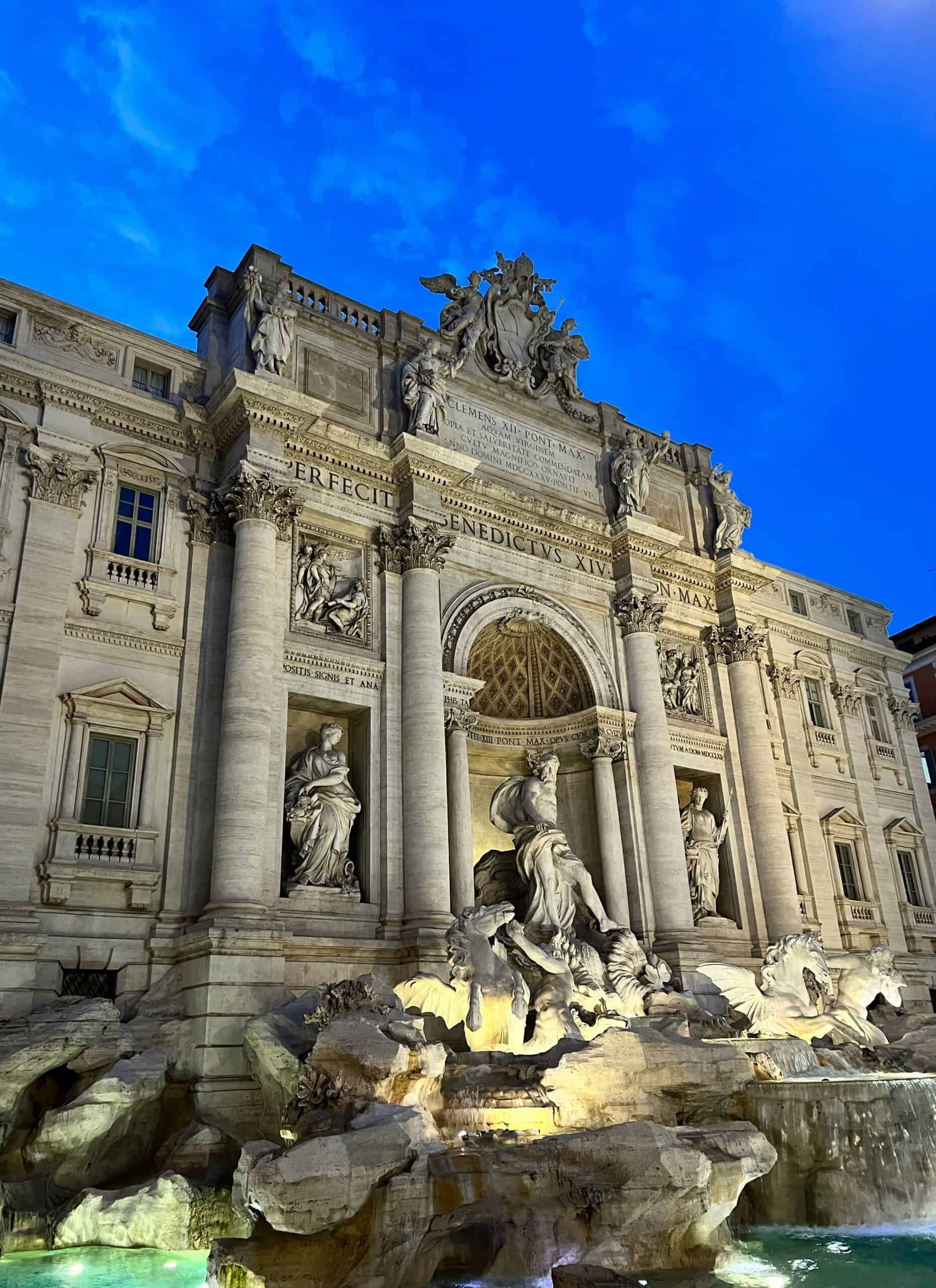
Late evening gives you another version again. The lighting becomes warmer and more cinematic, and the fountain takes on a more dramatic tone. It is less serene than early morning, but much more atmospheric.
History of Trevi Fountain Rome
The story begins in 19 BCE with the Aqua Virgo aqueduct, commissioned under Augustus. That origin matters because it gives Trevi Fountain a deeper identity than a normal Baroque monument. The fountain is visually 18th century, but conceptually it reaches back to the engineering logic of ancient Rome.
The Trevi Fountain we see today was designed by Nicola Salvi and completed by Giuseppe Pannini in 1762. Set against Palazzo Poli, it became one of the defining works of late Roman Baroque. The monument’s huge central niche, rough rockwork, and powerful figural program make it feel as if architecture itself is opening to let water burst outward.
That is part of why the fountain photographs so well. It is not a flat façade. It is a layered scene built for drama, almost like a stone stage set with water as the main actor.
Main Highlights You Should Actually Notice
Oceanus in the Central Niche
The towering central figure dominates the whole scene. Even if you do not know the iconography in detail, you can feel the monument’s message immediately: control, movement, and the overwhelming force of water. If you stand too close, you lose the balance of the composition, so give yourself at least a little distance.
The Horses and Their Contrasting Energy
One of the things I like most about the Trevi Fountain is how much movement it suggests. The horses are not symmetrical in mood. One seems calmer, the other more restless, and that contrast adds tension to the whole monument. It is one of those details people often miss because they are too focused on getting a quick coin-toss shot.
The Coin Toss Tradition
The tradition is famous because it is easy, visual, and tied to the emotional logic of travel: throw a coin and you will return to Rome. Whether you take it literally or not, it still works as one of the city’s most enduring rituals. The close-up basin access changes introduced in 2026 do not erase that appeal; they just make it more structured.
Best Time to Visit Trevi Fountain Rome
If your priority is photography and personal space, early morning is the clear winner. This is when the square feels least compressed and the fountain looks the cleanest. It is also when the emotional gap between expectation and reality tends to work in your favor.
If your priority is atmosphere, late evening is the better choice. The lighting adds depth, the monument becomes more dramatic, and the experience feels more cinematic. It is still a famous place, so do not expect total emptiness, but the mood is much better than the busiest daylight hours.
- Best overall: early morning
- Best atmosphere: late evening
- Most stressful: late morning through afternoon
Practical Visitor Tips
- Wear good walking shoes because the surrounding streets are cobbled and busy.
- Do not sit on restricted parts of the monument or ignore current staff instructions.
- Use the wider square to pause and observe before forcing your way forward.
- Pair the stop with nearby attractions instead of building your whole morning around only this fountain.
Smart Walking Route: Spanish Steps → Trevi Fountain → Pantheon
This is one of the most efficient short walks in central Rome because it links three major landmarks without awkward backtracking. Start at the Spanish Steps, move through the luxury-shopping and historic-center streets, stop at Trevi Fountain, and then continue toward the Pantheon.
- Start: Spanish Steps / Piazza di Spagna
- Walk through the central streets toward Trevi Fountain
- Spend 20–30 minutes at the fountain if timing is good, longer only if the square feels manageable
- Continue on foot toward the Pantheon
- Use cafés or quieter side streets after Trevi if you need a reset from the crowd density
Best Time Comparison
| Time | What It Feels Like | Best For | Verdict |
|---|---|---|---|
| Early morning | Quietest, clearest, most rewarding | Photos and lower stress | Best overall |
| Midday | Most crowded and least relaxed | Quick checklist stop only | Avoid if possible |
| Late evening | Most atmospheric and dramatic | Mood and lighting | Strong alternative |
Frequently Asked Questions
Is Trevi Fountain free to visit?
The square itself is publicly accessible, but official 2026 rules introduced a €2 fee for tourists and non-residents entering the inner basin area during the regulated hours.
What is the best time to visit Trevi Fountain Rome?
Early morning is best for lower crowd pressure and better photos. Late evening is best for atmosphere.
Can you still toss a coin?
Yes, the ritual remains one of the fountain’s signature traditions and still matters to many visitors.
How long should I spend here?
Around 20–30 minutes is enough for most travelers, unless you arrive at a particularly calm time and want to linger.
What should I combine with Trevi Fountain?
The smartest nearby pairing is Spanish Steps and the Pantheon, which creates one of the easiest central Rome walking routes.
Official Resources
Map
Final Thoughts
Trevi Fountain Rome is not difficult to reach, but it is one of the easiest major landmarks in Rome to experience badly if you show up at the most obvious hour. Timing changes everything here.
Visit it right, and it stops feeling like a crowded checklist stop and starts feeling like one of the city’s most memorable moments.