Spanish Steps View: Best Photo Spots, Timing, and Smart Walking Route in Rome
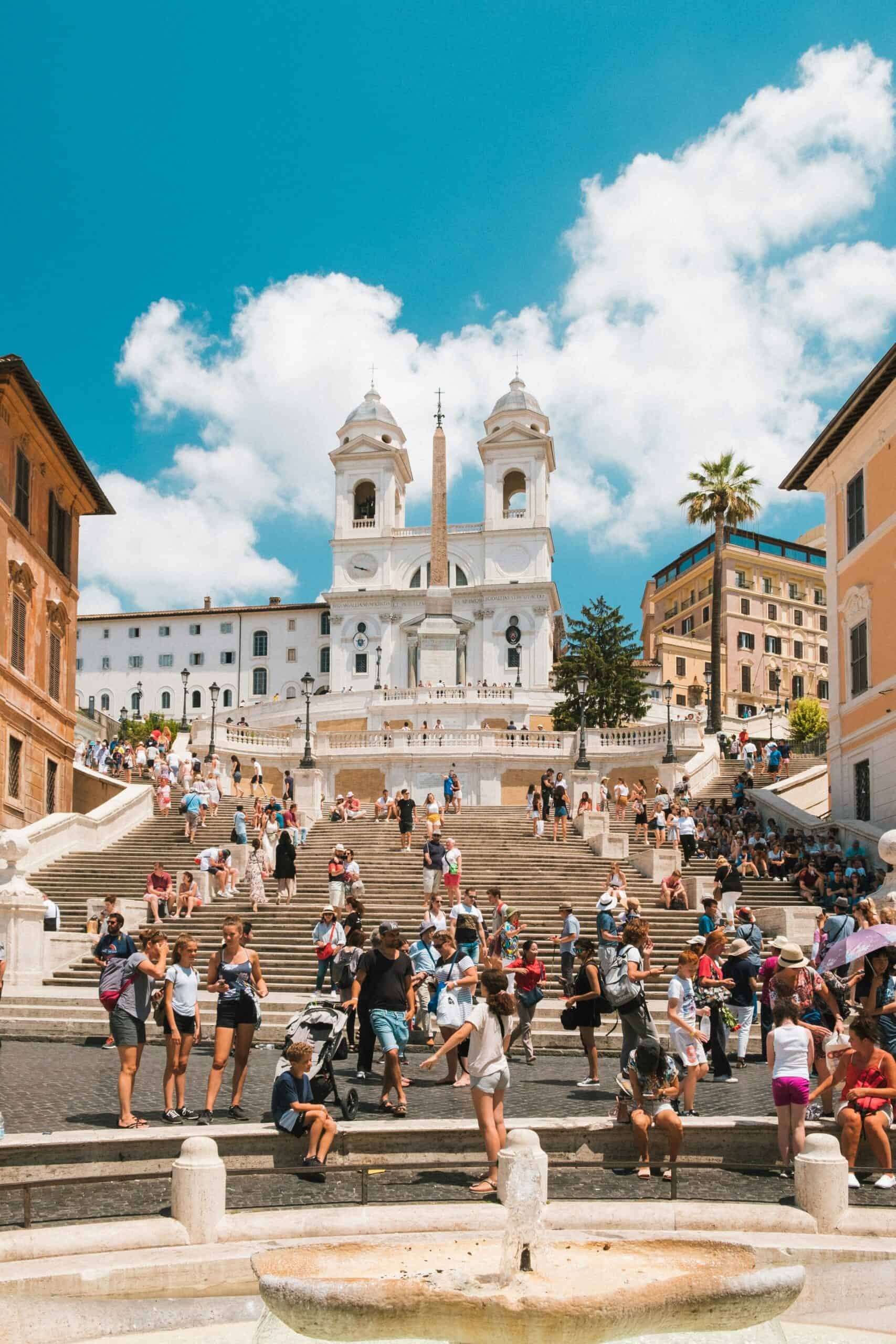
Spanish Steps view is one of the easiest places to understand Rome at a glance. You get rooftops, church towers, elegant streets, and a whole stage-like city composition in one climb. What makes it work so well is not just the top panorama, but the way the perspective keeps changing as you move from the square to the landings and then up toward Trinità dei Monti.
Why People Search for the Spanish Steps View
Most travelers looking up the Spanish Steps view want practical answers: where the best panorama actually is, when to go for lighter crowds, how to get photos without chaos in the frame, and what nearby places are worth combining into one smooth Rome walk. This guide is built around those real decisions.
Quick Summary
- The Spanish Steps are free to visit and sit between Piazza di Spagna below and Trinità dei Monti above.
- Early morning is best for cleaner frames, while golden hour gives the warmest light on the stone and rooftops.
- The top terrace is the classic panorama, but mid-landings often produce better photos.
- Villa Medici is the best paid add-on nearby if you want calmer gardens and another elevated Roman view.
- This stop works well in 30–60 minutes, or 2–3 hours if you add nearby places and move slowly.
Why the View Here Feels So Distinctly Roman
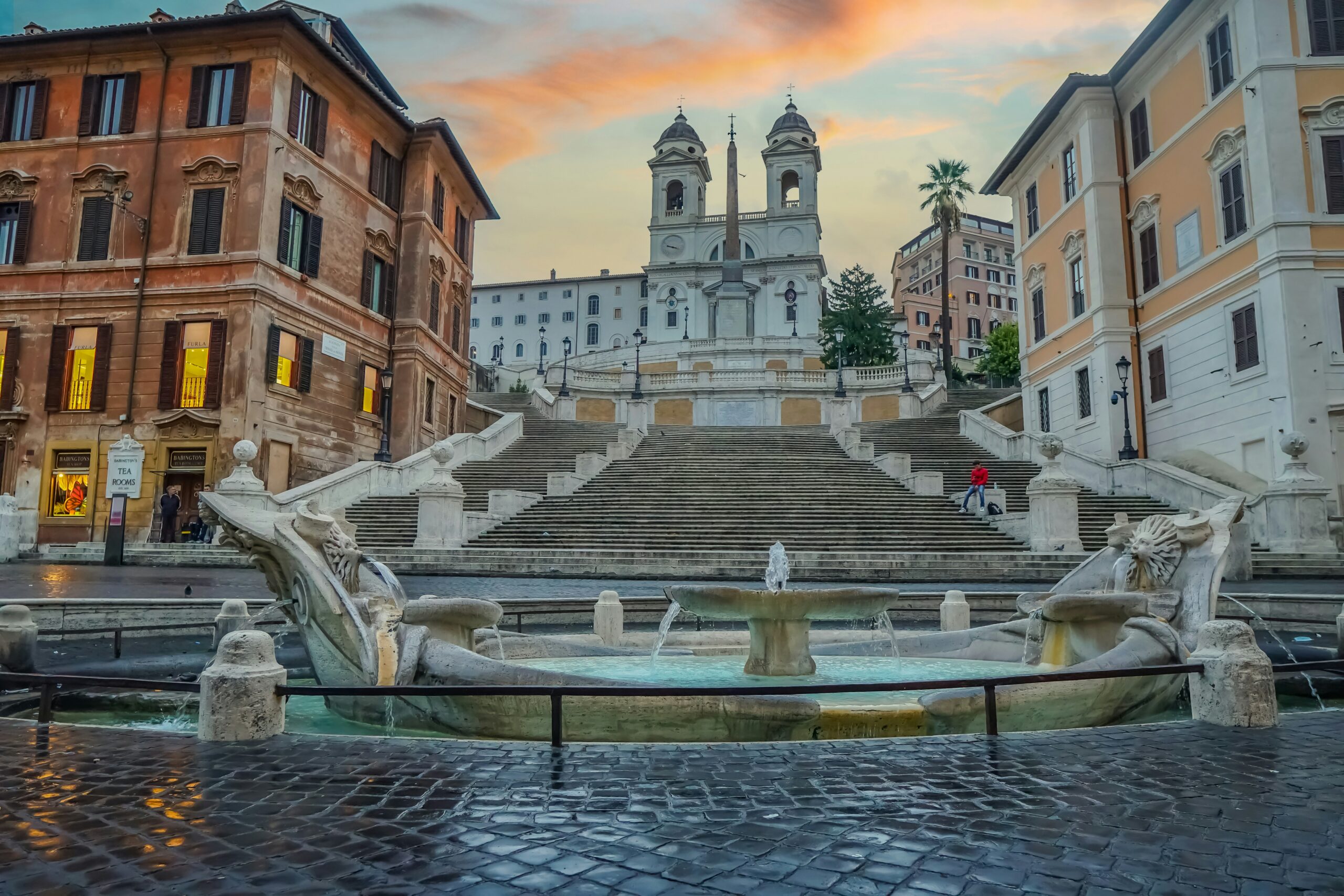
Some viewpoints in Rome feel purely scenic. The Spanish Steps feel more theatrical than that. The staircase acts almost like an urban stage, drawing your eye from the square up to the church and then back out across the city. Turismo Roma describes the site as one of the city’s great 18th-century scenographic landmarks, and that word really fits. It does not feel like a random staircase with a nice outlook. It feels designed to choreograph movement and attention.
I think that is why the view works even when it is crowded. You are not standing at a single static viewpoint. You are moving through a sequence of small reveals. One landing gives you rooflines, another gives you the square below, and the top gives you the cleanest sense of how this whole area of Rome fits together.
Key Visitor Information
| Access | Public outdoor staircase and square |
| Opening hours | Open-air public area; effectively visitable at any time |
| Entrance fee | Free |
| Address | Piazza di Spagna, 00187 Rome, Italy |
| Nearest metro | Metro Line A, Spagna |
| Best time to visit | Early morning for clearer photos, or golden hour for softer warm light |
| Best travel style | Short scenic stop, light photo session, or part of a central Rome walking route |
History and Context You Actually Feel on Site
The Spanish Steps were built between 1723 and 1726 and are widely recognized as one of Rome’s best examples of 18th-century urban scenography. Official Rome tourism pages describe them as the elegant link between the Pincio hill and Piazza di Spagna below, and that description matters because the staircase was always meant to do more than move people uphill. It was built to shape the experience of arrival.
Above the steps sits the Church of the Santissima Trinità dei Monti, which Turismo Roma notes as one of the five French-speaking Catholic churches in Rome. That upper church and the square below create the full visual frame of the site, so the “Spanish Steps view” is really a layered experience involving both architecture and elevation.
o not need a guidebook in your hand to sense the intended drama of the place. The relationship between the square, the stairs, and the church still performs exactly as it was designed to.
What It Feels Like in Real Time
The best part of this stop is that it changes mood fast. Early in the morning, it feels almost calm and editorial, the kind of place where every line in the architecture looks deliberate. Later in the day, it becomes louder, more social, and much more like a public stage.
I personally think the landings are where the site becomes most interesting. The top is beautiful, of course, but the middle sections give you a better sense of movement, layering, and everyday Roman life happening below. You can look down toward the square, catch street texture, and still keep the church and rooftops in the composition.
One small mistake people make is treating the stop like a sprint. The view improves if you slow down and let each section do something different.
Best Viewpoints for the Spanish Steps View
1. The Top Terrace
This is the most classic panorama. From here, Piazza di Spagna opens below you and the surrounding rooflines stretch outward in a way that makes central Rome feel both dense and elegant. It is the best spot for broad skyline-style frames.
- Best for: wide city photos, first-time visitors, sunrise calm
- Tip: shift slightly left or right instead of standing dead center the whole time
2. Mid-Landing Frames
These are often the best photography positions. The staircase lines, people flow, and view downward create more depth than the top alone. If you want something cinematic instead of just scenic, this is usually the strongest place to stop.
- Best for: portraits, architecture, vertical compositions
- Tip: pause and wait instead of shooting constantly while moving
3. Piazza Trinità dei Monti Edge
The upper square near the church often feels a bit calmer than the central staircase spine. It is a better place for a short pause, slower observation, and a less rushed sense of the city stretching outward.
- Best for: quieter moments, resting, wider atmosphere shots
Photography and Crowd Strategy
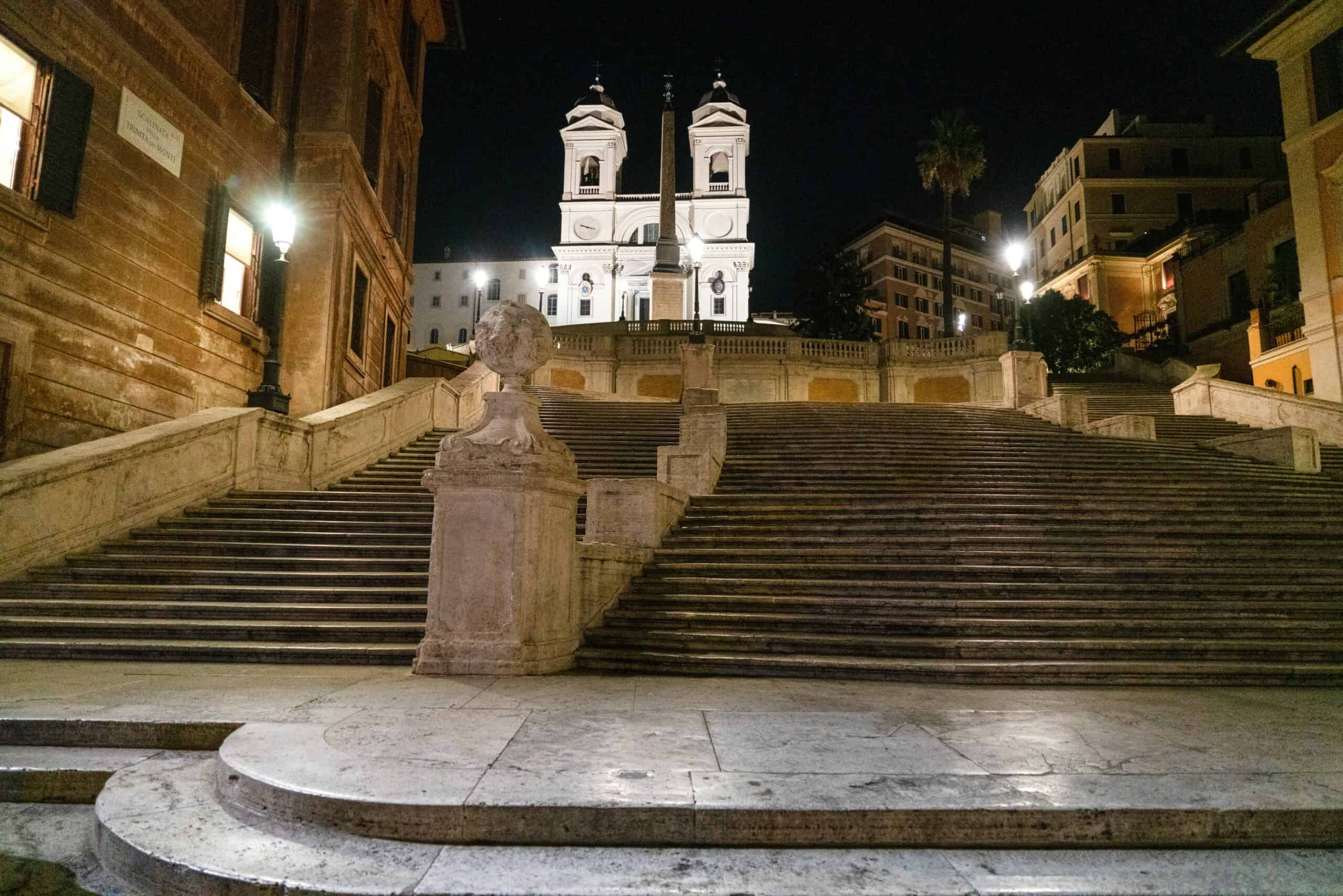
Early morning is still the cleanest window if you care about controlled compositions. You get less movement, less stress, and better odds of keeping random crowd clutter out of the frame. Golden hour is the most flattering for color and atmosphere, especially on the warm stone and rooftops.
- Go early: best for cleaner photos and less pressure
- Golden hour: best for warmth and texture
- Use landings: stop, compose, then move
- Respect local controls: the area is heavily visited, so follow current staff guidance and posted rules
I would not overcomplicate the camera setup here. Good timing matters more than gear.
Nearby Places That Pair Well With It
Piazza di Spagna and Fontana della Barcaccia
The square below is not just the base of the staircase. It completes the composition. Bernini’s fountain and the wider piazza soften the transition from viewpoint to street-level Rome.
Trinità dei Monti
The church above the steps is worth at least a short respectful stop. Turismo Roma notes that visitors should check the listed contacts for current visit arrangements and Mass-related timing, which is a good reminder not to assume fixed tourist hours.
This is the best nearby paid add-on if you want a calmer cultural extension. Villa Medici’s official visit page highlights guided visits through the historic rooms, Renaissance gardens, and the Belvedere with spectacular views over Rome. That makes it a very strong follow-up after the busy public energy of the steps.
Recommended Walking Route
- Start: Spagna Metro Station to Piazza di Spagna
- Take a short photo loop around the square and Fontana della Barcaccia
- Climb the Spanish Steps slowly, pausing at mid-landings
- Spend time at the top terrace and upper square
- Optional short Trinità dei Monti stop
- Optional Villa Medici extension if you want a deeper, quieter finish
Practical Tips
- Summer heat: bring water and choose earlier or later hours
- Core visit time: 30–60 minutes
- Expanded visit time: 2–3 hours with nearby stops
Spanish Steps View vs Other Easy Rome View Stops
| Place | Best For | Strength | Possible Drawback |
|---|---|---|---|
| Spanish Steps | Classic central Rome panorama | Free, iconic, easy to combine with nearby attractions | Crowds build fast later in the day |
| Villa Medici Belvedere | Calmer elevated cultural stop | Gardens and guided visit depth | Ticketed and less spontaneous |
| Piazza del Popolo side views | Broad square-based perspective | Open and photogenic | Less intimate staircase atmosphere |
Frequently Asked Questions
What is the best time for the Spanish Steps view?
Early morning is best for cleaner photos and fewer crowds. Golden hour is best for warmer light and a softer atmosphere.
Is it free to visit the Spanish Steps?
Yes. It is a public outdoor site and does not require a ticket.
How long should I spend here?
Plan around 30–60 minutes for the core stop, or 2–3 hours if you add nearby places like Trinità dei Monti and Villa Medici.
Can older travelers still enjoy the view?
Yes. Using nearby streets to access the upper area can make the visit more manageable if stairs are difficult.
Is Villa Medici worth adding?
Yes, especially if you want a calmer and more curated follow-up. Official Villa Medici information highlights guided visits, gardens, and Belvedere views over Rome.
Do I need to check church hours separately?
Yes. Turismo Roma indicates that visits and Mass-related timing for Trinità dei Monti should be checked through the listed contacts.
More Trip-Nexus Guides You May Like
Official and Useful Links
Map
Final Thoughts
The Spanish Steps view is one of the easiest classic panoramas in central Rome, but it works best when you stop treating it like a rushed checklist photo and start treating it like a short sequence of urban viewpoints. The square, the staircase, the church, and the rooftop view all matter together.
Go early if you want cleaner frames, go slower if you want a better memory, and add Villa Medici if you want the whole experience to feel deeper and less rushed.