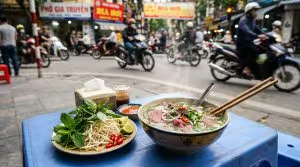
Hanoi 3 Day Itinerary (2026): What Actually Works, What to Skip, and How to Avoid Burning Out
Hanoi 3 day itinerary planning only works when you stop treating the city like a clean checklist. Hanoi is dense, loud, humid, layered, and physically tiring in a way many first-time visitors underestimate.
This guide gives you a realistic 3-day structure built around the Old Quarter, Ba Dinh, West Lake, and the French Quarter—with real pacing, actual costs, cultural context, and the mistakes most travelers only understand after they have already made them.
Search Intent
This article is for travelers asking: How do I spend 3 days in Hanoi without wasting time, melting in the humidity, or following a generic tourist route? The answer is not “see everything.” The answer is to divide the city properly, respect the climate, and understand that Hanoi rewards pacing more than volume.
Quick Summary
- Pacing is not optional: Build your days around early starts and midday indoor breaks if you want energy left by evening.
- The Old Quarter is day one for a reason: It helps you acclimatize to traffic, noise, and movement before deeper historical stops.
- Day two should be history-heavy: The Ho Chi Minh Mausoleum, Hoa Lo Prison, and surrounding political landmarks change how the city makes sense.
- Day three needs breathing room: West Lake and the French Quarter work best once you are already feeling sensory fatigue.
- Do not waste one of your three days on a rushed coastal detour: In a short Hanoi trip, staying urban is smarter than sitting on transport for half the day.
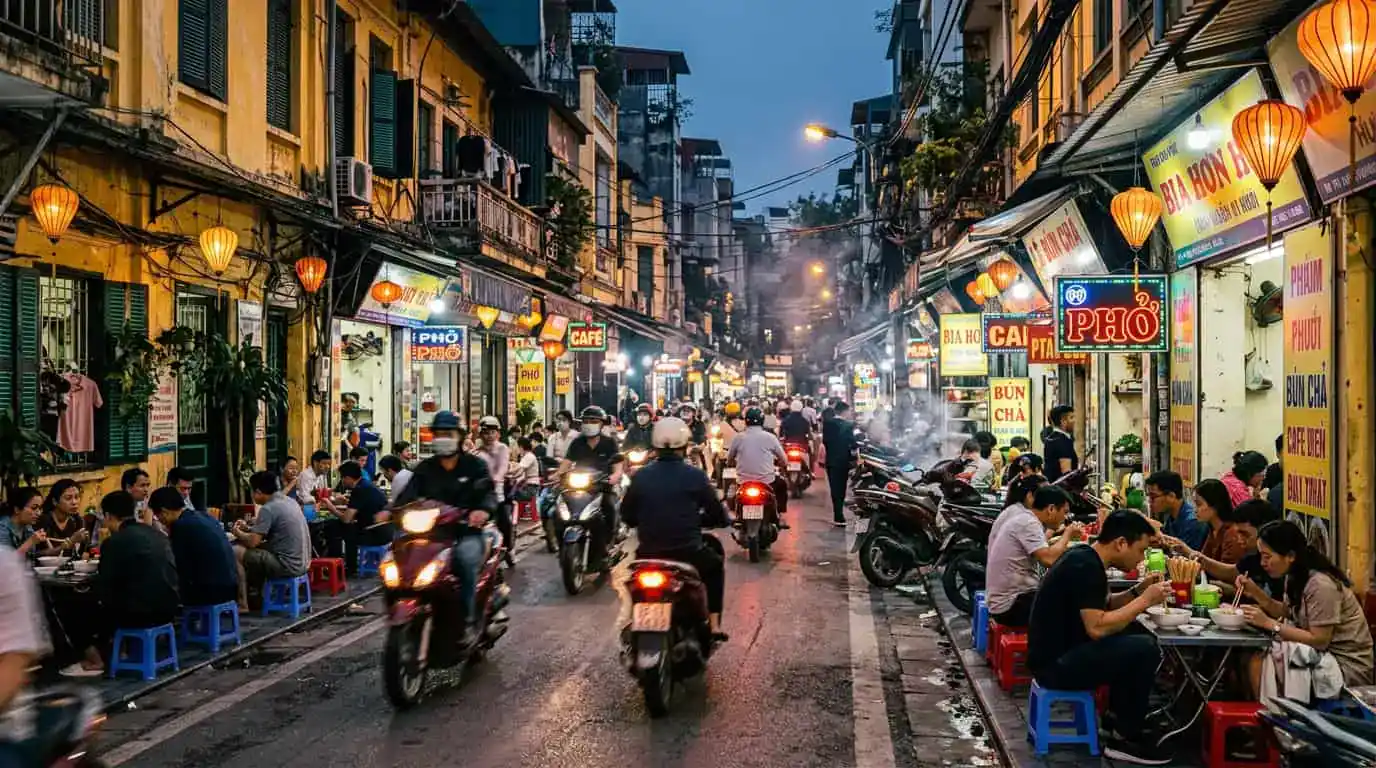
Building a functional Hanoi 3 day itinerary requires you to accept one absolute truth: you cannot control the pace of this city. Vietnam’s capital does not pause for tourists to take photographs or consult their maps. It is a thickly layered metropolis where the smell of simmering beef broth collides with exhaust fumes, where old Confucian spaces sit blocks away from colonial facades, and where crossing a road can feel like a psychological test.
The first time I tried to cross a street in the historic center, I completely froze. Thousands of scooters kept flowing, nobody stopped, and I realized my usual travel instinct—pause, assess, then move—was useless here. You cannot treat Hanoi like a sterile itinerary destination. If you do, the city overwhelms you fast.
To actually understand Hanoi without burning out by noon, you need a deliberate plan. Wake early. Retreat indoors when the tropical humidity peaks. Know which neighborhoods belong together. Know when a museum-heavy day makes sense and when it does not. This guide is built to do exactly that.
Why This Itinerary Actually Works
Most Hanoi guides make the same mistake: they optimize for attraction count instead of human stamina. On paper, it looks productive to pack landmarks into every hour. In reality, Hanoi punishes that style of planning. The heat slows you down, traffic eats into transitions, and the density of the city means even a short walk can become a mental workout.
The better approach is geographic and emotional. Day 1 should acclimatize you to the street rhythm of the historic core. Day 2 should shift your attention toward the state, history, and political symbolism that define modern Hanoi. Day 3 should open space back up and let the city breathe through food, water, and architecture.
That is why this itinerary is not just a list. It is a sequence.
What Hanoi Feels Like in Real Life
Hanoi feels noisy, compressed, and alive in a way that can be thrilling or exhausting depending on your energy level. The sidewalks are rarely really sidewalks. Scooters cut through your peripheral vision constantly. Tiny stools spill onto streets. Cafés hide in alleys that look too small to matter. And then, out of nowhere, you enter a shaded courtyard or a quiet temple enclosure and the city seems to drop its volume for a moment.
What surprised me most was how quickly the city could switch moods. One minute you are in a frantic traffic corridor trying not to get clipped by a mirror. Ten minutes later, you are standing in a still stone courtyard, looking at scholar stelae, wondering how both places belong to the same city.
Human touch: Hanoi became much better for me the moment I stopped trying to “beat” it. Once I accepted that the city would set the tempo, the trip stopped feeling stressful and started feeling fascinating.
History and Cultural Context You Need to Feel the City Properly
Hanoi only makes sense when you stop seeing it as one uniform destination. It is a city of layers. The Old Quarter still reflects a merchant-and-guild structure that defined trade in the city for centuries. Hoan Kiem Lake is not just a scenic stop; it sits at the symbolic heart of Hanoi and carries one of Vietnam’s best-known national legends. The Temple of Literature embodies the country’s long respect for education and Confucian learning. Ba Dinh pulls the city into the 20th century, with national revolutionary imagery and ceremonial architecture. West Lake opens the urban fabric again and reminds you that Hanoi is not only about compression and pressure.
That is part of what makes three days here feel so rich. You are not just visiting a city. You are moving through different versions of Vietnamese identity in physical form.
The Direct Answer: How to Spend 3 Days in Hanoi
If you want the most efficient way to digest the city without extreme fatigue, here is the simple structure: Day 1 for the Old Quarter and Hoan Kiem, Day 2 for Ba Dinh and deeper history, and Day 3 for West Lake, the French Quarter, and recovery pacing.
Do not try to cram a long out-of-city detour into this. For a short stay, Hanoi works best when you let the urban core unfold properly instead of treating the city as a base for elsewhere.
Highlights of This Hanoi 3 Day Itinerary
- Egg coffee at Café Giang before the city fully wakes up
- Hoan Kiem Lake and Ngoc Son Temple for mythology, symbolism, and central Hanoi atmosphere
- The 36 Streets for sensory overload in the best way
- Temple of Literature for shade, history, and intellectual heritage
- Ho Chi Minh Mausoleum complex for political gravity and national context
- Hoa Lo Prison for one of the strongest historical sites in the city
- Train Street for one of Hanoi’s strangest urban experiences
- West Lake + French Quarter for contrast, breathing room, and a more elegant final day
Key Visitor Info Table
| Day | Area Focus | Main Stops | Best For | Main Risk |
|---|---|---|---|---|
| Day 1 | Old Quarter / Hoan Kiem | Café Giang, Hoan Kiem, 36 Streets, Temple of Literature | Acclimatization and food | Sensory overload |
| Day 2 | Ba Dinh / historical core | Mausoleum, Presidential area, Hoa Lo, Train Street | Political and historical depth | Closures / dress code / fatigue |
| Day 3 | West Lake / French Quarter | Food tour, Tran Quoc, Women’s Museum, Opera House area | Recovery pacing and contrast | Doing too much after fatigue sets in |
Day 1: Acclimatization, Coffee, and the 36 Streets
The first day is about jumping directly into the deep end. You will spend the daylight hours navigating the historic center, a commercial district that has been active in one form or another for centuries.
Morning: Liquid Tiramisu and Lake Mythology
Wake up by 6:30 AM and head to Café Giang. Egg coffee sounds gimmicky until you actually try it. Then it suddenly makes sense. It is rich, sweet, dense, and almost dessert-like, but the bitter coffee underneath keeps it from becoming cloying. Sit there long enough and you can feel the city shifting from quiet setup mode into full movement.
By 8:00 AM, walk to Hoan Kiem Lake. The lake matters more than its surface beauty. It anchors the center of the city emotionally and symbolically. Crossing the red bridge toward Ngoc Son Temple feels touristy in theory, but in person it still carries atmosphere. The legend of the returned sword gives the place a cultural charge that is hard to ignore.
Afternoon: The Guild Streets and the First University
Lunch should be simple and tactical. A good bánh mì here is quick, cheap, and far better than it has any right to be. After that, spend time in the 36 Streets. The district only works if you let yourself wander a little. Some parts feel aggressively commercial, others still feel oddly specific and local. That contrast is part of the fun.
Once the heat becomes oppressive, move toward the Temple of Literature. This is one of the smartest afternoon stops in Hanoi because it gives you shade, beauty, and history at exactly the point in the day where you need all three. The scholar stelae, courtyards, and old academic symbolism make a strong contrast with the chaos outside the walls.
Evening: Water Puppets and Street Beer
In the evening, the Thang Long Water Puppet Theatre gives you a performance tradition tied to the Red River Delta rather than a generic tourist show. After that, you can finish at a plastic stool beer corner around Ta Hien if you want noise and density, or simply walk the lake area again if you want something softer. Both work. The mistake is assuming the evening must be planned down to the minute.
Day 2: Revolutionary Relics and Urban Trains
Day two changes the emotional temperature of the trip. You leave behind the purely commercial texture of the center and move into spaces shaped by political memory, ceremonial order, and state symbolism.
Morning: The Uncle Ho Complex
Dress conservatively and arrive early at the Ho Chi Minh Mausoleum area. Even before you enter, the square feels different from the rest of Hanoi. The city’s improvisational energy disappears and is replaced by geometry, silence, lines, and discipline.
This was one of the places where I most clearly felt Hanoi’s split personality. Outside the complex, motorbikes and horns. Inside, clipped lawns, white-uniformed guards, and near-total behavioral control. It is solemn, somewhat intimidating, and worth experiencing precisely because it is so different from the rest of the city.
From there, the nearby presidential and residential sites help humanize the political narrative a little. The contrast between monumental state architecture and more modest living spaces makes the broader story easier to grasp.
Afternoon: Bun Cha and the Hanoi Hilton
Lunch is the right time for bún chả. It is one of the dishes that explains Hanoi instantly: grilled pork, smoky sweetness, herbs, noodles, and broth that somehow feels casual and precise at the same time.
Then go to Hoa Lo Prison. This is one of the strongest museums in the city because it pushes you into uncomfortable historical space. The interpretive framing is not neutral, but that is exactly why it is so revealing. You learn as much from how history is told as from the facts themselves.
Evening: Train Street and Cha Ca
By evening, head toward the safer café-managed side of Train Street. The train experience is more intense than photogenic. Cups rattle. Tables shift. Everyone suddenly compresses against the wall. It lasts seconds and somehow still feels memorable.
Dinner at Cha Ca La Vong or another good cha ca restaurant gives you something theatrical to end the day: sizzling turmeric-marinated fish, dill, herbs, noodles, and a dish that feels completely tied to Hanoi.
Day 3: Lakeside Space, Culinary Curiosity, and French Elegance
By day three, most travelers are feeling some combination of culinary overload, heat fatigue, and low-level sensory burnout. That is why this day should open the city up visually and physically.
Morning: Food Tour or Cooking Class
A food tour works especially well here because it turns random-looking street decisions into an actual system. Markets become readable. Herbs stop looking interchangeable. Dishes that seemed repetitive begin to make more sense.
One of the biggest mistakes I made in Hanoi early on was assuming I could “figure out the food scene” just by walking. You can, up to a point. But a good guide speeds the learning curve up dramatically.
Afternoon: West Lake and Tran Quoc Pagoda
West Lake is where Hanoi suddenly stops pressing in on you. After two days around the tighter urban core, the scale of the shoreline and open water feels restorative. Tran Quoc Pagoda adds age, symbolism, and visual clarity without the same density you feel elsewhere.
If weather or mood makes the lake less appealing, the Vietnamese Women’s Museum is a smart indoor substitute. It is one of the better museums in the city and adds social and gender history that many travelers would otherwise miss entirely.
Evening: French Quarter and a Different Hanoi
Use your final evening in the French Quarter. The wider boulevards, older villas, and opera-house surroundings reveal another version of Hanoi—more spacious, more composed, and less relentlessly kinetic. It is the right way to end a 3-day stay because it lets the trip exhale instead of ending on maximum chaos.
The Cultural Experience Behind the Schedule
A good Hanoi itinerary is not just about logistics. It is about understanding why different parts of the city feel so different. The Old Quarter carries commercial memory. Hoan Kiem carries legend. The Temple of Literature carries scholarship. Ba Dinh carries state ritual. West Lake carries relief. The French Quarter carries colonial residue and later urban prestige.
That is why this itinerary works better than a random attraction list. It lets those identities unfold in an order that feels natural rather than jarring.
Travel Tips That Matter More Than People Admit
Stay in Hoan Kiem. Saving a little on accommodation outside the center often costs you far more in time, traffic stress, and daily friction.
Use Grab, not street taxis. It reduces pricing drama, communication issues, and small scam opportunities immediately.
Do not fight the climate. If the air feels heavy by late morning, that is your sign to slow down—not proof that you need to push harder.
How to Visit Hanoi for 3 Days Without Wasting Time
- Book centrally. Hoan Kiem is the safest base for a short trip.
- Start before the heat. Morning energy changes everything in Hanoi.
- Group attractions by area. Do not zigzag across the city just because a list tells you to.
- Use lunch and midday as pacing tools. They are part of the itinerary, not dead time.
- Let one evening stay flexible. Hanoi often feels best when one part of the day is allowed to unfold naturally.
Nearby Attractions and Related Vietnam Guides
Hanoi 3 Days vs Hanoi + A Rushed Day Trip
| Factor | Stay in Hanoi for 3 Days | Force in a Long Day Trip |
|---|---|---|
| Pacing | Manageable and immersive | Fatiguing and fragmented |
| City Understanding | Much deeper | Surface-level |
| Energy Use | Balanced across all three days | One day lost mostly to transport |
| Best For | First-time Hanoi travelers | People who do not mind rushing everything |
Who Should Use This Hanoi Itinerary?
This works especially well for:
- First-time visitors who want structure without feeling over-managed
- Travelers interested in food, urban history, political context, and neighborhood texture
- People who can handle a city that is messy, humid, and alive rather than polished
- Travelers who want a short stay that still feels meaningful
You may struggle with this city if:
- You need silence, clean sidewalks, and personal space constantly
- You hate humidity and are visiting in the hottest part of the year
- You want every attraction to feel frictionless and perfectly organized
FAQ
Is 3 days enough for Hanoi?
Yes—if you stay focused on Hanoi itself and do not burn one day on a long transfer-heavy side trip.
Where should I stay for a 3-day Hanoi trip?
Stay in or very near Hoan Kiem. For a short trip, centrality matters more than saving a little money farther out.
Is Hanoi walkable?
Parts of it are, but “walkable” in Hanoi still means navigating scooters, uneven sidewalks, and constant street activity.
Should I use taxis or Grab in Hanoi?
For most travelers, Grab is the simpler and safer option because pricing is clearer and the process is smoother.
What is the biggest mistake in a Hanoi 3-day itinerary?
Trying to do too much in the heat, or sacrificing one of the three days to a rushed out-of-city detour.
When is the best time to visit Hanoi?
Many travelers find the cooler months easiest, but timing depends on whether you prefer clearer weather or greener scenery.
Can I do Hanoi without cash?
Not comfortably. Some modern businesses take cards, but street food, small cafés, and local transactions still work better with cash.
Official and Helpful Links
Final Thoughts
The best Hanoi 3 day itinerary is not the one that covers the most ground. It is the one that understands the city’s rhythm. Hanoi rewards travelers who wake early, move intelligently, hide from the midday heat when necessary, and leave enough room for the city to surprise them.
Spend day one learning how the city moves. Spend day two understanding why it feels so historically dense. Spend day three letting it breathe. That is the version of Hanoi most people remember most fondly.