Pantheon Rome Guide: Tickets, Hours, Best Time to Visit, and How to Avoid Mistakes
Pantheon Rome is one of those rare places where the “must-see” label actually feels deserved. You step inside expecting an important ancient building, but what hits you first is how strangely alive it feels. The space is almost 2,000 years old, still functions as a church, still receives a daily stream of visitors, and still feels more modern than many newer monuments.
I think that is why the Pantheon stays with people. It is not just historically impressive. It is spatially powerful. The dome, the oculus, the balance of light, and the silence inside all work together in a way that makes the visit feel bigger than its footprint. This guide is built for real travelers: what to know before you go, how to avoid obvious mistakes, where to stand for the best views, and how to combine the Pantheon with a smart walking route through the historic center.
Why People Search for Pantheon Rome
Most travelers searching for Pantheon Rome already know it is famous. What they really want are the practical details that change the quality of the visit: current ticket rules, opening hours, how long it takes, whether the line is worth worrying about, what to focus on once inside, and what nearby places pair naturally with it. That is what this guide is built to answer.
Quick Summary
- The Pantheon is currently open daily from 09:00 to 19:00, with last entry at 18:30 and ticket office closing at 18:00.
- Official tickets are sold through Musei Italiani, the Musei Italiani app, or on-site at the ticket office and automatic totems.
- This is still an active basilica, so respectful dress and quiet behavior matter.
- The best first-time strategy is to arrive early, keep the visit focused, and spend real time under the oculus.
- The easiest nearby route is Pantheon → Piazza Navona → Campo de’ Fiori, with Trevi Fountain as an optional extension.
Key Information (Quick Visitor Facts)
| Attraction | Pantheon – Basilica of Santa Maria ad Martyres |
| Address | Piazza della Rotonda, 00186 Roma RM, Italy |
| Opening hours | Daily 09:00–19:00 |
| Last entry | 18:30 |
| Ticket office closing | 18:00 |
| Standard ticket | €5 full price |
| Reduced ticket | €2 for EU citizens aged 18–25 |
| Best time to visit | Early morning for a calmer experience, or late afternoon for warmer tones |
| Recommended visit time | 45–75 minutes for most visitors |
| Nearest area | Centro Storico, easily combined with Piazza Navona and Campo de’ Fiori |
Official Links (Use These for Tickets and Visitor Rules)
Why the Pantheon Matters More Than Most First-Time Visitors Expect
The Pantheon is famous for one reason that becomes obvious almost immediately: the dome. But the deeper reason it matters is harder to explain in one sentence. This building collapses time in a way that few monuments do. It was originally a Roman temple, later became a Christian church, and survives today not as a ruin but as a space still used, still maintained, and still filled with meaning.
That continuity is what makes the building feel so strangely intact. A lot of ancient sites impress you through fragments. The Pantheon impresses you through wholeness. You are not imagining what the space once felt like. You are standing in a space that still works. The Ministry of Culture explicitly describes it as a basilica open to worship, which helps explain why the visit feels different from walking through a normal archaeological monument.
What It Actually Feels Like Inside
The first thing most people notice is not the chapels or the tombs. It is the way the air feels under the dome. The space somehow feels both enormous and calm. The light entering through the oculus is not static. It moves, and that moving light makes the whole building feel alive instead of preserved.
I think the Pantheon is one of the best examples in Rome of a place where you should not rush to photograph first. Stand in the center, look up, and wait for a few seconds. The dome becomes more impressive the longer you actually stay still. The building is less about decoration than proportion, balance, and atmosphere.
There is also something quietly human about the place once you move out toward the side chapels and tombs. The central “wow” moment is real, but the side spaces are what remind you that this is not just a famous shell. It is still a sacred and commemorative interior.
History and Background
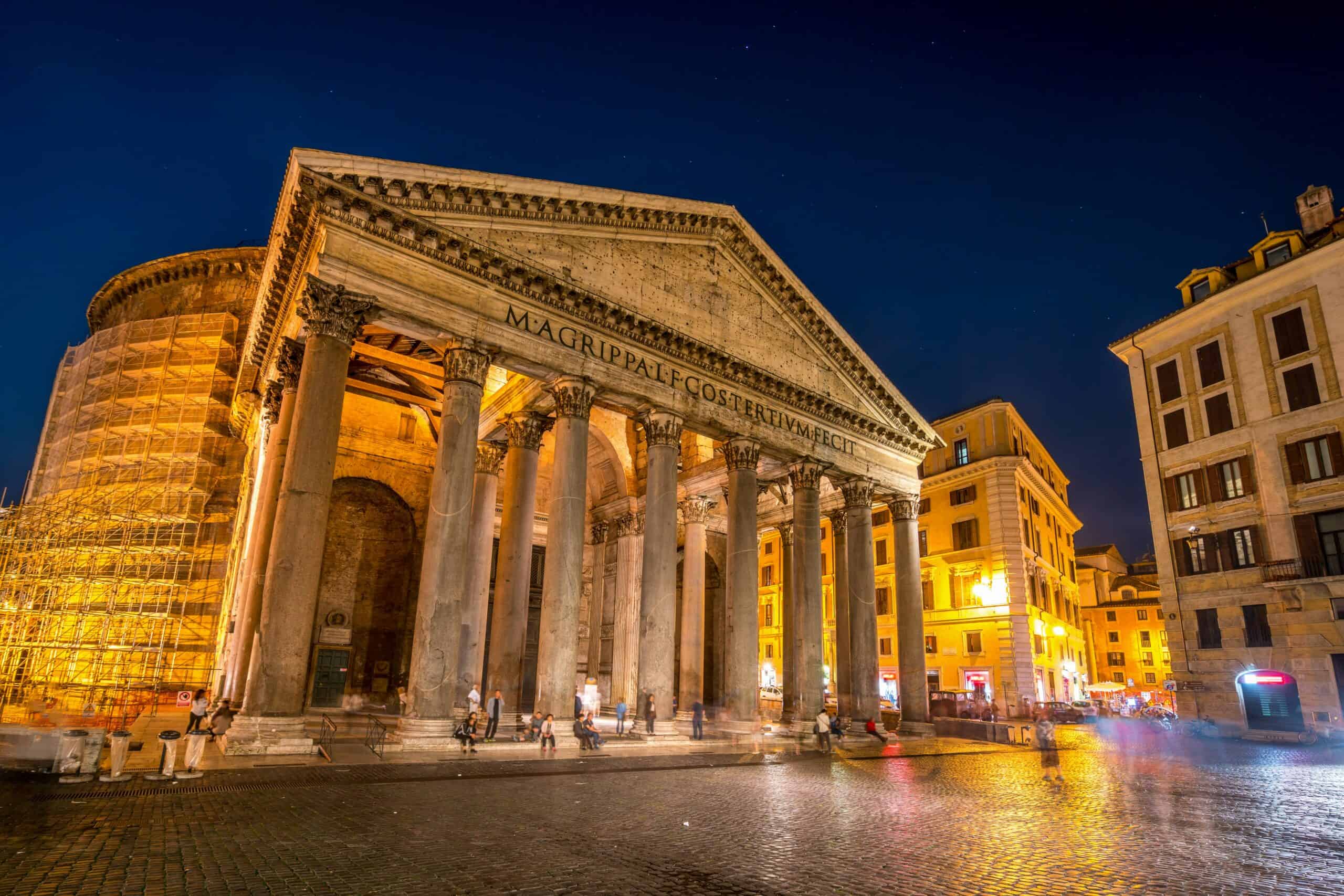
The Pantheon most visitors see today is generally associated with the rebuilding under Emperor Hadrian in the 2nd century CE, even though the inscription on the façade still references Marcus Agrippa. That layering alone tells you something important about Rome: the city often preserved memory by rebuilding rather than erasing.
Over time, the building’s conversion into a church helped protect it from the kind of dismantling or abandonment that damaged many other ancient monuments. That survival is one reason the Pantheon still feels unexpectedly complete. You are not looking at an archaeological leftover. You are looking at a building that kept its place in the life of the city.
Architecturally, the Pantheon remains one of the most studied buildings in the world because of the relationship between its cylinder and its dome. The interior height and diameter are famously balanced, which is one reason the space feels so harmonious even before most visitors understand why.
What to See Inside (Do Not Miss These)
1) The Oculus
The oculus is the Pantheon’s signature feature because it is both symbolic and practical. It opens the building to the sky, changes the light by the minute, and creates that unmistakable feeling that the whole space is breathing. If it rains, water does fall inside, and the floor drainage system quietly reminds you how intelligently the building was designed.
- Photo tip: stand near the center, but not perfectly under the oculus, for a more dynamic frame.
- Experience tip: wait longer than you think you need to. The light shift is part of the visit.
2) The Dome and Coffers
The dome is what makes the Pantheon feel almost impossible. The coffers are visually beautiful, but they also help reduce the apparent heaviness of the structure. What I like most is that you can actually feel the engineering, not just admire it academically. It does not read like a technical achievement first. It reads like a perfectly judged space.
- Best viewpoint: the middle of the rotunda, followed by a slow 360-degree turn.
- Best light mood: late afternoon often brings warmer tones across the interior surfaces.
3) Tombs and Chapels
Once the dome has done its work on your attention, move outward. The tombs, side chapels, and smaller details are what make the Pantheon feel lived-in rather than monumental in a cold way. These zones are also where the visit becomes quieter and more personal.
- Move along the side niches slowly. This is often where the crowd thins.
- Keep your voice low and listen to how the acoustics shift across the interior.
How to Visit Efficiently (Avoid the Obvious Mistakes)
Best Visit Strategy
- Arrive early: 09:00–10:00 is still one of the easiest windows for a calmer visit.
- Keep it focused: 45–75 minutes is ideal for most travelers.
- Use official tickets: buy through official channels instead of random reseller pages.
- Respect church etiquette: this is an active basilica, not only a tourist stop.
Season and Crowd Notes
- Spring and autumn: best walking comfort in the historic center.
- Summer: arrive early because the surrounding piazza heats up quickly.
- Winter: often feels calmer, but the interior can feel cooler than expected.
Recommended Walking Route (Pantheon + 3 Nearby Classics)
This is one of the easiest central Rome walking loops because you can string together several major landmarks without feeling like you are zigzagging unnecessarily. Plan around 2.5–3.5 hours including short pauses.
- Pantheon – 45–75 minutes
- Piazza Navona – around 10 minutes on foot, then 20 minutes to enjoy the square
- Campo de’ Fiori – another easy walk and a good snack or coffee stop
- Trevi Fountain – optional extension, best later in the day or evening
Photo Spots (Quick Checklist)
- Inside center point: best for the classic dome-and-oculus shot.
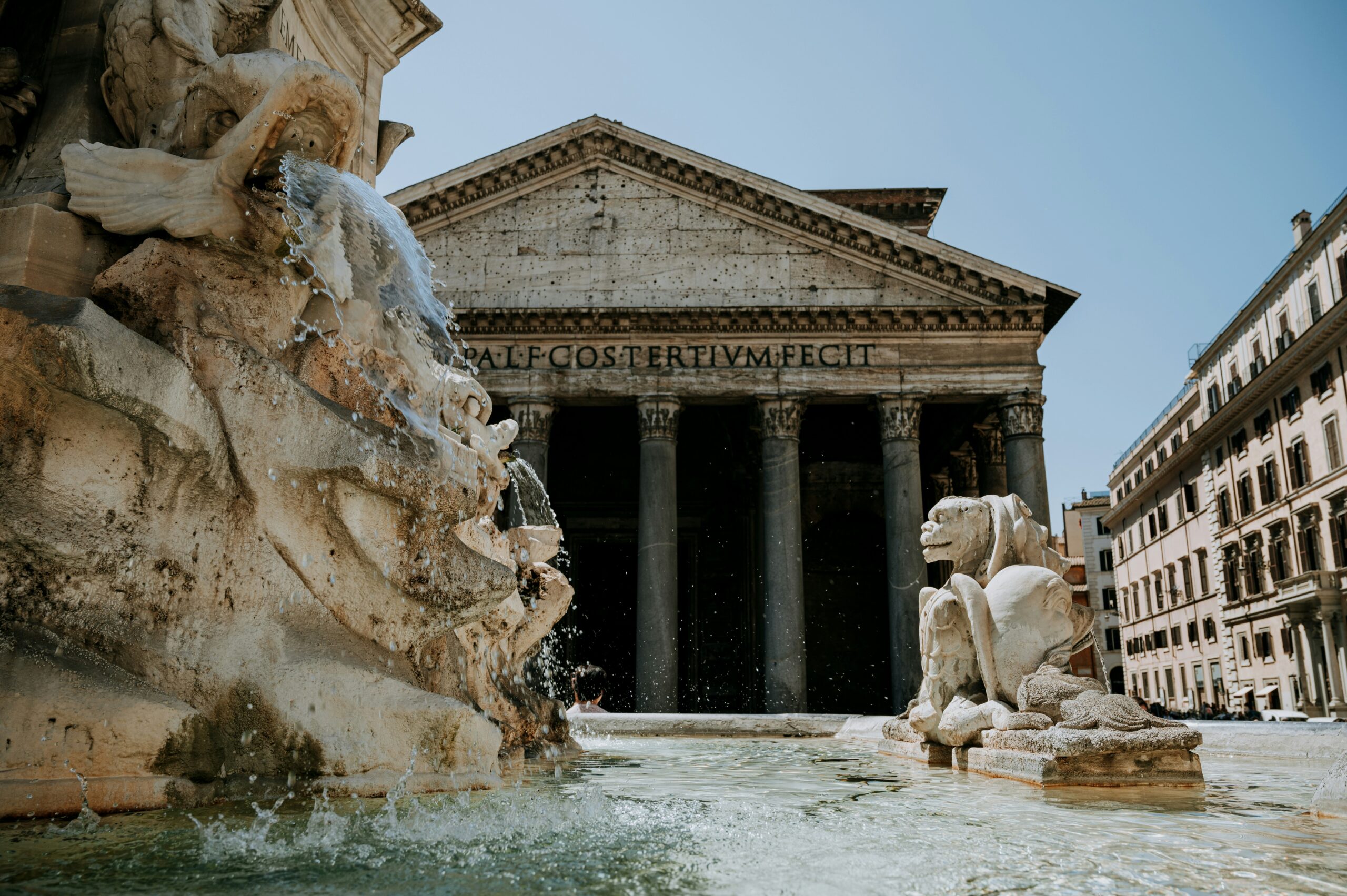
- Side angle under the portico: great for columns with piazza life behind.
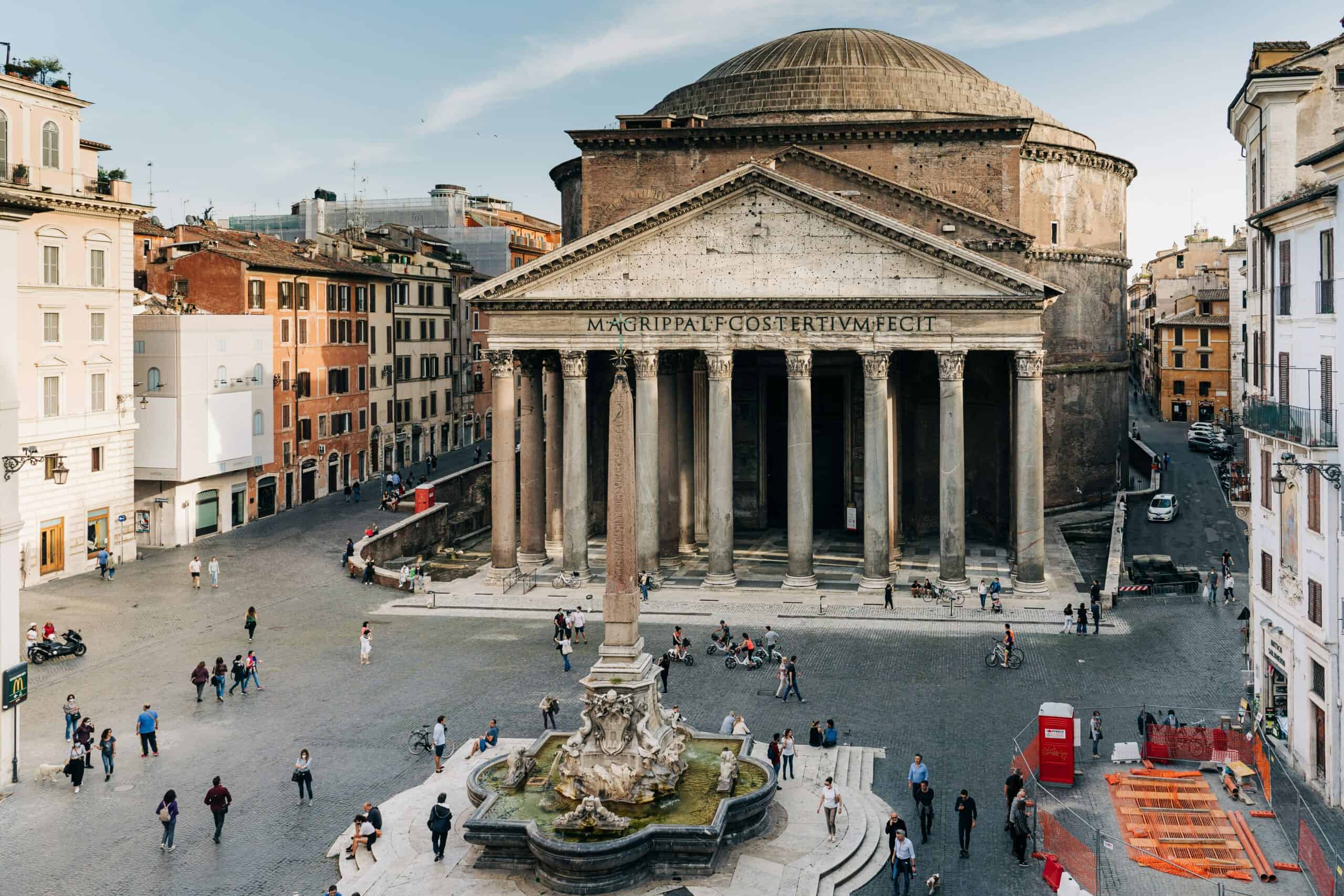
- Piazza della Rotonda in softer light: best for warm exterior stone tones and atmosphere.
One thing I would avoid is trying to force too many photos immediately. The Pantheon photographs better once you understand the space, not before.
Pantheon vs Other Quick Historic Center Stops
| Place | Best For | Strength | Possible Drawback |
|---|---|---|---|
| Pantheon | Architecture + atmosphere | Fast visit with huge cultural payoff | Can bottleneck at entry times |
| Piazza Navona | Outdoor urban atmosphere | Easy to enjoy casually | Less concentrated “wow” moment |
| Trevi Fountain | Spectacle and ritual | Very iconic and highly photogenic | Crowd pressure can be intense |
FAQ
Is the Pantheon worth it if I’m not a history person?
Yes. Even without deep historical knowledge, the interior is one of the strongest architecture experiences in Rome and easy to appreciate quickly.
How long do I actually need at the Pantheon?
Most travelers are happy with 45–75 minutes. If you love architecture or photography, closer to 90 minutes feels more satisfying.
Can I combine the Pantheon with other major sights in one day?
Absolutely. It pairs naturally with Piazza Navona, Campo de’ Fiori, and Trevi Fountain in a very manageable central walking loop.
Do I need official tickets?
Yes, use the official ticket channels listed by the Ministry of Culture. The official listing states there are no “skip-the-line” options, and entry proceeds in order of arrival.
More Trip-Nexus Guides You May Like
Google Maps Location
Final Thoughts
The Pantheon Rome experience delivers a rare combination: it is fast to visit, deeply meaningful, visually unforgettable, and right in the middle of one of the easiest walking zones in the city.
If you do one thing to upgrade the visit, do this: arrive early, stand in the center, look up, and give the space a full minute before you move.