JP • KYOTO
Fushimi Inari Shrine Guide: How to Visit, Best Time, and How Long You Really Need
Fushimi Inari Shrine in Kyoto is one of Japan’s most iconic sacred sites, famous for its endless tunnels of vermilion torii gates, mountain trails, fox symbolism, and the rare feeling that a major tourist landmark can still become deeply quiet once you keep walking.
Search Intent
This guide is for travelers who want to know whether Fushimi Inari is really worth the time, how early they should go, how long the hike actually takes, whether the full route is necessary, and how to enjoy the shrine as more than just a fast photo stop near Kyoto Station.
Quick Summary
- Fushimi Inari is famous for thousands of torii gates climbing the sacred slopes of Mount Inari
- The lower shrine area gets crowded, but the trail becomes calmer the higher you climb
- Early morning is the best time for photography, atmosphere, and manageable crowds
- One hour is enough for the base and lower gates, but 2 to 3 hours makes the visit feel complete
- It is one of the easiest major Kyoto attractions to reach by train from Kyoto Station
Fushimi Inari Shrine in Kyoto is one of Japan’s most recognizable and meaningful cultural landmarks, but what makes it memorable is not just its fame. It is the way the experience changes as you move through it. At the entrance, it can feel like one of Kyoto’s busiest headline attractions. Ten minutes later, you are already entering a repeating corridor of red gates and shifting shadow. Forty minutes later, the city feels much farther away than it actually is.
That changing rhythm is what separates Fushimi Inari from the kind of place people visit only for a photo and then leave. Yes, the shrine gives you one of Japan’s most iconic visual scenes almost immediately. But it also rewards patience. The further you climb, the more the visit turns from tourism into atmosphere: smaller shrines, stone steps, moss, quieter corners, fox statues, and occasional openings where Kyoto begins to appear below you.
I think that is why Fushimi Inari works for very different types of travelers. If you only have an hour, the base complex and lower torii path are still worth seeing. If you have half a day, the mountain becomes the real experience. It can be photogenic, spiritual, practical, symbolic, and unexpectedly meditative all in the same visit.
Why This Place Matters
Fushimi Inari is not just a famous shrine in Kyoto. It is the head shrine of Inari worship in Japan, founded in 711, and the entire mountain behind it is considered part of the shrine precinct. That gives the visit unusual depth: you are not simply walking through an attraction, you are moving through a sacred landscape.
What It Feels Like in Real Life
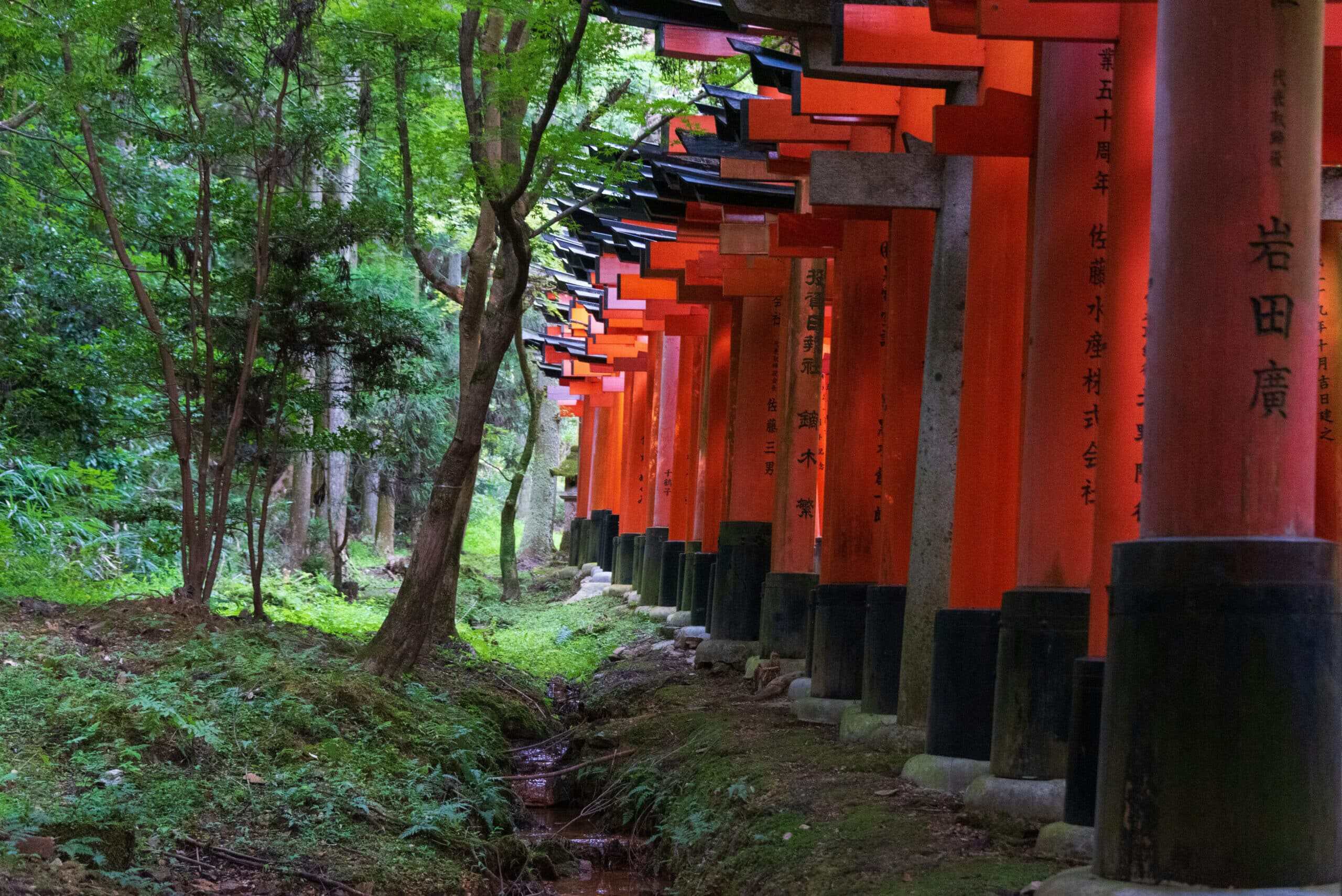
The first surprise is how quickly the atmosphere shifts. At the base, you are surrounded by visitors, cameras, and that familiar Kyoto sightseeing energy. But once you enter the torii corridor and begin to climb, the shrine starts to feel more rhythmic than crowded. The gates compress your field of vision, the path narrows your attention, and the repetition of red, black, and stone begins to slow your thoughts down.
I remember one of my own early visits most clearly not because of the main gate or the most photographed section, but because of the moment the noise dropped off. I had gone in expecting a famous tourist site and a quick walk. Instead, after climbing for a while, I realized I could hear my own footsteps more clearly than other people’s voices. That was the moment the shrine changed from a checklist stop into an actual experience.
The mountain adds texture to everything. There are side shrines, little breaks in the torii sequence, old stone markers, tea stalls, fox imagery, and occasional viewpoints that remind you the whole route is not a themed path but a real religious mountain environment. Early morning can feel cool, damp, and almost cinematic. Late afternoon can feel warmer and busier near the bottom, but still surprisingly calm above the most visited sections.
That is why I would not describe Fushimi Inari as only a photo location. It is one of Kyoto’s best examples of a place that looks famous online but feels fuller in person.
History and Cultural Background
Fushimi Inari Taisha was founded in 711, long before Kyoto became the imperial capital, and remains one of the most important Shinto shrines in the country. Official shrine information describes it as the head shrine connected with thousands of Inari shrines across Japan. Inari is associated with rice, agriculture, prosperity, and, over time, business success as well. The shrine’s most famous visual feature, the long torii corridors, comes from a continuing religious tradition. Worshippers and companies donate torii gates as offerings in gratitude or in prayer for prosperity. That practice is what created the famous gate tunnels visitors walk through today. Kyoto City’s official tourism guide describes the route as winding through the hills behind the shrine in a seemingly unending path of more than 5,000 gates.
Foxes, or kitsune, are another essential part of the shrine’s symbolism. They are understood as messengers of Inari, which is why fox statues appear across the grounds holding keys, rice sheaves, or other symbolic objects. Those details can seem decorative at first, but once you understand the shrine’s association with food, fortune, and safekeeping, the imagery becomes much more coherent.
There is also a reason the place feels so layered. The shrine is not only a single building or courtyard. The whole mountain is sacred territory. Smaller shrines, votive sites, stone altars, and gates continue far beyond the first famous photo section. That sacred geography is a huge part of what makes the visit feel deeper than many first-time visitors expect.
Main Attractions
Senbon Torii
The famous tunnel of gates begins behind the main shrine area and immediately gives you the signature Fushimi Inari image. This section is the busiest, but it is also the visual introduction that most visitors come for. The alternating light and shadow, narrow path, and continuous repetition of color make it one of Japan’s most recognizable shrine experiences.
Romon Gate and Main Shrine Complex
The base precinct includes the impressive Romon Gate and main worship areas. The Romon itself is linked by shrine tradition to Toyotomi Hideyoshi in the late 16th century, giving the entrance real historical weight beyond first impressions.
Mount Inari Hiking Trail
This is where the shrine becomes more than a sightseeing stop. The full ascent and loop can take around 2 to 3 hours at a comfortable pace, with many travelers turning back earlier once they reach a satisfying balance of views and quieter paths. Kyoto’s official guide also notes that the upper precincts form a pleasant day hike, which matches the way many visitors experience it.
Fox Statues and Small Shrines
One of the best parts of going farther is noticing the details many people miss: smaller altars, stone foxes, miniature shrine structures, and offerings tucked into corners of the route. These give the mountain texture and help the shrine feel like a living place of worship rather than only an iconic landmark.
Key Visitor Information
| Official Name | Fushimi Inari Taisha |
| Address | 68 Fukakusa Yabunouchicho, Fushimi Ward, Kyoto, Japan |
| Opening Access | The shrine precinct is accessible daily; some worship spaces and ceremonies vary by timing |
| Entrance Fee | Free |
| Best Time to Visit | Early morning, especially before the main crowd rush |
| Nearest JR Access | Right next to JR Inari Station on the JR Nara Line |
| Keihan Access | About 5 minutes on foot from Fushimi-Inari Station |
| Visit Length | 1 hour for lower precincts, 2 to 3 hours for a fuller mountain walk |
| Transport Advice | Public transport is recommended because parking around the shrine gets very crowded |
The Cultural Experience Visitors Often Miss
Many first-time visitors focus almost entirely on the torii gates, but the shrine becomes richer once you pay attention to its ritual atmosphere. People come here not only to sightsee, but to pray for prosperity, safety, business success, and family wellbeing. That devotional layer changes the way the place should be approached.
You will see visitors bowing, offering coins, purchasing omamori charms, writing wishes on ema plaques, and pausing at smaller sacred points along the climb. These actions are not performance for tourists. They are ordinary acts of worship in a site that continues to function religiously despite its global fame.
I think this matters because Fushimi Inari can be accidentally flattened into a photography location if you rush through it too quickly. It is much more interesting when you let the symbolism, repetition, and mountain setting work together. Even if you are not personally religious, the place becomes more moving when you treat it as a sacred environment rather than a backdrop.
Practical Tip
Take the train if possible. Official shrine access guidance specifically recommends public transportation because the area around the parking lots gets very congested.
Common Mistake
A lot of travelers judge the entire shrine by the first crowded section. That is the wrong read. If you have the energy, keep climbing. The atmosphere improves dramatically once the day-tripper concentration starts to thin out.
Recommended Walking Route
- 0 to 20 minutes: enter through the main approach, take in the Romon Gate, and visit the lower shrine complex without rushing.
- 20 to 45 minutes: walk through the lower torii corridor while crowds are still dense and photography is easiest.
- 45 to 90 minutes: continue upward past the most famous first section and let the route become quieter and more atmospheric.
- 90 to 180 minutes: continue the mountain circuit if you want a fuller pilgrimage-style experience with more sub-shrines and elevated viewpoints.
Practical Tips from Experience
- Wear proper walking shoes because the stone steps can feel uneven and slick in wet weather
- Go early if photographs matter to you; the difference in crowd pressure is significant
- Do not stop only at the first iconic torii section unless your time is extremely limited
- Bring water, especially in warm months, even though vending machines and rest areas appear along parts of the trail
- If you are tired but curious, aim for a partial ascent instead of forcing the summit just for completion
- Late afternoon and early evening can be beautiful, but morning usually feels more rewarding overall
Nearby Attractions That Pair Well With Fushimi Inari
If you want to turn the shrine into part of a stronger Kyoto day instead of an isolated stop, pair it with nearby or easy-train-access experiences that match your pace.
- Gion District: best if you want to contrast sacred mountain atmosphere with Kyoto’s traditional urban beauty
- Kiyomizu-dera: another major Kyoto classic, but with a different architectural and viewpoint experience
- Uji or southern Kyoto routes: strong if you want a softer, less rushed day beyond central Kyoto crowds
- Nara day extension: possible if you are moving onward by JR and want a temple-and-heritage-heavy itinerary
Fushimi Inari vs Other Kyoto Classics
| Place | Best For | Atmosphere |
|---|---|---|
| Fushimi Inari | Torii gates, symbolic imagery, mountain walking | Dynamic, layered, more rewarding the longer you stay |
| Kiyomizu-dera | Temple architecture, wide Kyoto views | Dramatic, scenic, often crowded |
| Gion | Historic streets, evening strolling, traditional district mood | Urban, atmospheric, cultural rather than mountainous |
If you want the strongest mix of iconic visuals and active movement, Fushimi Inari is probably the better pick. If you want one concentrated architectural viewpoint, Kiyomizu-dera may feel simpler and faster.
Who Should Visit?
- First-time Kyoto travelers who want one of the city’s true signature experiences
- Photographers who care about atmospheric repetition, color, and changing light
- Travelers who want both culture and walking in the same stop
- Visitors staying near Kyoto Station who want a high-value attraction with easy train access
- People willing to walk a little farther than average in exchange for quieter, more rewarding sections
FAQ
How long should I spend at Fushimi Inari Shrine?
About 1 hour is enough for the lower shrine and main torii section, but 2 to 3 hours gives you a fuller mountain experience.
Is Fushimi Inari free to enter?
Yes. The shrine grounds are free to visit, though charms, fortunes, and other devotional items are paid separately.
Is Fushimi Inari crowded?
The base and first torii sections are often busy, but the trail thins out noticeably as you continue climbing.
What is the best time to visit?
Early morning is best for quieter paths, cleaner photos, and a more atmospheric visit. Kyoto’s official tourism material also highlights late afternoon and early evening as especially atmospheric in the upper precincts.
How do I get there from Kyoto Station?
The shrine is right next to JR Inari Station on the JR Nara Line, just two stops and about five minutes from Kyoto Station.
Do I need to hike all the way to the top?
No. A partial climb already gives you quieter torii sections and a better feel for the mountain. The summit matters most if you want the full pilgrimage-style route.
Related Reads on Trip Nexus
Official Website and Planning Resources
Google Map
Final Thoughts
Fushimi Inari Shrine in Kyoto is one of those rare attractions that fully deserves its fame but still gives you room to make the experience your own. You can come for the iconic gates and leave satisfied, or you can keep climbing and discover that the real reward is the gradual transformation from crowded landmark to quiet sacred mountain.
I think that flexibility is the shrine’s greatest strength. It works for rushed first-time visitors, careful photographers, spiritual travelers, and people who simply want a meaningful walk without leaving Kyoto. Few major attractions offer such a strong mix of access, symbolism, atmosphere, and personal pace.
If you want one Kyoto experience that feels unmistakably Japanese, visually memorable, and deeper than it first appears, Fushimi Inari is one of the safest and strongest choices you can make.