Gyeonggijeon Shrine Jeonju: The Quiet Royal Place Most Travelers Almost Skip
Gyeonggijeon Shrine Jeonju is one of the most meaningful cultural stops inside Jeonju Hanok Village, not because it overwhelms visitors with spectacle, but because it quietly preserves the royal memory of Korea’s Joseon Dynasty in a place that still feels calm, dignified, and deeply rooted.
Most travelers arrive in Jeonju thinking first about hanok streets, bibimbap, rental hanbok, cafés, and photo spots. Those are all part of the city’s appeal. But if you walk only through the busy lanes and skip Gyeonggijeon Shrine, you miss the historical anchor that gives the neighborhood much of its emotional weight.
The shrine was founded in 1410 and is known for housing the royal portrait of King Taejo, founder of the Joseon Dynasty. VISITKOREA describes it as a registered historic site connected to King Taejo’s portrait and notes that its original name was Eoyongjeon before it became Gyeonggijeon in 1442. For travelers, that means this is not just a pretty courtyard. It is a place where Korea’s dynastic origin story is preserved inside one of the country’s most beloved traditional districts.
Search Intent
Travelers searching for Gyeonggijeon Shrine Jeonju usually want practical answers before they visit: what the shrine is famous for, how it connects to King Taejo and the Joseon Dynasty, whether it is worth entering while exploring Jeonju Hanok Village, what the opening hours and entrance fee are, how long to spend, and which nearby attractions fit naturally into the same walking route.
Quick Summary
- Gyeonggijeon Shrine was founded in 1410 and preserves the royal portrait of King Taejo, founder of the Joseon Dynasty.
- It sits inside Jeonju Hanok Village, making it easy to combine with hanok streets, cafés, markets, and nearby heritage sites.
- The experience is quiet and reflective rather than flashy, with traditional halls, stone paths, courtyards, and mature trees.
- Autumn is especially scenic because the ginkgo trees turn gold, but mornings and late afternoons are pleasant year-round.
- The shrine is best for travelers who want a deeper cultural layer beyond Jeonju’s food and photo spots.
Why Gyeonggijeon Shrine Matters in Jeonju
Gyeonggijeon Shrine is not simply another traditional building inside Jeonju Hanok Village. It is one of the key reasons the area feels historically grounded rather than merely decorative. The shrine was created to honor King Taejo, the founder of Joseon, and the royal portrait preserved here connects Jeonju directly to the origin of one of Korea’s longest and most influential dynasties.
That historical connection matters because Jeonju was the ancestral hometown of the Yi family, the royal house of Joseon. The shrine therefore works almost like a symbolic bridge between local identity and national history. A visitor can enjoy the hanok streets without knowing this context, but the experience becomes richer once you understand why this quiet compound carries such cultural weight.
Architecturally, the shrine reflects the restrained beauty associated with Joseon-era Confucian values. The complex does not try to impress through height, color, or drama. Instead, it uses balance, order, wood, stone, open courtyards, and natural shade. The result is a place that invites slower movement. I think this is exactly why the shrine stays memorable: it does not compete with Jeonju’s busy tourist energy. It quietly resets it.
For first-time visitors, Gyeonggijeon also helps explain why Jeonju is more than a weekend food destination. The city is a cultural archive. Its architecture, markets, food traditions, craft workshops, and royal heritage all connect into a larger story of Korean identity. Gyeonggijeon Shrine is one of the easiest places to feel that story without needing a museum-level background in Korean history.
What It Feels Like to Walk Through the Shrine
Walking into Gyeonggijeon Shrine feels different from walking through the surrounding hanok streets. Outside, Jeonju Hanok Village can feel lively, sometimes even crowded, especially on weekends. You hear café music, tourists chatting in rented hanbok, camera shutters, snack vendors, and the constant movement of people drifting from one pretty alley to another. Inside the shrine grounds, the pace changes almost immediately.
The entrance gates create a soft psychological boundary. After passing through, you begin to notice stone paths, wooden structures, old trees, and the careful spacing between buildings. The shrine does not demand attention all at once. It reveals itself slowly. One courtyard leads to another view, one roofline frames another hall, and the quietness makes small details more visible.
I remember feeling that this was the kind of place where you naturally stop talking for a moment, not because anyone tells you to, but because the atmosphere suggests it. The smell of old wood, the crunch of leaves underfoot in autumn, and the filtered light through ginkgo branches give the shrine a calm, almost ceremonial mood.
That calm is the main reason I recommend not rushing through. Some travelers enter, take a quick photo, and leave in ten minutes. That is a mistake. Gyeonggijeon is not designed for a fast checklist visit. It works best when you slow down, step away from the most photographed angles, and let the site’s quiet structure do its work.
History and Cultural Context
Gyeonggijeon Shrine was established in the early Joseon period, in 1410, to enshrine the portrait of King Taejo. King Taejo, born Yi Seong-gye, founded the Joseon Dynasty in 1392 after the fall of Goryeo. Joseon would go on to shape Korean politics, social structure, Confucian culture, writing, art, education, and architecture for more than five centuries.
The shrine’s name and function evolved over time. According to VISITKOREA, it was originally called Eoyongjeon and later renamed Gyeonggijeon in 1442 during the reign of King Sejong. This detail may sound small, but it helps show that the shrine was not a random commemorative building. It was part of an official royal memory system that mattered deeply to the state.
The presence of the royal portrait is especially important. In Joseon culture, royal portraits were not treated as casual images. They were highly symbolic objects connected to legitimacy, ritual, memory, and reverence. Preserving the founder’s portrait in Jeonju tied the dynasty back to its ancestral base and gave the city a lasting royal association.
Today, the shrine complex includes halls, gates, courtyards, archive-related structures, and the nearby Royal Portrait Museum. Korean Heritage information also highlights the Royal Portrait Museum as a place where visitors can understand the history of Gyeonggijeon and view royal portrait-related displays. This makes the site more than a single-photo stop; it is a compact cultural zone that helps visitors understand royal representation in Korean history.
The shrine has also become part of Jeonju’s contemporary cultural identity. Heritage programs, night openings, and seasonal events sometimes use the site to reconnect visitors with traditional performance and royal ceremony. Even when no special event is happening, the grounds retain a sense of ritual space.
Main Highlights Inside Gyeonggijeon Shrine
The Royal Portrait Connection
The main historical reason to visit is the shrine’s connection to King Taejo’s royal portrait. Even if you are not a history specialist, knowing that this site preserves the image and memory of Joseon’s founder changes how the place feels. The halls are not just old buildings; they are part of a ritual landscape built around dynastic remembrance.
Traditional Joseon Architecture
The buildings are elegant rather than dramatic. Look for the curve of the rooflines, the rhythm of wooden pillars, the quiet relationship between structures and courtyards, and the way open space is used. The architecture is especially rewarding for travelers who enjoy subtle design rather than bright decoration.
Ginkgo Trees and Seasonal Atmosphere
The ginkgo trees are one of the shrine’s most beloved visual features. In autumn, the yellow leaves transform the grounds into one of Jeonju’s most photogenic scenes. However, spring and summer are also pleasant because the greenery softens the stone paths and adds shade to the courtyards.
Royal Portrait Museum
The nearby Royal Portrait Museum adds context for visitors who want to understand the significance of royal portraiture. If you have time, do not treat it as optional filler. It helps explain why portraits mattered and how royal memory was preserved.
Key Visitor Information
| Item | Details |
|---|---|
| Attraction | Gyeonggijeon Shrine |
| Location | 44 Taejo-ro, Wansan-gu, Jeonju, South Korea |
| Main historical link | Royal portrait of King Taejo, founder of Joseon |
| Typical visit time | 45 minutes to 1.5 hours, longer if visiting the museum carefully |
| Best season | Autumn for ginkgo color; spring and early morning visits are also pleasant |
| Official tourism source | Jeonju Tourism |
| National tourism source | VISITKOREA |
The Cultural Experience: Why It Feels Different from a Museum
Gyeonggijeon Shrine does not feel like a conventional museum, even though it contains deep historical material. The experience is spatial and atmospheric. You learn by moving through gates, crossing courtyards, looking at rooflines, and noticing how the buildings sit inside the landscape.
This matters because many first-time Korea travelers encounter history through palaces in Seoul, where scale and ceremony can feel grand. Gyeonggijeon is smaller and more intimate. Instead of standing in front of a huge palace complex, you are walking through a place where national history and local memory overlap. That intimacy is the site’s advantage.
It also pairs naturally with hanbok rental, but I would treat that carefully. Wearing hanbok can make photos more memorable, yet the shrine is still a heritage site. Move respectfully, avoid blocking narrow paths for long photo sessions, and remember that the place is not only a backdrop. This is one of those locations where good travel behavior makes the visit better for everyone.
The best cultural approach is to combine observation with restraint. Read the signs, visit the museum if open, take photos without rushing, and then step into the hanok village with a clearer sense of why Jeonju matters. That shift from “pretty traditional streets” to “living cultural district with royal memory” is what makes the shrine worth including.
Travel Tips for a Better Visit
Early morning usually feels calmer, and the light is softer for photos around the courtyards and trees.
Do the shrine first, then explore cafés, crafts, street snacks, and nearby alleys with better historical context.
The best angles are often found after walking the grounds slowly, especially near trees and side paths.
How to Visit Gyeonggijeon Shrine Step by Step
- Start at Jeonju Hanok Village. The shrine entrance is on Taejo-ro, one of the main streets of the traditional district.
- Check current hours before you go. Use Jeonju Tourism or VISITKOREA for the most reliable starting point, especially around holidays or special events.
- Enter before the busiest lunch period. Morning visits usually feel more peaceful and make photography easier.
- Walk the grounds slowly. Do not rush straight to the main hall. The courtyards, walls, trees, and side views are part of the experience.
- Visit the Royal Portrait Museum if time allows. It adds important context to the shrine’s royal portrait connection.
- Continue into Hanok Village. After the shrine, walk toward Jeondong Catholic Cathedral, Pungnammun Gate, or Nambu Market.
- Leave time for food. Jeonju is famous for food culture, so pairing the shrine with a local meal makes the visit feel complete.
Nearby Attractions You Can Combine with Gyeonggijeon Shrine
Jeonju Hanok Village
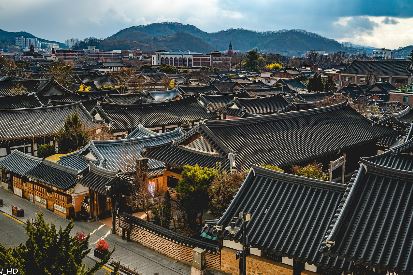
Jeonju Hanok Village surrounds the shrine and is one of Korea’s best-known traditional districts. It is filled with hanok architecture, guesthouses, tea rooms, cafés, craft shops, street snacks, and photo spots. The area can feel touristy, but it remains one of the easiest places to experience a concentrated version of Korean traditional aesthetics.
Jeondong Catholic Cathedral
Located close to the shrine, Jeondong Catholic Cathedral adds a different historical layer to the neighborhood. Its architecture contrasts beautifully with the surrounding hanok scenery and makes a strong walking-route companion.
Pungnammun Gate
Pungnammun Gate is one of the remaining gates of Jeonju’s old city walls. It is a short walk from the shrine and helps visitors imagine the older urban structure of Jeonju.
Jeonju Nambu Market
For food, local energy, and a less polished atmosphere, Jeonju Nambu Market is a useful follow-up stop. It works especially well if you want to move from heritage sightseeing into everyday local culture.
Gyeonggijeon Shrine vs Jeonju Hanok Village: Which Should You Prioritize?
| Comparison Point | Gyeonggijeon Shrine | Jeonju Hanok Village |
|---|---|---|
| Main appeal | Royal history, quiet courtyards, Joseon heritage | Traditional streets, food, cafés, hanbok photos |
| Best for | Culture-focused travelers and history lovers | First-time visitors, families, photo-focused travelers |
| Atmosphere | Calm, reflective, respectful | Lively, commercial, colorful |
| Time needed | 45–90 minutes | 2–4 hours or more |
| Best strategy | Visit first for context and quieter photos | Explore after the shrine for food and atmosphere |
Who Should Visit Gyeonggijeon Shrine?
Gyeonggijeon Shrine is best for travelers who want Jeonju to feel deeper than a food-and-photo stop. If you enjoy Korean history, traditional architecture, quiet walking spaces, seasonal trees, or cultural sites with real historical meaning, the shrine should be near the top of your Jeonju itinerary.
It is also a good choice for families because the grounds are easy to walk and the story is simple enough to explain: this place preserves the royal memory of the founder of Joseon. Couples and solo travelers may enjoy it even more in the early morning, when the atmosphere feels still and personal.
However, if you only want shopping, snacks, and fast photo spots, you may find the shrine too quiet. That is not a flaw. It is the character of the place. Gyeonggijeon rewards visitors who are willing to slow down.
Related Trip Nexus Guides
Official and Trustworthy Resources
Google Map
FAQ
What is Gyeonggijeon Shrine famous for?
Gyeonggijeon Shrine is famous for preserving the royal portrait of King Taejo, founder of the Joseon Dynasty, and for its calm traditional architecture inside Jeonju Hanok Village.
Where is Gyeonggijeon Shrine located?
It is located at 44 Taejo-ro, Wansan-gu, Jeonju, inside the Jeonju Hanok Village area.
Is Gyeonggijeon Shrine worth visiting?
Yes, especially if you want to understand Jeonju’s royal and cultural history beyond food, cafés, and hanok photo spots.
How long should I spend at Gyeonggijeon Shrine?
Most travelers should plan 45 minutes to 1.5 hours, depending on whether they visit the Royal Portrait Museum and take photos slowly.
When is the best time to visit?
Autumn is especially beautiful because of the golden ginkgo trees, but early morning or late afternoon visits are pleasant in most seasons.
Can I visit Gyeonggijeon Shrine while exploring Jeonju Hanok Village?
Yes. The shrine sits inside the Hanok Village area, so it is one of the easiest attractions to combine with cafés, restaurants, hanok streets, Jeondong Catholic Cathedral, and Nambu Market.
Is Gyeonggijeon good for photography?
Yes, but it is best for quiet, atmospheric photography rather than flashy shots. Ginkgo trees, gates, stone paths, and traditional halls are the strongest visual elements.
Should I check opening hours before visiting?
Yes. Hours, admission, and access can change for holidays, maintenance, or special events, so check Jeonju Tourism or VISITKOREA before visiting.
Final Thoughts
Gyeonggijeon Shrine Jeonju is the kind of place that proves a travel highlight does not need to be loud. Its power comes from quiet courtyards, royal memory, traditional architecture, and the feeling that Jeonju’s cultural identity is still alive around you.
If you visit only the busy hanok streets, Jeonju may feel charming but slightly commercial. If you include Gyeonggijeon Shrine, the city becomes more layered. You begin to see how food, architecture, royal history, craft culture, and local memory all connect.
My honest recommendation is simple: visit the shrine early, walk slowly, check the museum if time allows, and then continue into Hanok Village with a better understanding of why Jeonju matters. It may not be the loudest stop in the city, but it is one of the most meaningful.