Kakunodate Samurai District Guide: Best Time to Visit, What to See, and Why It Feels So Calm
Kakunodate Samurai District is one of those rare places in Japan that feels preserved not just in appearance, but in atmosphere. The streets are broad, the black wooden fences feel dignified rather than decorative, and the old samurai residences carry a kind of quiet confidence that never needs to shout. Even before you enter a single house, the district already feels different from the rest of modern Japan.
Located in Semboku, Akita Prefecture, this former samurai quarter is often described as one of the best-preserved historic districts in the country. That sounds like a tourism slogan until you actually walk it. Then you realize the real appeal is not just “old buildings.” It is the emotional texture of the place: spacious, restrained, elegant, and deeply rooted.
Search Intent
This guide is for travelers who want to know whether Kakunodate Samurai District is worth visiting, when to go for the best scenery, how much time to spend, what the samurai houses are actually like, and how to combine the district with a smart Akita or Tohoku itinerary.
Quick Summary
- Kakunodate Samurai District is one of Japan’s best-preserved historic samurai neighborhoods.
- The area is most famous in late April to early May, when weeping cherry trees soften the black fences and old residences.
- It is easy to visit on foot from Kakunodate Station, which is served by the Akita Shinkansen.
- The district rewards slow walking, quiet observation, and travelers who appreciate atmosphere more than fast sightseeing.
- Plan about 2 to 4 hours if you want to visit houses, walk the district properly, and not rush the experience.
Why Visit Kakunodate Samurai District
Kakunodate is often called the “Little Kyoto of Tohoku,” but I think that comparison only helps up to a point. Yes, it is beautiful. Yes, it is traditional. But what makes Kakunodate memorable is not that it resembles somewhere else. It is that it has a stillness and discipline that feel entirely its own.
This district developed as a samurai town in the early 17th century, and much of that structure remains legible today. The road width, the black fences, the lot sizes, the arrangement of houses and gardens—all of it creates a sense that the district was planned with hierarchy, order, and restraint in mind. That order is part of the beauty. Nothing feels random here.
Visitors usually come for one of three reasons: cherry blossoms, samurai history, or the desire to find a Japanese heritage destination that still feels spacious and grounded. Kakunodate works because it gives you all three at once. The district is scenic, but it is also intellectually interesting. It photographs well, but it is even better when you stop trying to photograph everything and simply walk.
What It Feels Like to Walk Here
The first thing I would say is that Kakunodate does not feel theatrical. It feels composed.
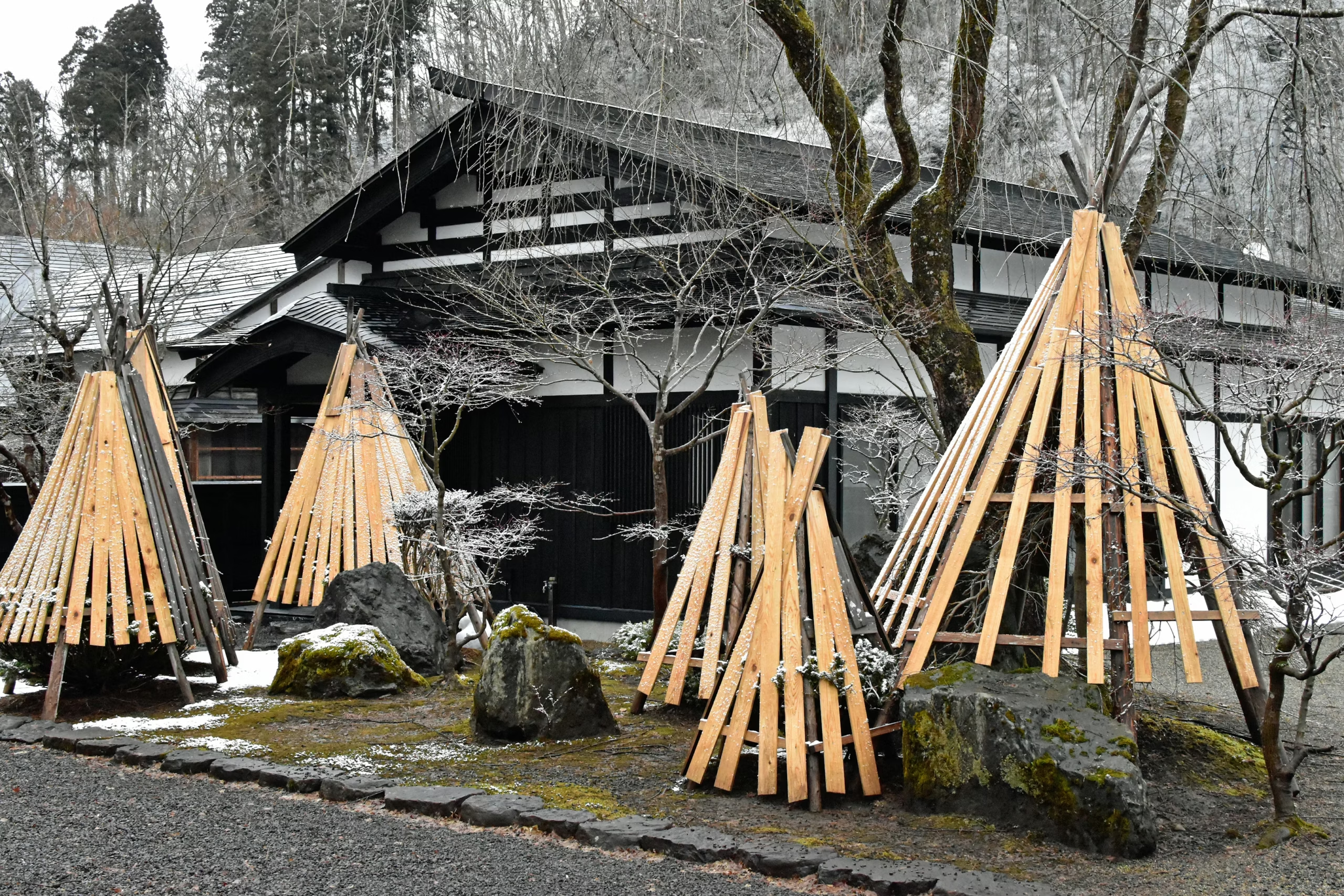
Some preserved districts in Japan are beautiful but a little too polished, almost as if they were designed to be consumed quickly. Kakunodate feels older in spirit. The black fences absorb light. The roads are wide enough to create space around you. The trees bend and soften the lines without weakening them. When the wind moves through the district, it changes the mood more than the view.
I especially like the contrast between strength and gentleness here. The fences and gates suggest discipline, status, and protection. Then spring arrives and the weeping cherry trees dissolve the strictness into something softer and more emotional. That tension is probably why the district lingers in memory. It is not only beautiful; it is balanced.
One honest note: this is not the place to rush with a “ten-minute checklist” mindset. If you do that, it can seem quieter than expected. But if you slow down, the district starts revealing itself in layers—garden walls, gate details, tatami interiors, craft shops, old storehouses, and the feeling that history here was lived domestically, not only ceremonially.
History and Cultural Context
Kakunodate flourished as a castle town in the early Edo period, and the samurai district still preserves much of that urban logic. Around 80 samurai families once lived here, and the surviving townscape remains one of Japan’s strongest examples of an old samurai residential quarter. Six samurai estates are open to the public today, including the Aoyagi, Ishiguro, Iwahashi, Kawarada, Matsumoto, and Odano residences.
One of the reasons the district feels so coherent is that it is not just a few isolated old houses. It is a preserved environment. The broad 11-meter street width has been retained from the original town plan, and the district was designated an Important Preservation District for Groups of Traditional Buildings in 1976. That protected status helped preserve the visual identity of the quarter while still allowing residents to continue living in it.
This matters because Kakunodate is not a fake reconstruction. It is a place where preservation, everyday life, and historical continuity still overlap. That overlap is exactly what gives the district emotional credibility.
Highlights You Should Not Miss
- The black wooden fences: they define the district’s visual character before you even enter a house.
- The Aoyagi House: one of the best-known samurai residences, with displays that help visitors understand the feudal era.
- The Ishiguro House: especially interesting because descendants of the family still occupy part of the residence.
- The weeping cherry trees: these are the district’s most famous seasonal signature and were historically brought from Kyoto.
- The nearby merchant district: worth exploring for cherry-bark crafts, old storehouses, and a broader sense of Kakunodate beyond the samurai image.
Insider note:
Key Visitor Information
| Item | Details |
|---|---|
| Location | Kakunodate, Semboku, Akita Prefecture, Japan |
| Best Time to Visit | Late April to early May for cherry blossoms; autumn is also atmospheric and calmer |
| Access | About 15–20 minutes on foot from Kakunodate Station |
| From Tokyo | Roughly 3 hours by Akita Shinkansen |
| Public Houses | Six samurai residences are open to the public in the district |
| Typical House Admission | Many houses charge modest individual admission, often around ¥500 depending on the residence |
Immersive Cultural Experience
Kakunodate is more than a row of preserved facades. It is one of those places where architecture, seasonal nature, and local craft traditions all reinforce one another. Inside the district and nearby merchant quarter, you can encounter displays of swords, armor, documents, and household objects that make the samurai world feel domestic rather than abstract.
The area is also associated with kabazaiku, or cherry-bark craft, which gives the town a quieter cultural identity beyond the obvious samurai narrative. That matters because it turns the visit into something more complete. You are not only looking at military history; you are walking through a place shaped by households, craftsmanship, etiquette, gardens, and local continuity.
I think this is why Kakunodate feels emotionally richer than some “historic districts” that rely only on visual charm. Here, the beauty is tied to habits of living.
Seasonal Events and Why They Matter
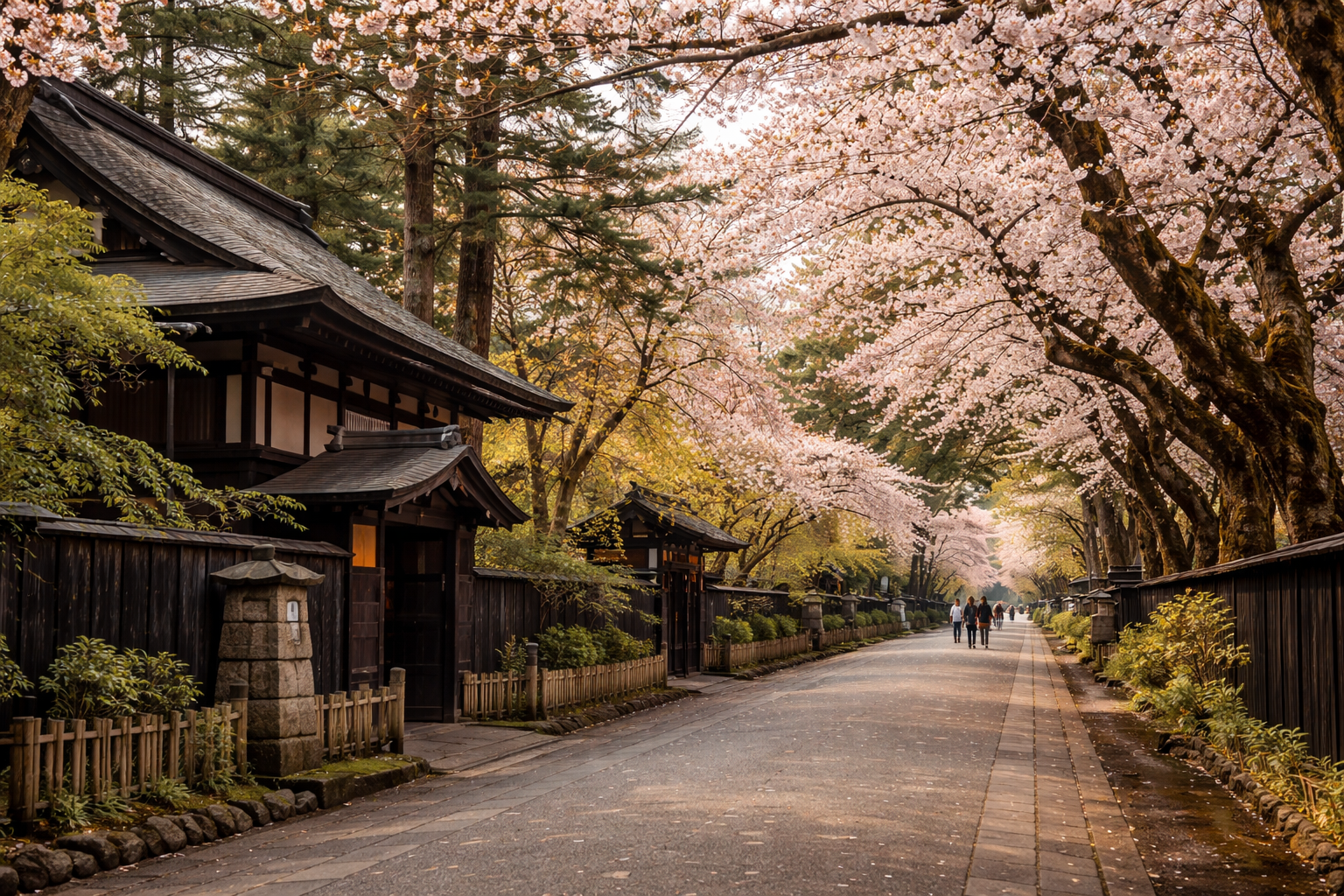
Spring is the headline season, and for obvious reasons. The weeping cherry trees along the samurai district and the long line of Somei Yoshino trees by the Hinokinai River turn Kakunodate into one of Tohoku’s most famous blossom destinations. If you come in late April or early May, expect beauty—but also expect other people to know that too.
Autumn has a different kind of drama. The district becomes more textural, the crowds ease, and the black fences seem even deeper against the changing leaves. Then in early September, Kakunodate Festival brings another layer of local identity with large kabuki-themed floats moving through town. That festival is held annually on September 7, 8, and 9, and it adds an entirely different energy to the district.
Personally, I think Kakunodate has one of those rare seasonal ranges where there is no single “correct” answer. Spring is the most famous, but quieter shoulder seasons may suit some travelers even better.
Essential Travel Tips
Tip #1:
Tip #2:
Tip #3:
One practical mistake people make is trying to “do Kakunodate” too quickly as a stopover. You can technically do that, but it strips away the mood. This is one of those destinations where an extra unhurried hour improves everything.
How to Visit Kakunodate Samurai District Smartly
- Take the Akita Shinkansen to Kakunodate Station if you are coming from Tokyo or moving through Tohoku by rail.
- Walk from the station rather than overcomplicating the route; the district is close enough for most travelers.
- Give yourself 2 to 4 hours depending on whether you want to enter houses, browse crafts, or continue to the riverbank.
- Visit one or two houses well instead of trying to speed through every accessible residence.
- Combine history with seasonality by checking blossom timing, autumn color, or festival dates before you go.
- Stay quiet and observant; part of Kakunodate’s value is that it still feels like a lived place, not only a performance zone.
Nearby Attractions and Local Rhythm
The most obvious nearby seasonal companion is the Hinokinai Riverbank, where long rows of cherry trees create one of the region’s best blossom walks. During peak bloom, the contrast between the soft riverbank blossoms and the disciplined lines of the samurai district gives Kakunodate a rare dual identity: formal and emotional at the same time.
If you have more time in the area, Lake Tazawa is one of the best-known larger excursions from this part of Akita. But even without a bigger day trip, Kakunodate itself has enough depth for a satisfying slow half-day if you let the town set the pace.
Kakunodate Samurai District vs Kyoto Historic Areas
| Factor | Kakunodate Samurai District | Kyoto Historic Areas |
|---|---|---|
| Atmosphere | Quieter, slower, more residential in feeling | More famous, more layered, often more crowded |
| Best for | Travelers who want preserved samurai atmosphere and calm | Travelers chasing temple variety and iconic classics |
| Seasonal strength | Cherry blossom contrast is exceptional | Beautiful year-round with broader sightseeing density |
| Travel rhythm | Reflective and spacious | More intense and itinerary-heavy |
Who Should Visit
Kakunodate Samurai District is especially good for travelers who enjoy:
- samurai history and domestic architecture
- traditional Japan without the biggest crowds
- cherry blossom destinations with stronger historical context
- quiet walks, craft culture, and slower itineraries
- Tohoku travel beyond the standard Tokyo-Kyoto-Osaka circuit
If you need nonstop entertainment, heavy nightlife, or constant “big attraction” energy, Kakunodate may feel too restrained. But if you want a place that feels refined, deeply local, and visually coherent, it is one of the most rewarding historic stops in northern Japan.
FAQ
Is Kakunodate Samurai District worth visiting?
Yes, especially if you enjoy historic neighborhoods, samurai culture, cherry blossoms, and destinations that feel calm rather than crowded.
How do I get to Kakunodate Samurai District from Tokyo?
The easiest way is by Akita Shinkansen to Kakunodate Station, then a 15 to 20-minute walk to the samurai district.
When is the best time to visit Kakunodate?
Late April to early May is the most famous period for cherry blossoms, but autumn is also beautiful and usually less crowded.
How many samurai houses can you visit in Kakunodate?
Six samurai residences are open to the public in the preserved district, although some may be partly viewable depending on the property.
Is Kakunodate good only during cherry blossom season?
No. Spring is the most famous season, but the district’s architecture, quiet streets, and cultural atmosphere make it rewarding in other seasons too.
What festival is Kakunodate known for in September?
Kakunodate Festival, held from September 7 to 9, is known for large floats, music, and strong local cultural energy.
Related Japan Guides
Official and Useful Sources
Google Map
Final Verdict
Kakunodate Samurai District is not flashy, and that is exactly its strength. It offers one of Japan’s most coherent samurai landscapes, but it does so through quiet confidence rather than spectacle. The district gives you history, architecture, seasonal beauty, and emotional atmosphere in a way that feels unusually complete.
If you are looking for a destination that lets you feel Japan’s feudal past without turning it into a theme-park experience, Kakunodate is an excellent choice. Come for the blossoms if you want the iconic image. Come in a quieter season if you want the deeper mood. Either way, give it time.
This is one of those places where slowness is not a drawback. It is the whole point.