Roman Forum Rome: Best Walking Route, Key Stops, and How to Visit Without Confusion
Roman Forum Rome is the place where ancient Rome stops feeling abstract and starts feeling physical. You are not just looking at old stones here. You are moving through the space where senators argued, emperors celebrated, markets formed, and religion, politics, and daily life collided in one dense valley between the Palatine and Capitoline Hills.
I think this is the section of Rome that changes how people understand the city. The Colosseum is more instantly dramatic, but the Forum is where Rome becomes layered, complicated, and strangely intimate. When I picture a rewarding first visit, it is not a rushed photo stop. It is a slow walk along the Via Sacra, a few pauses at the Senate House, and enough time to let the place stop looking like ruins and start looking like a living capital again.
Search Intent
This guide is built for travelers who want the best Roman Forum walking route, current visitor basics, major highlights worth stopping for, and a realistic way to combine the Forum with Palatine Hill and the Colosseum without burning out halfway through the day.
Quick Summary
- The Roman Forum is the core civic zone of ancient Rome and makes the most sense when visited slowly, not rushed.
- Plan around 2 to 2.5 hours for the Forum itself, or 4 to 5 hours if you are combining it with Palatine Hill and the Colosseum.
- The best first-time route starts near the Arch of Titus and follows the Via Sacra westward toward the Temple of Saturn.
- The most rewarding stops are the Arch of Titus, Curia Julia, Temple of Saturn, Basilica of Maxentius, Temple of Antoninus and Faustina, and the House of the Vestals area.
- Early morning is the easiest time for cooler temperatures, lower crowd pressure, and clearer photos.
Why the Roman Forum matters more than many first-time visitors expect
The Roman Forum served as the civic center of Rome for centuries. It was not just one monument or one ceremonial plaza. It was the space where religion, law, commerce, administration, public speeches, and imperial propaganda all overlapped. That is why this site feels different from a museum. Nothing is isolated. Every broken column and every platform belonged to a system of power.
That layered feeling is what makes the Forum so memorable. At first glance, some visitors see a wide archaeological field and worry it will be confusing. That reaction is normal. I made the same mistake on my first serious Rome itinerary planning session: I assumed the Forum would be a quick add-on after the Colosseum. In practice, it is the part that deserves patience. Once you understand where the Senate met, where triumphal routes passed, and where temples anchored public life, the whole site becomes much easier to read.
What it feels like on the ground
The experience is less polished than many travelers expect, and that is part of the appeal. The paths are uneven, the distances between structures can look deceptive, and the visual field is crowded with layers from different centuries. You hear gravel under your shoes, voices bouncing off stone, and the occasional pause in conversation when people finally recognize a landmark they have only seen in books.
There is also a strange rhythm to the place. One minute you are in an open section with broad sun and panoramic views. A few minutes later you are studying brickwork or fragments so closely that the Forum starts to feel almost architectural rather than monumental. I especially like that contrast. It keeps the site from becoming visually repetitive.
The heat is the part many people underestimate. In warmer months, the exposed stone and sparse shade can make a midday visit much more tiring than expected. If you arrive after already walking through central Rome, you may feel that fatigue sooner than you planned. That is another reason the Forum rewards an early start.
Historical background in plain English
The Forum began as a low-lying area that was gradually drained and formalized into the main civic space of Rome. Over time it became the center of public life for more than a millennium. Major political rituals, judicial processes, temple life, triumphal movement, and public communication all passed through this zone.
Structures were rebuilt, restored, and politically reinterpreted as Rome changed from monarchy to republic to empire. That is why the site can feel dense rather than neatly chronological. The Forum is not one clean historical moment. It is a compressed record of power changing form.
Later decline, quarrying, burial under accumulated earth, and archaeological rediscovery all shaped what visitors see today. In some ways, the Forum’s current appearance is part Roman, part medieval survival story, and part modern excavation history. That complexity is exactly what makes it so rewarding for travelers who want more than surface-level sightseeing.
Key visitor information
| Official park site | colosseo.it |
| Official ticket page | ticketing.colosseo.it |
| Location | Largo della Salara Vecchia 5/6, Rome |
| Closest metro | Metro Line B, Colosseo stop |
| Bus options | 51, 75, 81, 85, 87, 118 are commonly listed near the area |
| Ticket logic | Usually combined with Colosseum / Palatine products rather than treated as a stand-alone major visit |
| Best visit window | Early morning or late afternoon for better light and less heat |
Highlights you should actually stop for
1. Arch of Titus
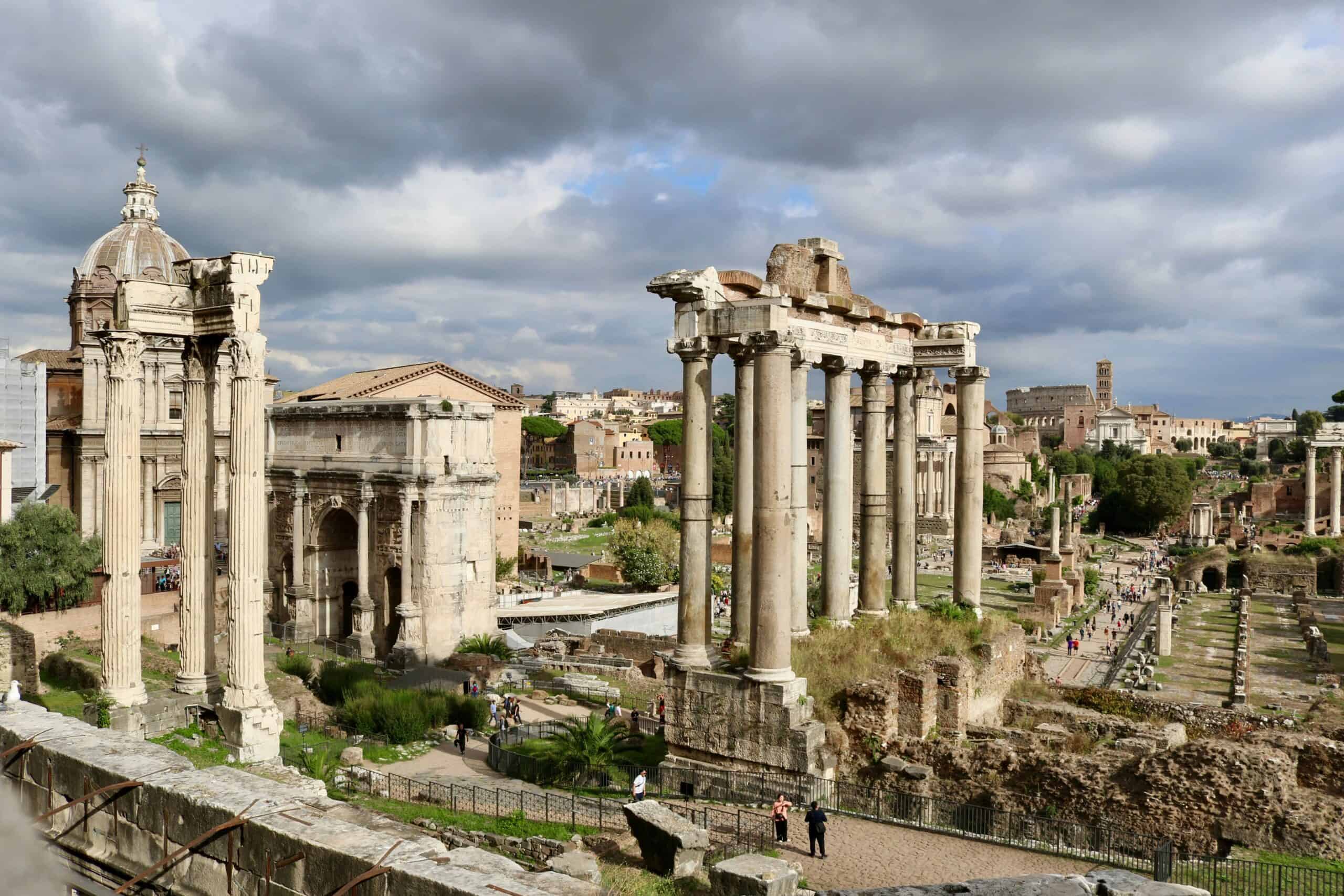
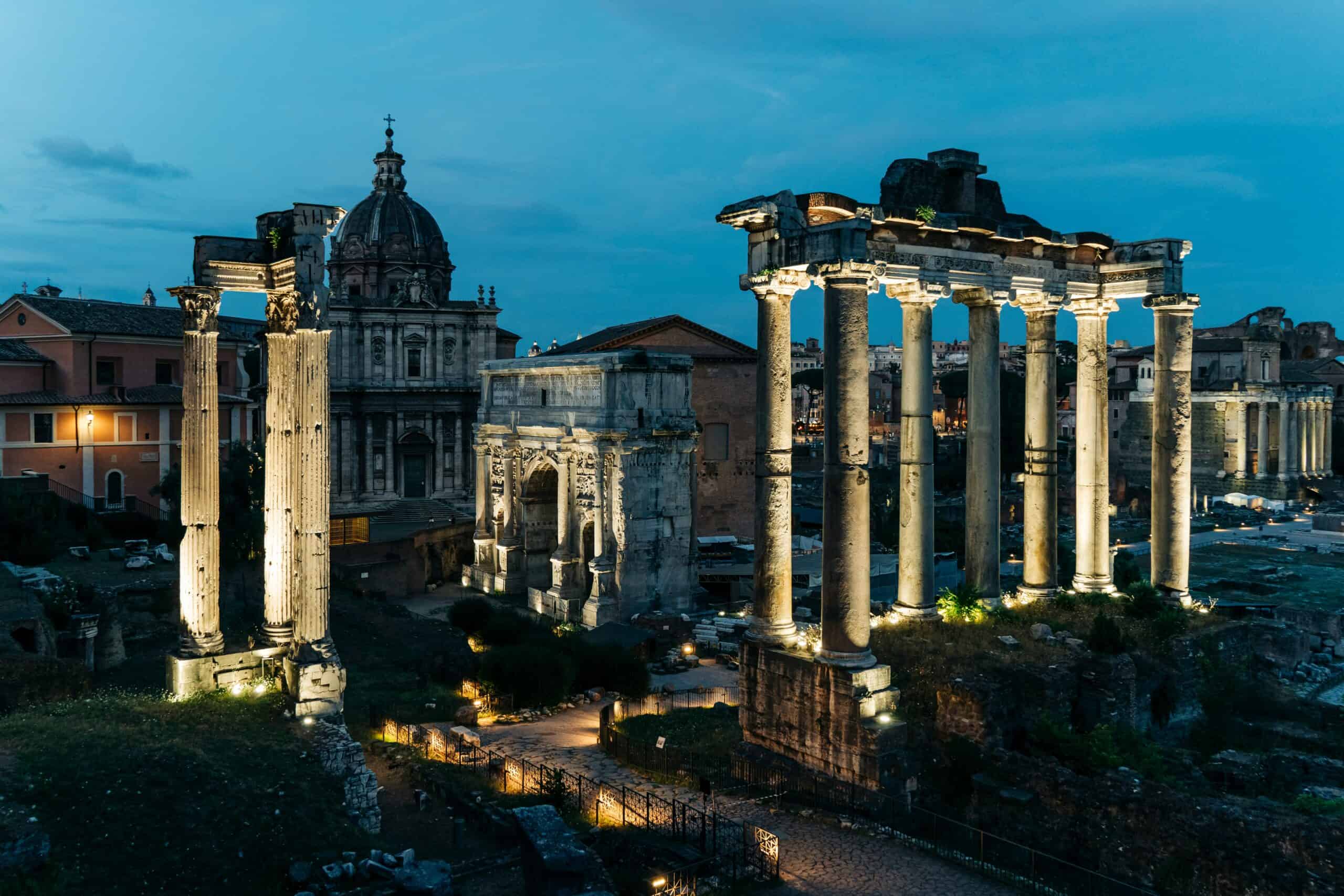
This is one of the best anchors for starting your route. It stands along the Via Sacra and immediately gives your walk a sense of direction. The reliefs inside are historically important and visually memorable, so do not rush past it just because it looks like a gateway.
2. Curia Julia
The Senate House is one of the easiest structures for first-time visitors to understand. That clarity matters. When everything around you feels fragmented, the Curia gives your imagination something stable to hold onto. It is where the Forum becomes political, not just scenic.
3. Temple of Saturn
The surviving columns create one of the classic Forum silhouettes. It is photogenic, yes, but more importantly it reminds you that temples here were tied directly to state identity and finance, not just worship in an isolated spiritual sense.
4. Basilica of Maxentius and Constantine
This is where the scale of Roman engineering becomes obvious. The remaining arches feel massive even in ruin. It is one of the easiest places to grasp the ambition of imperial architecture.
5. Temple of Antoninus and Faustina
This site is especially striking because of the way later Christian reuse interacts with the ancient structure. It is one of the clearest reminders that Rome is a city of continuities, not neatly separated time periods.
6. Temple of Vesta and House of the Vestals
If you want a softer contrast to the heavy political symbolism elsewhere, this area adds a different emotional tone. It gives the Forum a more human and ritual dimension.
The cultural experience most guides skip
The Forum is not just important because famous rulers passed through it. It matters because it shows how public life in Rome was staged. Power was visible. Ritual was visible. Law was visible. Architecture was part of the message.
That is why the site feels richer when you stop asking, “What building is this?” and start asking, “What role did this space play in convincing people that Rome was ordered, sacred, and permanent?” I find that question makes the whole area sharper and far less overwhelming.
There is also something emotionally effective about seeing collapse and endurance in the same frame. Broken columns, reused stone, Christian adaptation, excavation lines, and modern visitors all overlap here. Few places in Rome communicate historical continuity so directly.
Recommended walking route
- Start at the Arch of Titus. This gives you orientation and a strong visual entry point.
- Follow the Via Sacra westward. Do not hurry this section. Let the route do the storytelling for you.
- Pause at the Basilica of Maxentius area. This is where scale and engineering stand out most clearly.
- Continue toward the Temple of Antoninus and Faustina and nearby central Forum remains.
- Visit the Curia Julia. This is one of the best places for mentally reconstructing civic life.
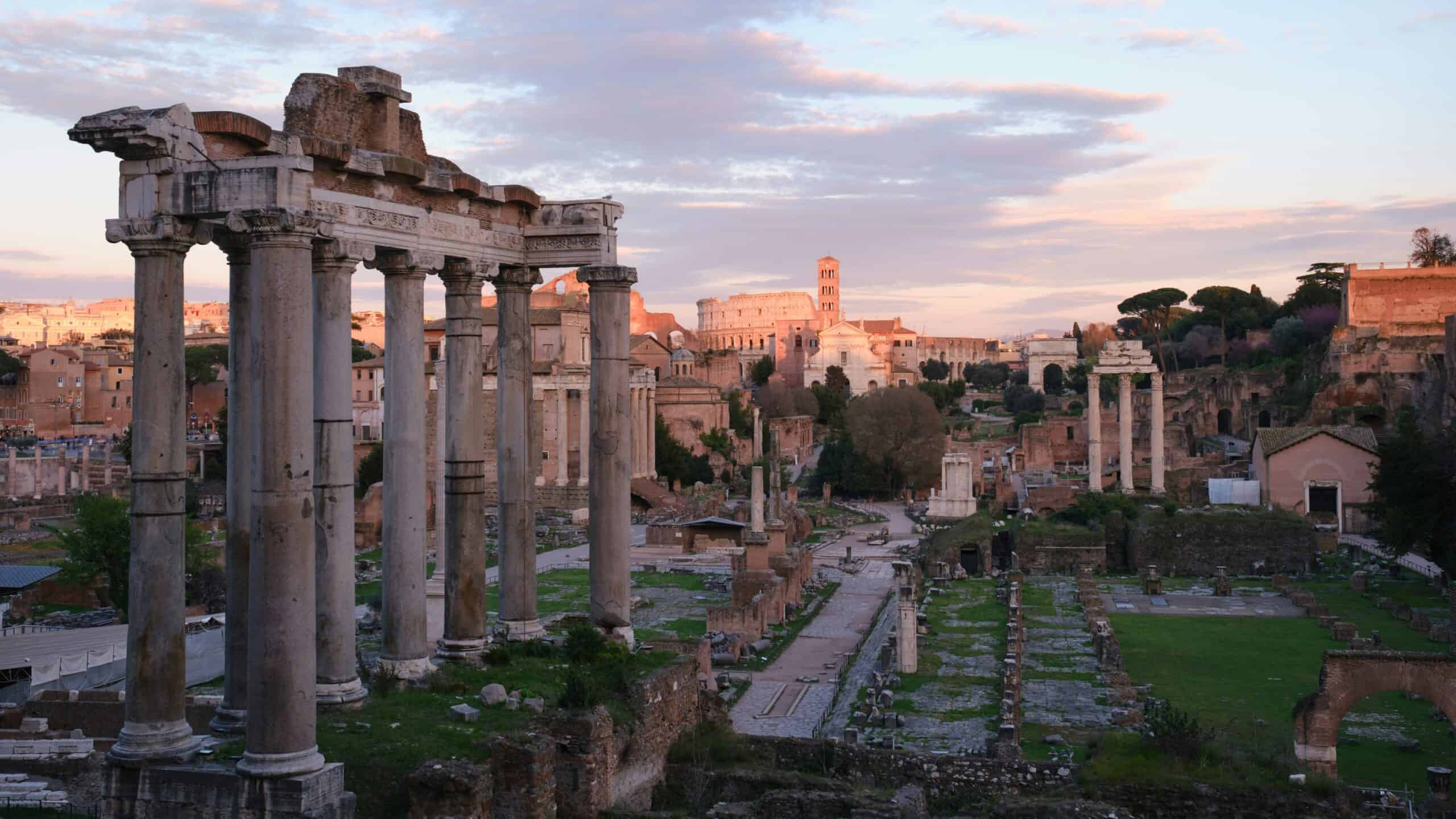
- Finish near the Temple of Saturn and western Forum zone. The visual payoff here is excellent.
- Continue uphill to Palatine Hill if your energy is still good. The elevated views help the Forum layout make sense.
Practical tips that really help
- Wear shoes with grip. Parts of the route are uneven, sloped, or polished smooth by heavy foot traffic.
- Carry water even outside peak summer. The exposure can be surprisingly draining.
- Download or screenshot your ticket details before arrival.
- Do not assume the Forum is visually self-explanatory. A simple route plan makes the visit much better.
- If photography matters, morning usually gives cleaner light and fewer people blocking major sightlines.
- Build in margin for Palatine Hill. Many visitors think they will “just pop up there,” then realize they are already tired.
What to combine with the Roman Forum
Palatine Hill is the obvious pairing because it adds context and views. Looking down from above helps the Forum feel less fragmented. The Colosseum adds spectacle and narrative contrast, especially if you want to understand public performance versus public governance.
If your Rome schedule is broader, it also helps to compare the Forum day with lighter city experiences elsewhere in Italy. For example, a more scenic waterfront pace appears in Poetto Beach in Cagliari, while a very different kind of historic urban atmosphere comes through in the Rialto Bridge Venice guide and the Bridge of Sighs Venice guide. For mountain-scale contrast, the Tre Cime Dolomites guide shows a completely different side of Italy.
Roman Forum vs Colosseum vs Palatine Hill
| Place | Best for | Feeling | Time needed |
|---|---|---|---|
| Roman Forum | History depth, route-based exploration, political and civic context | Layered, reflective, archaeological | 2 to 2.5 hours |
| Colosseum | Iconic visuals, first-time Rome excitement | Dramatic, concentrated, theatrical | 1 to 1.5 hours |
| Palatine Hill | Views, imperial residence context, breathing room | Open, scenic, elevated | 1.5 to 2 hours |
Who should prioritize the Roman Forum
This site is especially worth prioritizing if you enjoy ancient history, urban archaeology, slow sightseeing, or places that reward interpretation rather than instant spectacle. It is also ideal for return visitors to Rome who want a deeper experience beyond landmark photography.
If you dislike heat, uneven walking surfaces, or long open-air visits with limited shade, you should still go, but you will want a smarter time slot and lighter expectations. The Forum is rewarding, but it is not effortless.
FAQ
How long does it take to visit the Roman Forum?
Most travelers need around 2 to 2.5 hours for a satisfying Forum visit. Add more time if you read signage carefully, pause for photos often, or continue onto Palatine Hill.
Is the Roman Forum included with Colosseum tickets?
In practice, yes, many official ticket products combine the Colosseum, Roman Forum, and Palatine areas, but always check the exact ticket type and access conditions before purchase.
What is the best time of day to visit?
Early morning is usually best for cooler temperatures and easier movement. Late afternoon can also be beautiful, especially for softer light.
Should I visit the Roman Forum before or after the Colosseum?
If possible, visit the Forum when your energy is still high. Many people appreciate it more before fatigue sets in.
Is the Roman Forum difficult to walk?
It is manageable for many visitors, but surfaces are uneven and the site is spread out. Good footwear makes a noticeable difference.
Can I do the Roman Forum quickly in under an hour?
You can pass through it quickly, but that usually turns a major historic site into background scenery. It is much better with at least 90 minutes to 2 hours.
Is the Roman Forum worth it for travelers who are not history experts?
Yes, as long as you approach it as a walk through the real center of ancient Rome rather than a checklist of ruins. The narrative matters more than memorizing names.
Continue planning your Italy trip
Official and authoritative links
Roman Forum map
Final thoughts
The Roman Forum is where ancient Rome becomes understandable. Not simplified, but understandable. The site asks for patience, curiosity, and a little imagination, and it rewards all three. For travelers who want more than iconic photos, this is one of the most important places in the city.
If you build your Rome day around the Forum instead of squeezing it in as an afterthought, you will probably leave with a much stronger sense of what the city once was and why it still feels so powerful now.