Temple of Literature: What It Actually Feels Like (Quiet, Slow & Unexpected)
📜 Wisdom • Architecture • 2026 Updated
Temple of Literature Hanoi is one of the few places in the capital where the city’s noise seems to stop at the gate. I expected a calm historical site. What I actually found was a space that felt disciplined, symbolic, and strangely emotional—less like a garden for tourists and more like a monument to how seriously Vietnam has treated education for nearly a thousand years.
If you only know Hanoi through traffic, cafés, and the Old Quarter, this place resets your rhythm. It is slower, quieter, and much more meaningful than it first appears. For 2026 travelers, it remains one of the best cultural stops in the city precisely because it does not try to entertain you. It invites you to observe.
Search Intent: What This Guide Solves
This guide is for travelers asking: Is Temple of Literature Hanoi worth visiting? What should I see inside? What time should I go? How long do I need? Is it better than the Mausoleum for a first cultural stop? If that is exactly where you are, this page is built for you.
Quick Summary
Why This Place Matters
In Hanoi, some landmarks project power. The Temple of Literature Hanoi projects something quieter and, in a way, more enduring: the belief that knowledge deserves ceremony. Founded in 1070 and closely tied to Vietnam’s earliest national university tradition, the site represents a version of national identity built not on spectacle, but on study, discipline, and merit. :contentReference[oaicite:1]{index=1}
That is what struck me most. The place does not feel like a “top attraction” in the usual sense. It feels like a space where achievement was once filtered, recorded, and honored. Even if you know almost nothing about Confucian education or imperial examinations, the layout still communicates that message. Courtyard by courtyard, the site guides you inward as if scholarship itself were a sacred process.
What It Actually Feels Like
I made a small mistake the first time: I treated it like a quick stop between bigger Hanoi sights. That mindset lasted maybe five minutes.
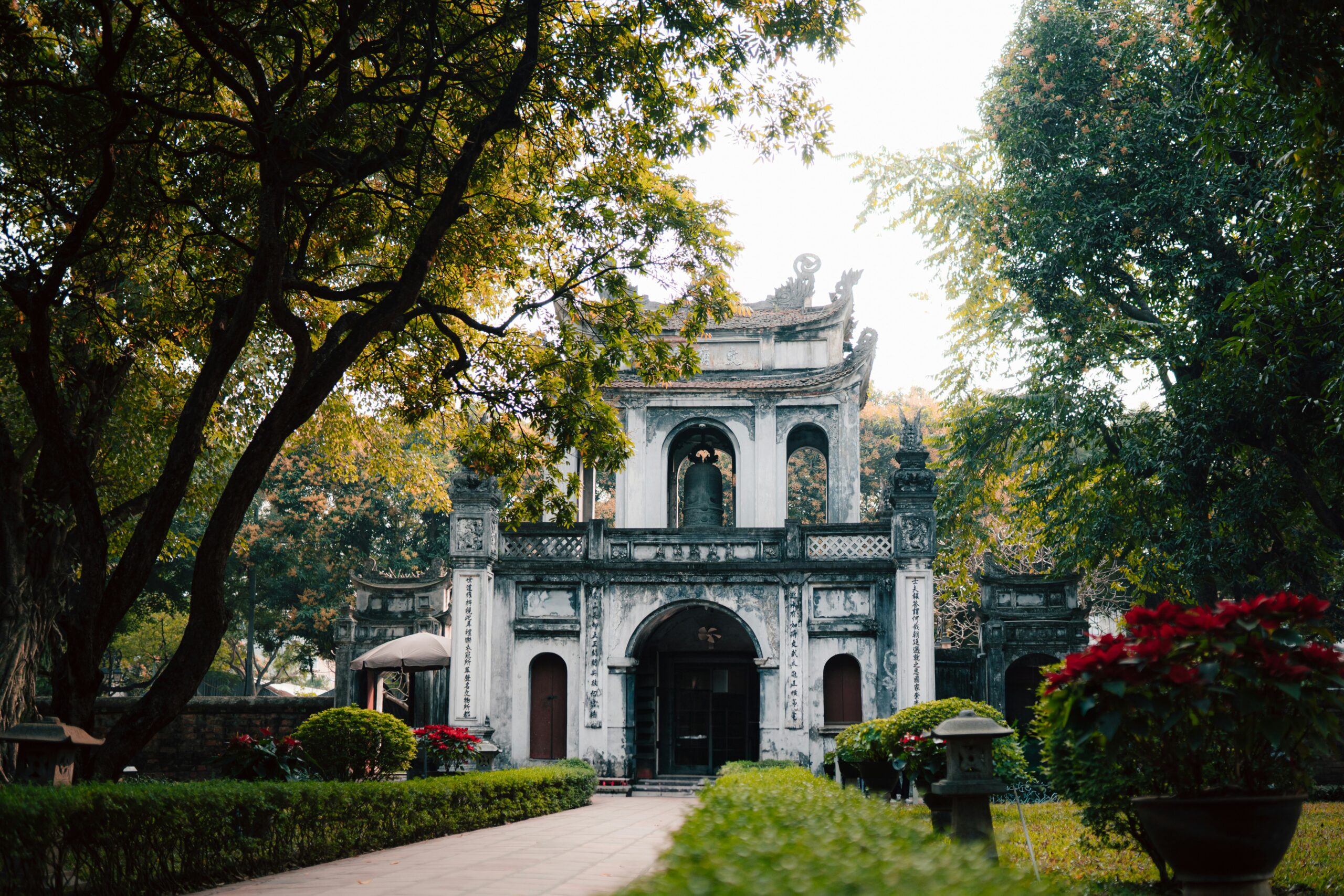
Once I passed through the first gate, the city dropped away faster than I expected. No horn noise. No urgency. Just trees, stone paths, red timber, and the soft rhythm of people moving slower than usual. Instead of rushing deeper, I noticed that everyone who seemed to be enjoying the place was doing the opposite—pausing, reading, sitting, and letting each section settle before moving on.
That was the real shift. Temple of Literature does not reward speed. It rewards attention. The more I slowed down, the more the space started to make sense: the balance of the courtyards, the way the pond interrupts the route, the almost ritual feeling of moving from public space into something more selective and more reverent.
“This isn’t a place you ‘do’ quickly. It’s a place that quietly teaches you how to move through it.”
That is why I would not sell it as “beautiful and peaceful” only. It is that, yes. But it also carries the pressure of old ambition. You can feel that generations of students once approached education here not as a lifestyle choice, but as a route to legitimacy, service, and status.
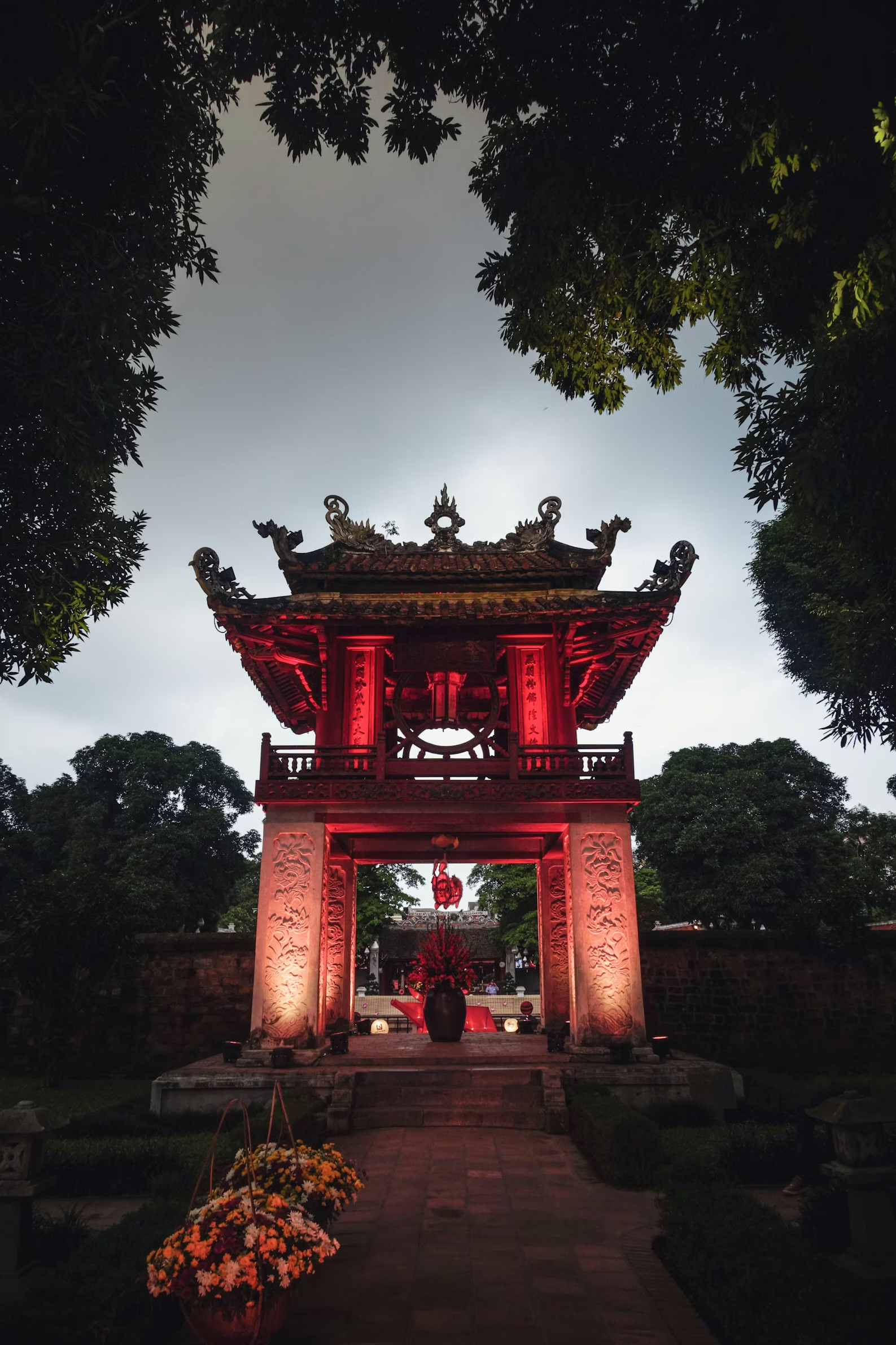
Visualizing History: The Gate of Great Success
Architecturally, the star of the visit is Khue Van Cac, the Pavilion of the Constellation of Literature. It is one of those structures that instantly anchors the whole site because it feels symbolic even before you know the details. The circular windows, balanced proportions, and elevated pavilion form create a visual logic that fits the scholarly identity of the complex perfectly.
It is also one of the reasons this site photographs so well. Unlike many heritage sites that look strongest only from one angle, Temple of Literature keeps rewarding you as you move. Rooflines, gates, water, trees, and brick paths constantly reframe the space without breaking its calm.
The famous 82 Doctoral Stelae are another reason the place matters beyond aesthetics. These inscriptions record the names and details of successful doctoral laureates from the imperial examinations and are recognized under UNESCO’s Memory of the World framework. They are not just decorative stone objects. They are archival memory in physical form. :contentReference[oaicite:2]{index=2}
Key Visitor Info at a Glance
The Five Courtyards: A Step-by-Step Way to Read the Site
If you walk through Temple of Literature too quickly, the complex can blur into one elegant historical garden. That is a waste. The five-courtyard structure is part of the meaning, and each section feels like a different level of progression.
- The Opening Courtyards: These spaces prepare your pace. They are calmer, greener, and more transitional than dramatic. Their job is to separate you from the city.
- The Well of Heavenly Clarity: This is where the complex starts to feel intellectually symbolic rather than just scenic. The water and symmetry create a reflective pause at the center of the visit.
- The Doctoral Stelae Zone: This is the section I would never rush. The 82 turtle-mounted stone records give the place historical density. They turn achievement into something literal and visible. :contentReference[oaicite:3]{index=3}
- The Inner Worship Areas: These spaces change the mood again. The site stops feeling like an educational park and starts feeling like a moral and ceremonial landscape.
- Thai Hoc / Imperial Academy Area: This final section brings the institutional idea together. If you have made it here without rushing, the site feels complete rather than fragmented.
Strategic Transport: Arriving Like a Local
The Temple of Literature is easier to reach than it first looks on the map. That said, the way you arrive changes the mood of the visit.
- The ride-hailing play: From the Old Quarter, a quick ride is often the most efficient option. Using inDrive or another app-based option keeps pricing calmer than improvised curbside decisions.
- The walking option: If the weather is mild and it is still early, walking over from Hoan Kiem Lake can actually improve the transition. You arrive mentally slower.
- The connectivity check: Keep your data active before you leave. For travelers sorting out local navigation, our Roamless eSIM review and international eSIM guide can help.
Temple of Literature vs. Ho Chi Minh Mausoleum
🦊 Insider Hacks for 2026 Travelers
- Go early or accept the compromise: the site is still pleasant later, but it loses some of its meditative quality once group traffic builds.
- Do not touch the turtles: many travelers still treat this like a “luck” ritual photo stop. It is better to keep distance and treat the stelae as documentary heritage, not props.
- Do not stack too many heavy museums after this: Temple of Literature works best when you leave some mental room around it.
- Pair it smartly: the nearby Fine Arts Museum is a strong cultural follow-up if you still have focus left.
- My honest tip: this site is much better when you give yourself permission to sit for ten minutes and do nothing. That tiny pause changes the whole experience.
Frequently Asked Questions
Keep Building Your Hanoi Route
Final Verdict
The Temple of Literature Hanoi is not loud, dramatic, or overwhelming. That is exactly why it works.
In a city that can feel fast and crowded, this is where Hanoi becomes legible in a different way. Not through politics. Not through nightlife. Through scholarship, order, memory, and quiet ambition. If the city starts to feel too intense, this is one of the best places to reset without losing depth.
Updated: March 2026 • Rebuilt into full guide format with structure, comparison, FAQ, internal links, and higher dwell-time flow.