JP
Meiji Jingu Shrine Tokyo Travel Guide: Sacred Forest Walk, Access, and Visitor Tips
Meiji Jingu Shrine Tokyo is one of the most peaceful spiritual landmarks in Japan, tucked inside a vast man-made forest just steps from the busy fashion streets of Harajuku.
Search Intent
This guide is for travelers who want to know whether Meiji Jingu Shrine Tokyo is worth visiting, what it actually feels like to walk through the forest, how long to stay, how to get there, when to go, what rituals to expect, and how it compares with other major shrine and temple experiences in Tokyo.
Quick Summary
- Location: 1-1 Yoyogi-Kamizono-cho, Shibuya City, Tokyo
- Best known for: A grand Shinto shrine surrounded by an enormous sacred forest in central Tokyo
- Why it stands out: It feels dramatically quieter and more spacious than most city attractions
- Best time to visit: Early morning for the calmest atmosphere, or late afternoon for softer light
- Recommended stay: About 1.5 to 2.5 hours if you include the main approach, shrine courtyard, and nearby Harajuku area
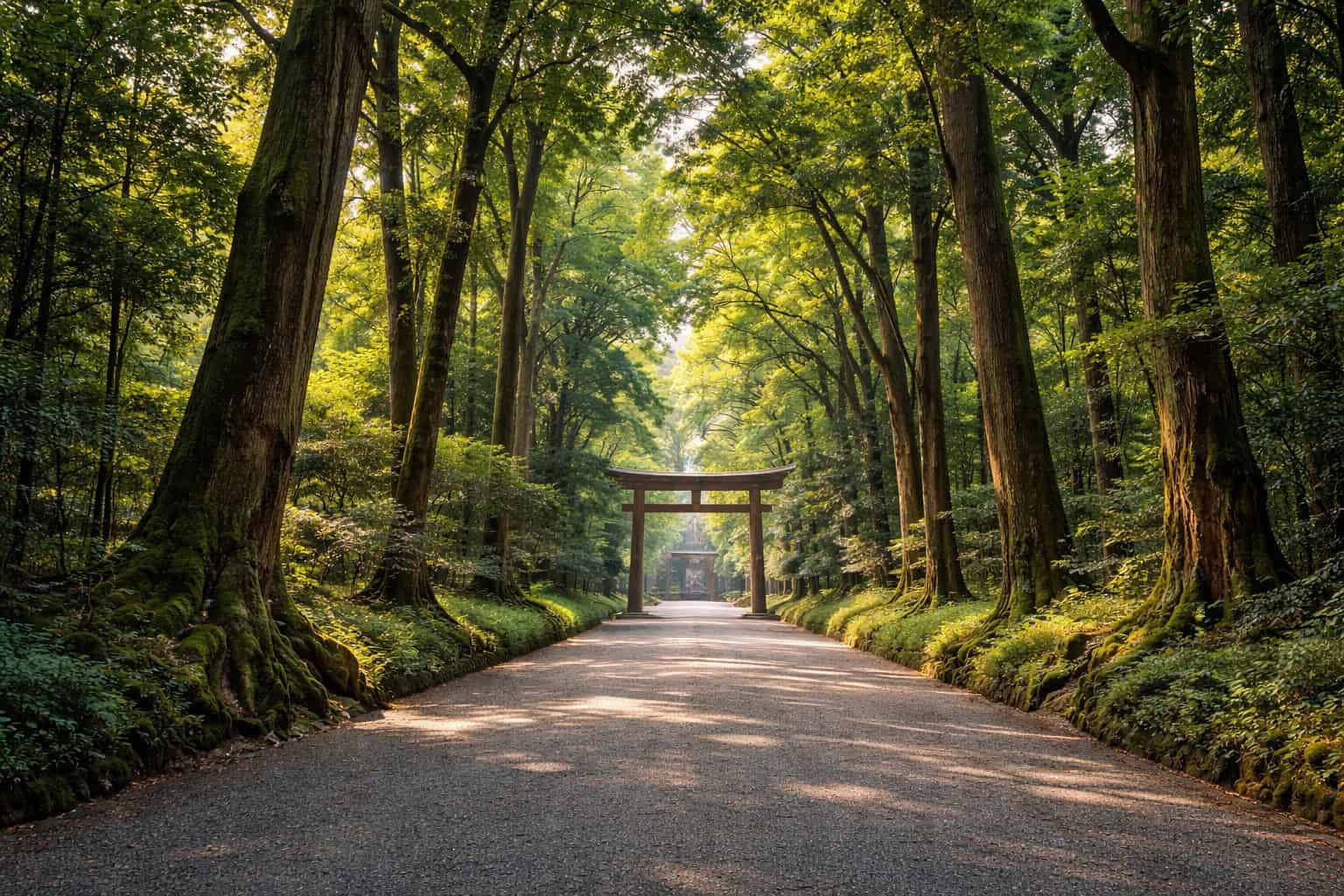
Meiji Jingu Shrine Tokyo is one of the rare places in the city where the pace of Tokyo seems to collapse in on itself and go quiet. A few minutes earlier, you can be standing among commuters, shopping crowds, and traffic around Harajuku. Then you step past the giant torii gate, and suddenly the air feels cooler, the sound softens, and the path begins to pull you inward instead of forward.
That contrast is the real reason people remember this place. Plenty of attractions in Tokyo are visually impressive, but Meiji Jingu changes your mood almost immediately. I remember the first time I walked in expecting a quick shrine stop before moving on to nearby neighborhoods. Instead, I slowed down without meaning to. The gravel underfoot made that dry crunching sound, the trees blocked out more of the skyline than I expected, and the city started to feel very far away for somewhere sitting right beside Harajuku Station.
It did not feel like a checklist stop. It felt like a reset.
That is also why Meiji Jingu works for many different kinds of travelers. It suits first-time visitors who want an easy cultural experience, photographers chasing framed forest paths and torii gates, couples wanting a calm break between busier neighborhoods, and repeat visitors who already know Tokyo can be exhausting when every stop is crowded and overstimulating. If you want a place that combines history, ritual, nature, and accessibility without much planning, this is one of the easiest wins in the city.
Why Meiji Jingu Shrine Tokyo Still Feels Special
Meiji Jingu is not simply an old shrine in a convenient location. It was established in 1920 to honor Emperor Meiji and Empress Shoken, and the grounds were deliberately shaped as a spiritual landscape rather than just a ceremonial site. What makes the experience unusual is the scale of that vision. The forest around the shrine is not accidental greenery. It was planned, planted, and nurtured into what is now a massive sacred woodland in the middle of Tokyo.
That context matters when you visit. You are not just walking through a park and then arriving at a shrine building. The approach itself is part of the experience. The long path through the trees creates distance from ordinary city life, and that gradual transition is one of the strongest things the site offers. In a city packed with sensory overload, Meiji Jingu feels designed to cleanse attention before you even reach the main courtyard.
Another reason it stands out is that it is approachable without feeling watered down for tourists. There is enough signage and structure for first-time visitors to feel comfortable, but the atmosphere still feels genuinely active and sacred rather than staged. You may see local visitors quietly bowing, washing hands at the purification pavilion, writing wishes on wooden ema plaques, or buying omamori charms. Sometimes, if your timing is lucky, you might even catch a traditional wedding procession crossing the shrine grounds. Those moments are not performed for visitors. You are simply allowed to witness them.
Why It Matters
If your Tokyo itinerary feels too urban, too commercial, or too rushed, Meiji Jingu Shrine Tokyo adds balance. It is one of the easiest places in the city to feel history and stillness without needing a full-day excursion.
What It Feels Like Walking Through Meiji Jingu
The first impression is not the shrine hall. It is the scale of the approach. The paths are wide, the torii gates feel oversized in a way that photographs rarely capture properly, and the tree cover changes how the light falls around you. Even on a busy day, the walkway has a surprising softness to it because people instinctively lower their voices.
What I liked most was that the calm did not feel forced. Nobody tells you to be quiet in some theatrical way. The space itself makes you want to move more slowly. You notice details you might normally ignore: the rhythm of gravel, shadows moving in the canopy, the way a gate frames the next stretch of path, or the sudden opening into the larger courtyard area.
There is also a subtle emotional shift when you reach the central precinct. The walk gives you enough time to arrive mentally, so the shrine feels more consequential when it finally appears. That pacing is one reason Meiji Jingu leaves a stronger impression than some attractions that are visually spectacular but instantly consumed.
I also think this is one of the best places in Tokyo for travelers who like atmosphere more than action. There is not a huge list of things to “do” in the usual tourist sense, and that is exactly why it works. You walk, watch, pause, and absorb. If you arrive expecting entertainment, it can feel quiet. If you arrive wanting presence, it can feel almost restorative.
History and Cultural Context
Meiji Jingu was built to commemorate Emperor Meiji and Empress Shoken, figures closely associated with Japan’s transformation during the Meiji era. The shrine became a symbolic site tied not only to the imperial household but also to the broader national story of modernization and identity.
The forest surrounding the shrine is one of its most fascinating features. More than 100,000 trees were donated from across Japan and planted with the long-term intention of creating a self-sustaining woodland. That idea alone gives the site unusual emotional weight. The forest was meant to grow into a living sacred environment over generations, and today it feels mature enough that many visitors assume it must be far older than it is.
The current buildings also carry a layered history. The original shrine structures were damaged during World War II and later reconstructed. Because of that, the site embodies both continuity and renewal, which in some ways matches the broader symbolism of Meiji Jingu itself: memory preserved, but not frozen.
Highlights You Should Not Miss
The giant torii gates
These are among the most memorable visual markers of the visit. They create a strong sense of threshold, especially on the main approach from Harajuku. In person, they feel heavier and more imposing than they do in photos.
The forested approach
This is the emotional core of the visit. Do not rush through it just to reach the main shrine. The walk is the transition that makes the main precinct meaningful.
The main courtyard and prayer area
This is where visitors bow, offer prayers, and take in the grand architecture. It is spacious, orderly, and often calmer than famous temple grounds in other parts of Tokyo.
Barrel displays and shrine details
The decorative sake barrels and wine barrels are easy to miss if you are walking too fast, but they add cultural texture and are one of the more photogenic parts of the route.
Possible wedding sightings
If you visit on a weekend, you may be lucky enough to see a Shinto wedding procession. It is one of those moments that makes the shrine feel vividly alive rather than historical in an abstract way.
Key Visitor Information
| Location | 1-1 Yoyogi-Kamizono-cho, Shibuya City, Tokyo |
| Main Grounds Admission | Free |
| Opening Hours | Daily, generally sunrise to sunset |
| Best Visit Window | Early morning for quiet paths, or late afternoon for softer light |
| Recommended Stay | 1.5 to 2.5 hours |
| Nearest Stations | Harajuku Station, Meiji-jingumae Station, and also accessible from Yoyogi or Sangubashi sides depending on your route |
| Inner Garden | Separate maintenance contribution required |
Travel Tip
I would avoid making this your midday “gap filler” between crowded shopping stops. Meiji Jingu works best when you arrive with a little time and patience. Give it breathing room or the calm will not fully land.
Cultural Experiences at the Shrine
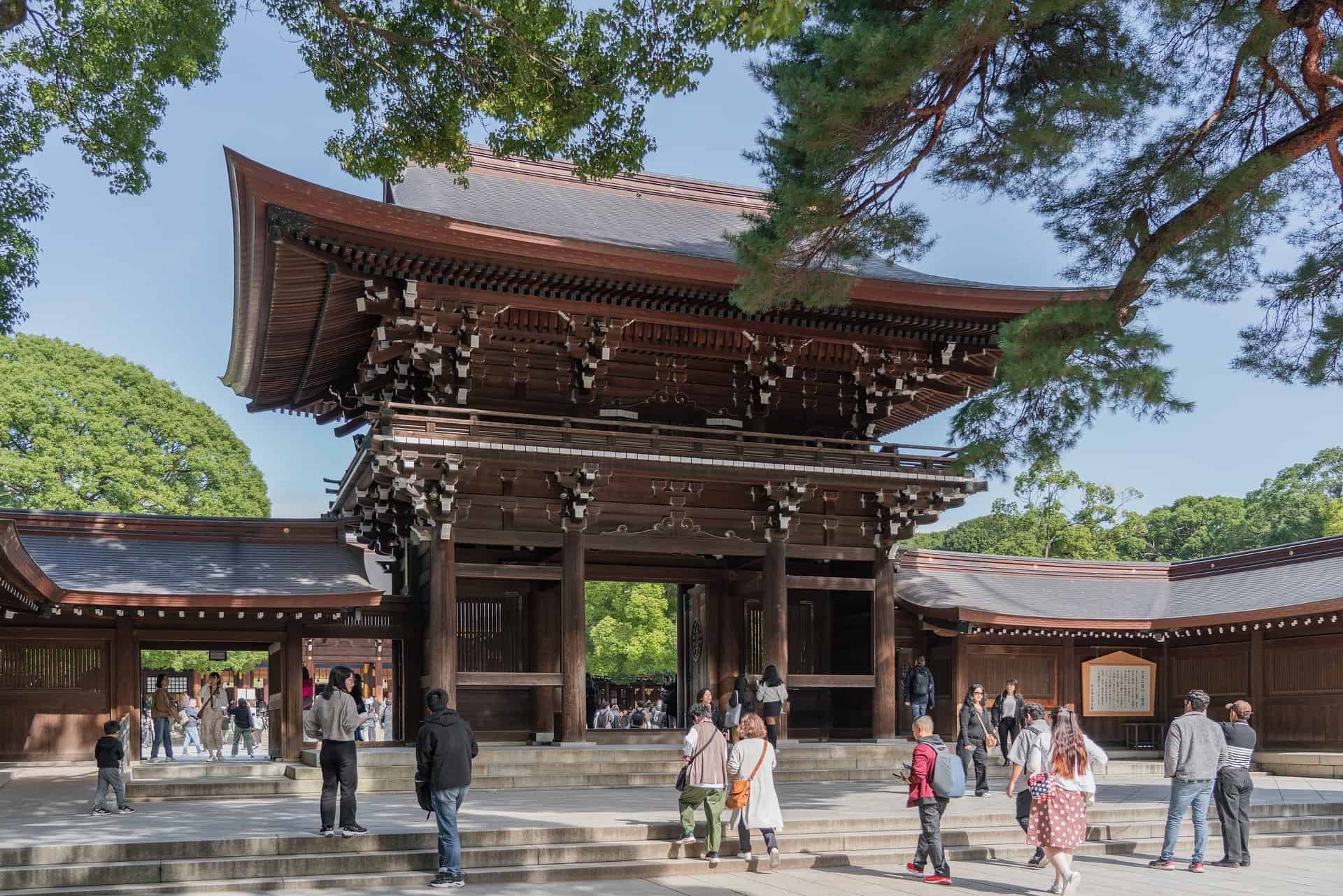
One of the best things about Meiji Jingu Shrine Tokyo is that it introduces visitors to living Shinto practices in a way that feels respectful and accessible. Before approaching the main shrine area, many visitors stop at the temizuya, the purification pavilion, where they rinse their hands and mouth with water using a wooden ladle. Even if you choose not to participate, watching the rhythm of the gesture gives you a sense of how ritual shapes movement through the site.
You will also see ema plaques where people write wishes, omamori charms associated with good fortune or health, and visitors offering prayers in front of the main hall. None of this is presented as spectacle. It happens quietly, naturally, and continuously. That makes it more powerful.
I made the mistake on an early visit of treating the courtyard as mainly a photo stop. After a few minutes, I realized the space makes much more sense when you stop performing the visit for your camera and start observing the way other people move through it. The shrine became more meaningful the moment I stopped trying to capture every angle.
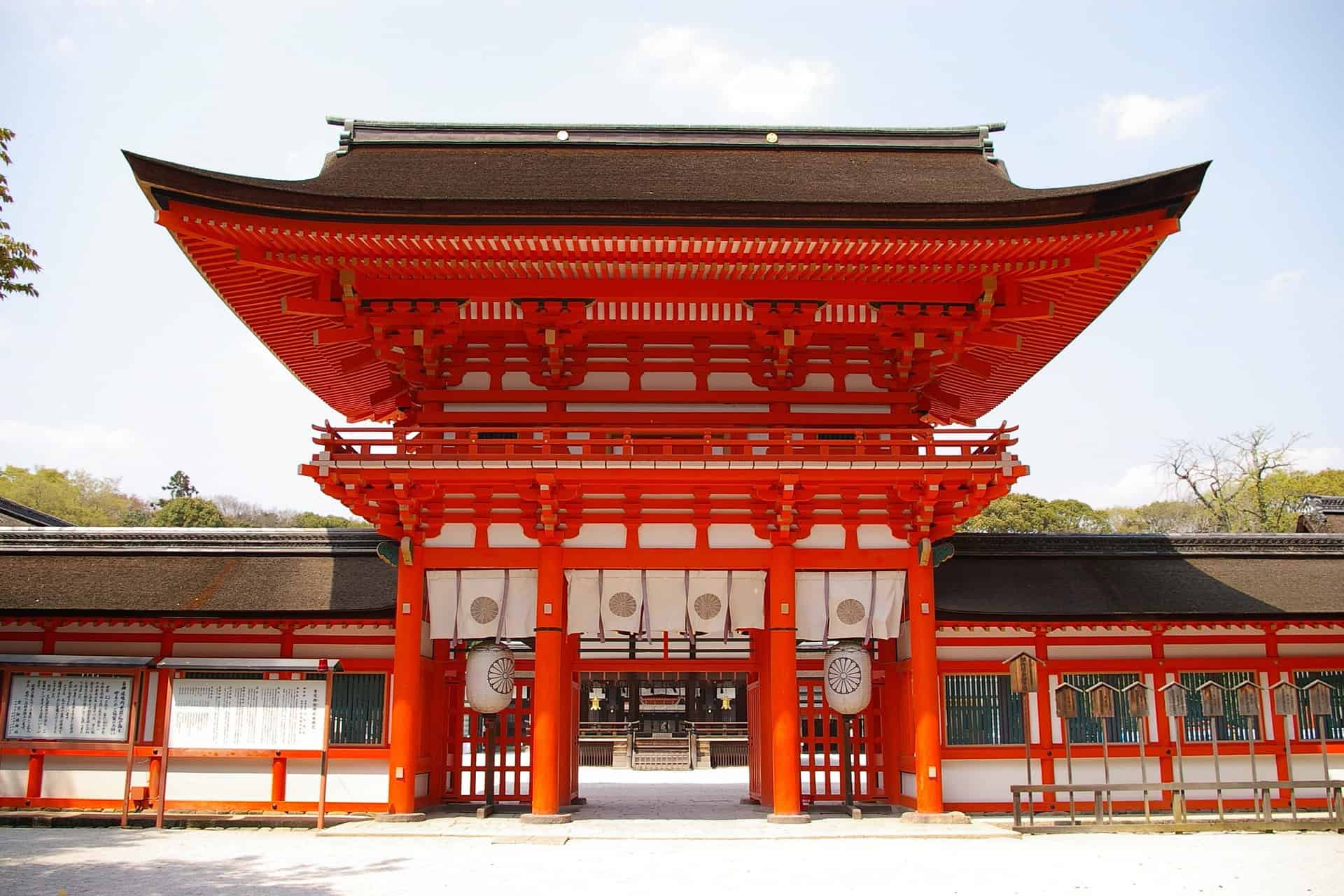
The iconic torii gate entrance of Meiji Jingu Shrine in Tokyo marks the transition from city streets to sacred forest paths.
How to Visit Meiji Jingu Smoothly
The easiest route for most first-time visitors is via Harajuku Station or Meiji-jingumae Station. That makes Meiji Jingu an extremely practical stop, especially if you are already exploring Harajuku, Omotesando, or Yoyogi Park on the same day.
- JR Yamanote Line → Harajuku Station
- Tokyo Metro Chiyoda/Fukutoshin Lines → Meiji-jingumae Station
- Alternative access points also connect through Yoyogi and Sangubashi sides
A simple route is to arrive from Harajuku, walk the main approach, spend time in the central shrine area, and then continue toward Yoyogi Park or back into Omotesando depending on your energy. This makes the shrine fit nicely into a half-day plan rather than forcing a standalone trip.
If you prefer quieter visits, aim for early morning. If you want a more atmospheric but still manageable experience, late afternoon can be beautiful. I would avoid national holidays or the New Year period unless crowds are part of the experience you want, because the shrine is especially famous for major seasonal visits.
Practical Walking Advice
The paths are easy, but they are longer than some people expect from the station entrance to the main precinct. Comfortable shoes matter more here than people think, especially if you are combining the shrine with Harajuku, Omotesando, or Yoyogi Park on the same day.
Nearby Attractions That Pair Well With Meiji Jingu
One of the best reasons to visit Meiji Jingu is how easily it connects to other neighborhoods and attractions. You can build a satisfying half-day or full-day route without much transit effort.
Harajuku and Takeshita Street
If you want contrast, this is the most immediate shift possible. One moment you are in a serene forest, and minutes later you are in one of Tokyo’s loudest and most youth-oriented shopping streets.
Omotesando
For travelers who prefer stylish cafés, architecture, and a more polished atmosphere, Omotesando works well after the shrine.
Yoyogi Park
This is the easiest extension if you want to keep the day green, open, and less commercially focused.
Shibuya
If you want to end with energy, crossing into Shibuya after Meiji Jingu gives you another dramatic mood change.
Meiji Jingu vs Other Shrine and Temple Stops in Tokyo
| Place | Best For | Atmosphere | Area |
|---|---|---|---|
| Meiji Jingu | Forest walk, spiritual calm, easy first shrine visit | Spacious, serene, meditative | Harajuku / Shibuya |
| Senso-ji | Classic temple atmosphere, street market energy | Bustling, historic, highly social | Asakusa |
| Nezu Shrine | Quieter local feel, hidden-gem atmosphere | Intimate, slower, less monumental | Bunkyo |
| Hakone Shrine | Lake scenery, day trip atmosphere, iconic torii photos | Scenic, spiritual, excursion-like | Hakone |
If I had to sum it up simply, Senso-ji is the better choice for visual energy and old-town excitement, while Meiji Jingu Shrine Tokyo is better for atmosphere, space, and emotional reset.
Honest Drawback
If you only care about dramatic interiors, dense historical artifacts, or nonstop activity, Meiji Jingu can feel understated. Its strength is not intensity. Its strength is quiet scale.
Who Should Visit Meiji Jingu Shrine Tokyo
- First-time Tokyo travelers wanting an easy but meaningful cultural stop
- Visitors staying near Shibuya, Harajuku, or Shinjuku who want a low-effort half-day addition
- Photographers who prefer atmosphere and framing over dense crowds
- Travelers who need a calmer counterpoint to busy Tokyo neighborhoods
- Repeat visitors who have already done the main commercial districts and want something more reflective
FAQ
Is Meiji Jingu free to visit?
Yes. The main shrine grounds are free to enter. Some areas such as the Inner Garden have a separate maintenance contribution.
How long should I spend at Meiji Jingu?
Most visitors should plan for around 1.5 to 2.5 hours. If you walk slowly, take photos, and linger in the courtyard, you may want a bit longer.
What is Meiji Jingu famous for?
It is famous for its vast sacred forest, monumental torii gates, connection to Emperor Meiji and Empress Shoken, and its surprisingly tranquil atmosphere in central Tokyo.
What station is closest to Meiji Jingu Shrine Tokyo?
Harajuku Station is the easiest choice for many travelers, and Meiji-jingumae Station is also very convenient depending on your route.
When is the best time to visit?
Early morning is best for the quietest atmosphere. Late afternoon is also beautiful, especially if you want softer light and a less rushed feel.
Can you see a traditional wedding here?
Sometimes, yes. Weekend visits can occasionally coincide with Shinto wedding processions, though there is no guarantee.
Is Meiji Jingu worth visiting if I only have a short Tokyo itinerary?
Yes. It is one of the easiest major cultural sites to fit into a short stay because of its central location and straightforward access.
Should I visit Meiji Jingu or Senso-ji if I can only choose one?
Choose Meiji Jingu if you want calm, greenery, and reflective atmosphere. Choose Senso-ji if you want busier temple energy, shopping streets, and a more crowded classic Tokyo scene.
Related Reads on Trip Nexus
Official and Authoritative Sources
Google Map
Final Thoughts
Meiji Jingu Shrine Tokyo is not the loudest, flashiest, or most dramatic attraction in the city, and that is exactly why it stays with people. It offers a kind of depth that busy itineraries often miss. You are not there to be overwhelmed. You are there to slow down enough to notice a different side of Tokyo.
I think that is why the place lingered in my memory longer than I expected. The walk in was gentle, the shrine itself felt grounded rather than theatrical, and the return to Harajuku afterward made the contrast even sharper. Few places in Tokyo let you move between those two moods so naturally.
If you want one shrine experience in Tokyo that feels accessible, meaningful, and genuinely calming, Meiji Jingu Shrine Tokyo is one of the safest and most satisfying choices you can make.