Naganeupseong Folk Village Suncheon Travel Guide 2026: What Makes It Unique, What to Do, and How to Visit
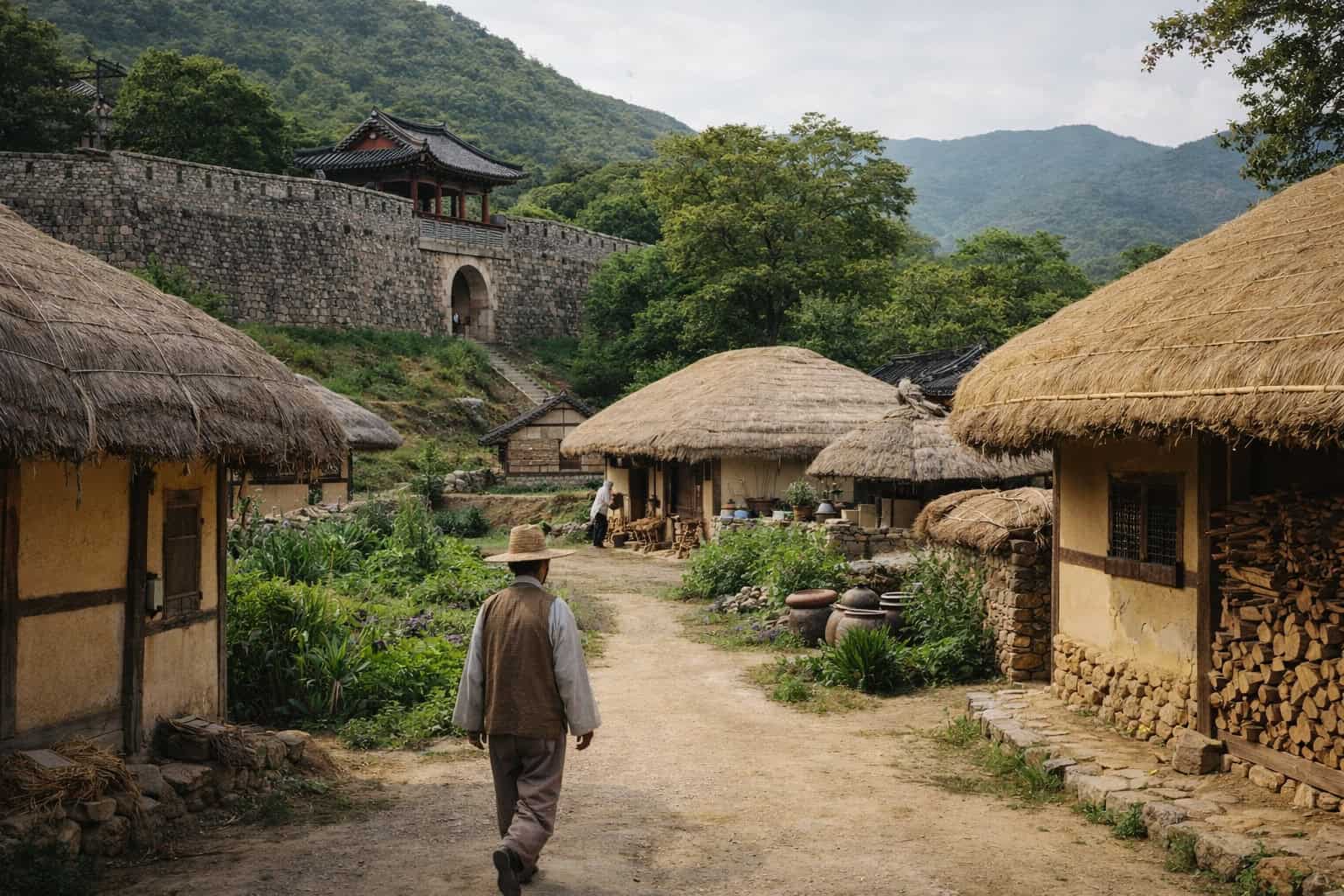
Naganeupseong Folk Village in Suncheon is one of the rare places in South Korea where Joseon-era architecture, village life, fortress walls, and living heritage still exist together in a way that feels real rather than staged.
Quick Summary
- Naganeupseong is not just a display village. It is a real historic settlement where residents still live inside a walled Joseon-era town.
- The fortress walls, thatched-roof houses, wells, lanes, and agricultural rhythm make it feel more authentic than many better-known folk attractions.
- Official adult admission is KRW 4,000, and ticketing hours vary by season, so timing matters if you want a relaxed visit.
- A stay of 2 to 3 hours works well for most travelers, but longer visits are rewarding if you enjoy crafts, photography, and slower cultural travel.
- It pairs especially well with Suncheon Bay Wetland Reserve and other Suncheon cultural sites for a fuller day trip.
Why Visit Naganeupseong Folk Village
There are many historic villages in Asia that look beautiful in photographs but feel strangely empty in person. Naganeupseong Folk Village is memorable for the opposite reason. It does not feel preserved in a glass case. It feels inhabited. The walls, paths, roofs, and courtyards are historic, but the atmosphere is not frozen. That living quality is what makes the place stand out.
Unlike reconstructed folk parks that were built mainly for tourism, Naganeupseong carries a stronger sense of continuity. People still live here. Gardens still matter. Daily routines still shape the mood of the village. As a visitor, you do not just observe architecture. You sense the relationship between architecture and life.
That difference changes the emotional tone of the visit. Instead of thinking, “This is a nice old village,” you start to feel that you are walking through a historical structure that still has social meaning. For travelers interested in Korean culture beyond Seoul palaces, cafés, and modern city districts, Naganeupseong offers one of the most grounded experiences in the country.
What It Feels Like to Walk Through Naganeupseong
The first thing you notice is scale. Naganeupseong does not overwhelm you with monumental architecture the way a palace or temple complex might. Instead, it draws you in through intimacy. The stone lanes are narrow, the walls feel human-sized, the roofs sit low against the sky, and the village unfolds gradually rather than dramatically.
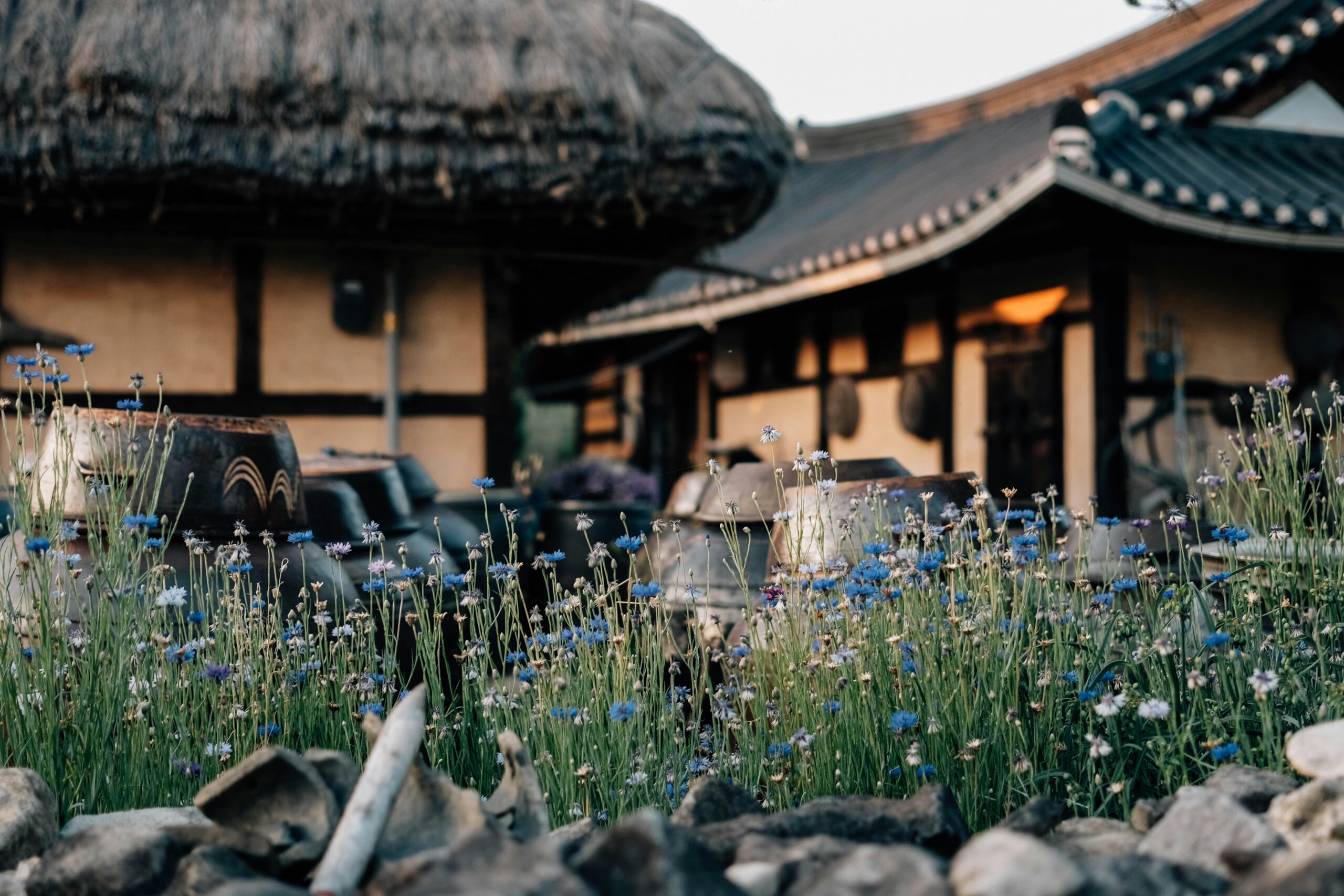
That slower reveal is part of the charm. You walk past earthen walls, vegetable patches, wooden gates, and traditional roofs that seem to sink naturally into the landscape. Then small details begin to matter more: a straw mat drying in the sun, smoke or cooking smells drifting from a courtyard, handmade objects resting under eaves, or the feeling that you have stepped into a place where modern urgency has lost its authority.
I think this is why Naganeupseong works best for travelers who are willing to pay attention rather than rush. If you sprint through it in forty minutes, you may leave thinking it is simply “a pretty traditional village.” If you walk more slowly, pause, and let the ordinary parts register, the village becomes much richer.
It also feels especially good in softer weather. Morning light makes the walls and roofs feel textured and calm, while late afternoon adds warmth and shadow. In crowded midday moments, it can still be beautiful, but the quieter edges of the day help the place feel more alive and less touristic.
Key Visitor Information
| Location | Nagan-myeon, Suncheon, Jeollanam-do, South Korea |
| Type | Living folk village and historic fortress town |
| Historical Origin | Joseon Dynasty, with a preserved administrative town and fortress structure |
| Adult Admission | KRW 4,000 (official individual adult rate) |
| Recommended Time | 2–3 hours |
| Ticketing Hours | Seasonal: roughly 09:00–17:30 in winter, 09:00–18:00 in shoulder seasons, and 08:30–18:30 in peak warmer months |
| Best Visit Style | Slow walk, cultural browsing, photography, crafts, and paired Suncheon day trip |
| Special Note | This is often discussed in connection with Korea’s historic town preservation and UNESCO Tentative List context, but it is not an official UNESCO World Heritage Site |
What Makes Naganeupseong Different From a Typical Folk Village
It is still a real village
This is the most important difference. Many cultural attractions reconstruct the past for visitors. Naganeupseong preserves an actual settlement where residential life and historical space still overlap.
The fortress and village exist together
The defensive wall is not just decoration. The site preserves the structure of a walled administrative town, which gives the village a stronger historical identity than a simple cluster of old houses.
Daily life is part of the atmosphere
Gardens, lanes, roofs, and craft scenes do not feel isolated from the place. They feel integrated into an ongoing community landscape.
A Walk Through a Living Joseon-Era Village
Naganeupseong was established during the Joseon period as a settlement with both administrative and defensive functions. The site’s structure reflects traditional planning principles, and even today the arrangement of houses, walls, pathways, and open spaces reveals a deep relationship between landscape and everyday life.
As you move through the village, you begin to understand that this is not only about architecture. It is about patterns of living. The low thatched roofs were shaped by climate and agricultural reality. The lanes were shaped by human movement and communal use. The walls were shaped by the practical need for protection.
That layered logic gives the village unusual depth. You are not looking at isolated old buildings; you are walking through a preserved social system. And because the site is still inhabited, the line between heritage and life stays intentionally blurred.
Some travelers prefer attractions with dramatic “wow” moments. Naganeupseong is quieter than that. Its strength is accumulation. The more details you notice, the more complete the place feels.
Hands-On Cultural Experiences
Naganeupseong is more rewarding when you participate rather than just pass through. Depending on the season and schedule, visitors may encounter traditional craft demonstrations, folk performances, food-related experiences, and educational programs linked to older village practices.
That hands-on layer matters because it stops the site from becoming purely visual. You are not only looking at thatched roofs and stone walls; you are also seeing how practical skills, communal entertainment, and domestic traditions helped sustain village life.
One of the most valuable parts of the visit is that the atmosphere often feels personal rather than stage-managed. When local explanation or demonstration happens naturally, the place becomes far more memorable than a standard museum display panel ever could.
Festivals and Seasonal Atmosphere
Naganeupseong changes character with the agricultural year, which is exactly how a real village should feel. Spring tends to bring softer light, fresher color, and a more optimistic tone. Summer can feel richer and more active, but also warmer and busier. Autumn is especially attractive because the village atmosphere deepens, and the broader southern Korea travel season becomes more comfortable. Winter strips things back and makes the village feel quieter, more textured, and in some ways more contemplative.
The folk culture festival context is also relevant here. KTO highlights the Naganeupseong Folk Culture Festival as a major event with traditional foods, performances, and folk culture programming. That makes festival timing attractive if you want a more animated version of the site, though it comes with more people and less solitude. If your goal is quiet immersion, a non-festival weekday visit may actually be better. :contentReference[oaicite:1]{index=1}
Personally, I would choose autumn for balance or spring for freshness. Winter is tempting if you care more about mood than activity.
How to Get There
From Seoul, the most practical long-distance approach is to head toward Suncheon first, usually by KTX or other rail combination depending on your starting point and timetable. From Suncheon Station, local transport or a taxi gets you to Naganeupseong much more easily than many first-time visitors expect.
If you are traveling by car, the site is straightforward to combine with a larger Suncheon itinerary. Driving gives you the most flexibility if you also want to include Suncheon Bay, nearby museums, or other Jeollanam-do countryside stops on the same day.
For most travelers, the simplest strategy is this: do not think of Naganeupseong as a standalone Seoul day trip unless you are highly motivated. It works much better as part of a Suncheon-based or southern Korea route.
Nearby Places to Explore
- Suncheon Bay Wetland Reserve: one of Korea’s best-known ecological landscapes, especially beautiful for reed fields and birdlife.
- Suncheon Open Film Set: a strong contrast to Naganeupseong, with reconstructed streets and cinematic nostalgia.
- The Deep Rooted Tree Museum: a nearby cultural stop listed in KTO’s surrounding recommendations for the area.
- Naganminsok National Recreational Forest: useful if you want to expand the day into nature and forest atmosphere. :contentReference[oaicite:2]{index=2}
Naganeupseong vs Other Korean Heritage Attractions
| Place | Best For | Main Difference |
|---|---|---|
| Naganeupseong Folk Village | Living heritage, rural rhythm, authentic village atmosphere | Feels inhabited rather than staged |
| Gyeongbokgung-style palace visits | Royal architecture and formal history | Much more monumental and urban in feel |
| Reconstructed folk parks | Family tourism and easy overview experiences | Often more performative and less organically lived-in |
| Temple sites in Korea | Spiritual atmosphere and mountain landscapes | Religious focus rather than village life focus |
Practical Travel Tips
- Go earlier if possible: the village feels more intimate before the busiest group-tour hours.
- Wear stable shoes: this is not a polished city attraction, and that is part of its charm.
- Respect private residential space: remember that this is not only a visitor set.
- Do not rush lunch planning: if you want a slower cultural day, pair the village with a meal and one nearby site rather than overloading the itinerary.
- Give yourself time to walk the walls and lanes: the village reveals itself gradually, not instantly.
- Check seasonal ticketing hours in advance: they change by period, especially between winter and warmer months. :contentReference[oaicite:3]{index=3}
Who Should Visit Naganeupseong Folk Village?
This place is ideal for travelers who enjoy culture at walking pace. If you like architecture, local life, slower photography, historical atmosphere, and destinations that feel human rather than spectacular, Naganeupseong is an excellent choice.
It is especially strong for repeat Korea visitors who want to go beyond Seoul, Busan, and the standard headline attractions. It is also a very good fit for people interested in traditional Korean settlement patterns, folk culture, or UNESCO-related heritage contexts without the pressure of a heavily commercialized mega-site.
If you only want fast, high-drama sightseeing, you may find it too subtle. But that subtlety is exactly why many thoughtful travelers end up loving it.
Related Trip-Nexus Guides
FAQ
Is Naganeupseong Folk Village a real village?
Yes. That is one of its biggest strengths. It is not simply a reconstructed set for visitors, but a preserved historic village with lived continuity.
How much is the entrance fee?
The official adult individual rate is KRW 4,000, with different rates and exemptions depending on age and visitor category. :contentReference[oaicite:4]{index=4}
How long should I spend there?
Most travelers should plan 2 to 3 hours, though culture-focused visitors may want longer if they enjoy slow exploration.
Is Naganeupseong a UNESCO World Heritage Site?
No. It is associated with UNESCO Tentative List context, but it is not officially inscribed as a World Heritage Site. :contentReference[oaicite:5]{index=5}
What is the best time to visit?
Earlier in the day is often best for atmosphere, and spring or autumn usually offer the most comfortable overall conditions.
Can I combine it with Suncheon Bay?
Yes. That is one of the strongest and most practical combinations for a Suncheon cultural-and-nature day.
Is it good for children?
Yes, especially for families who enjoy space, walking, and educational cultural environments rather than fast-paced attractions.
What makes it different from other Korean folk villages?
The strongest difference is authenticity. Naganeupseong feels more like a living place than a staged cultural theme park.
Official & Trusted Links
Final Thoughts
Naganeupseong Folk Village is one of the most meaningful cultural stops in South Korea because it preserves something many heritage attractions lose: continuity. You do not feel like you are visiting a replica of the past. You feel like you are brushing against a slower version of life that still has roots in the present.
If you are building a Suncheon itinerary and want one place that combines architecture, history, atmosphere, and quiet depth, this is an easy recommendation. It may not be the loudest attraction in Korea, but it is one of the ones that lingers longest in memory.