Dongseong-ro Daegu Guide: What to Do, Best Time to Visit, and What It Feels Like
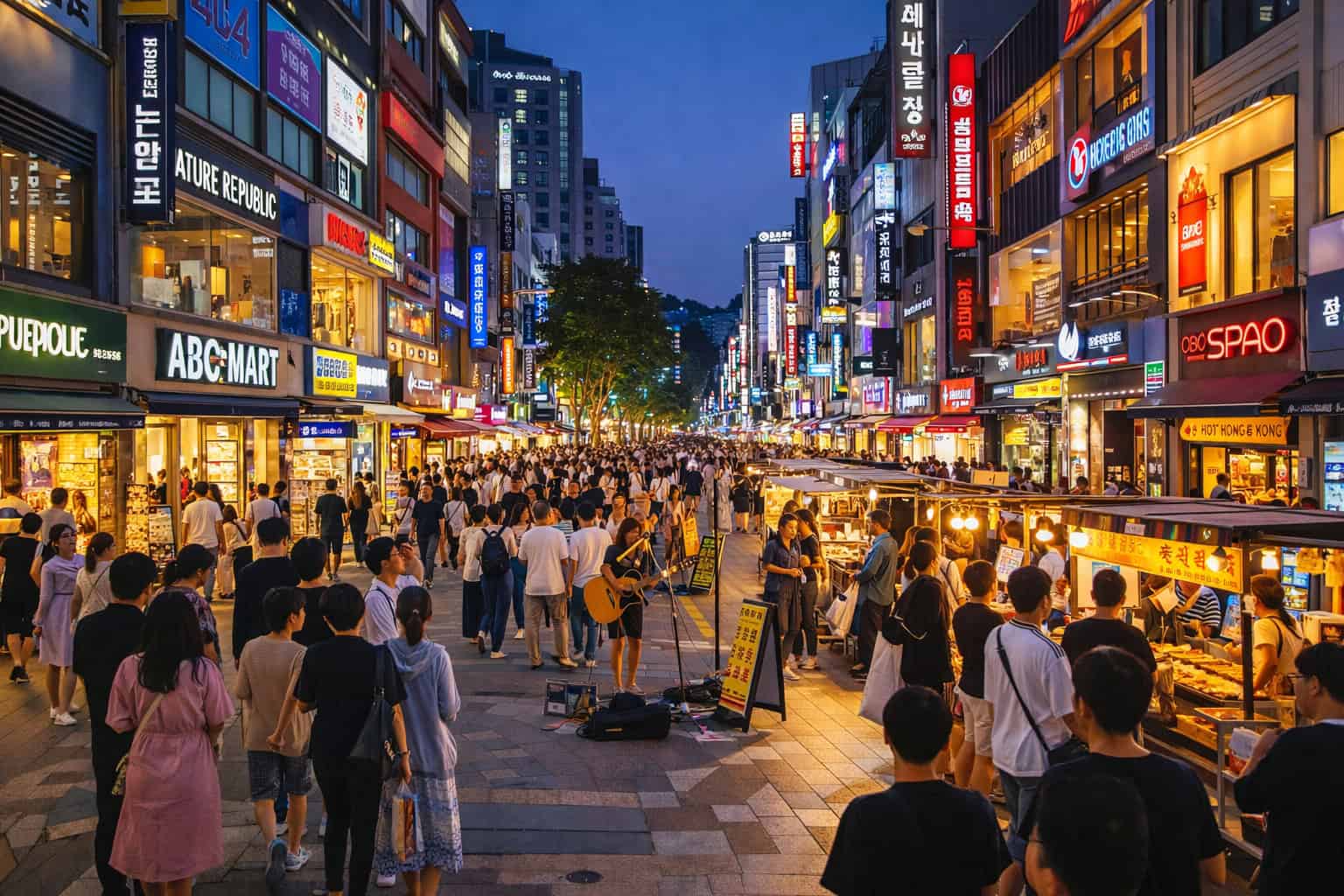
Dongseong-ro Daegu is the city’s most energetic downtown street, a place where shopping, youth culture, cafes, performances, and nightlife all spill into one walkable urban core. The first time I passed through it in the early evening, I immediately understood why people treat it as more than just a commercial district. It felt like a live pulse point for Daegu itself — noisy, bright, crowded, and strangely easy to enjoy even if you arrived with no real plan.
This is not the kind of attraction you visit for one monument or one perfect photo. Dongseong-ro works because of movement. You walk, turn, notice a side alley, hear music, smell street food, pass fashion shops, and end up staying longer than expected. If you want to understand modern urban Daegu rather than just checking off landmarks, this street is one of the clearest places to start.
For travelers who enjoy city energy, late-day atmosphere, and local rhythm more than formal sightseeing, Dongseong-ro can easily become one of the most memorable stops in Daegu.
Quick Summary
- Dongseong-ro Daegu is the city’s best-known central shopping and entertainment street
- It stretches through the core of downtown Daegu and is easy to reach from Banwoldang Station
- The area is best visited from late afternoon into the evening
- It is ideal for shopping, people-watching, cafes, street food, and casual nightlife
- It pairs well with Seomun Market, Daegu Modern History Museum, and other central Daegu stops
Why Dongseong-ro Matters
Every major city has a street that tells you how the place moves in real life. In Daegu, that street is Dongseong-ro. It is not only a shopping district but also a social center, a youth zone, a meetup point, and one of the easiest places to feel the city’s everyday energy. Official tourism materials describe it as the busiest shopping street in Daegu and one of the city’s representative central districts, which fits the experience on the ground exactly.
What makes it especially useful for travelers is that it does not require explanation to work. You do not need to study history panels or book a timed entry. You simply arrive and let the street carry you. Brand stores, road shops, cafes, food stops, event areas, and side alleys all create movement. The result is a destination that feels immediate rather than staged.
It also matters because it helps balance a Korea itinerary. Many travelers collect temples, palaces, beaches, and scenic viewpoints but forget that modern city districts can be just as revealing. Dongseong-ro shows a different side of Korea: fast, commercial, youthful, expressive, and constantly changing.
What It Feels Like to Walk Through Dongseong-ro
Dongseong-ro is the kind of place that gets stronger as the day moves on. In the afternoon, it feels like a busy shopping corridor. By evening, it becomes more atmospheric. Signs brighten, crowds thicken, music becomes more noticeable, and the street starts feeling less like retail space and more like a public stage.
I think that shift is what makes the district memorable. The first time I walked it, I expected a straightforward commercial street. Instead, it felt layered. One block was full of fashion chains, the next had buskers and younger crowds, and then a side alley suddenly opened into a quieter café pocket. That rhythm kept the area from feeling repetitive.
It is also one of those places where doing very little still feels like doing something. You can browse, snack, sit, watch people, or simply drift. That is part of its charm. Dongseong-ro is not built around a single headline attraction. Its appeal comes from urban momentum.
History and Urban Context
Dongseong-ro sits in Jung-gu, the central district of Daegu, and functions as one of the city’s best-known downtown corridors. VISITKOREA describes the street as stretching roughly 900 meters from Daegu Station Intersection to Art Square, with shops, performance spaces, and event squares along the route. That helps explain why it feels broader than a normal shopping street.
It is also important as an urban landmark because it reflects how Daegu presents itself today. This is not a preserved old quarter frozen in time. It is a living commercial center that keeps adapting to youth trends, seasonal promotions, public events, and changing consumer culture. The district’s identity is modern, but it still connects naturally to the older downtown areas around it.
That is why Dongseong-ro works so well in a travel plan. It is not just a place to buy things. It is where Daegu’s central city image becomes visible.
Highlights of Visiting Dongseong-ro
- Experience Daegu’s busiest and most recognizable downtown shopping street
- Enjoy a mix of major brands, smaller shops, cafes, and food stops
- Visit one of the city’s most walkable entertainment districts
- Catch a more lively atmosphere after sunset
- Combine central Daegu shopping with nearby markets and museums
Key Visitor Information
| Location | Dongseong-ro area, Jung-gu, Daegu, South Korea |
| Official Tourism Page | Daegu Tour – Dongseong-ro Street |
| Nearest Metro | Banwoldang Station (Daegu Metro Lines 1 and 2) |
| Entry Fee | Free |
| Best Time to Visit | Late afternoon to late evening |
| Recommended Visit Length | 2 to 4 hours |
| Street Character | Shopping, entertainment, cafes, street culture |
| Accessibility | Generally easy to walk, with wide central downtown access routes |
The Cultural Side of Dongseong-ro
Dongseong-ro is often described as commercial first, but that makes it sound flatter than it is. The district also functions as a public culture zone. Official descriptions mention performance stages and event squares, which matches the feeling of the street as a place where entertainment, street presence, and youth visibility matter.
That means the experience is not only about shopping bags and chain stores. What stays with most visitors is the liveliness of the environment: music, crowds, visual noise, changing storefronts, and the sense that the district is always in motion. If you are interested in how Korean city centers actually feel at street level, Dongseong-ro is a good place to observe that in real time.
It is also easier than some nightlife districts because it remains broad and accessible. You do not need to commit to bars or clubs to enjoy it. A simple evening walk already gives you the atmosphere.
How to Visit Dongseong-ro Smoothly
The easiest way to approach Dongseong-ro is to treat it as a central Daegu session rather than a one-stop attraction. Start with an easy arrival through Banwoldang Station, wander the main street first, and then let yourself drift into the side streets depending on your mood — shopping, coffee, food, or just street watching.
If I had to choose one ideal timing window, I would arrive in the late afternoon and stay into the evening. That gives you daytime clarity for browsing and orientation, then the brighter night mood once the district fills out. It is a much stronger rhythm than showing up too early in the morning.
Come in the late afternoon and stay after dark. Dongseong-ro becomes more expressive as the lights, crowds, and food scene build up.
Wear comfortable shoes. This is one of those districts where you will end up walking more than you planned.
Do not come expecting one iconic building or a museum-style visit. Dongseong-ro works best as a city district experience rather than a single-ticket attraction.
Nearby Attractions and Good Pairings
Seomun Market is the strongest food-and-market contrast. If Dongseong-ro gives you modern downtown energy, Seomun adds a more traditional and market-driven side of Daegu.
Daegu Modern History Museum works well if you want to add context and slow the pace after the street’s commercial energy.
Banwoldang and the central Jung-gu area are useful for extending the walk naturally without overplanning.
For food, the district itself is usually enough. Street snacks, casual dining, dessert cafés, and late-evening stops are part of the experience, so there is no need to force a separate food detour unless you want something more traditional.
Dongseong-ro vs Other Korea City Experiences
| Place | Best For | Main Feel |
|---|---|---|
| Dongseong-ro, Daegu | Central Daegu shopping and evening street life | Youthful, commercial, lively, walkable |
| Myeongdong, Seoul | Big-name shopping and heavy tourist energy | Denser, more tourist-heavy, more intense |
| Seomyeon, Busan | Nightlife and big-city district hopping | Broader, busier, more nightlife-driven |
| Tapdong Square, Jeju | Waterfront atmosphere and easier evening strolling | Coastal, airy, lower-pressure |
If Myeongdong feels more tourist-saturated and Seomyeon feels more nightlife-heavy, Dongseong-ro feels like a balanced central city district that still belongs clearly to Daegu.
Who Should Visit Dongseong-ro
- Travelers who enjoy lively downtown districts more than formal sightseeing
- Visitors looking for shopping, snacks, cafes, and casual nightlife in one place
- First-time Daegu visitors who want an easy central district to understand the city
- People who like walking city streets and finding atmosphere block by block
- Korea travelers who want a major urban district outside Seoul and Busan
It may feel less rewarding only if you dislike crowds or want a highly curated heritage-style attraction. Dongseong-ro is strongest when you want city life, not quiet monument time.
FAQ
Is Dongseong-ro worth visiting in Daegu?
Yes. It is one of the easiest places to experience central Daegu’s shopping, youth culture, and evening street atmosphere.
What is Dongseong-ro famous for?
Dongseong-ro is known as Daegu’s busiest downtown shopping and entertainment street, with shops, food, and public activity throughout the day and evening.
How do I get to Dongseong-ro?
The simplest route is by Daegu Metro to Banwoldang Station, then a short walk into the main district.
What is the best time to visit Dongseong-ro?
Late afternoon and evening are usually the best times because the street feels fuller, brighter, and more atmospheric.
Is Dongseong-ro free to visit?
Yes. It is an open public district, so there is no admission fee.
How long should I spend there?
Most travelers can enjoy Dongseong-ro in 2 to 4 hours, though it can easily stretch longer if you shop or stay for dinner.
Are there events in Dongseong-ro?
Yes. Official tourism materials describe performance stages and event spaces in the district, and VISITKOREA notes the Dongseong-ro Festival in May.
Can I combine Dongseong-ro with other Daegu attractions in one day?
Absolutely. It pairs especially well with Seomun Market and nearby central Daegu museums and streets.
More Korea Travel Guides
Official and Useful Resources
Google Map
Final Thoughts
Dongseong-ro Daegu is one of those places that makes a city feel immediately understandable. You do not need a long explanation to enjoy it. You simply show up, walk, look around, and let the district do what it does best — pull you into the pace of central Daegu.
If you want one urban stop that captures shopping, public energy, youth culture, and easy evening atmosphere in one route, Dongseong-ro is one of the strongest choices in the city. It is not quiet, and that is exactly the point.