What Makes Place des Vosges Paris So Quietly Elegant in the Heart of the Marais
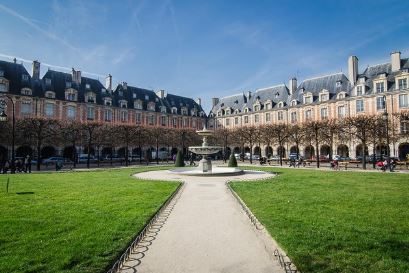
Place des Vosges Paris is one of the most beautiful urban squares in France and one of the most quietly rewarding places to visit in the Marais. Surrounded by red-brick façades, stone arcades, and a calm central garden, it offers a version of Paris that feels slower, more intimate, and more balanced than the city’s busier boulevards. It is also widely recognized as Paris’s oldest planned square, first inaugurated in the early 17th century under Henry IV.
The square has a rare kind of composure. Even in a city full of famous landmarks, Place des Vosges feels different. It does not overwhelm you with scale. Instead, it draws you in through proportion, rhythm, and atmosphere. The arcades create shade and symmetry. The lawns soften the geometry. Fountains, benches, and linden trees give the whole place a lived-in elegance that still feels deeply Parisian. If you want a destination that mixes history, architecture, literary culture, and everyday city life, this square delivers all of it without needing to shout.
I think that is exactly why the place stays in people’s memory. It is not flashy. It is refined. And in Paris, refinement has a power of its own.
Search Intent
Travelers searching for Place des Vosges Paris usually want to know why the square is famous, what to see around it, whether Victor Hugo’s house is worth visiting, how to get there in the Marais, and what time of day makes the experience most enjoyable.
Quick Summary
- Location: 4th arrondissement, Marais, Paris
- Best known for: Arcades, red-brick façades, central garden, Victor Hugo connection
- Historic significance: Oldest planned square in Paris, inaugurated in 1612
- Best time: Morning for calm, late afternoon for atmosphere
- Nearby bonus: Maison de Victor Hugo at 6 Place des Vosges
Why Visit Place des Vosges Paris
Place des Vosges Paris is a perfect stop for travelers who want something historic and beautiful without the exhaustion that can come with larger monuments. The square gives you architecture, greenery, literary heritage, and excellent Marais positioning in one compact visit. You can sit in the garden, walk the arcades, browse galleries, and then continue into the surrounding neighborhood for museums, boutiques, or food.
It is also one of the easiest places in Paris to understand through feeling rather than through explanation. The space is symmetrical, calm, and human in scale. You do not need a guide to appreciate it. That said, knowing a little of its history deepens the experience. The square was created as Place Royale and later became Place des Vosges. It has long been associated with aristocratic residences, artists, and writers, and Victor Hugo famously lived here for years. The Maison de Victor Hugo still welcomes visitors and is open Tuesday to Sunday from 10 AM to 6 PM according to the museum’s official site.
That combination of beauty and context is what makes the square so satisfying. It works for architecture lovers, readers, photographers, and travelers who simply want a place to breathe.
What It Feels Like to Walk Through the Square
The first thing you notice is order. Every side of the square feels intentionally composed. The red brick, pale stone, slate roofs, and repeated archways create a visual rhythm that is unusually soothing. In the middle, the lawns and fountains soften the geometry and make the place feel welcoming rather than formal.
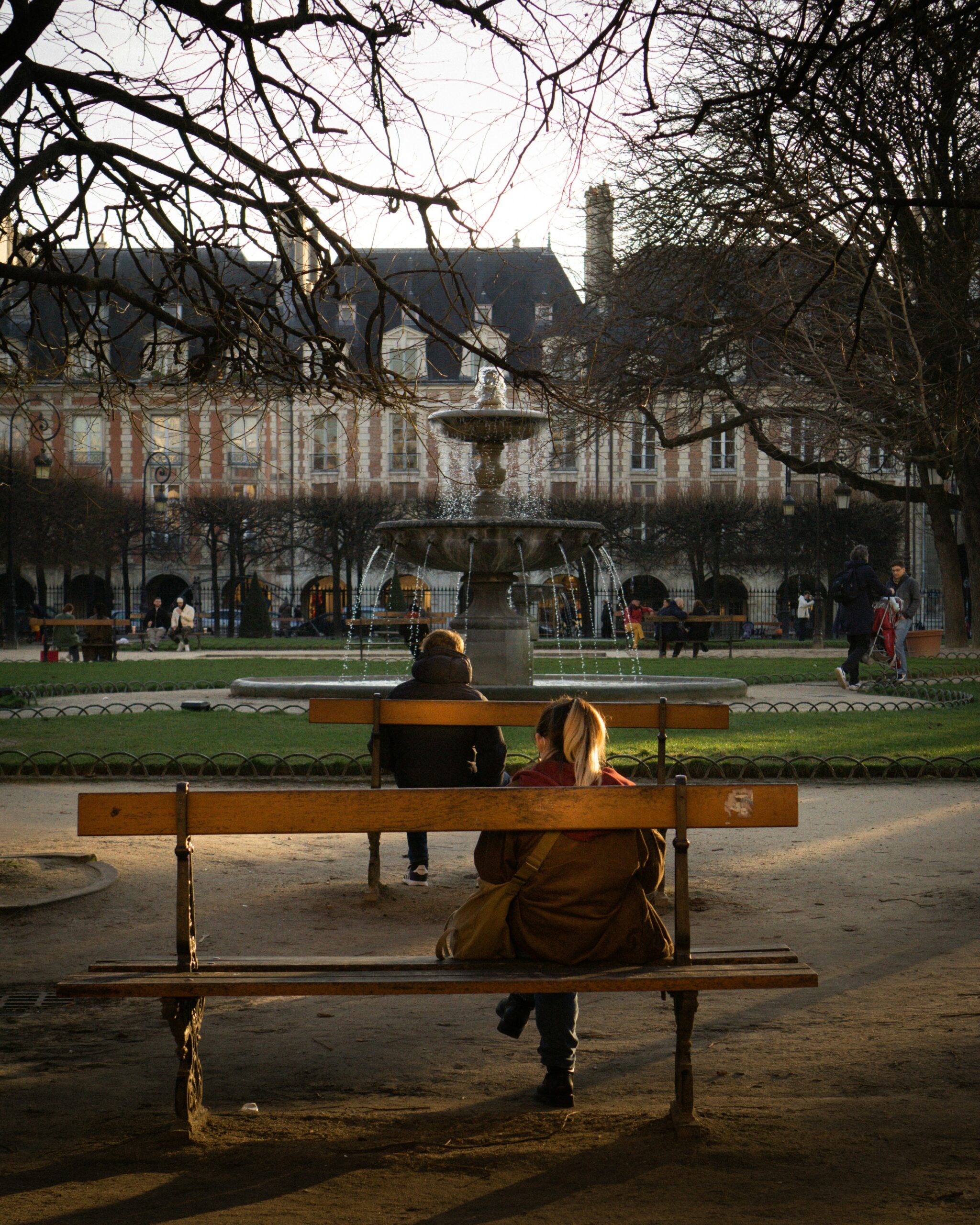
Morning is my favorite time here. The light is cleaner, the benches are quieter, and the Marais still feels half asleep. Later in the day, the atmosphere changes. Couples pass through with coffee, children run around the fountains, and the arcades begin to feel more theatrical. Neither version is wrong, but they feel completely different.
There is also something undeniably cinematic about the edges of the square. Under the covered arcades, you get shifting patterns of shadow and sunlight. Small galleries, cafés, and discreet entrances create the sense that Paris is always hiding something just beyond view. That feeling is one of the reasons Place des Vosges stays so compelling even after multiple visits.
Key Information
| Category | Details |
|---|---|
| Location | Place des Vosges, 75004 Paris |
| Historic milestone | Inaugurated in 1612 |
| Literary highlight | Maison de Victor Hugo at 6 Place des Vosges |
| Official Paris visitor info | Paris tourism website |
| Victor Hugo museum info | Maison de Victor Hugo official site |
Google Map
How to Get There
Place des Vosges is easy to reach from the Marais and central Paris. The most practical Metro stops are Saint-Paul and Chemin Vert, followed by a short walk through surrounding streets. If you are already exploring the Marais, it fits naturally into a walking route that can also include the Musée Carnavalet area, Victor Hugo’s house, and other historic streets nearby.
From a travel-planning perspective, this is one of those places that rewards walking more than rushing. Approaching the square on foot through the Marais lets the atmosphere build gradually, which is much more satisfying than arriving with no context.
Nearby Attractions and Smart Pairings
Maison de Victor Hugo is the most obvious companion stop, and it is absolutely worth it if you care about French literature or interiors. The museum explains that Victor Hugo lived at Place Royale, now Place des Vosges, from 1832 to 1848, and the apartment visit helps anchor the square in lived history rather than abstract heritage.
If you are building a broader France itinerary, these Trip-Nexus internal guides fit naturally with this stop: Centre Pompidou Paris Modern Art Guide, Petit Palais Paris Guide, Parc des Buttes-Chaumont Paris, Château des Ducs de Bretagne Nantes Guide, and Villefranche-sur-Mer Old Town.
Official Resources in Context
For broader city planning, use the Paris tourism website. For Victor Hugo museum details, opening times, and visit information, use the official Maison de Victor Hugo website. If you are combining this with a wider France trip, the national tourism board at France.fr is the most reliable country-level planning source.
FAQ
Why is Place des Vosges famous?
It is Paris’s oldest planned square and one of the city’s most elegant historic spaces.
Is Place des Vosges worth visiting?
Yes. It is one of the best places in the Marais for architecture, atmosphere, rest, and literary history.
What is the best time to visit?
Morning is best for calm and photos, while late afternoon has the nicest social atmosphere.
Can I visit Victor Hugo’s house here?
Yes. Maison de Victor Hugo is located at 6 Place des Vosges.
How long should I spend here?
Forty-five minutes is enough for a quick stop, but 1.5 to 2 hours is much more rewarding if you include the museum and arcades.
Is it good for families?
Yes. The central garden and open space make it comfortable for families, especially during daytime.
Is it free to visit?
The square itself is public and free. Museum visits may have separate access conditions.
What neighborhood is it in?
It sits in the Marais, in Paris’s 4th arrondissement.
Final Thoughts
Place des Vosges Paris is not one of those places you “tick off.” It is a place you absorb. The balance of architecture, shade, silence, and gentle movement gives it a lasting elegance that few city squares can match.
If you want a Paris stop that feels graceful, grounded, and deeply atmospheric, Place des Vosges deserves real time in your itinerary.