Osteria da Fortunata Rome Guide: Best Time to Go, What to Order, and How to Skip the Line
Osteria da Fortunata Rome is one of those places people talk about before they even land in Italy—part pasta show, part classic Roman meal, part tourist magnet. The real question is not whether it is famous. The real question is whether it deserves one of your limited Rome meal slots, and how to visit it without turning dinner into a line-management exercise.
Search Intent (Why You’re Here)
If you searched for Osteria da Fortunata Rome, you are probably trying to solve one very practical travel problem: is it actually worth your time, what should you order, and when should you go so Rome does not turn into one long food queue? This guide is built for real trip decisions, not generic food writing. I’m focusing on timing, atmosphere, route planning, realistic expectations, nearby sights, and the small mistakes that can quietly ruin an otherwise great Roman meal.
Quick Summary (5 Lines)
- Worth it? Yes—especially if you want a lively handmade-pasta experience in central Rome.
- Best time: go early for lunch or early dinner; peak evening hours are the risky window.
- How long: plan about 60–90 minutes for the meal, plus possible waiting time.
- Best first order: carbonara, ragù, or another simple Roman classic rather than over-ordering.
- Best pairing: Campo de’ Fiori → Osteria da Fortunata → Pantheon → Piazza Navona makes a very efficient Rome walking loop.
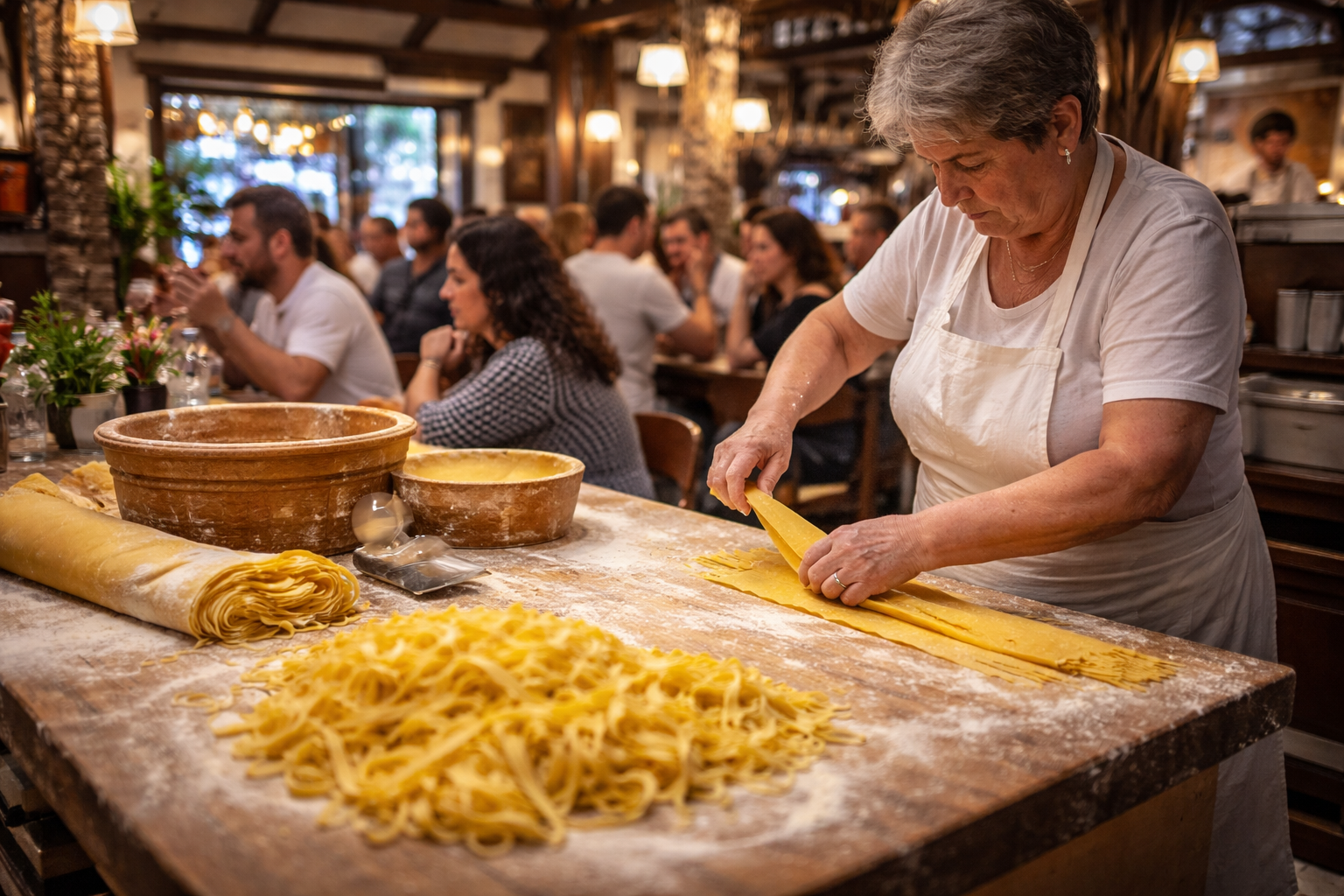
Osteria da Fortunata Rome handmade pasta atmosphere in central Rome
Why Osteria da Fortunata Matters on a Rome Trip
Rome gives you an endless list of “must-eat” addresses, and honestly, that can become exhausting. One place promises tradition, another promises locals-only credibility, another promises a view, and suddenly you are spending more energy choosing dinner than enjoying Rome itself. That is where Osteria da Fortunata works well. It is central, recognizable, energetic, and easy to fit into a sightseeing day without crossing the city.
What I like about this stop is that it delivers a very clear kind of Rome experience. You are not going for delicate fine dining, white tablecloth calm, or a slow, private evening. You are going for movement, sound, fresh pasta in plain view, and a sense that dinner is happening inside the rhythm of the city rather than outside it. That makes it a strong choice for travelers who want one meal that feels memorable without needing an elaborate plan.
It also helps that the official site lists multiple Rome locations and a dedicated booking contact for the city, which tells you immediately that this is not a tiny hidden secret anymore—it is a known destination, and you should approach it strategically, not casually.
What It Actually Feels Like Inside
The first thing that usually hits you is the pace. This is not a calm room where voices disappear into soft music. It is compact, active, and social. Tables are close, servers move fast, dishes land quickly, and the handmade-pasta display pulls your attention almost immediately. The performance element works because it does not feel staged in a fake way. The pasta-making is part of the identity of the place, not a decorative side show.
I think this is where expectations matter most. If you go in expecting an intimate anniversary dinner, you may leave feeling slightly overwhelmed. If you go in wanting a vivid Roman meal that feels alive, you will probably understand why so many people intentionally build a stop here into their itinerary. The atmosphere is more “busy Roman dinner energy” than “romantic tucked-away trattoria.”
A Little Context: Why People Keep Talking About It
According to the restaurant’s official site, Osteria da Fortunata traces its story back to 1921 and presents itself as a long-running Roman culinary reference point built around generational tradition and handmade cooking. The site leans heavily into family continuity, visible craftsmanship, and the image of pasta made in front of guests rather than hidden away in the kitchen.
That matters because in Rome, “traditional” gets used for almost everything. Some places feel traditional because of the menu, some because of the room, and some because of storytelling. Fortunata feels traditional mainly through its emphasis on visible labor: dough, movement, repetition, and recipes that stay intentionally familiar. Whether you think it is touristy or not, the place understands what visitors want from a Roman pasta experience and delivers it in a format that is easy to consume.
The result is a restaurant that sits in an interesting middle space: not a secret local-only canteen, but also not a hollow Instagram prop. That balance is exactly why it works for so many short-stay travelers.
Key Visitor Information
| Category | Details |
|---|---|
| Main central address | Via del Pellegrino 11/12, 00186 Roma |
| Officially listed hours | Open every day from 11:30 AM to 1 AM (check official site before going) |
| Reservations | Rome booking contact exists, but some listed restaurants do not accept reservations |
| Rome reservation contact | Tel. +39 06 6066 7391 / WhatsApp +39 06 9970 1350 / prenotazioni@osteriadafortunata.com |
| Price expectation | Usually moderate for central Rome; budget around a classic sit-down pasta meal rather than a cheap takeaway stop |
| Best visiting strategy | Early lunch or early dinner for less stress and smoother pacing |
| Nearby zone | Campo de’ Fiori / Piazza Navona / Pantheon walking area |
Why Visit Osteria da Fortunata Instead of Just Anywhere Nearby
- Visible handmade pasta: you are not just ordering pasta; you are watching the preparation become part of the meal.
- Strong central-Rome convenience: it fits naturally into a historic center day without wasting time on transport.
- Classic Roman comfort food energy: the menu direction is straightforward, recognizable, and low-risk for first-time visitors.
- Memorable atmosphere: even people who argue about “best pasta” usually remember the feeling of the visit.
- Efficient high-impact stop: if you only have a few meals in Rome, this is the kind of place that can justify its slot with both food and atmosphere.
The Cultural Experience: Why Timing Changes Everything
I think this restaurant is best understood as a rhythm problem, not a menu problem. Most people already know the food is supposed to be solid. The real difference between “I loved it” and “I don’t get the hype” often comes down to when you show up. Rome can feel generous when your timing is good and frustrating when it is not, and this restaurant follows that rule exactly.
If you arrive during the busiest dinner wave, you may spend a surprising amount of emotional energy just monitoring the line, wondering whether the wait is worth it, and mentally checking the rest of your evening. That kind of mood changes how food tastes. On the other hand, if you arrive at the opening stretch or for an early meal, the entire experience feels more generous. Service has more breathing room. You notice the room more. You taste the pasta instead of treating dinner like a task.
One of the easiest travel mistakes in Rome is assuming a famous restaurant will somehow feel magical at the most crowded possible time. Usually it feels crowded. That is not a failure of the restaurant. That is a planning issue.
What to Order on Your First Visit
For a first visit, the safest and smartest strategy is to stay close to the house identity: classic Roman pasta, minimal overthinking, and portions that still leave space for the rest of Rome. A place with this reputation does not need complicated menu hacking.
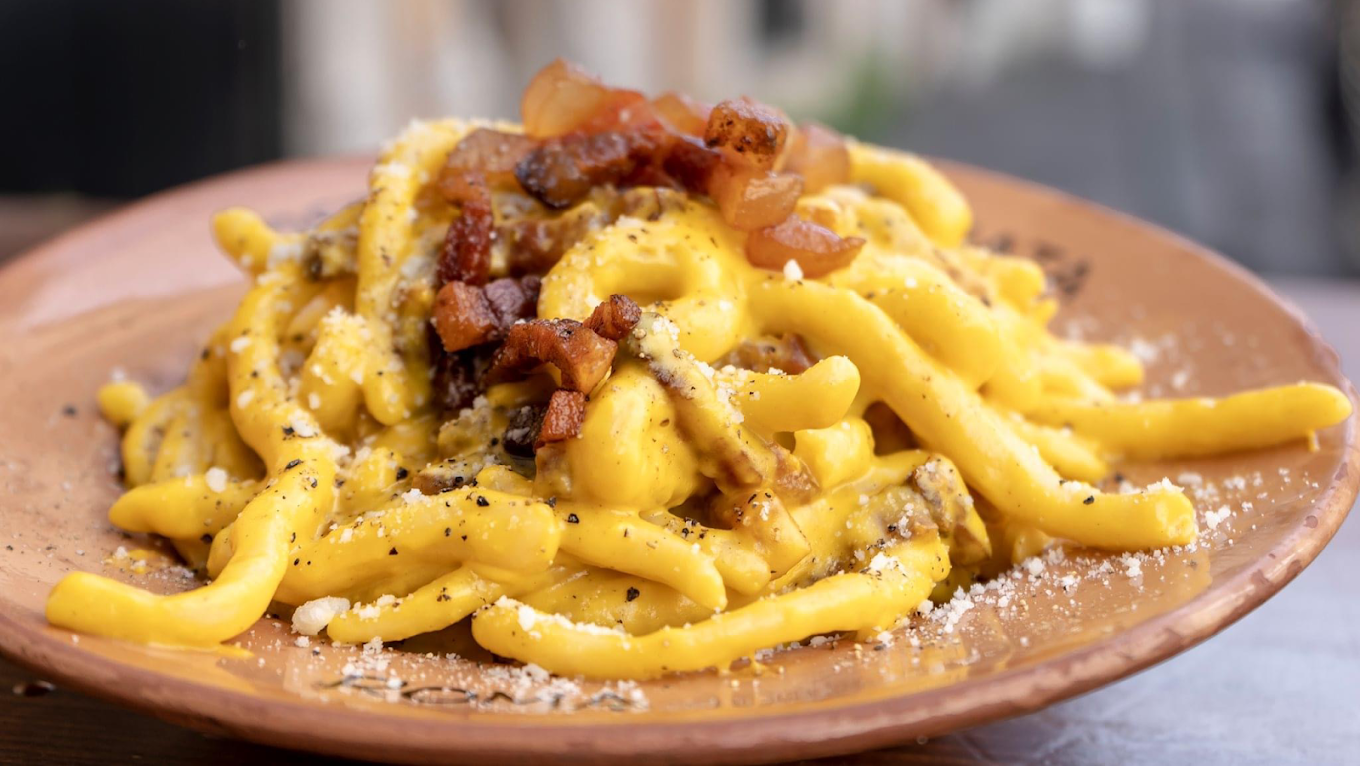
- Carbonara: still the first-order choice if you want the obvious Roman classic.
- Ragù pasta: a comforting choice if you want something deeper and more familiar.
- Seasonal handmade option: worth considering once you know what kind of texture you prefer.
- Simple starter: good if you are sharing, but avoid turning lunch into a marathon.
My honest approach: one starter to share, one pasta each, and then stop. Rome is not a city where you should sacrifice the rest of your evening just to win a restaurant ordering contest.
How to Visit Without Wasting Time
- Choose the day first: weekday if possible.
- Choose the meal slot second: early lunch or early dinner.
- Check the official site before you go because hours and reservation rules can shift by location.
- Keep your route local: do not cross Rome just for this if your day is already packed elsewhere.
- Order confidently and simply once seated.
- Leave enough room in the schedule for a post-meal walk rather than rushing straight to transport.
Nearby Attractions and the Best Walking Loop
This is one of the strongest practical advantages of the restaurant: the surrounding area is easy to love on foot. You do not need a complicated transit plan. You just need a sensible order.
- Start at Campo de’ Fiori for a short atmosphere walk.
- Eat at Osteria da Fortunata when you are still early enough to enjoy it calmly.
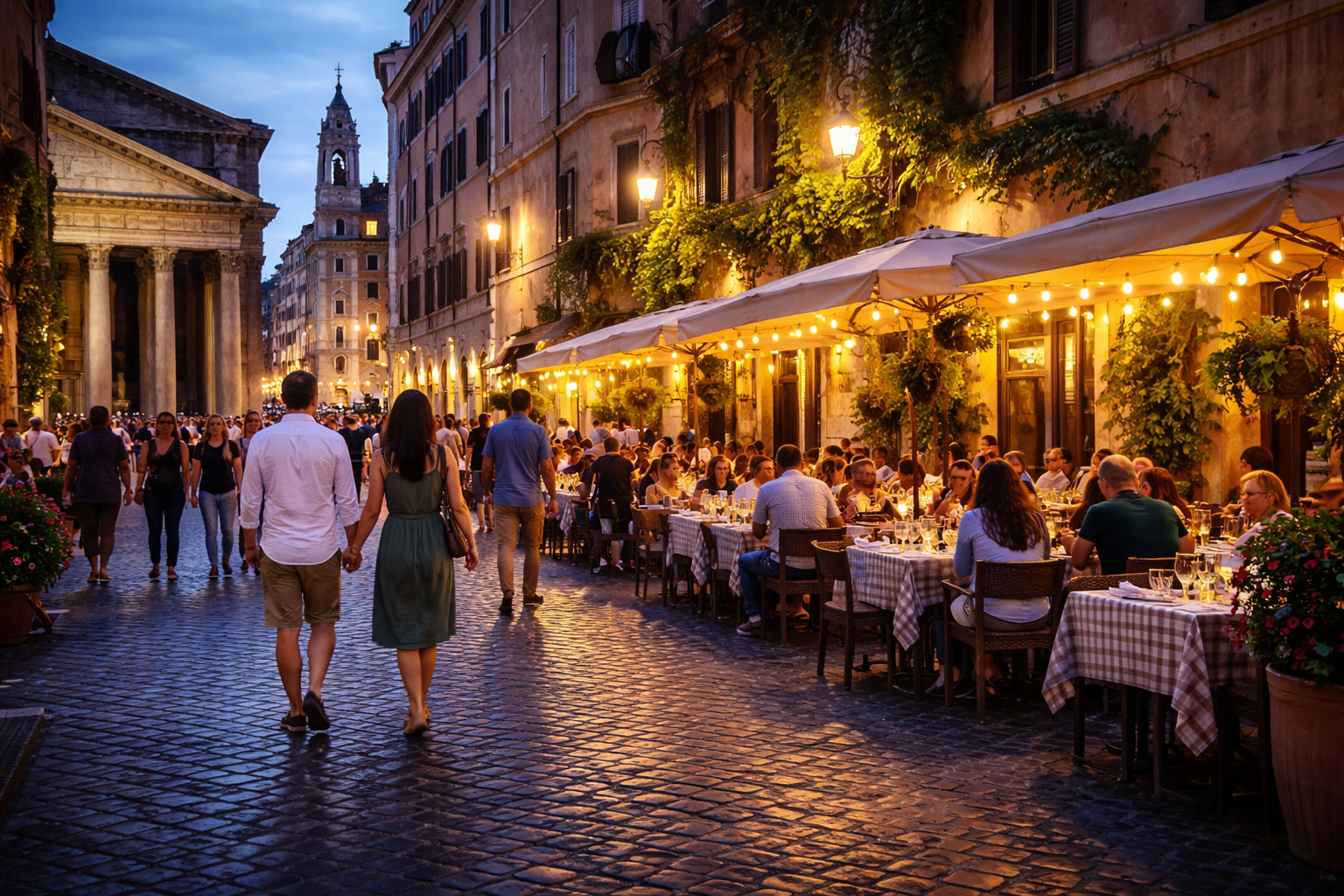
- Walk toward the Pantheon, one of Rome’s defining monuments and an easy high-value next stop. Turismo Roma highlights its architectural and historical importance, including the famous dome and royal tombs.
- Finish around Piazza Navona for a slower, more atmospheric close to the route.
I like this loop because it feels efficient without feeling rushed. You get food, architecture, street energy, and evening walking time in one compact slice of central Rome.
A vs B Comparison: Lunch or Dinner?
| Visit Style | Pros | Cons | Best For |
|---|---|---|---|
| Lunch | Usually smoother, easier to fit into sightseeing, less emotional risk | Slightly less dramatic evening mood | Travelers with packed Rome itineraries |
| Early Dinner | More evening buzz, more classic “Rome night” feeling | Can get crowded fast if you misjudge timing | Travelers who want atmosphere first |
Best call: lunch for efficiency, early dinner for vibe. Full peak dinner is usually the riskier version.
Who Should Visit—and Who Might Prefer Something Else
Great fit for: first-time Rome visitors, travelers building a central walking day, pasta lovers, and people who enjoy lively restaurants with visible food preparation.
Maybe not the best fit for: couples looking for a deeply intimate dinner, travelers who hate queues, or anyone determined to eat only in low-profile neighborhood spots.
My honest view is that this is a strong “one Rome meal” choice for most visitors, but not necessarily the right choice for every mood. That distinction matters more than arguing whether it is overrated or underrated.
FAQ
Is Osteria da Fortunata Rome worth visiting?
Yes, especially if you want a central Rome meal that feels energetic and memorable. It is more than just pasta; it is the full atmosphere that makes it work.
What is the best time to go?
Early lunch or early dinner is the safest choice. That is when you are most likely to enjoy the experience without the peak-hour stress.
Do I need a reservation?
Check the official booking page. The restaurant states that some listed locations do not accept reservations, while Rome has a city booking contact available.
What should I order first?
Start with a simple Roman classic like carbonara or ragù. This is the kind of place where classic choices usually make the most sense.
How much time should I allow?
About 60–90 minutes for the meal is reasonable, but leave extra time in your schedule in case the line is longer than expected.
Is it family-friendly?
Yes, but it can feel busy and noisy at peak times, so family comfort depends a lot on timing.
Is it a good romantic dinner spot?
Not really in the quiet, intimate sense. It is lively, close-packed, and more energetic than romantic.
More Italy Travel Guides on Trip Nexus
Official and Planning Links
Google Map
Final Verdict
If you want a polished secret hideaway, this probably is not the answer. If you want a vivid, easy-to-place, high-recognition Roman pasta stop that actually fits into a real sightseeing day, Osteria da Fortunata Rome is a very smart pick. The trick is not chasing perfection. The trick is visiting at the right time, ordering simply, and letting the meal become part of a larger historic-center walk.
My recommendation is simple: make it your central Rome pasta anchor meal, go early, enjoy the atmosphere for what it is, and then keep walking toward the Pantheon and Piazza Navona. That combination gives you one of the easiest and most satisfying “food + Rome” sequences in the city.