ITALY • ROME FOOD
Armando al Pantheon Rome Guide: Best Time, What to Order, and How to Plan the Perfect Meal
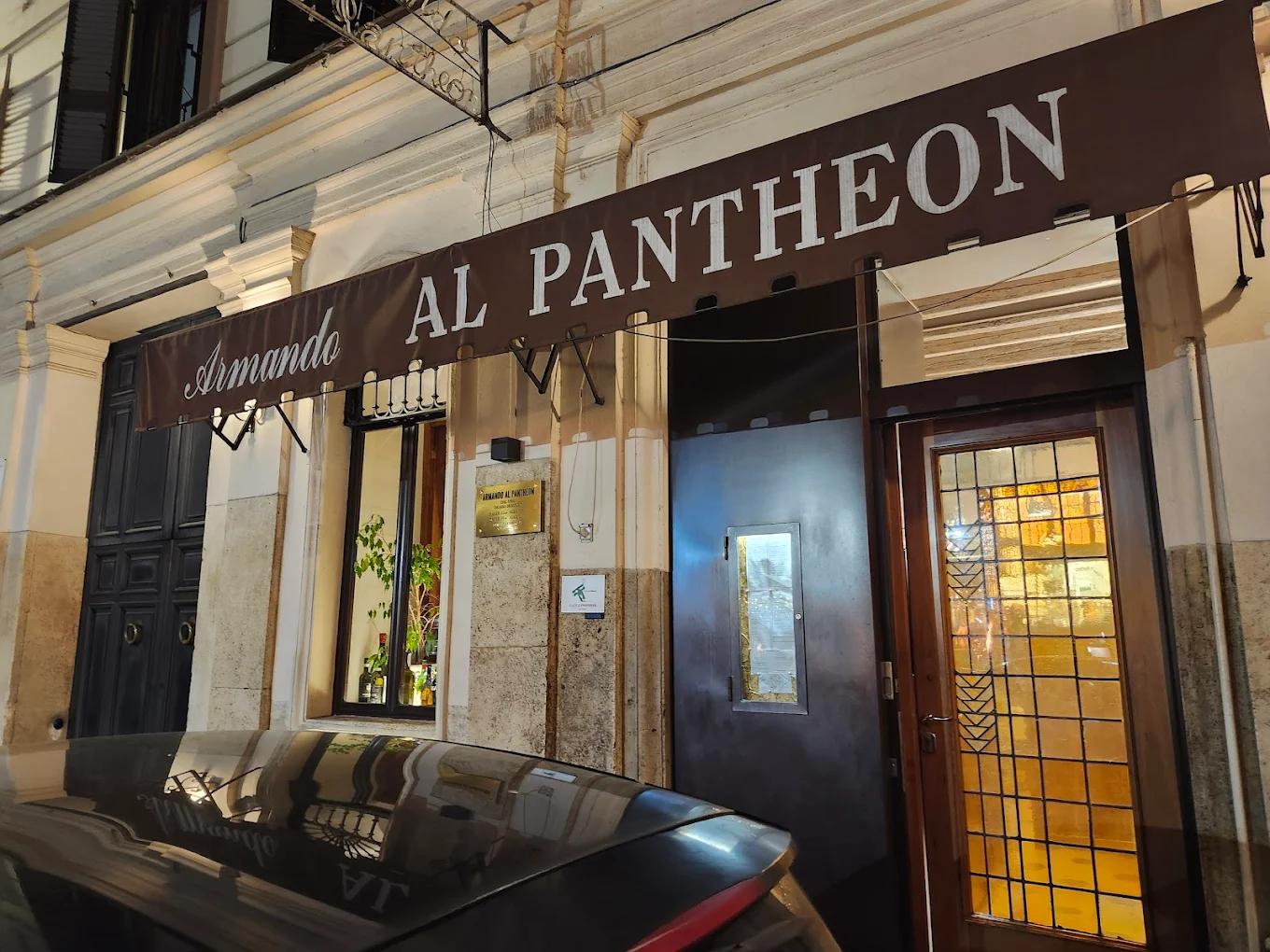
Armando al Pantheon in Rome is one of the city’s best-known classic Roman trattorias, combining serious pasta, a historic-center location, and the rare feeling that a famous restaurant near a headline landmark can still feel grounded and worth the effort.
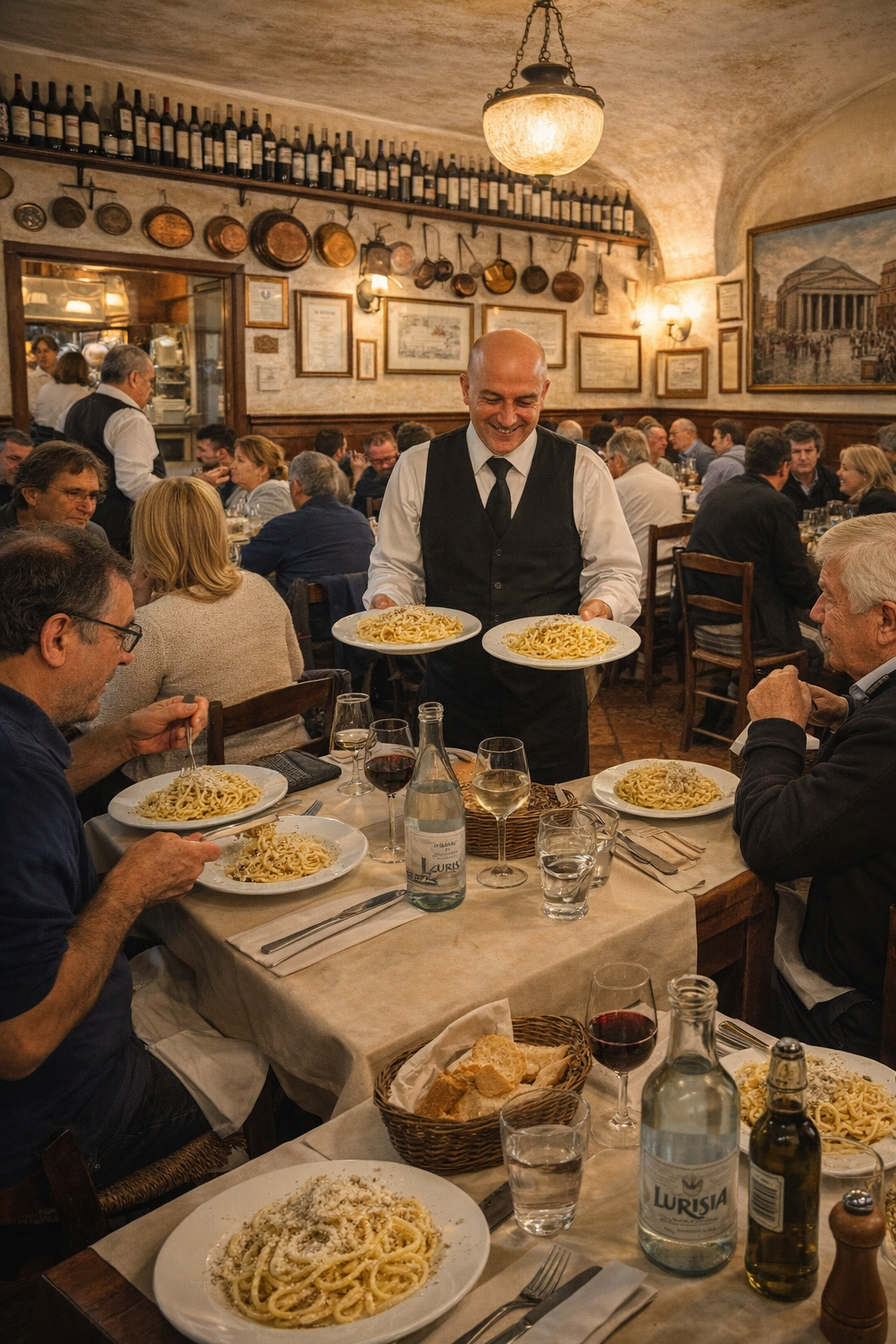 Inside Armando al Pantheon — a classic Roman trattoria experience near the Pantheon
Search Intent (Why You’re Here)
If you searched for Armando al Pantheon Rome, you are probably trying to answer one practical question: is it actually worth one of your limited Rome meal slots, and how do you visit without wasting time on bad timing, reservation mistakes, or overhyped expectations? This guide is built for real trip planning—what to order, the best time to go, how long to stay, what kind of atmosphere to expect, and how to turn the meal into a smooth Pantheon-area walking loop.
Quick Summary (5 Lines)
- Worth it? Yes—one of the most dependable classic Roman trattoria meals in central Rome.
- Best time: lunch right at opening (12:30) or dinner on a weekday right at 18:00.
- How long: about 75–110 minutes for a relaxed full meal.
- Must-order: cacio e pepe, carbonara, or amatriciana, plus one Roman side or starter.
- Best combo: Pantheon → Armando al Pantheon → Piazza Navona or Campo de’ Fiori.
Armando al Pantheon Rome sits in one of the most touristed parts of the city, and that is exactly why it matters when a restaurant here still feels authentic. Plenty of places around the Pantheon survive on location alone. Armando survives on reputation, repeat loyalty, and a menu built around Roman dishes that people actually travel to Rome hoping to eat properly.
What makes it work is not novelty. It is discipline. The room feels traditional, compact, and lived-in rather than styled for tourists. The cooking leans into Roman standards without trying to reinvent them, and that is often the right move in a city where classic pasta dishes are judged hard and remembered for a long time.
If you have limited meals in Rome, Armando is the kind of place that makes strategic sense. You walk only a short distance from the Pantheon, sit down in a real trattoria environment, eat one of the city’s signature pastas well, and step back into central Rome without losing half a day chasing a “must-try” detour. For travelers who want one dependable Roman meal in the historic center, that is a very strong proposition.
Why This Place Matters
Armando al Pantheon officially describes itself as a Roman kitchen “dal 1961” and as one of the symbolic restaurants of Roman cuisine, just steps from the Pantheon. That longevity matters in a neighborhood where location alone could easily reward mediocrity.
What It Feels Like in Real Life
Armando does not feel theatrical. It feels compressed, warm, and efficient. That difference matters. Some restaurants near major landmarks feel like they are staging “Italian atmosphere” for passing visitors. Armando feels like it already knows what it is. The room is cozy rather than spacious, and the meal rhythm feels built around people who came to eat seriously, not just sit somewhere photogenic.
I think the best way to understand the place is to stop expecting a grand dining event and start expecting a strong Roman trattoria meal in a prime location. That is exactly where it wins. If you arrive wanting a polished luxury dinner, you may be reading the room wrong. If you arrive wanting one of those meals that makes Rome feel more concrete and more edible, the restaurant suddenly makes perfect sense.
The emotional payoff is also tied to context. You are eating within minutes of one of Rome’s most iconic monuments, yet the meal can still feel personal and grounded. That contrast is part of the pleasure. You move from the spectacle of the Pantheon to a dining room where the focus narrows to sauce texture, guanciale, pepper, pecorino, and timing.
Key Information Table
| Official Name | Armando al Pantheon |
| Address | Salita de’ Crescenzi 31, 00186 Rome, Italy |
| Lunch Hours | Daily 12:30–15:00 |
| Dinner Hours | Monday to Friday 18:00–23:00 |
| Weekly Closures | Saturday dinner and all day Sunday |
| Reservation Policy | Reservations possible online only |
| Best Time to Visit | 12:30 lunch opening or 18:00 weekday dinner opening |
| Recommended Duration | 75–110 minutes |
| Location Advantage | Just a short walk from the Pantheon in the historic center |
These details are based on the official Armando al Pantheon site.
Why Visit Armando al Pantheon (Not Generic Reasons)
- Roman pasta done properly: cacio e pepe, carbonara, and amatriciana are not there as obligatory tourist items—they are core to the restaurant’s identity.
- Historic-center convenience: no detour is needed, which makes it unusually efficient for a landmark-heavy Rome day.
- Old-school trattoria atmosphere: compact dining rooms and a traditional tone fit the food better than oversized contemporary styling would.
- Reputation with staying power: the place has enough culinary credibility that it is more than just “the restaurant near the Pantheon.”
- Strong first-timer value: it gives travelers one of the clearest “Rome pasta” experiences without forcing them into food-scene overplanning.
Experience Paragraph #1 (Timing + How Long + Simple Plan)
Armando can feel either beautifully efficient or mildly stressful depending on your timing. My rule for this place is simple: treat it like a booked mission in the Pantheon zone. Lunch right at 12:30 or dinner right at 18:00 makes the whole experience feel calmer and more controlled. Those entry points align much better with how a sightseeing day actually works.
Plan about 75 to 110 minutes if you want the meal to feel complete instead of rushed. One pasta and one side can work if you are moving aggressively through the city, but this is also the kind of place that rewards slowing down just enough to add a starter or dessert if the day allows it. The point is not to turn it into a marathon meal. The point is to let the trattoria rhythm happen without forcing the schedule too hard.
What You’ll Actually Eat Here (The Real Highlights)
Armando’s menu positions itself clearly within Roman cuisine, and that matters because the dishes people care about most in Rome require restraint and technique rather than culinary showmanship.
- Cacio e Pepe: the pure Roman test—pepper and pecorino handled with enough control to stay silky instead of turning heavy or clumpy.
- Carbonara: rich, glossy, and guanciale-led, without the cream shortcuts that flatten the dish.
- Amatriciana: tomato, pecorino, and guanciale, with a warmer, slightly sharper profile than cacio e pepe.
My best first-time order: choose cacio e pepe if you want to judge Roman technique in the most stripped-back way possible, or choose carbonara if you want the richer comfort-food version of the city. Either way, keep the order focused. This is not the kind of place where ordering too much makes the experience better.
Travel Tip
If you are building a Pantheon-area day, lock the reservation first and then shape the sightseeing around it—not the other way around. This restaurant works best when it anchors the schedule instead of interrupting it.
Common Mistake
One of the easiest mistakes is assuming you can casually walk in at peak dinner time because the restaurant is in a tourist-heavy area. The official site explicitly pushes online reservations, and that should tell you how to approach it.
Experience-Based Route (Best 2–3 Hour Pantheon Food Loop)
- Start at the Pantheon and explore it before the heaviest crowd swell.
- Walk to Armando al Pantheon for your reserved lunch or early dinner slot.
- After the meal, continue to Piazza Navona for an easy extension of the historic-center rhythm.
- If you still have energy, keep going toward Campo de’ Fiori for a market or aperitivo atmosphere.
Why this works: you avoid transport friction, stay inside one of Rome’s best walking zones, and combine one major monument with one dependable Roman meal in a single efficient block.
Experience Paragraph #2 (How to Enjoy It Like a Local)
The most satisfying way to eat here is not to chase quantity. It is to chase one excellent plate. Order one signature pasta, slow down a little more than you think you should, and pay attention to the details that make Roman food memorable: the way pecorino melts into the sauce, the way black pepper carries the whole dish, the way guanciale shifts the texture and salt balance of each bite.
Then step outside and let Rome resume immediately around you. That is part of the charm. The meal does not remove you from the city. It folds directly back into it. You go from pasta and conversation to the Pantheon district’s evening light, moving crowds, and stone streets almost without transition. I think that is one reason this place stays in people’s memory: the restaurant feels connected to Rome rather than sealed off from it.
Best for: first-time Rome visitors, Roman pasta lovers, travelers who want one reliable trattoria meal near major sights, and anyone who values strategic location as much as food quality.
A vs B Comparison (Choose the Right Time)
Lunch (12:30) vs Early Dinner (18:00)
- Lunch: better for itinerary efficiency, cleaner scheduling, and a lighter meal block in the day.
- Early dinner: better for Rome evening atmosphere, but stronger pressure builds as the later dinner wave approaches.
Best decision: if you are sightseeing aggressively, choose lunch. If you want a more atmospheric Rome dining rhythm, choose the earliest dinner slot you can get.
How to Get There
- On foot: just a short walk from the Pantheon.
- From the broader center: easy to reach as part of any historic-center walking day.
- From larger transport nodes: arrive into central Rome first, then finish on foot—the neighborhood rewards walking more than forcing direct vehicle logistics.
Nearby Attractions (Perfect Pairing)
- Pantheon: the obvious and strongest pairing, since the restaurant is essentially built into that sightseeing zone.
- Piazza Navona: ideal for extending the meal into a classic Rome stroll.
- Campo de’ Fiori: useful if you want to move from monument energy into a more market-and-social atmosphere.
- Central Rome side streets: often the best “after meal” activity is simply walking without an agenda for twenty minutes.
Google Map
Official Websites (Use These Before You Go)
Internal Links (Add These for SEO)
FAQ (Armando al Pantheon)
Is Armando al Pantheon worth it?
Yes. It is one of the strongest dependable Roman trattoria choices near the Pantheon, especially if you want a classic pasta meal without leaving the historic center.
Do I need a reservation?
Yes, it is strongly recommended. The official site states that reservations are handled online only.
What should I order first time?
Cacio e pepe or carbonara are the safest first picks. If you prefer tomato-based Roman pasta, choose amatriciana.
What’s the best time to visit?
Lunch right at 12:30 or weekday dinner right at 18:00 gives you the cleanest experience.
How long should I plan for the meal?
About 75–110 minutes is a strong target for a relaxed trattoria meal near major sights.
Is it good for families?
Yes, but the dining rooms are compact, so peak hours can feel tight.
Is it good for a romantic dinner?
It feels more like a classic lively trattoria than a quiet romantic hideaway. Early dinner gives you the best balance of mood and comfort.
Final Thoughts
Armando al Pantheon Rome is not a secret, and that is fine. In a city like Rome, the real question is not whether a place is hidden. It is whether a famous place still earns your time. Armando does, because it combines culinary credibility, practical location, and a traditional trattoria mood that feels properly Roman rather than generic.
If you want one reliable Roman meal near a top landmark, this is an easy win. Reserve the right slot, keep the order focused, and let the meal become part of your Pantheon-area experience instead of a break from it.
Author note: This guide has been updated with a real-trip focus: timing, reservation strategy, ordering logic, and how to build a smooth walking loop around the Pantheon district.