Galleria Vittorio Emanuele II Milan Guide: Why It’s More Than Just a Shopping Arcade (What Most Visitors Miss)
Most people walk into Galleria Vittorio Emanuele II expecting a beautiful shopping arcade—and walk out without realizing what they just missed. That’s the real problem.
Galleria Vittorio Emanuele II in Milan is not just one of Italy’s most recognizable landmarks. It’s a space where architecture, atmosphere, and everyday Milan life overlap in a way that most visitors don’t fully notice on a first pass.
Quick Summary
- Galleria Vittorio Emanuele II links Piazza del Duomo and Piazza della Scala, making it one of the easiest and most natural stops in central Milan.
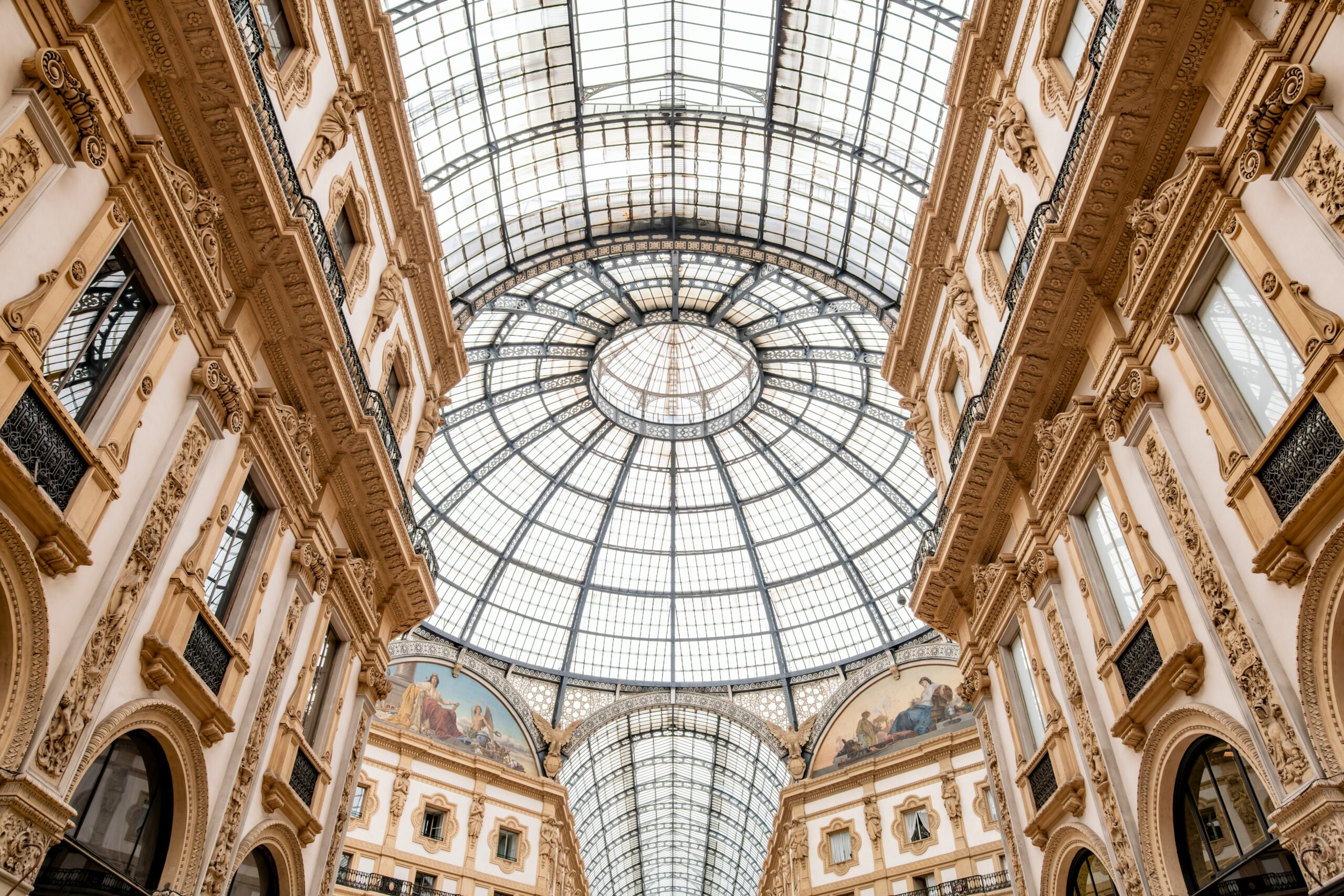
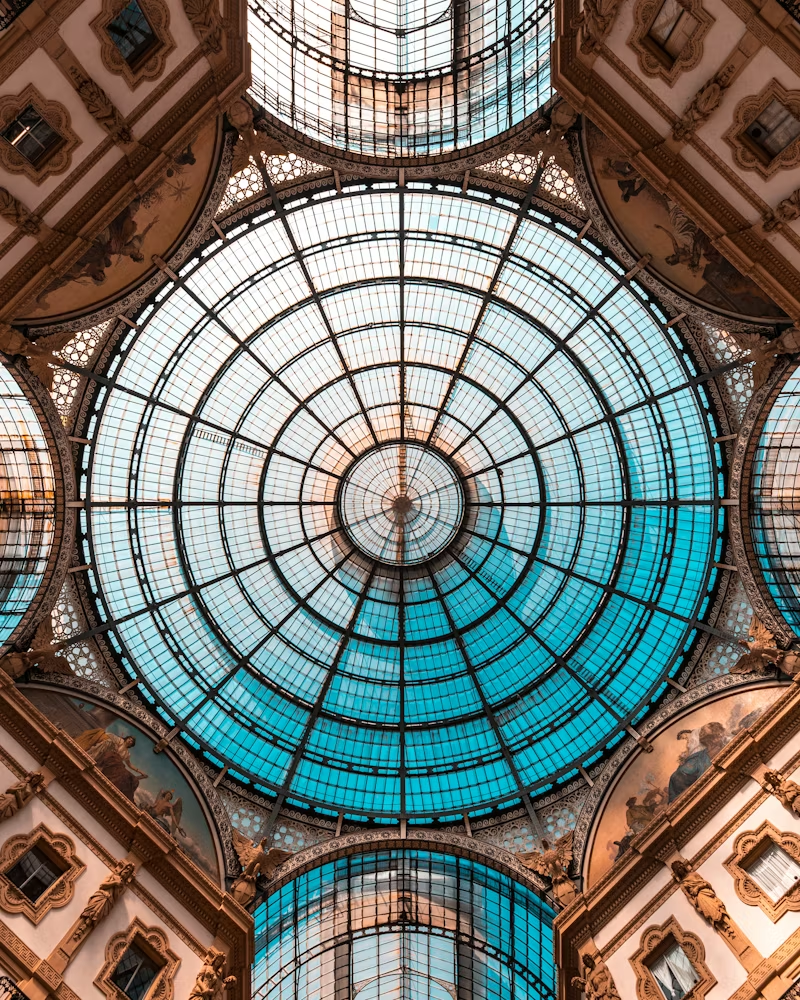
- It is famous for its 19th-century glass-and-iron vaults, monumental central dome, and richly detailed floor mosaics.
- Even if you never enter a boutique, the arcade is worth visiting for architecture, atmosphere, coffee culture, and people-watching alone.
- Weekday mornings are best for cleaner photos, while evenings are best for drama, light, and that unmistakable Milan mood.
- A realistic visit lasts 30 to 60 minutes for a quick stop, or up to 2 hours if you add a café, slow browsing, and nearby sights.
Why Galleria Vittorio Emanuele II Is Worth Visiting
Some attractions impress you because they are huge, loud, or difficult to forget. The Galleria Vittorio Emanuele II works differently. It pulls you in through atmosphere. You walk in expecting a beautiful shopping arcade and quickly realize that the space feels more ceremonial than commercial. The scale of the glass roof, the symmetry of the intersecting passageways, the polished stone underfoot, and the movement of people beneath the central dome all create a kind of urban theater.
That is why this place continues to matter even for travelers who are not interested in luxury shopping at all. Yes, the storefronts are part of the identity. But the Galleria is more than retail. It is one of those rare city spaces where architecture, history, daily life, and tourism overlap so naturally that the visit never feels forced. You do not need a museum ticket, a guided entry slot, or a complicated plan. You simply step inside and Milan changes tempo.
It also helps that the arcade is embedded in the heart of the city. Because it sits between the Duomo and La Scala, visiting it never feels like a detour. Instead, it becomes a bridge between some of Milan’s most important landmarks. That practicality is part of its genius.

What It Feels Like to Walk Through the Galleria
The first thing I noticed here was not actually the shops. It was the light. Even on a busy day, the glass vaults diffuse daylight in a way that makes the whole arcade feel softer and more theatrical than the street outside. There is something almost cinematic about entering from Piazza del Duomo, where the crowd is dense and energetic, and then suddenly finding yourself under this elegant structure where the noise seems to reorganize itself into echoes.
At ground level, the Galleria feels both grand and strangely intimate. That contrast is part of its charm. The ceiling and dome make you look up with a kind of awe, but the cafés, window displays, footsteps, and rituals on the mosaic floor keep the experience human and alive. It never feels frozen like a monument that people only photograph from a distance. It feels used. It feels inhabited.
I also think it is one of the best places in Milan to understand how style works in everyday life. You are not just looking at architecture. You are watching how locals meet, how travelers slow down, how people pause for espresso, how fashion and routine mix together under one roof. In that sense, the Galleria is not only beautiful. It is socially revealing.
If you arrive too quickly and rush through, you may register it as “a fancy passage.” But if you stop for even ten minutes and let yourself look up, then down, then across, the whole place opens up. That is when it becomes memorable.
Key Visitor Information
| Location | Piazza del Duomo, 20123 Milan, Italy |
| Entry | Free for the arcade itself; shopping and dining have their own pricing |
| Best Time | Weekday mornings for photos, evenings for atmosphere |
| Nearest Metro | Duomo Station (M1 / M3) |
| Nearby Major Sights | Duomo di Milano, Teatro alla Scala, Piazza Mercanti |
| Accessibility | Generally accessible, though peak-hour crowds can slow movement |
| Official Tourism Reference | YesMilano |
Why the Architecture Still Feels Extraordinary
The Galleria is often introduced as one of the oldest shopping arcades in Italy, but that phrase alone does not explain the experience. The real power of the place is how confidently it occupies space. The iron-and-glass roof does not feel like a practical cover thrown over a walkway. It feels like a statement about modernity, elegance, and urban ambition.
Standing at the center beneath the dome, you can feel how carefully the space was designed to produce awe without becoming cold. The intersecting arcades form a cross-shaped plan that channels movement in several directions at once, yet the eye is always drawn upward. This is one reason the Galleria photographs so well: the structure gives visitors a natural focal point without asking them to pose against anything artificial.
Another detail that makes the arcade richer than a quick glance suggests is the floor. Many first-time visitors spend the first few minutes staring only at the ceiling. Then they notice the mosaics underfoot and realize the Galleria is designed vertically — up and down — rather than only as a corridor to pass through.
That balance of engineering and ornament is what keeps the place from feeling dated. It belongs to the 19th century, but it does not feel trapped there.
What Makes the Galleria Unique
A 19th-century masterpiece in iron and glass
Built to express Milan’s urban confidence, the arcade still feels monumental rather than merely historic. The dome and vaults transform a walk through the city center into an architectural experience.
The bull mosaic good-luck ritual
One of the most famous local traditions is the bull mosaic on the floor. Many visitors spin on their heel over the emblem for luck, and the ritual gives the Galleria a playful human side beneath all the elegance.
A place where Milan performs itself
During events like Fashion Week and even on ordinary evenings, the Galleria becomes one of the city’s best stages for observation. It is not just a place to see architecture. It is a place to see Milan being Milan.
Best Things to Do Inside Galleria Vittorio Emanuele II
- Photograph the dome: stand near the central octagon and look straight up for the most balanced composition.
- Admire the floor mosaics: many visitors miss the details because the roof demands so much attention.
- Try the bull mosaic ritual: whether you believe in luck or not, it is one of the most recognizable traditions in the arcade.
- Pause for coffee or aperitivo: the Galleria feels much more complete when you experience it at a slower rhythm.
- Window-shop heritage luxury brands: even without spending anything, the visual merchandising is part of the cultural atmosphere.
- Walk through in both directions: entering from the Duomo side and exiting toward La Scala changes the visual experience.
How Long Should You Spend Here?
If your goal is simply to admire the architecture, take a few photos, and continue toward nearby sights, 30 to 45 minutes is enough. That is the efficient traveler version of the visit. It works, but it only captures the surface.
A better first visit is usually 60 to 90 minutes. That gives you time to walk through from both sides, pause at the central dome, notice the floor mosaics, watch people for a bit, and sit down for coffee or aperitivo. If you enjoy photographing architecture carefully or you like to linger over details, the Galleria can easily expand toward 2 hours without feeling excessive.
My advice is not to over-schedule it. The arcade rewards unhurried curiosity more than checklist speed.
How to Get There
The easiest access is via Duomo Metro Station (M1 / M3). Once you emerge in the Duomo area, the Galleria is only steps away, which is one reason it fits so naturally into almost every central Milan itinerary.
If you are already walking around the historic center, you do not really need to “plan transport” for this stop at all. It functions more like an elegant connector between places you were probably going to visit anyway. That is part of what makes it so valuable: low effort, high payoff.
Travelers arriving with a full day in Milan often combine the Galleria with the Duomo complex, nearby squares, and La Scala in one smooth sequence rather than treating it as a separate attraction.
Nearby Attractions You Can Pair With It
- Duomo di Milano: the cathedral and rooftop terraces are immediately next to the arcade and are the most obvious pairing.
- Teatro alla Scala: one of the world’s great opera houses sits just beyond the Galleria, making the transition feel architecturally seamless.
- Piazza Mercanti: a quieter, older pocket of Milan that works well if you want a short detour away from the main crowd flow.
- Museum and shopping streets nearby: the central district around the arcade makes it easy to build a compact, elegant Milan walking route.
Galleria Vittorio Emanuele II vs Other Milan Experiences
| Place | Best For | Main Trade-Off |
|---|---|---|
| Galleria Vittorio Emanuele II | Architecture, atmosphere, coffee, elegant city rhythm | Can feel crowded and expensive around dining/shopping |
| Duomo di Milano | Monumental religious architecture, rooftop views | Usually needs more time and often involves ticket planning |
| La Scala area | Music history, opera culture, refined city atmosphere | More niche if you are not especially interested in performing arts |
| Brera stroll | Neighborhood charm, slower walking, galleries and cafés | Less iconic for first-time “must-see” architecture |
Who Should Visit?
The Galleria works particularly well for first-time Milan visitors, architecture lovers, photography-minded travelers, couples, luxury-window-shoppers, and anyone who wants a central stop that feels both iconic and easy. It is also excellent for travelers with limited time because it delivers a high-density Milan experience without requiring separate transport or an admission ticket.
It may matter slightly less to travelers who only care about museums or who are trying to avoid the most touristed parts of the city center. Even then, though, it remains one of the few places where “touristy” and “genuinely beautiful” overlap so strongly that the visit still feels justified.
Essential Travel Tips
- Go early for photos: weekday mornings usually give you cleaner symmetry shots and a calmer mood.
- Come back after dark: the evening lighting makes the arcade feel more theatrical and romantic.
- Look down as well as up: the mosaics are part of the experience, not just the ceiling.
- Keep expectations realistic on price: cafés and restaurants in iconic locations often cost more than ordinary city stops.
- Be mindful of peak-hour crowds: central Milan stays busy, so keep bags secure and avoid stopping in the middle of the main flow.
- Use it as a connector, not a detour: the Galleria works best when it is part of a wider Duomo–La Scala walk.
Related Trip-Nexus Guides
FAQ
Is entry to Galleria Vittorio Emanuele II free?
Yes. The arcade itself is free to enter. Costs only apply if you shop, dine, or book something through individual venues.
How long should I spend here?
Most travelers spend 30–60 minutes for architecture and photos, or 1–2 hours with a coffee stop and slower browsing.
What is the best time to visit?
Weekday mornings are usually best for photos and breathing room. Evenings are best for atmosphere and city energy.
Is it wheelchair accessible?
Generally yes. The central surfaces are manageable for many visitors, though the arcade can become crowded during peak periods.
Do I need to shop to enjoy the Galleria?
Not at all. Many people visit purely for architecture, photography, people-watching, and the atmosphere of central Milan.
What is the bull mosaic tradition?
Many visitors spin on their heel over the bull emblem on the floor for good luck. It is one of the arcade’s best-known traditions.
Can I combine it easily with the Duomo?
Yes. In fact, that is the most natural way to visit it. The Galleria sits directly in the historic center between the Duomo area and La Scala.
Is it worth visiting at night?
Absolutely. If daytime shows you the details, nighttime gives you the mood. The lighting makes the arcade feel more cinematic and elegant.
Official Links
Google Map
Final Thoughts
Galleria Vittorio Emanuele II is one of those places that proves a city can express itself through a passageway. It is elegant without feeling empty, famous without feeling meaningless, and central without feeling disposable. Even if you arrive expecting “just a luxury arcade,” you usually leave with something more memorable: a sense of how Milan turns everyday movement into style.
If you have limited time in the city, this is one of the easiest yes decisions you can make. And if you have more time, it becomes even better because you can let the arcade slow you down instead of rushing you through.