Why Toulouse Capitole Square Feels Like the True Center of the City
Toulouse Capitole Square is the civic and emotional center of Toulouse, a grand urban stage where rose-colored brick, public life, and centuries of local identity come together in one of southern France’s most memorable public spaces.
Search Intent
If you are wondering whether Place du Capitole is just a quick photo stop or a place worth building into your Toulouse itinerary, the answer is clear: this is where the city feels most alive. It is the best place to understand Toulouse’s identity, admire its famous pink brick architecture, step into ceremonial civic rooms, and begin exploring the historic center on foot.
Quick Summary
- Place du Capitole is the symbolic heart of Toulouse and the city’s main gathering square.
- The Capitole building houses City Hall, ceremonial rooms, and the city’s historic theater complex.
- The square works best as both a sightseeing stop and a launch point for walking the old center.
- Nearby highlights include Saint-Sernin Basilica, the Jacobins Convent, and Victor Hugo Market.
- Morning and late afternoon give you the best light, atmosphere, and photo conditions.
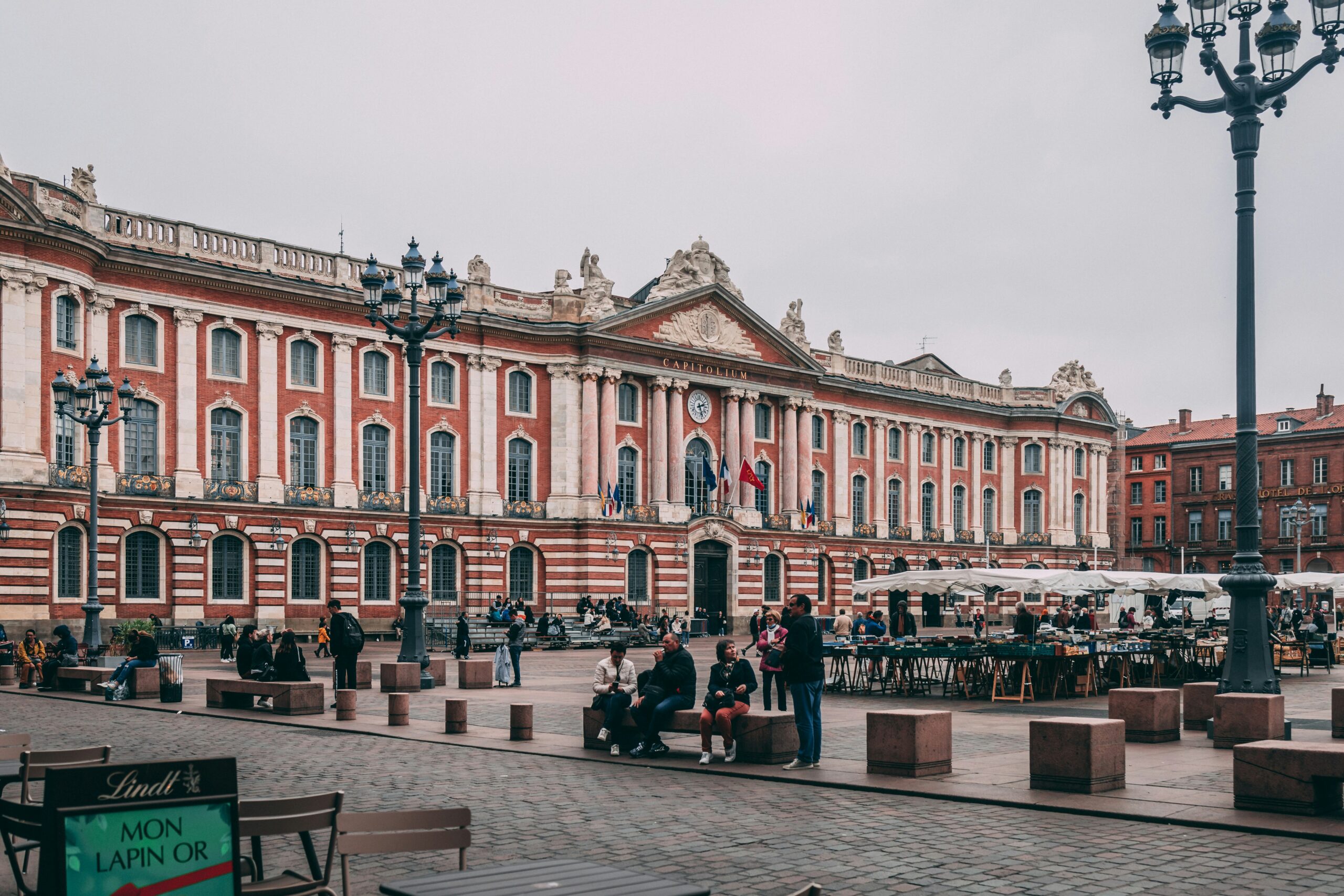
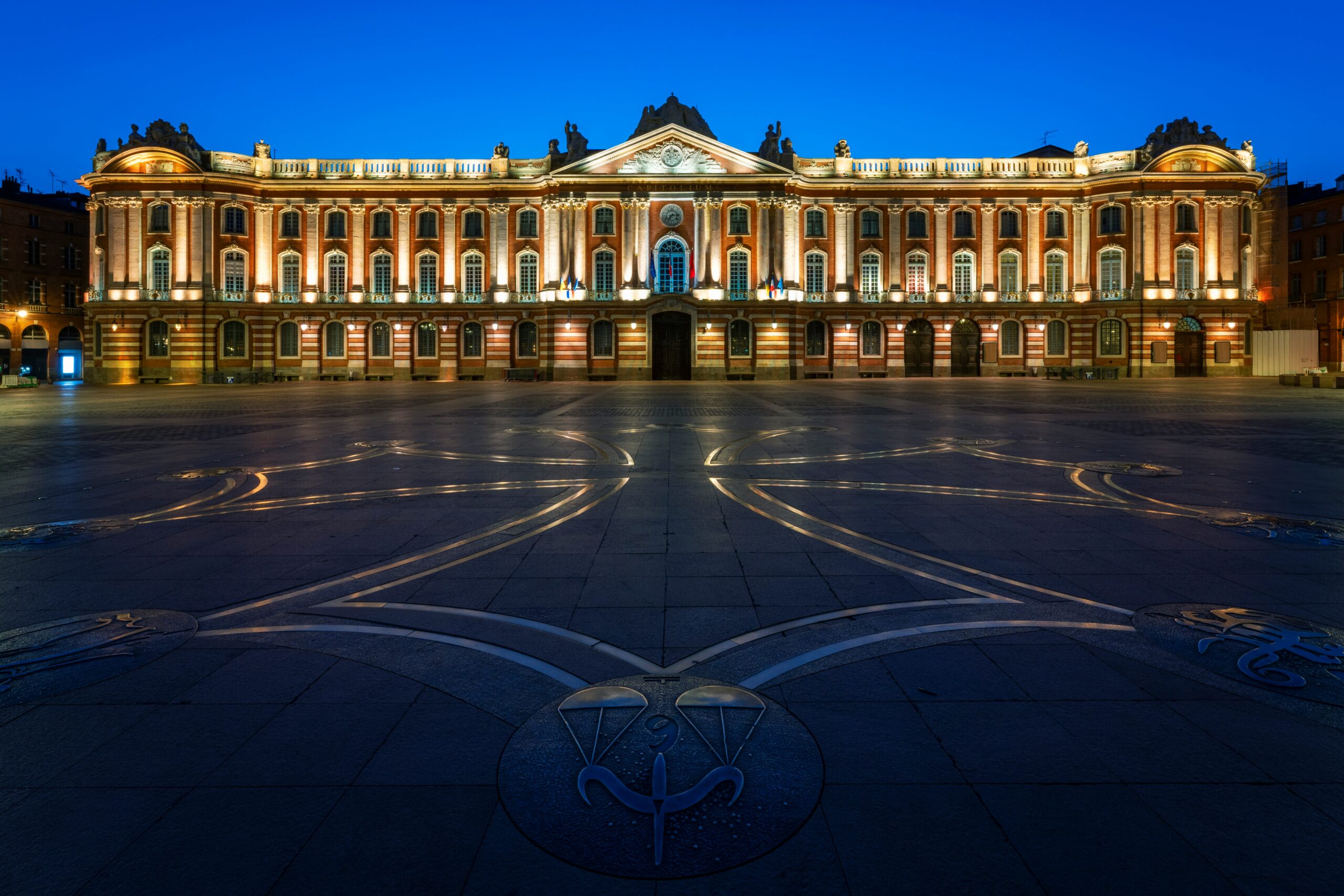
Toulouse Capitole Square sits right at the center of the Pink City, and it feels like the one place where everything in Toulouse converges at once: history, politics, cafés, daily routine, celebration, and spectacle. Some city squares look impressive for five minutes and then go flat. This one does not. I think that is because Place du Capitole is not only beautiful; it is used. People cross it on the way to work, linger there with coffee, meet friends under the arcades, gather for events, and return at night when the long façade glows softly against the open sky.
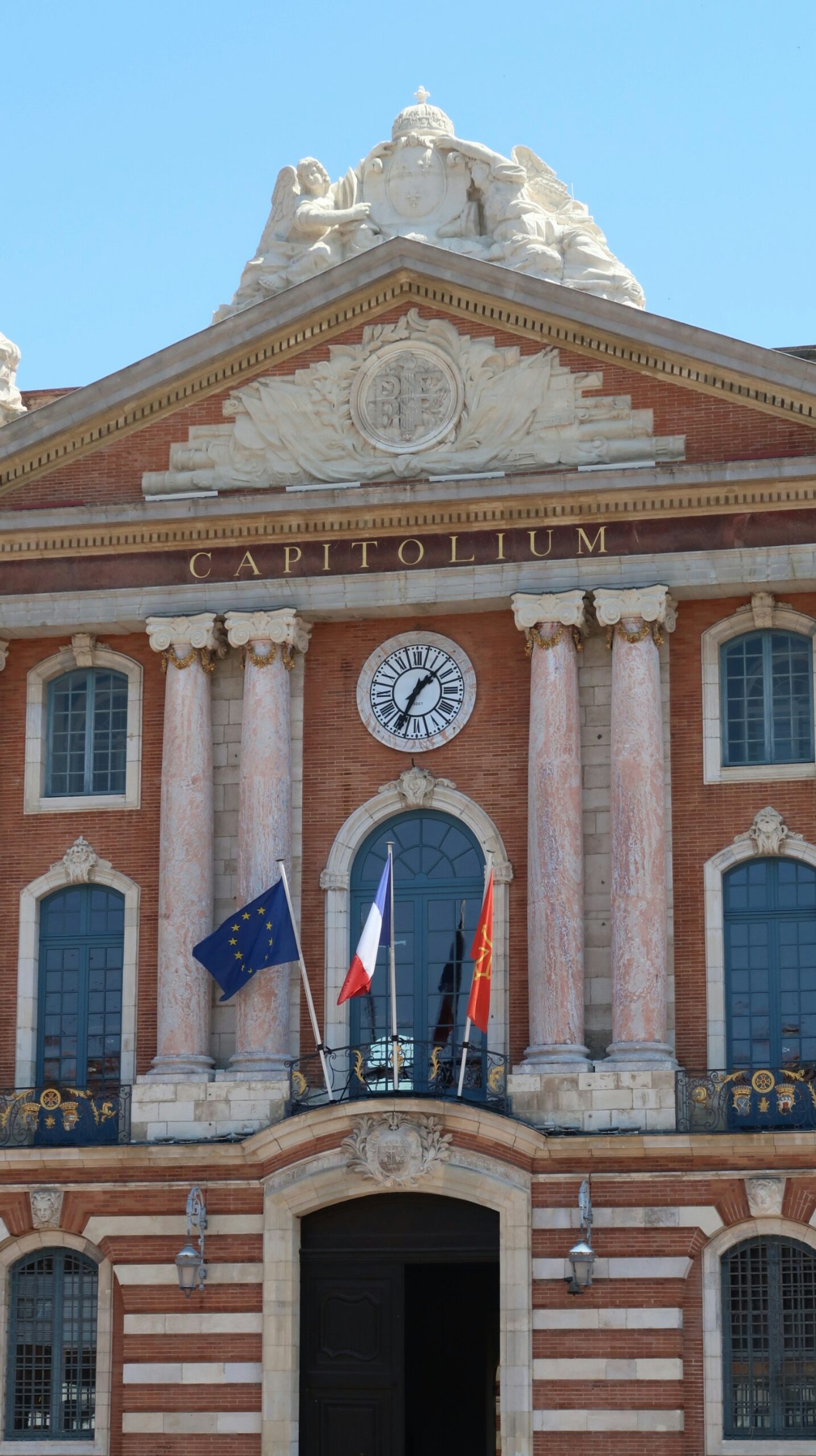
For travelers, that makes a huge difference. You are not looking at a preserved shell. You are stepping into the living center of Toulouse. The monumental Capitole façade, the famous Occitan cross pattern set into the ground, and the warm brick palette that gives Toulouse its nickname all come together here in a way that feels instantly recognizable and unmistakably local.
Why Toulouse Capitole Square Matters
A lot of European squares are important because they used to be central. Place du Capitole still is. It remains the visual and civic anchor of Toulouse, framed by cafés and historic streets and dominated by the Capitole itself, the emblematic building that today contains City Hall, the theater, and state rooms that visitors can admire. That mix of municipal power, architecture, and public life is what gives the square its unusual energy.
It is also one of the clearest places to feel the identity of Toulouse as the Pink City. The warm brick tones do not just appear on postcards; they wrap the experience of being there. When the light hits the surrounding façades in the morning or late afternoon, the square feels less like a formal plaza and more like a stage set built from glowing terracotta.
What It Feels Like to Stand There
The first thing I would notice is the sense of release. You move through tighter streets, then suddenly the city opens. The square is broad without feeling empty, formal without feeling stiff. There is often motion everywhere: footsteps crossing in diagonals, chairs filling on terraces, snippets of conversation, the occasional performer, and the low urban hum that tells you this is a lived-in center rather than a museum backdrop.
The Capitole façade gives the whole space direction, but the square itself gives it rhythm. The pavement pattern helps pull your eye inward, and the famous Occitan cross motif creates a focal point that makes photos stronger than you expect. One honest travel note, though: in the middle of the day, especially under hard summer light, the square can feel more exposed than romantic. I would choose morning or golden hour every time.
History and Cultural Context
Place du Capitole is inseparable from the Capitole building itself, which has long represented municipal authority in Toulouse. Today the complex is still central to civic life while also functioning as a cultural landmark through its ceremonial rooms and its connection to the city’s major performing arts scene. That dual role is part of why the square feels more layered than many other grand plazas in France.
This area also captures Toulouse’s architectural personality. The city’s brick tradition is not decorative trivia; it shapes the color, warmth, and texture of the urban landscape. From here, you can begin to understand why Toulouse feels visually different from stone-heavy cities elsewhere in France. Even when the square is busy, that brick palette softens the scene and gives it a warmth that feels distinctly southern.
Highlights You Should Not Miss
1. The Capitole Façade
It is the visual signature of the square: stately, symmetrical, and monumental without feeling cold. It works as the classic Toulouse postcard view, but in person the scale is what lands most strongly.
2. The Occitan Cross on the Ground
The inlaid cross in the center of the square is one of those details people often photograph quickly and forget, but it matters. It ties the square directly to regional identity and gives the plaza an immediate sense of place.
3. The Arcades and Interior Rooms
The arcades are not just for shelter. They frame the square beautifully, create a softer transition into the building, and can lead you toward the Salle des Illustres and other ceremonial interiors that many casual visitors skip.
4. Day-to-Night Atmosphere Shift
The square changes character across the day. Morning feels spacious and elegant. Afternoon feels busier and more civic. Evening brings café energy and better color in the brick. If you have time, this is absolutely a place worth seeing twice.
Key Visitor Information
| Feature | Details |
|---|---|
| Location | Place du Capitole, 31000 Toulouse, France |
| Main Landmark | Le Capitole (City Hall, ceremonial rooms, theater complex) |
| Best Visit Time | Morning or late afternoon for softer light and better atmosphere |
| Suggested Duration | 45 minutes to 2 hours, longer if you pair it with nearby sights or a performance |
| Capitole General Reception Hours | Monday to Friday, 8:30–18:00, subject to exceptional changes |
| Entry Fee | The square itself is free |
| Nearest Metro | Capitole station, Toulouse Metro Line A |
| Accessibility | Central location with nearby public transport and accessible routes |
The Cultural Experience Around the Square
What makes this stop richer than a simple architecture visit is what surrounds it. The Capitole is linked to Toulouse’s performing arts identity through the city’s major opera and theater institutions. That means the square can feel both administrative and artistic at the same time, which is not a combination you get everywhere.
Then there is the wider walking experience. Within a short radius, you can move from the square to places that deepen your understanding of Toulouse: Saint-Sernin Basilica, one of the great Romanesque landmarks associated with the Routes of Santiago de Compostela; the Jacobins Convent with its famous stone palm tree; and Victor Hugo Market, a favorite stop for regional produce and classic Toulouse flavors.
How to Visit Toulouse Capitole Square Well
- Arrive in the morning if you want calmer photos and gentler light.
- Cross the square fully once before stopping. This helps you feel the scale first.
- Stand under the arcades for your best façade angle and a break from direct sun.
- Check whether the Capitole interiors are accessible during your visit window.
- Walk onward to Saint-Sernin or the Jacobins Convent instead of ending your visit here.
- Finish with food at Victor Hugo Market or a nearby terrace if you want the experience to feel complete.
Essential Travel Tips
Nearby Attractions and Local Food Stops
Saint-Sernin Basilica is one of the strongest next stops because it adds religious and Romanesque depth to your Toulouse itinerary. It is associated with the Routes of Santiago de Compostela and recognized through UNESCO’s heritage framework.
Jacobins Convent offers a very different mood: quieter, more contemplative, and architecturally striking thanks to its celebrated stone palm structure and calm garden setting.
Victor Hugo Market is where your visit shifts from monuments to appetite. If you want Toulouse to move from “beautiful city” to “city I would genuinely return to,” this is where that usually happens.
For local flavors, look for cassoulet, duck specialties, regional cheeses, and a glass of Fronton wine. Toulouse is not only photogenic; it rewards people who build food into their route.
Toulouse Capitole Square vs Other City Squares
| Criteria | Toulouse Capitole Square | More Monument-Heavy Squares |
|---|---|---|
| Atmosphere | Lively, civic, everyday, social | Often more formal or ceremonial |
| Visual Identity | Distinct pink brick palette | Usually stone-dominant |
| Usefulness for Travelers | Excellent orientation point for the old center | Sometimes better for quick viewing than route planning |
| Best For | First-time visitors who want the city’s pulse | Visitors focused mainly on architecture photography |
Who Should Visit
This place is ideal for you if:
- You want to understand Toulouse quickly through one highly central landmark.
- You like city squares that feel active rather than purely monumental.
- You enjoy architecture, people-watching, and walkable historic centers.
- You want an easy base for pairing monuments, markets, and food in one route.
- You only have a short stay and need one reliable anchor point in the city.
FAQ
Is Toulouse Capitole Square worth visiting?
Yes. It is the city’s symbolic and practical center, and one of the best places to begin exploring Toulouse on foot.
How long do you need at Place du Capitole?
About 45 minutes is enough for a quick visit, but 1 to 2 hours feels more satisfying if you include the nearby streets, arcades, or a café stop.
Can you enter the Capitole building?
You can access parts of the Capitole complex depending on schedules and public access conditions, so it is worth checking the current official information before visiting.
What is the best time to visit?
Morning and late afternoon are best for light, atmosphere, and photography. Midday can feel brighter and more exposed.
What is nearby?
Saint-Sernin Basilica, the Jacobins Convent, Victor Hugo Market, shopping streets, and many cafés are all within easy walking distance.
Is Place du Capitole free?
Yes, the square itself is free to visit.
How do you get there?
The easiest public transport option is Capitole station on Toulouse Metro Line A.
Is it good for first-time visitors to Toulouse?
Absolutely. It is probably the single most useful first stop in the city because it combines orientation, architecture, atmosphere, and access to nearby highlights.
More France Travel Ideas on Trip Nexus
Official and Authoritative Resources
Google Map
Final Verdict
Place du Capitole is not just Toulouse’s postcard square. It is the city’s emotional center and one of the most useful places to begin understanding the Pink City. If you want architecture, atmosphere, civic history, nearby food, and easy walkability all in one stop, this square more than delivers.
My honest take: even if your Toulouse itinerary is short, do not treat this as a five-minute photo detour. Give it real time, return at a better hour if the midday light feels flat, and let it introduce the city properly. Toulouse makes more sense after Place du Capitole.