1. The Maritime Engine: Beyond the Postcard
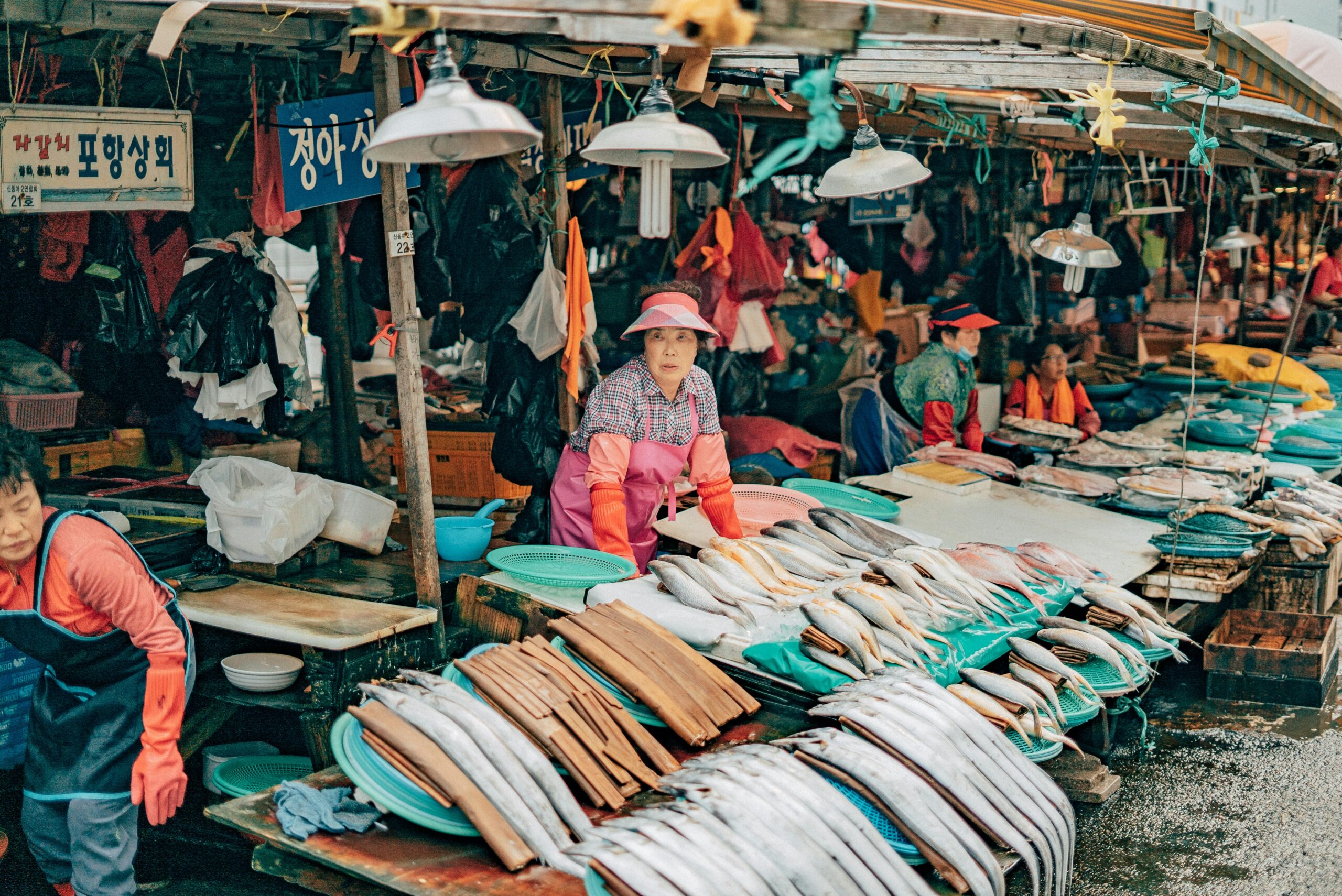
Jagalchi Market is not a sanitized attraction; it is a sprawling, high-stakes industrial ecosystem that defines the economic pulse of Busan. Since its formalization in the mid-20th century, Jagalchi has evolved from a simple gathering of war-torn refugees to a global benchmark for live seafood logistics.
To understand Jagalchi in 2026, one must appreciate the “Jagalchi Ajumma”—the legendary female vendors whose grit and resilience have become symbols of the city itself. These women managed the market while the men were at sea, creating a unique matriarchal trade structure that still governs the floor today. When you enter the market, you are stepping into a historical continuum that predates the high-rise apartments and neon lights of modern Busan.
“Entering the Jagalchi main hall feels like the ocean has finally pushed its way into the city streets. The air is thick with the scent of brine and industrial-strength filters. You hear the rhythmic ‘tink-tink’ of knives on polycarbonate boards and the sudden splash of a five-kilogram octopus challenging its tank. It is loud, it is wet, and it is the most honest conversation Busan will ever have with you.”
2. Honestly? The Experience is Briny and Beautifully Chaotic
👟 Tactical Warning: The Footwear Failure
I’ve made the mistake of bringing high-end suede boots to Jagalchi—don’t follow my lead. The market is a 24/7 “wet zone.” Saltwater from the tanks is constantly being sprayed and drained across the aisles. By the time you find your vendor, your shoes will be coated in a fine layer of ocean brine. In 2026, the floors have been upgraded for better traction, but they are still slick. If you aren’t wearing water-resistant soles with significant grip, you’ll spend more time looking at your feet than at the world-class red snapper in front of you.
💡 The “Decision Fatigue” Strategy
With over 500 stalls in the main building and hundreds more outside, choice fatigue is a real threat to your appetite. My tested 2026 strategy: The One Raw, One Cooked Rule. Do not try to assemble a 10-dish feast on your first visit. Pick one premium fish (like Flounder or Sea Bream) for *Hoe* (Korean sashimi) and one hearty *Maeuntang* (spicy fish stew) to follow. The stew is essentially “Busan in a pot”—it uses the umami from the fish bones and heads, balanced with Gochugaru (red chili flakes), to reset your palate after the delicate raw fish.
3. A vs B: The Chronological Strategy
In 2026, your arrival time at Jagalchi Market dictates not just the crowd level, but the very nature of the seafood you encounter. The market breathes in a cycle that most travelers fail to leverage.
PRO STRATEGY 2026 Insider Hacks
-
01The “Total Math” Verification
Never let a vendor hand your fish to a runner before you agree on a single combined figure. In 2026, some vendors may quote a low seafood price only for you to find an expensive “service charge” on your final bill upstairs. Confirm: “Does this include the setup and the soup?”. -
02The 7th Floor “Skyline” Pivot
95% of tourists leave after the 2nd floor. The Hack: Take the elevator to the 7th floor of the main Jagalchi building. There is a free outdoor observation deck that offers the single best view of Busan Harbor, including the giant crane ship silhouettes and the colorful houses of Gamcheon in the distance. It’s the ultimate “calm” after the market “storm.” -
03The “Poker Face” Walk
Walk the center aisle twice. On the first pass, don’t make eye contact. This establishes your presence as a “buyer” rather than a “wanderer”. Vendors will drop their initial “tourist price” on your second pass once they see you’ve already scanned the competition.
4. The “Seafood to Skyline” Route: Step-by-Step
Phase 1: The Arrival (09:00 AM). Use Metro Line 1 to Jagalchi Station. Take Exit 10. Walk past the “Gorae-sa” Eomuk shop toward the smell of salt and diesel.
Phase 2: The Tactical Scan (09:15 AM). Enter the main building. Walk the ground floor from one end to the other. Look for stalls where the tanks have high-velocity water movement and clear, odorless water. This indicates healthy, active catch.
Phase 3: The Transaction (09:30 AM). Pick a Sea Bream or Flatfish. Negotiate to include a plate of small sea squirts (*Meongge*) or abalone as a “service” (free gift). Confirm the weight on the digital scale.
Phase 4: The Feast (10:00 AM). Follow the vendor up to the 2nd floor. Ask for a table by the window overlooking the Yeongdo Bridge. Eat slowly and let the Maeuntang simmer for at least 15 minutes before your first bowl—it gets better with time.
Phase 5: The Cultural Outro (11:30 AM). Exit through the rear toward the docks. Walk 5 minutes to BIFF Square for a *Ssiat Hotteok* (seed-filled pancake) as dessert—the sugar balances the savory sea meal perfectly.
5. Geographic Context
6. Expert FAQ: The Honest Clarifications
Optimize Your 2026 Korea Expedition
7. Expert Final Verdict
Field Data Verified: March 2026 • Curated by the Trip Nexus Busan Logistics Team.