Hanoi Old Quarter: What It Actually Feels Like (Chaos, Rhythm & Real Life)
This Hanoi Old Quarter guide is for travelers who want more than a checklist. Hanoi Old Quarter is the historic core of the capital, but it does not feel frozen in the past. It feels alive, loud, fragrant, messy, and strangely magnetic. The district sits in Hoan Kiem District and is often described as the city’s soul because daily life still spills directly into the street.
I remember expecting a beautiful heritage area with charming shopfronts and a relaxed walking route. Instead, the first few minutes felt like total sensory overload. Motorbikes brushed past, stools blocked the pavement, and every turn seemed noisier than the last. Then something shifted. Once I stopped trying to control the rhythm and just moved with it, the Old Quarter started making sense. That is the real key to enjoying it.
Search Intent: What This Guide Helps You Do
✅ Quick Summary
Why Hanoi Old Quarter Still Matters
The Hanoi Old Quarter matters because it is not a decorative historic quarter built for visitors. It is still part of the city’s working body. Traders, families, temple-goers, delivery riders, cooks, shoppers, and travelers all share the same dense physical space. That creates friction, but it also creates authenticity. You do not come here to stand outside history and admire it from a safe distance. You come here to move through it.
Many famous urban districts around the world become polished versions of themselves. They may be attractive, but they lose the feeling of daily necessity. Hanoi Old Quarter has not fully gone in that direction. Yes, there are souvenir shops, boutique stays, and curated coffee spots, but they exist alongside mechanics, household goods, worship spaces, hardware stores, and tiny kitchens operating on the pavement. That overlap is the point.
If you enjoy places that feel a little too clean and too perfectly arranged, the Old Quarter may frustrate you. But if you are looking for a place with texture, contradiction, and human rhythm, this district delivers something more memorable than polished beauty. It offers presence.
What It Feels Like to Walk Here
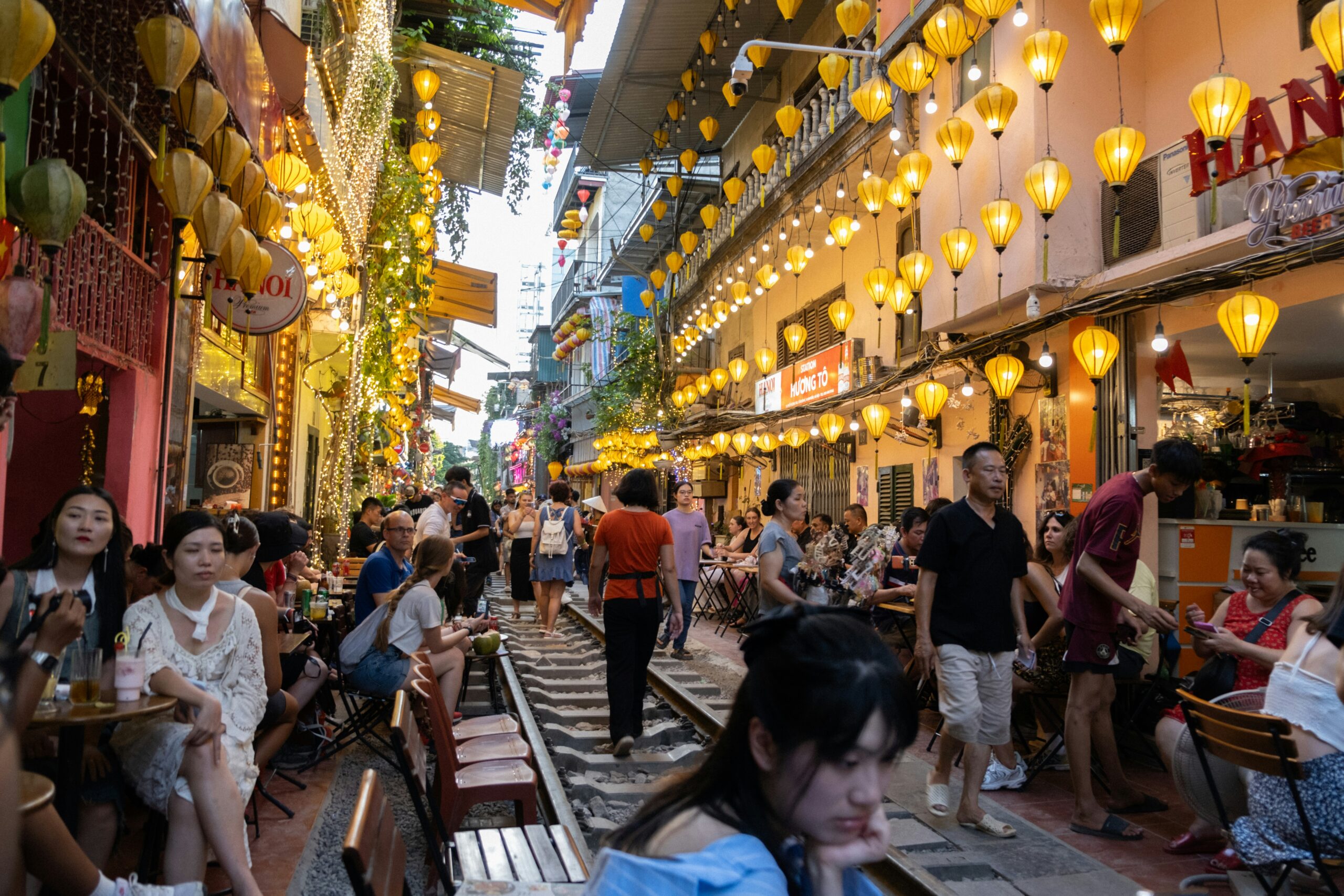
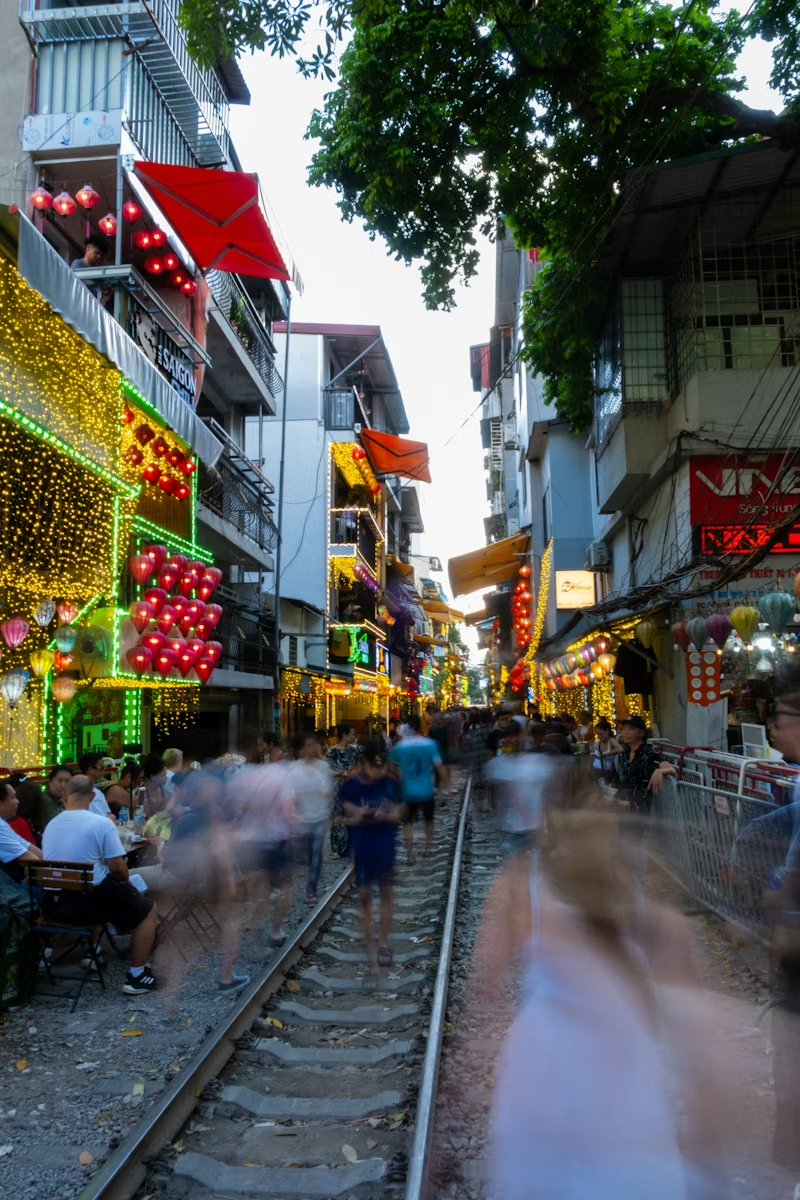
The first thing that usually hits you is not the architecture. It is the motion. The district does not wait for you to adjust. Scooters glide through narrow lanes, people carry boxes across your path, metal shutters rattle open, and plastic stools seem to appear exactly where you thought you were about to step. At first, it can feel like a city refusing to make room for you.
Then the second layer arrives: smell. Broth, charcoal smoke, frying garlic, coffee, rain on stone, fruit, incense. This is one of the reasons Hanoi Old Quarter becomes memorable so quickly. It is not just visually dense. It is emotionally immersive. Your senses have too much to process, and that is strangely the experience itself.
I made a classic mistake here. I tried to follow a clean digital route from point A to point B to point C. I wanted efficiency. That strategy collapsed almost immediately because the sidewalks kept dissolving into parked scooters, low tables, or shop displays. I ended up stepping into the street again and again, annoyed that my “plan” was failing. Once I stopped insisting on efficiency, the visit improved. The Old Quarter rewards curiosity more than control.
A good Hanoi Old Quarter walk is not about covering every famous street. It is about accepting the district’s rhythm, choosing a few meaningful anchors, and letting the spaces in between become part of the story.
By evening, the atmosphere changes again. The light softens, signs glow, more tables appear, and the district becomes an enormous shared dining zone. This is when many first-time travelers suddenly fall in love with it. The same streets that felt overwhelming in the afternoon start to feel cinematic after dark.
The Meaning of the “36 Streets”
The Old Quarter is often associated with the idea of the 36 Streets, a traditional guild-based structure in which individual streets became known for particular crafts or trades. This is one of the key reasons the district feels so historically distinct. It was not simply an old residential zone. It was a commercial ecosystem where specialization shaped identity.
Even if the original trade system is no longer preserved in a pure form, traces of that logic still survive in the street names and commercial character of certain areas. Hang Bac remains associated with silver, while Hang Gai is still one of the best-known streets for silk and textiles. The street-level continuity matters because it gives the district a historical spine. You are not wandering through random lanes. You are walking through a long economic memory.
That memory is not presented in a sterile museum style. It appears in fragments: a temple squeezed between shopfronts, an old facade above a modern sign, a lane that still feels tied to a trade even after decades of change. That layering is part of what makes the Old Quarter more rewarding than a place that has been too neatly restored.
Hanoi Old Quarter Key Visitor Information
Best Things to Do in Hanoi Old Quarter
Start with a purposeful wander. This sounds vague, but it is the best advice. Choose one or two anchor streets, then allow side lanes and pauses to shape the rest. A rigid list can turn the district into a task. A flexible route turns it into an experience.
Visit Bach Ma Temple. One of the most atmospheric historical stops in the area, it offers a spiritual counterweight to the commercial intensity outside. It is also a reminder that the district was never only about trade. Ritual and commerce have always existed side by side here.
Explore Hang Gai and Hang Bac. These streets are some of the clearest windows into the old trade identity of the quarter. Even when the products become more tourist-facing, the sense of specialization remains part of the district’s DNA.
Look for an egg coffee stop. Hanoi’s coffee culture is one of the best ways to slow the experience down. I strongly prefer taking a pause halfway through the walk rather than waiting until the end, because the district can wear you down if you keep moving without reset points.
Spend time around Dong Xuan Market. Even if you do not plan to shop seriously, the area helps you understand the commercial pulse of the quarter. It feels functional rather than decorative, and that is exactly why it matters.
🦊 Insider Hacks and Real-World Tips
- Crossing the street: Walk steadily and predictably. Stopping suddenly is often worse than continuing calmly.
- Do not chase every famous food spot: The quarter is full of good options, and waiting in every viral line can destroy your rhythm.
- Use a ride-hailing backup: If your feet are done, inDrive can help you negotiate a practical return route.
- Choose one coffee stop on purpose: Without breaks, sensory fatigue builds faster than many first-time visitors expect.
- Do not mistake chaos for danger: The district can feel intense without being hostile. The challenge is rhythm, not fear.
A Good Half-Day Hanoi Old Quarter Walking Loop
- Start at Hoan Kiem Lake. This gives you breathing space before entering the district’s density. If you need a gentler beginning, this is the best transition point.
- Enter the Old Quarter gradually. Move toward the narrower commercial streets rather than trying to jump immediately into the busiest section.
- Visit Bach Ma Temple. Use it as an early cultural anchor that slows your pace and adds depth beyond shopping and food.
- Continue toward Hang Gai and nearby lanes. This area gives you a strong sense of the quarter’s trade identity and visual texture.
- Pause for coffee. Do this before fatigue sets in. A short break changes the whole quality of the second half of your walk.
- Head toward Dong Xuan Market. The area becomes more openly commercial and gives you a more functional look at local movement.
- Finish with a contrast stop. Either return toward Hoan Kiem Lake or continue toward the Temple of Literature if you want a calmer historical finish.
A vs B: Hanoi Old Quarter vs French Quarter
Who Will Love Hanoi Old Quarter—and Who Might Struggle
You will probably love it if you enjoy street life, food culture, visual detail, urban history, people-watching, and places that feel genuinely lived in. It is especially rewarding for travelers who do not panic when plans loosen.
You may struggle here if you need clean sidewalks, low noise, wide personal space, or highly organized movement. None of those things are the district’s strengths. That does not make it bad. It just makes it demanding.
For me, the district became enjoyable only after I accepted that it was not going to behave like an orderly heritage zone. Once I adjusted that expectation, nearly every frustration became part of the place’s character instead of a problem to fix.
FAQ: Hanoi Old Quarter
Is Hanoi Old Quarter worth visiting for first-time travelers?
Yes. For many visitors, it is the place that most clearly communicates Hanoi’s identity. It can be intense, but it is rarely forgettable.
How much time should I spend in Hanoi Old Quarter?
Plan for at least 3 to 5 hours. A half-day feels right for most travelers, especially if you include coffee and food breaks.
Is Hanoi Old Quarter walkable?
Yes, but “walkable” here does not mean comfortable in the usual sense. Pavements are frequently interrupted, so expect to adapt constantly.
What is the best time to visit?
Early morning offers softer light and local rhythm, while evening is best for atmosphere and street food.
Is the Old Quarter safe?
It generally feels active rather than threatening, but traffic awareness matters. The main risk for many visitors is confusion and fatigue, not fear.
Can I visit without a guide?
Absolutely. Many travelers do best by self-guiding with a few anchors instead of joining a rigid route.
What should I not do in Hanoi Old Quarter?
Do not overpack your itinerary, do not expect uninterrupted sidewalks, and do not freeze in the middle of traffic when crossing.
What nearby places pair well with the Old Quarter?
Hoan Kiem Lake works beautifully as a softer companion space, and the Temple of Literature adds a calmer cultural contrast.
Continue Your Vietnam Planning
Useful Official and Planning Links
Google Map
Final Verdict: Should You Visit Hanoi Old Quarter?
Yes—but not because it is comfortable. Visit because it feels alive in a way that many historic districts no longer do. The Old Quarter is one of those places that can irritate you and fascinate you at the same time, sometimes within the same five minutes.
If you arrive expecting order, you may leave tired. If you arrive ready to observe, adapt, pause, and wander, the district can become one of the most memorable parts of Hanoi. That was my experience. I did not love it instantly. I understood it gradually. And that slower understanding is exactly what made it stay with me.
Land lightly, walk patiently, drink coffee before your energy drops, and let the city show itself instead of forcing it into a checklist.
SEO Notes: Focus Keyword: Hanoi Old Quarter | Secondary Keywords: Hanoi Old Quarter guide, Hanoi walking route, 36 Streets Hanoi, Hanoi street food district, Hoan Kiem District travel