Saebyeol Oreum Guide (2026): Best Hiking Route, Fire Festival, and What to Expect
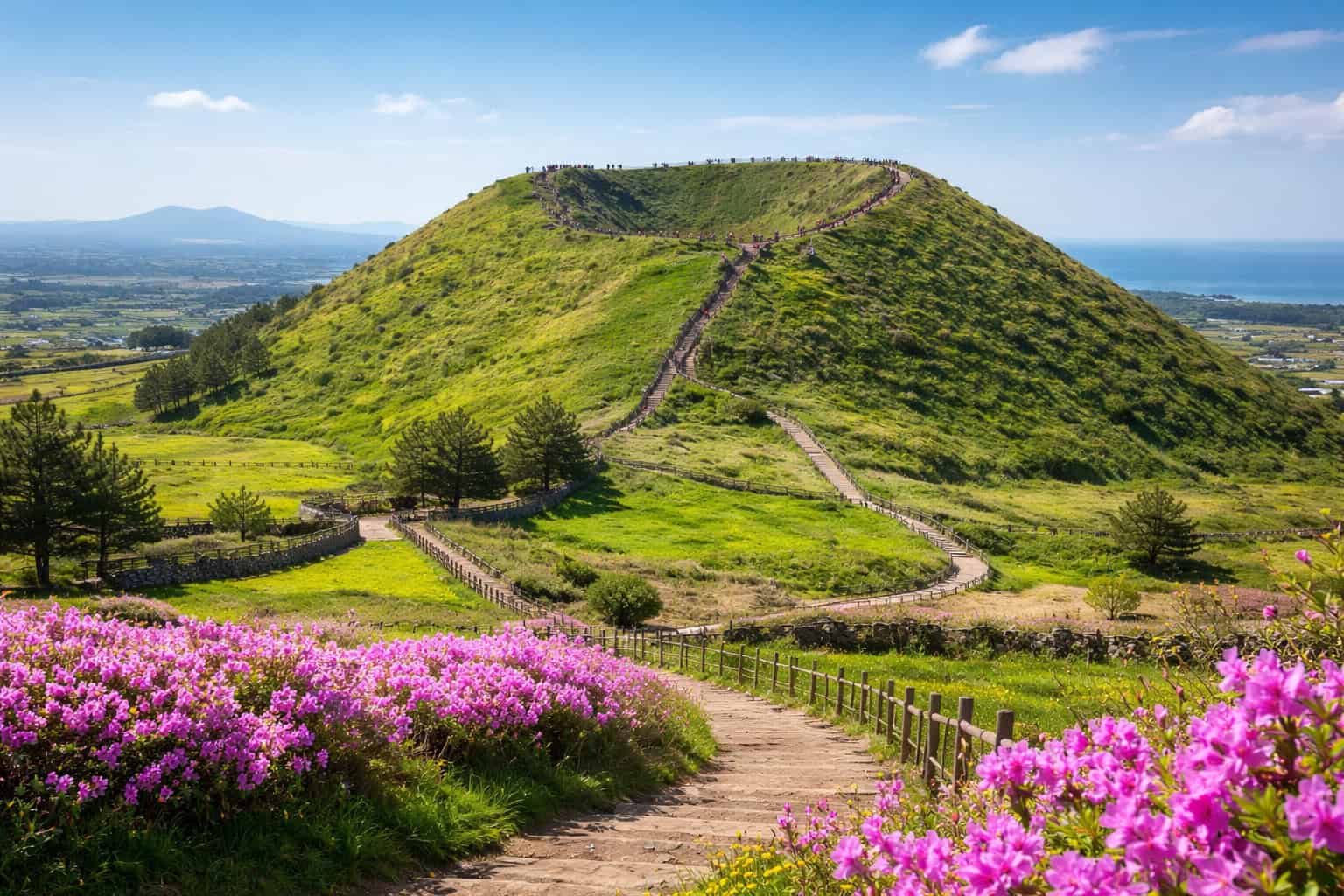
Saebyeol Oreum in Jeju is one of the island’s most memorable volcanic landscapes, known for its open ridgelines, wide western Jeju views, silver-grass season, and deep connection to the Jeju Fire Festival. It is not the tallest hike in Jeju, but it is one of the most emotionally satisfying.
When I first looked into Saebyeol Oreum, I expected a simple scenic cone that people visit mostly for sunset photos. What surprised me was how much space it seems to create around you. The landscape feels uncluttered, wind-shaped, and unmistakably Jeju. It is one of those places that looks gentle in photos, then feels much bigger once you start walking it.
Search Intent
Travelers searching for Saebyeol Oreum in Jeju usually want to know whether the hike is easy, how long it takes, what makes it different from other oreum, whether it is worth visiting outside festival season, and how to combine it with other western Jeju stops. This guide answers those practical questions while keeping the place’s atmosphere intact.
Quick Summary
- Saebyeol Oreum is one of Jeju’s most recognizable oreum and is often associated with broad ridgelines and “morning star” imagery.
- Most visitors can reach the summit area in about 30 minutes, depending on pace and chosen trail.
- The oreum has both eastern and western entrances, with the western trail generally steeper.
- October silver grass season is especially photogenic, but the oreum is rewarding year-round.
- It is also the symbolic home of the Jeju Fire Festival, making it culturally significant as well as scenic.
Why Visit Saebyeol Oreum
Jeju has many volcanic landscapes, but Saebyeol Oreum stands out because of how open it feels. It does not overwhelm you with cliffs, lava formations, or dense forest. Instead, it offers shape, horizon, and wind. That may sound simple, but it is exactly what makes the experience powerful. The oreum feels like a distilled version of Jeju’s volcanic identity.
There is also a practical advantage: this is one of the oreum that works well for a wide range of travelers. The climb is not trivial, but it is accessible enough that casual travelers, families, and photographers can all enjoy it without needing a full-day trekking plan. The reward-to-effort ratio is one of the best in Jeju.
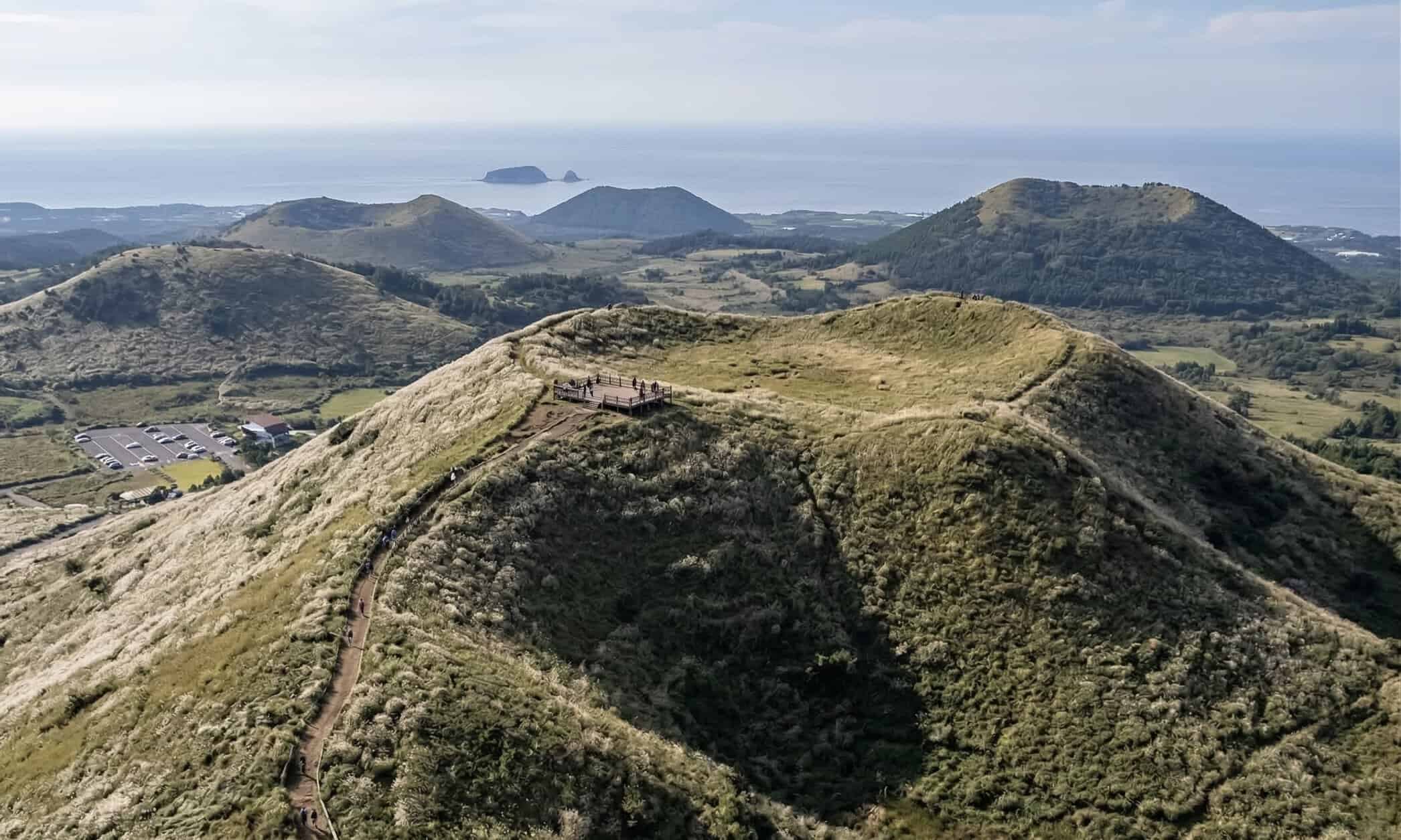
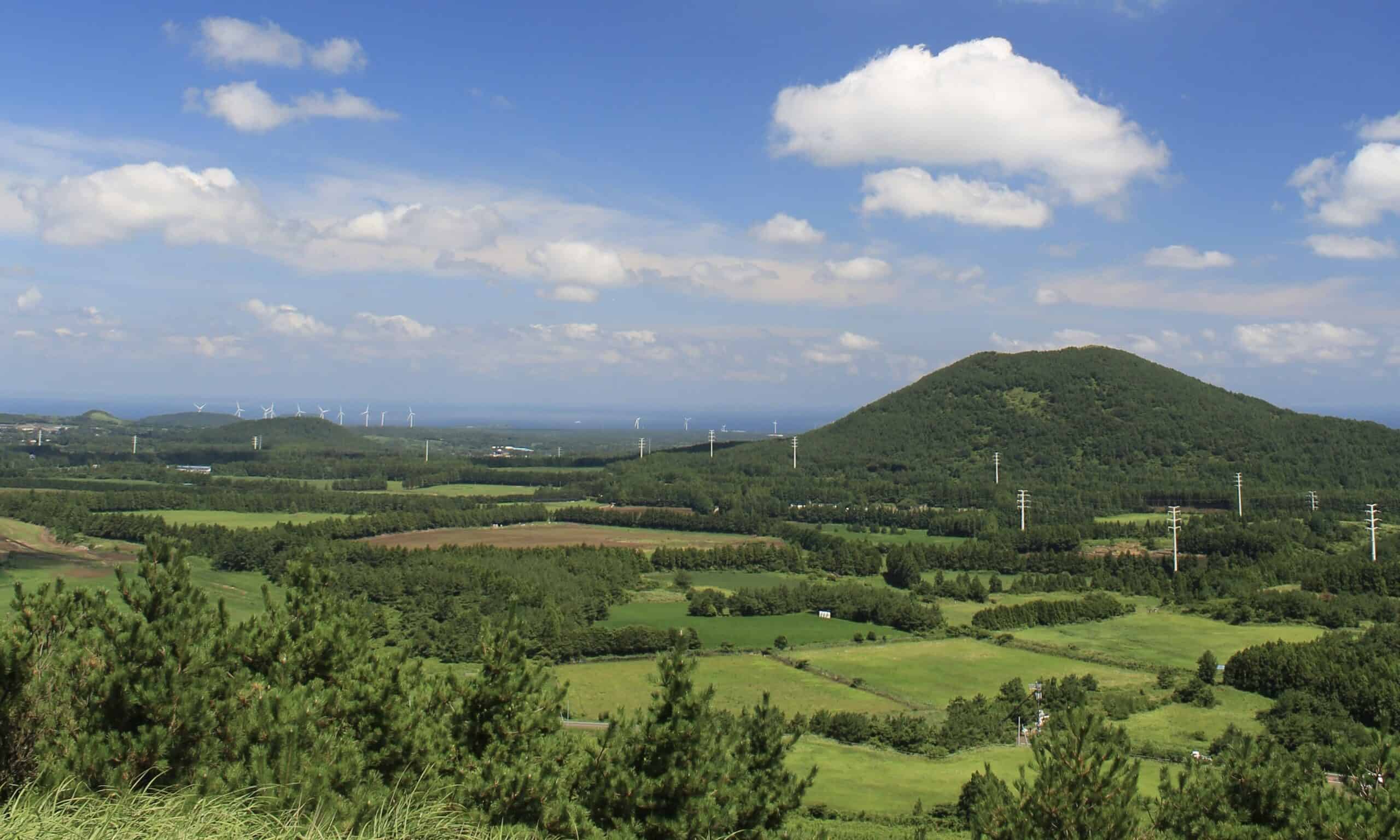
What I like most is that the view is not only scenic, but spatially satisfying. Once you get higher up, the western Jeju landscape opens into fields, roads, coast, and other oreum shapes in the distance. It gives you a stronger sense of the island’s scale than some more enclosed trails do.
What It Feels Like to Walk Saebyeol Oreum
Saebyeol Oreum feels broader than it looks. At the base, it seems almost modest, especially compared with some of Jeju’s more dramatic coastal or mountain landmarks. But once you start climbing, the ridges stretch wider, the horizon expands, and the oreum begins to feel like a suspended grassland above the fields.
The wind is part of the experience. That is not just a travel tip; it is part of the place’s character. Even on a calm-looking day, the summit can feel much more exposed than expected. I think that is one reason the oreum stays in people’s memory. It never feels static. The grass moves, the light shifts quickly, and the sky always seems oversized.
There is also a quiet emotional quality here. Unlike a crowded urban viewpoint, Saebyeol Oreum gives you room to look outward and breathe without too much visual clutter. If you time it well, it can feel almost meditative. If you time it poorly on a windy festival weekend, it can feel much more energetic and social. Both versions are real.
History and Cultural Context
According to official Jeju and Korea tourism sources, Saebyeol Oreum’s name comes from the image of a solitary “morning star” in the sky before dawn. That naming logic suits the oreum well. It stands distinctly in the surrounding western Jeju landscape, and its ridges create a recognizable profile even from a distance.
It is also closely tied to the Jeju Fire Festival, which reinterprets Jeju’s older agricultural practice of burning old grass to clear pests and prepare grazing land. That matters because Saebyeol Oreum is not just a pretty summit. It is a place where land use, seasonal rhythm, local memory, and tourism all overlap in a visible way.
I think this is what gives the oreum more depth than a standard photo stop. If you visit without the festival, it feels calm and elemental. If you visit around the festival, it feels communal and symbolic. Either way, the landscape carries more cultural meaning than its simplicity first suggests.
Main Highlights of Saebyeol Oreum
1. The ridgeline views
The summit area opens up into panoramic western Jeju scenery, including distant coastline and surrounding volcanic forms. It feels spacious in a way that many first-time visitors do not expect.
2. Beginner-friendly summit payoff
Official Jeju tourism information notes that most people can reach the top in about 30 minutes, which makes this one of the most efficient scenic hikes on the island.
3. Seasonal silver grass
Visit Jeju specifically highlights October as one of the best times to see Saebyeol Oreum when silver grass blooms across the slopes.
4. Jeju Fire Festival setting
The oreum is deeply associated with the Jeju Fire Festival, giving the landscape a stronger cultural identity than a typical scenic cone.
5. Two trail approaches
The official Jeju tourism page notes that there are eastern and western entrances, and that the western trail is steeper, which helps travelers choose the route that suits them better.
Key Visitor Information
| Official location | San 59-8, Bongseong-ri, Aewol-eup, Jeju-si, Jeju-do |
|---|---|
| Type | Oreum / parasitic volcanic cone |
| Admission | Free |
| Parking | Available |
| Trail structure | East and west entrances; west side is generally steeper |
| Approximate summit time | About 30 minutes for many visitors |
| Best seasonal note | October silver grass season is especially popular |
| Festival note | 2026 Jeju Fire Festival main dates: March 13–14, with pre-events March 9–12 |
Jeju Fire Festival and the Meaning of the Landscape
Saebyeol Oreum is inseparable from the Jeju Fire Festival. Official tourism sources describe the festival as a reinterpretation of traditional field burning used to clear away pests and old grass. That agricultural memory gives the event more depth than a standard seasonal spectacle.
For 2026, the official festival site lists the main event on March 13 and 14, with pre-events from March 9 through March 12 at the Saebyeol Oreum area. That means festival-period visitors should expect a very different mood from a normal hiking day: more traffic, more staging, more people, and more event structure.
I actually think Saebyeol Oreum has two equally valid identities. Outside festival season, it feels clean, quiet, and contemplative. During festival season, it feels collective and symbolic. Which one you prefer depends on whether you want solitude or cultural energy.
Essential Travel Tips
Choose your trail intentionally. The west side is steeper, so pick based on comfort rather than guessing at the trailhead.
Do not underestimate the wind. Even when the weather seems mild, the summit can feel far more exposed than the base area.
Time your photos around morning or late afternoon. Saebyeol Oreum looks best when the slopes have directional light and the ridges show more shape.
October is ideal for silver grass lovers. If that soft-textured autumn look matters to you, this is one of the best oreum choices.
How to Visit Saebyeol Oreum
- Drive if possible, since parking is officially available and the site works well as part of a wider west-Jeju route.
- Pick your trail side based on energy level, with the west approach generally steeper.
- Allow at least 1 to 2 hours total if you want a comfortable hike and summit time.
- Check weather closely before going, especially wind conditions.
- If going during Jeju Fire Festival season, plan for extra travel time and crowd management.
Nearby Attractions Worth Pairing With Saebyeol Oreum
- Songaksan Seogwipo – for a stronger crater-and-coast contrast after the oreum hike
- Gimnyeong Beach Jeju – for a calmer shoreline mood and clear coastal color
- Cheonjeyeon Waterfall – for a shaded, myth-rich counterpoint to the oreum’s open terrain
- Sanbangsan Area – for another iconic volcanic landscape in Jeju
- Nearby cafés and countryside stops – western Jeju works well when you mix scenic movement with one slow food stop
Saebyeol Oreum vs Other Jeju Hikes
| Point | Saebyeol Oreum | Typical Jeju Hike |
|---|---|---|
| Main appeal | Open ridges, volcanic form, horizon-heavy scenery | Often forested, coastal, or more enclosed |
| Difficulty | Moderate and beginner-friendly for many visitors | Can vary much more widely |
| Seasonal signature | Silver grass, wind, and Fire Festival identity | Usually tied to foliage, coast, or forest mood |
| Best for | Travelers who want a short, scenic, culturally meaningful oreum walk | More specialized hiking goals |
Who Should Visit Saebyeol Oreum?
- First-time Jeju visitors who want one oreum that feels iconic without being overly difficult
- Photographers who love grassland ridges, sky drama, and autumn silver grass
- Travelers building a west-Jeju half-day route
- Families or casual hikers who want a manageable volcanic trail
- Anyone interested in the cultural backdrop of the Jeju Fire Festival
FAQ
Is Saebyeol Oreum difficult to hike?
Not for most visitors. Official Jeju tourism guidance suggests many people can reach the summit in about 30 minutes, though weather and trail choice matter.
What makes Saebyeol Oreum special?
Its open ridgelines, “morning star” identity, silver-grass season, and connection to the Jeju Fire Festival make it stand out from other Jeju oreum.
When is the best time to visit Saebyeol Oreum?
October is especially popular for silver grass, but the oreum is attractive year-round depending on whether you want clear horizons, green slopes, or festival energy.
Is parking available at Saebyeol Oreum?
Yes. Official tourism pages list parking as available.
Can I visit outside Jeju Fire Festival season?
Absolutely. In many ways, non-festival days are better if you want a quieter and more contemplative hike.
Which trail is easier?
The official Jeju tourism page notes that the western trail is steeper, so many visitors may find the eastern side more comfortable.
Explore More Jeju & Korea Destinations
Official and Useful Links
Saebyeol Oreum Map
Final Take
Saebyeol Oreum in Jeju is one of the island’s best examples of how a place can feel simple and powerful at the same time. It does not depend on dramatic cliffs or difficult trekking. Its strength comes from openness, wind, ridgeline movement, and the way Jeju’s volcanic identity becomes easy to feel here.
If you are building a Jeju itinerary with one oreum hike that is accessible, scenic, and culturally meaningful, Saebyeol Oreum is a very strong choice. Outside festival season it feels spacious and calming. During festival season it becomes one of the island’s most symbolic landscapes.
For me, that is what makes it stay in memory. Not just the summit view, but the feeling of standing in a landscape that still seems shaped by both wind and tradition.