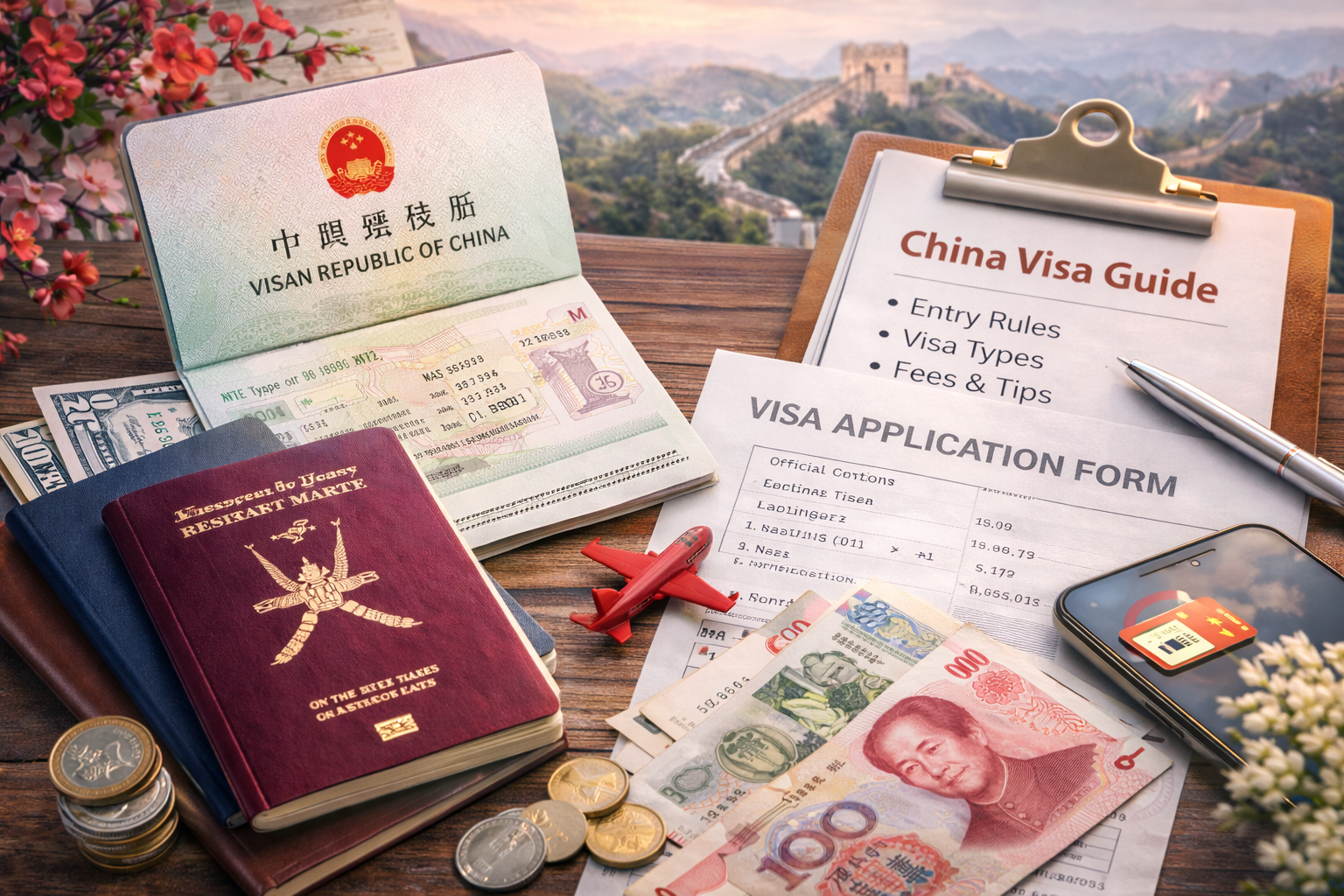
With the allure of China’s ancient wonders, futuristic skylines, and vibrant local life, travelers from every walk of life are drawn to this vast and complex country. Whether you’re embarking on a solo journey to Beijing’s hutongs, planning a family reunion at the Great Wall, negotiating business in Shanghai, or setting out as a digital nomad to the tech hubs of Shenzhen, understanding the intricate details of China’s visa system is your gateway to a seamless adventure. This passionate guide, crafted by a seasoned visa specialist, unpacks every nuance, offering expert insights and micro-advisory cues for each travel scenario.
Visa-Free Entry
China’s visa-free policies are selective, designed to facilitate transit and special exchanges while safeguarding national security. Travelers from certain countries can enjoy short-term, visa-free transit in key cities like Beijing, Shanghai, and Guangzhou, typically for 24, 72, or 144 hours. Officers on arrival will rigorously inspect onward flight tickets, hotel bookings, and proof of sufficient funds. Families with children and elderly parents, as well as solo adventurers, should quietly prepare printed confirmations and double-check all documentation. Business travelers must ensure their layover aligns with permitted activities—any hint of business negotiation outside transit may be scrutinized. Senior travelers are advised to pre-arrange airport assistance, as seasonal congestion and language barriers can be challenging. During high season, border control expectations include longer wait times and enhanced document checks, especially during major Chinese holidays.
Types of Visas
China offers a spectrum of visas tailored to a diversity of traveler profiles: tourist (L), business (M), student (X), work (Z), family reunion (Q/S), and transit (G) visas. Each category demands a unique suite of supporting documents, which officers will cross-check meticulously. For digital nomads, the business (M) or short-term (F) visa may seem appealing, but it is essential to verify your purpose aligns with the declared category—any inconsistency can trigger red flags in automated pre-screening systems. Families traveling with children or elderly relatives must provide notarized relationships and medical coverage proof. A common misunderstanding is that group travelers can apply collectively, but officers typically expect individually tailored supporting evidence, especially for long-term expatriates and students. Case study: A group of students from Europe faced delays when one member’s financial proof did not match the declared sponsor, prompting additional scrutiny for the entire group. Always double-check financial consistency and purpose-of-travel matching to avoid such scenarios.
Visa Application Fees
Visa fees for China vary significantly depending on nationality, visa type, and the urgency of processing. While most short-term tourist visas fall within a moderate cost band, expedited processing or multiple-entry options can carry a premium. Families and group travelers should quietly prepare for cumulative costs—fees are typically nonrefundable, even if applications are denied. It is essential to verify official fee tables on the government portal; fee changes are often implemented with little advance notice. For business travelers and digital nomads, invoice or company sponsorship documentation must match payment records. Officers are alert to discrepancies—case study: a business applicant from Southeast Asia faced rejection after presenting a sponsor letter with mismatched payment evidence. Preventive guidance: always keep proof of payment and double-check that all financial flows reflect the declared sponsor or applicant.
Visa Processing Time
Processing times for Chinese visas generally range from 4 to 7 working days, but seasonal surges, public holidays, and incomplete documentation can extend this window. Officers exercise heightened scrutiny during peak travel periods such as Lunar New Year or National Day. Families with elderly parents, students, and long-term expatriates should apply well in advance, as enhanced background checks or requests for additional proof are common. Digital nomads and business travelers may face automated pre-screening, with the system flagging inconsistencies for manual review. Case study: a solo traveler misrepresented prior travel history, resulting in a lengthy investigation and delayed approval. Travelers should keep in mind the importance of transparent disclosure and timely submission. Urban centers tend to process applications faster, while rural consulates may face logistical delays, especially during adverse weather or local festivals.
Official Online Application Links
China’s official visa application portals are the only trusted source for submitting applications and tracking status. Avoid third-party agents unless absolutely necessary, and always use the official government site: https://www.visaforchina.cn. For entry/exit information, refer to the National Immigration Administration: https://www.nia.gov.cn. It is essential to verify site authenticity—a common scam involves fake lookalike portals siphoning fees. Solo travelers, seniors, and students are especially vulnerable to these traps. Officers expect applicants to follow the correct procedures; irregularities or missing steps can result in outright rejection. Always double-check your application number, upload high-resolution visa photos, and confirm all data matches your passport. For families and groups, ensure each application reflects the correct relationships and travel intentions.
Online Status Check
Once your application is submitted, use the official portal to monitor progress. Automated pre-screening systems check for document consistency and flag incomplete or suspicious entries. Experienced travelers know that patience is often required; status updates may be delayed during busy periods or if the application is referred for manual review. Business travelers and digital nomads should keep email and phone lines open in case of additional queries. A common misunderstanding is believing that silence means approval; in reality, officers may be quietly verifying background data. Families with children or elderly parents should prepare all supporting documents in digital format for quick re-submission if requested. Case study: a family traveling for a multi-generational reunion was asked to provide additional proof of kinship after initial review. Preventive advice: upload clear scans, retain originals, and check the portal daily for updates.
Local Telecom & Connectivity Information
Staying connected in China is essential for navigation, communication, and compliance with local regulations. The primary provider, China Mobile, offers robust coverage in urban and rural areas: https://www.chinamobileltd.com. Digital nomads, business travelers, and students should procure SIM cards upon arrival, ensuring devices are unlocked and compatible with local networks. Families with elderly parents should consider plans with emergency features. Urban centers provide easy access to telecom shops, but rural areas may have limited English support and fewer options. Always double-check SIM activation and data settings before venturing far from major cities. It is essential to verify data package validity and top-up options to avoid service disruption—especially during high season or in remote destinations. Case study: a senior traveler lost connectivity during a rural excursion, resulting in missed border notifications. Preventive tip: keep paper copies of critical documents and contacts in case of outages.
Currency, Exchange & Financial Info
The official currency in China is the Renminbi (RMB), issued and regulated by the People’s Bank of China: https://www.pbc.gov.cn. Exchange rates fluctuate, particularly around major holidays, and officers may require proof of sufficient funds for longer stays. Always double-check the authenticity of exchange offices and avoid street-level money changers, especially in tourist hotspots. Digital nomads and business travelers should set up mobile payment apps such as Alipay or WeChat Pay, but remember that foreign cards may not always be accepted. Families, especially those traveling with children or elderly relatives, should bring a mix of cash and cards, and verify withdrawal limits with their home bank. Urban areas provide plentiful ATMs and banking support, while rural regions may experience outages or limited access. Safety advisory: be vigilant about card skimming and ATM security. Case study: a group traveler lost access to funds in a remote area due to incompatible cards—preventive guidance is to activate international banking before arrival and carry backup cash.
As you prepare for your journey into the heart of China, remember that each step of the visa process is a reflection of the country’s evolving balance between hospitality and security. Officers are trained to spot inconsistencies, and automated systems leave little room for error. Yet, with careful preparation, honest disclosure, and a deep respect for local customs and procedures, your entry becomes not just a bureaucratic hurdle, but a rite of passage into one of the world’s most dynamic landscapes. Whether you’re charting new business territory, reuniting with loved ones, or simply seeking the next great adventure, let this guide be your compass—reminding you always to double-check, verify, and approach each stage with confidence and clarity.
Visa / Immigration: https://www.visaforchina.cn
Border Control: https://www.nia.gov.cn
Telecom: https://www.chinamobileltd.com
Currency / Central Bank: https://www.pbc.gov.cn