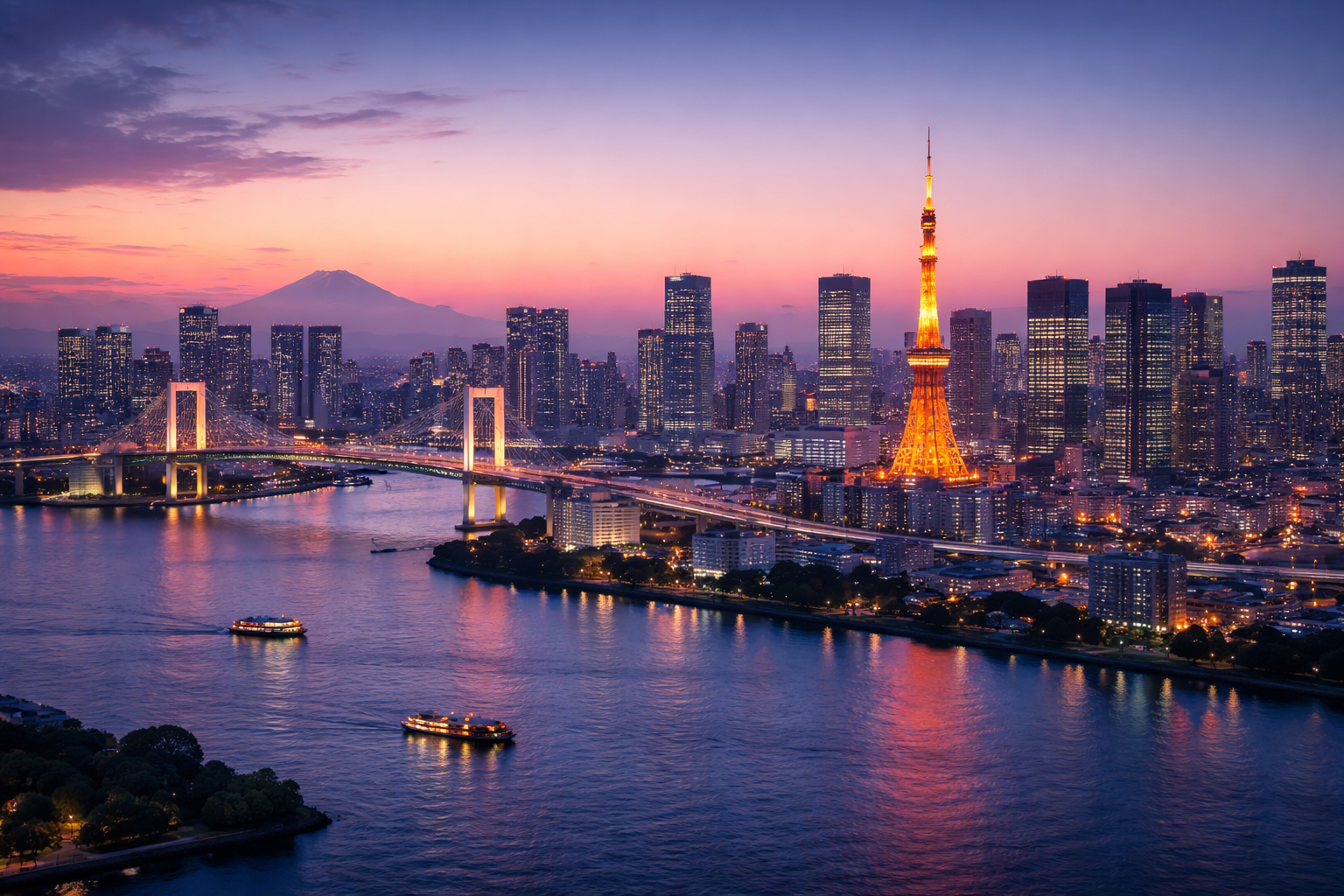
Use a hyper-realistic, text-free horizontal image: a quiet Tokyo skyline at blue hour, Shibuya crossing from a distance,
or a serene Kyoto temple approach (no signs, no letters, no typography).
Suggested alt text: Tokyo skyline at dusk with city lights and a calm, cinematic atmosphere
- Can I enter Japan visa-free (and for how long)?
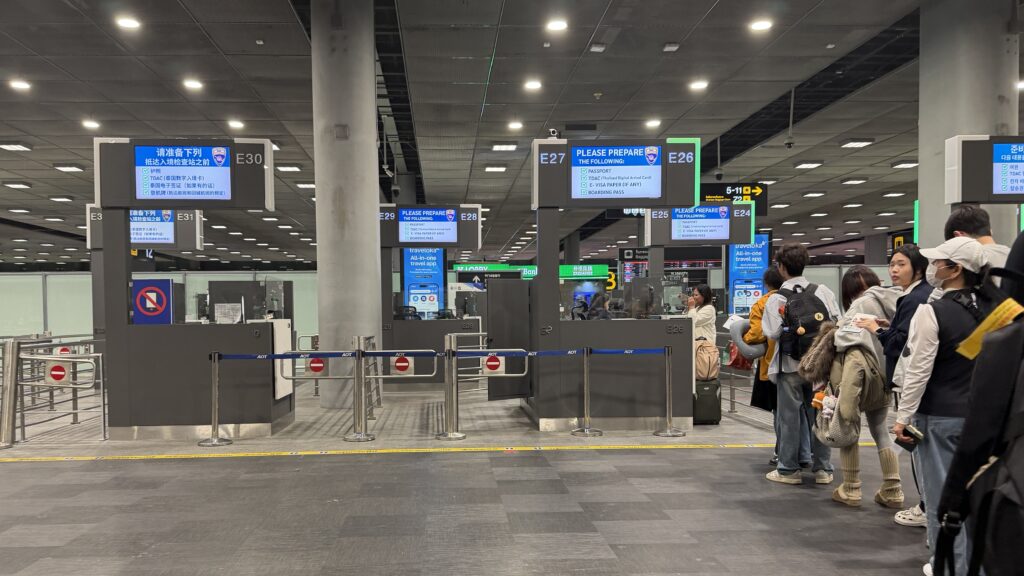
- What will immigration officers check at the airport?
- Do I need Visit Japan Web, and what does it speed up?
- Which Japan visa types match my purpose (tourism, business, study, work, family)?
- How do I avoid the common “visa-free but denied entry” scenario?
- How do I handle connectivity (SIM/eSIM) and money (JPY) safely?
- Visa-free is real—but conditional: Japan grants visa exemptions to 74 countries/regions, with typical stays up to 90 days (some are 15/30 days). Use MOFA’s official table. MOFA visa exemption list
- A visa doesn’t guarantee entry: immigration grants “landing permission” at the port of entry. MOFA visa basics
- Visit Japan Web saves time: register online to streamline procedures (recommended for smoother arrival). Visit Japan Web
- Digital nomad option exists: a new limited visa is described by JNTO (6 months, non-renewable, income threshold noted). JNTO digital nomad visa
- Prepare the border “proof trio”: return/onward ticket + accommodation details + funds proof. Consistency beats “confidence.”
Japan visa requirements feel effortless when you treat them as one rule: your story must match your documents, every single time.
Japan is famous for being safe, organized, and beautifully efficient—yet entry can be strict when your plan looks unclear.
Most travelers who run into trouble aren’t “bad travelers.” They’re simply inconsistent: a visa-free tourist who can’t show a return ticket,
a “business visitor” without a clear meeting plan, or someone who says “I’ll just figure it out” when asked about accommodation.
This guide is designed for real scenarios: solo trips, family vacations, short business visits, and longer stays (study/work).
It focuses on what immigration actually checks, how Visit Japan Web can reduce friction, and how to plan money + connectivity like a pro.
What Japan immigration “feels” like on arrival
The best description is: calm, fast, and quietly strict.
If your documents are clean, you’ll feel like the airport is “running on rails.”
If your documents are messy, the same calm system can feel intimidating—because it doesn’t argue, it just asks for proof.
Officers usually focus on fundamentals: identity, purpose, length of stay, and whether you can support yourself.
MOFA makes the key point clearly: a visa is a requirement for entry, but it does not guarantee entry—landing permission is granted at the port of entry by immigration officers.
MOFA visa basics
Translation: even visa-free travelers need to be “entry-ready.” Think of it like boarding a flight—your ticket exists, but you still follow the rules at the gate.
Visa-free entry: who qualifies and how long you can stay
Japan has reciprocal visa exemption arrangements with 74 countries and regions.
MOFA states the period of stay granted upon landing permission will be 15 days for Indonesia and Thailand,
30 days for Brunei and Qatar, and 90 days for other listed countries/regions.
MOFA: Exemption of Visa (Short-Term Stay)
- Don’t assume “90 days for everyone.” Confirm your country and the exact stay period on the MOFA table.
- Keep a return/onward flight you can show instantly (PDF + screenshot + email receipt).
- Have an accommodation address ready (hotel booking or host address). “I’ll decide later” increases questions.
- If you plan to work remotely, study, or stay long-term, visa-free may be the wrong route—choose the correct visa type.
Japan visa types (how to choose without overthinking)
Japan’s visa system is built around purpose. If your purpose is unclear, your application (or your border interview) gets harder.
Start with MOFA’s official visa guide and definitions:
MOFA visa page.
| Scenario | Usually fits | What they check | Common mistake |
|---|---|---|---|
| Tourism under 90 days (eligible passport) | Visa-free short-term stay (if listed) | Return ticket, accommodation, funds, clear itinerary | No hotel/host address + vague plan |
| Short business visit (meetings, conference) | Visa-free (if eligible) or short-term visa | Company tie, meeting schedule, return plan | Saying “business” without proof |
| Study, work, family, long stay | Appropriate long-stay visa/status of residence | Acceptance/contract, residence plan, finances | Trying to enter visa-free and “switch” later |
| Digital nomad (remote work) | Specific framework described by JNTO | Income threshold, duration rules, documentation | Assuming tourist entry covers remote work plans |
If you’re targeting a digital nomad stay, JNTO notes a new 6-month limited, non-renewable visa and references an income requirement (10 million yen per year).
Treat this as a “read and confirm” route: start from the official page and then validate with the relevant application instructions.
JNTO digital nomad visa
Add a second text-free image: cherry blossoms along a river at sunrise, or a minimal Shinkansen platform scene without signage.
Visit Japan Web (VJW): what it is and why it matters
Visit Japan Web is Japan’s official online system that helps streamline arrival procedures. If you’ve ever watched a line split into “prepared” vs “not prepared,”
VJW is one of the reasons.
Official site: Visit Japan Web
- Set it up before travel while you have stable Wi-Fi.
- Save any generated codes/screens locally (your phone may roam slowly on arrival).
- Print a “one-page backup” with your hotel address + return flight details (for family members who don’t love apps).
Don’t rely on “I can log in later.” If your login email is blocked or your phone battery fails, you’ll lose time at exactly the worst moment.
Prepare offline backups.
Border control checklist (what officers expect you to prove)
- Return/onward ticket (PDF + screenshot)
- Accommodation (hotel booking or host address + phone)
- Funds (card + recent balance screenshot; keep it simple)
- Each traveler has their own entry-ready set (passport, booking, return)
- Bring a printed card: hotel address in English + Japanese if possible
- Keep a calm “family narrative” (same dates, same accommodation, consistent plan)
- Meeting schedule + host company contact
- Employer proof (letter, ID, or business card)
- Return plan (clear end date)
Don’t try to “sound impressive.” Try to sound consistent.
When officers feel your plan is coherent, the process is usually quick.
Visa fees (how to avoid wasting money)
Japan visa fees vary by visa type and where you apply (embassy/consulate). The safest rule is:
don’t rely on a random blog’s fee table—confirm via official MOFA guidance and your local Japanese embassy/consulate instructions.
Start from: MOFA visa page.
Avoid third-party “guaranteed approval” services. MOFA is clear that a visa does not guarantee entry, and only official channels should be trusted for rules and procedures.
MOFA visa basics
Processing time: plan for seasons (not optimism)
If you need a visa (not visa-free), processing time depends on your local embassy/consulate workflow and seasonal demand.
Cherry blossom season, summer holidays, and year-end periods tend to create volume.
The practical playbook: apply earlier than you think, keep documents consistent, and avoid last-minute itinerary changes that conflict with your application narrative.
Consistency reduces follow-up requests.
Official resources (bookmark these)
- MOFA visa overview (official): https://www.mofa.go.jp/j_info/visit/visa/index.html
- MOFA visa exemption list (official): https://www.mofa.go.jp/j_info/visit/visa/short/novisa.html
- Immigration Services Agency (MOJ/ISA official): https://www.moj.go.jp/isa/
- Visit Japan Web (official): https://www.vjw.digital.go.jp/
- JNTO digital nomad visa explainer (authority): https://www.japan.travel/en/plan/digital-nomad-visa/
Local telecom & connectivity (SIM / eSIM)
Japan is extremely easy to navigate when you have data—trains, maps, translation, and real-time updates.
For official telecom info, NTT Docomo is a primary reference point:
NTT Docomo.
- Before landing: download Google Maps offline area (Tokyo/Osaka/Kyoto) and save your hotel pin.
- Family travel: one portable Wi-Fi or a shared data plan keeps everyone synced.
- Backup plan: screenshot your hotel address and the last-train time to your area.
Loud calls on trains are frowned upon. If you need to talk, step aside—Japan rewards quiet courtesy.
Currency, exchange & money safety (JPY)
Japan uses the Japanese Yen (JPY). Cash is still important in smaller restaurants, local markets, and rural areas.
For authoritative monetary information, Bank of Japan is the official reference:
Bank of Japan.
- Use ATMs in convenience stores/banks (reliable), not random exchange booths.
- Carry a small cash buffer for transit and small purchases.
- Keep a second payment option (another card or wallet) in a separate place.
Close with a third text-free image: a quiet shrine path, a clean station platform scene without signage, or a coastal train line at sunset.
A vs B: Visa-free entry vs Getting a visa (what I recommend)
| Option | Best for | Pros | Cons | My recommendation |
|---|---|---|---|---|
| Visa-free (if eligible) | Tourism/short business under the exemption rules | Fast, minimal admin | Still must prove return + accommodation + funds; purpose must match | Best for clean short stays |
| Short-term visa | Not eligible for exemption; complex short trips | Clearer pre-approval framework | Processing time, fees, paperwork | Choose if you’re not on the exemption list |
| Long-stay visa/status | Study, work, family, structured long stays | Correct legal basis for longer activities | More documentation required | Always use for long-term intent |
To confirm visa-free eligibility and stay length, use MOFA’s official exemption list:
MOFA visa exemption list.
FAQ: Japan visa & entry (2026)
1) Where do I check if my country is visa-exempt for Japan?
MOFA visa exemption list
2) Is visa-free entry guaranteed?
MOFA visa basics
3) What documents are most likely to be requested at the border?
4) What is Visit Japan Web and do I need it?
Visit Japan Web
5) I’m visiting family/friends. What should I prepare?
6) Can I work remotely in Japan on a tourist/visa-free stay?
JNTO digital nomad visa
7) Where do I find official immigration procedure updates?
MOJ/ISA
8) What’s the best SIM/eSIM reference for Japan?
NTT Docomo
9) Is Japan cashless now or should I carry cash?
10) Where can I reference official monetary information in Japan?
Bank of Japan
Related Trip Nexus guides (internal links)
These are the “arrival logistics” that actually make Japan easier: airport flow, eSIM, and payment tools.
Trust note: Visa-free eligibility and stay lengths are sourced from Japan’s MOFA. Official arrival tooling references Visit Japan Web, and immigration updates reference MOJ/ISA.
Next step: I’ll tailor the checklist to your passport
Send me: (1) your passport country, (2) trip dates/length, and (3) purpose (tourism / business / study / work / family).
I’ll tell you the cleanest route (visa-free vs visa) and the exact documents you should prepare.