1. The Evolving Frontier: Why Clarity Beats Luck
In 2026, the China visa guide narrative has shifted from “How do I get in?” to “How do I stay compliant?”. While the list of visa-free countries has tripled since 2023, the administrative scrutiny for those needing traditional L (Tourism) or M (Business) visas has become highly automated and data-driven.
The current landscape rewards the “Boring Traveler.” If your itinerary is a neat line of confirmed hotel bookings and a single return flight, you are invisible to the system—which is your goal. However, the rise of the “Digital Nomad” and remote work has created a significant friction point. Attempting to enter on a 30-day visa-free tourist stint while carrying a laptop full of commercial contracts and professional photography gear can trigger a secondary inspection at PVG or PEK. In China, “purpose mismatch” is the fastest way to turn a dream trip into a deportation record.
“Chinese immigration isn’t looking for perfection; they are looking for consistency. If your hotel dates don’t match your flight arrival, or if your business host can’t answer a phone call at 2 AM, the system flags you. Entry is a dance of documentation where the rhythm must be perfect.”
2. Honestly? The 240-Hour Transit is Not a “Free Visa”
🧭 The “Third Country” Paradox
I’ve seen dozens of travelers denied boarding because they misunderstood the definition of “Transit.” To use the 240-hour (10-day) Transit Without Visa (TWOV), you must be traveling from Country A to Country C via China (Country B). If you book a ticket from London to Shanghai and back to London, you are NOT transiting. You are visiting. Even a layover in Hong Kong or Macau counts as a “third region,” but you must have the boarding pass to prove it. If your ticket is a simple round-trip, the airline will deny you entry at your departure gate.
💡 The Invitation Letter Scrutiny
For “Business M” visas, the era of the “generic template” is dead. Consular officers in 2026 now cross-reference the inviting company’s tax records and the specific job title of the person signing the letter. If the letter says “Consultation” but you are actually visiting a factory for quality control, that is a mismatch. My advice: Ensure your sponsor includes their direct mobile number and a detailed day-by-day itinerary of your meetings. A vague letter is the #1 cause for a “Request for More Info” which delays your trip by weeks.
3. A vs B: Choosing Your Entry Lane
Success in entering China in 2026 depends on picking the lane that matches your evidence, not just your intent.
PRO STRATEGY 2026 Insider Hacks
-
01The “Shadow” Itinerary Rule
If your real plan is to visit 5 cities, only list the 2 major ones (e.g., Shanghai and Beijing) on your visa application. Providing a chaotic, multi-city route creates more surface area for questions. As long as your hotels for the first 3 nights are confirmed, the system is satisfied. Keep your true “adventure” for after you clear immigration. -
02The Fingerprint Queue Hack
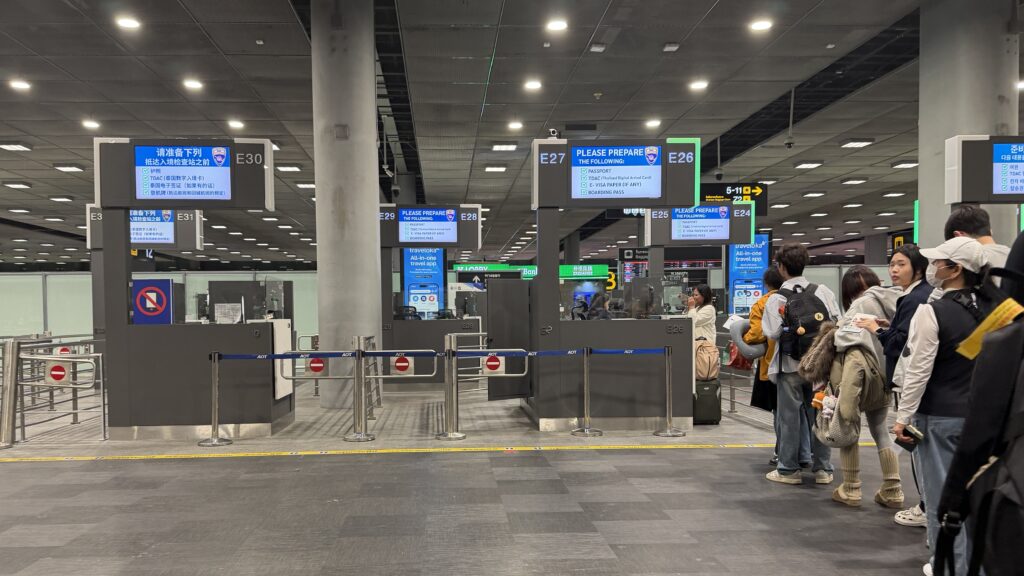
Most travelers rush to the main immigration line only to be sent back to the biometric kiosks. The Hack: Look for the small, self-service fingerprint stations located *before* the main health declaration area. Scanning your prints there and getting the small receipt saves you 30 minutes of standing in the wrong line. -
03The Currency Deadzone
Don’t wait until you land to set up payments. Your foreign visa/visa-free status is meaningless if you can’t pay for a taxi. In 2026, 90% of taxis will not take cash or physical credit cards. Download Alipay and link your home card *before* you leave. Without it, you are logistically paralyzed the second you leave the airport terminal.
4. The “Click-to-Curb” Workflow: Step-by-Step
Phase 1: Eligibility Audit (30 Days Out). Check if your passport is on the 2026 Visa-Free list. If not, start your application on visaforchina.cn immediately. Never use a .com or .org third-party site; they are 5x more expensive and often provide outdated forms.
Phase 2: Document Hardening (20 Days Out). Print your flight itinerary and hotel vouchers in both English and Mandarin (Alipay’s translation tool is perfect for this). If you have a sponsor, call them and ensure they are ready to verify your stay if contacted by the consulate.
Phase 3: Digital Setup (72 Hours Out). Register your health declaration code via the “Customs Pocket Declaration” WeChat mini-program or website. Screenshot the QR code; the airport Wi-Fi is notoriously spotty and you don’t want to be fumbling with it while an officer watches you.
Phase 4: The Border Encounter. Provide short, factual answers. If they ask “Where are you staying?” show the printed voucher. If they ask “What are you doing?” say “Tourism” or “Meetings” as per your visa. Do NOT offer extra information about your plans to “maybe check out some real estate” or “look for a job”.
Phase 5: The First 60 Minutes. Activate your **China Mobile** or **China Unicom** SIM. Test your Alipay at the first convenience store. If it works, you are officially “in” the Chinese ecosystem. Welcome to the future.
5. Expert FAQ: The Honest Clarifications
Maximize Your 2026 East Asia Expedition
6. Expert Final Verdict
Field Data Verified: March 2026 • Curated by the Trip Nexus Compliance Team.