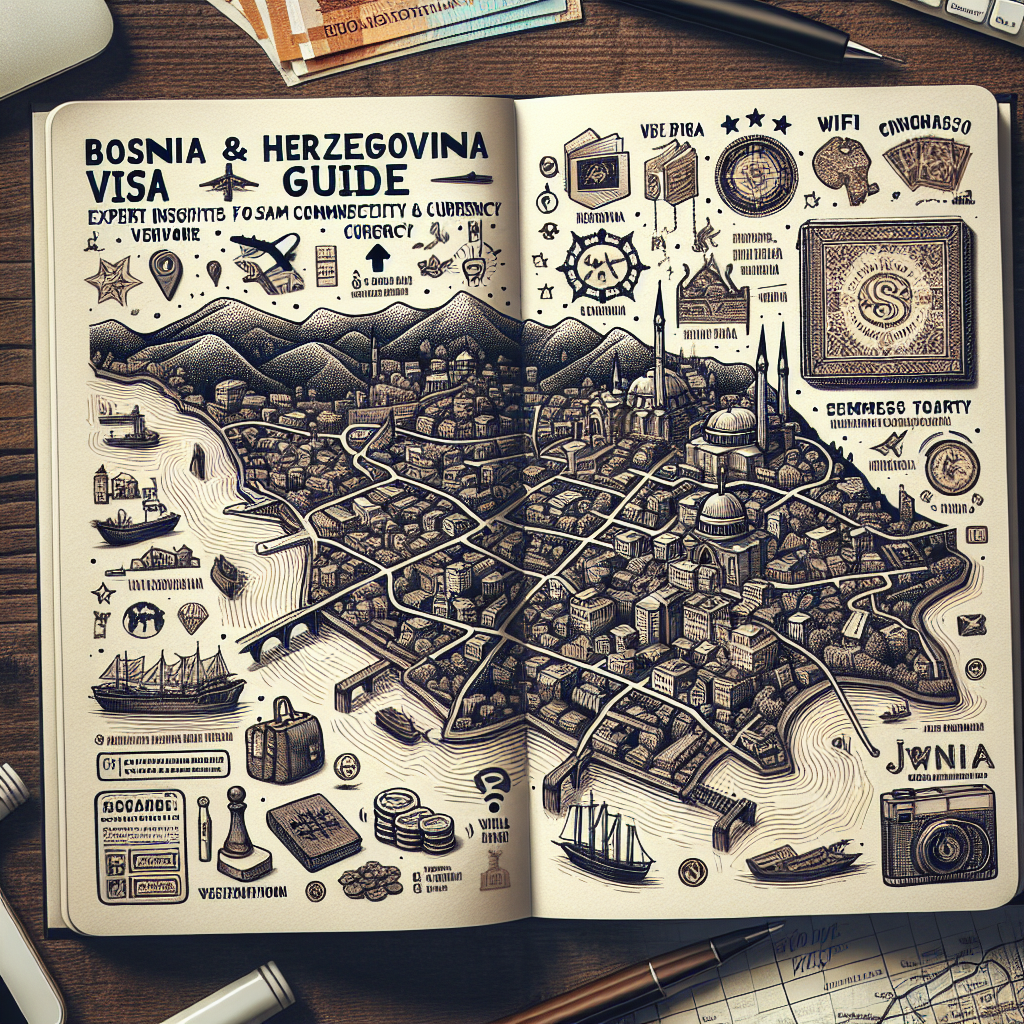
Bosnia & Herzegovina, a land where East meets West, beckons travelers with its storied cities, mountain vistas, and vibrant culture. Yet before you step onto Sarajevo’s cobbled streets or wander Mostar’s iconic bridge, understanding the intricacies of entry, visa types, fees, and local essentials is paramount. This passionate, expert-level guide blends deep visa officer logic, real traveler scenarios, and practical micro-advisories—ensuring your journey into Bosnia & Herzegovina is as seamless and fulfilling as the landscape is breathtaking.
Visa-Free Entry
One of the most attractive features of Bosnia & Herzegovina’s immigration rules is the array of visa-free entry options for selected nationalities. Many travelers from the EU, United States, Canada, Australia, and several Asian and Middle Eastern countries enjoy the privilege of short-term, visa-free stays, typically up to 90 days within a 180-day period. However, travelers should quietly prepare by confirming their eligibility—officers typically expect proof of onward travel, accommodation bookings, and sufficient funds for the duration of the stay.
For solo travelers, the ease of visa-free entry can be liberating, but always double-check the latest entry rules for your passport and maintain copies of your documents. Couples and families with children should keep in mind that children’s documents and parental consent forms (if traveling with only one parent) may be scrutinized at the border. Elderly parents may require additional medical insurance documentation. Senior travelers should be aware that border officers sometimes ask for details of medication and health insurance. Business travelers and digital nomads, despite visa-free schemes, may be questioned about the purpose of their stay—officers are trained to match declared intent with supporting evidence, so preparation is vital.
Case Study: A digital nomad from Canada was recently flagged at the Sarajevo Airport for not providing proof of accommodation beyond the first week. Automated pre-screening systems, now common in Bosnian immigration, had detected an inconsistency between his stated duration and his bookings. With calm explanation and rapid online reservation, he was allowed entry—a reminder that strong-ties proof and document consistency are essential.
Types of Visas
Bosnia & Herzegovina offers a spectrum of visas to cater to diverse traveler needs. The primary categories are short-stay (Type C), long-stay (Type D), and transit visas. Short-stay visas cover tourism, family visits, and business engagements for up to 90 days. Long-stay visas are essential for students, expatriates, and those pursuing work or family reunification. Officers meticulously cross-check documents, ensuring financial means, purpose-of-travel, and accommodation align seamlessly. Enhanced scrutiny is often reserved for applicants from certain nationalities or those with previous visa denials.
Families moving for long-term stays, especially with children enrolled in schools, must provide thorough documentation: school acceptance letters, proof of income, and rental contracts. Students—both short and long stay—should be prepared with enrollment confirmations and financial support evidence. Group travelers must ensure all members hold the appropriate visa; a common misunderstanding is assuming a group leader’s approval covers everyone. Officers expect each passport to be individually compliant.
Case Study: An Australian family relocating for a year found their application delayed due to missing translations of their children’s school records. Consulting an expert expedited the process—an illustration of the value of thorough, preemptive preparation.
Visa Application Fees
Visa application fees for Bosnia & Herzegovina are standardized but subject to periodic updates. Short-stay (Type C) visas generally range from 31 to 57 EUR, while long-stay (Type D) visas can reach up to 72 EUR. Business and student visas may entail marginally different fee structures, so it is essential to verify current amounts on the official consular website. Applicants should be ready for potential bank transfer fees and, in rare cases, additional service charges at certain consulates or embassies.
Travelers should keep in mind that visa fees are non-refundable, even if an application is denied—officers will not process fees for incomplete or inconsistent applications. For families or group travelers, exact fee calculation is crucial to avoid delays. Senior applicants must ensure their pension documentation aligns with their declared income, as financial consistency is a major focus for immigration authorities.
Case Study: A group of business travelers from Southeast Asia overlooked a recent fee adjustment and underpaid. Their applications were returned, causing a week-long delay and lost accommodation deposits. Always double-check official sources before paying.
Visa Processing Time
Processing times for Bosnian visas vary by category and applicant profile but typically range from 7 to 30 days. Short-stay visas are often cleared more rapidly, while long-stay, study, or work visas undergo deeper scrutiny and may require additional documentation. Immigration officers use automated pre-screening systems to identify red-flag triggers, such as inconsistent travel history or unclear financial resources.
Solo travelers and digital nomads can expedite processing by presenting a robust and complete dossier from the start. Families relocating or traveling with elderly parents should apply well in advance, particularly during high season (June to September) when application volumes surge and border delays are frequent. Business travelers and students should factor in consular closing periods and local holidays, which may not align with their home country’s calendar.
Case Study: A senior traveler from Turkey applied for a long-stay visa in late August, not realizing that the Eid holiday would close the consulate for a week. By quietly preparing and submitting all supporting documents upfront, he minimized the impact, but his experience underscores the importance of seasonal awareness.
Official Online Application Links
Applicants are strongly advised to start their journey on the Bosnia & Herzegovina Ministry of Foreign Affairs official visa portal. This resource provides application forms, requirements for each visa type, and a directory of consular offices. Always cross-reference entry rules and document requirements here—many delays stem from outdated third-party information. Immigration systems employ robust document cross-checking; discrepancies between submitted forms and supporting documents can trigger enhanced scrutiny or outright denial.
For group or family applications, ensure every member’s data matches across all forms. Students should use the dedicated section for educational visas, and business travelers will find specific instructions for supporting letters and invitation documents. A high-trust applicant is one who anticipates officer expectations and proactively addresses potential questions.
Online Status Check
After submission, visa applicants can monitor their status through the official visa portal. This online tool provides real-time updates and flags missing documents or required interviews. It is essential to check regularly, as officers may request clarifications or additional proof at any stage. Automated pre-screening systems may flag applications for enhanced review even after initial submission.
Travelers should keep their application reference numbers secure and check their email spam folders for correspondence. For families, one member should be designated to track collective progress and relay updates. Digital nomads and business travelers, in particular, benefit from monitoring status closely, as business travel timelines are often tight and any delay can impact project schedules.
Local Telecom & Connectivity Information
Upon arrival, connectivity is a top priority for most travelers. Bosnia & Herzegovina’s leading provider, BH Telecom, offers SIM cards and data packages at major airports, city centers, and kiosks. Urban areas boast robust 4G coverage, but rural and mountainous regions may experience reduced signal strength—travelers should download offline maps and key documents ahead of time, especially if venturing off the beaten path.
Solo travelers and digital nomads should compare short-term data packages for remote work needs. Families and group travelers will find family SIM deals and shared data plans cost-effective. Elderly travelers or those unfamiliar with local tech may benefit from in-person setup at official BH Telecom shops. It is essential to verify network compatibility for unlocked devices before purchasing a local SIM.
Case Study: An expatriate student relied on public Wi-Fi in Sarajevo, only to find it unreliable during high-traffic hours. After switching to a local prepaid SIM from BH Telecom, connectivity—and peace of mind—were restored.
Currency, Exchange & Financial Info
Bosnia & Herzegovina’s official currency is the Convertible Mark (BAM), and up-to-date exchange rates are maintained by the Central Bank of Bosnia & Herzegovina. Urban centers have plentiful ATMs and official exchange offices, but rural areas may accept only cash—travelers should keep a reserve of small bills, especially when exploring villages or attending local festivals. Always double-check exchange rates and fees before withdrawing or converting currency.
Business travelers should be aware that some local businesses may prefer cash, even in larger cities. Students and long-term expatriates are advised to open a local bank account for convenience and cost savings. Families with children or elderly parents should prepare for unexpected expenses, such as medical visits or local transport, where card payment may not be accepted. Officers expect applicants to demonstrate access to sufficient funds; bringing bank statements and proof of solvency is both a visa requirement and a wise travel precaution.
Seasonal factors can impact financial logistics: high-season festivals may lead to ATM shortages, and rural markets may operate on a cash-only basis. Urban safety is generally high, but travelers should remain vigilant for common tourist scams, particularly during crowded events. Night travel in rural areas requires caution, both for personal safety and due to sparse access to financial services.
As your Bosnian journey unfolds, remember that careful preparation—rooted in document consistency, cultural awareness, and practical micro-checklists—will empower you to explore every corner with confidence. Whether you are a solo adventurer, a family seeking new roots, a business leader sealing deals, or a student embarking on academic pursuits, Bosnia & Herzegovina’s entry rules and vibrant landscape await your discovery. Let your visa application be a bridge, not a barrier, to the wonders that lie ahead.
Visa / Immigration: http://www.mvp.gov.ba
Border Control: https://sps.gov.ba
Telecom: https://www.bhtelecom.ba
Currency / Central Bank: https://www.cbbh.ba