GLN Global Loyalty Network (2026): How to Pay Abroad by QR — No Cash Exchange, No Card Swipe
If you’re traveling to Thailand/Vietnam/Japan (and more) and want a “local QR wallet” experience, this guide shows exactly
when GLN beats cash/cards, how to set it up, what fees/limits to expect, and the real-world mistakes that cause failed scans.
🏆 Quick Summary: 5 Key GLN Takeaways (2026)
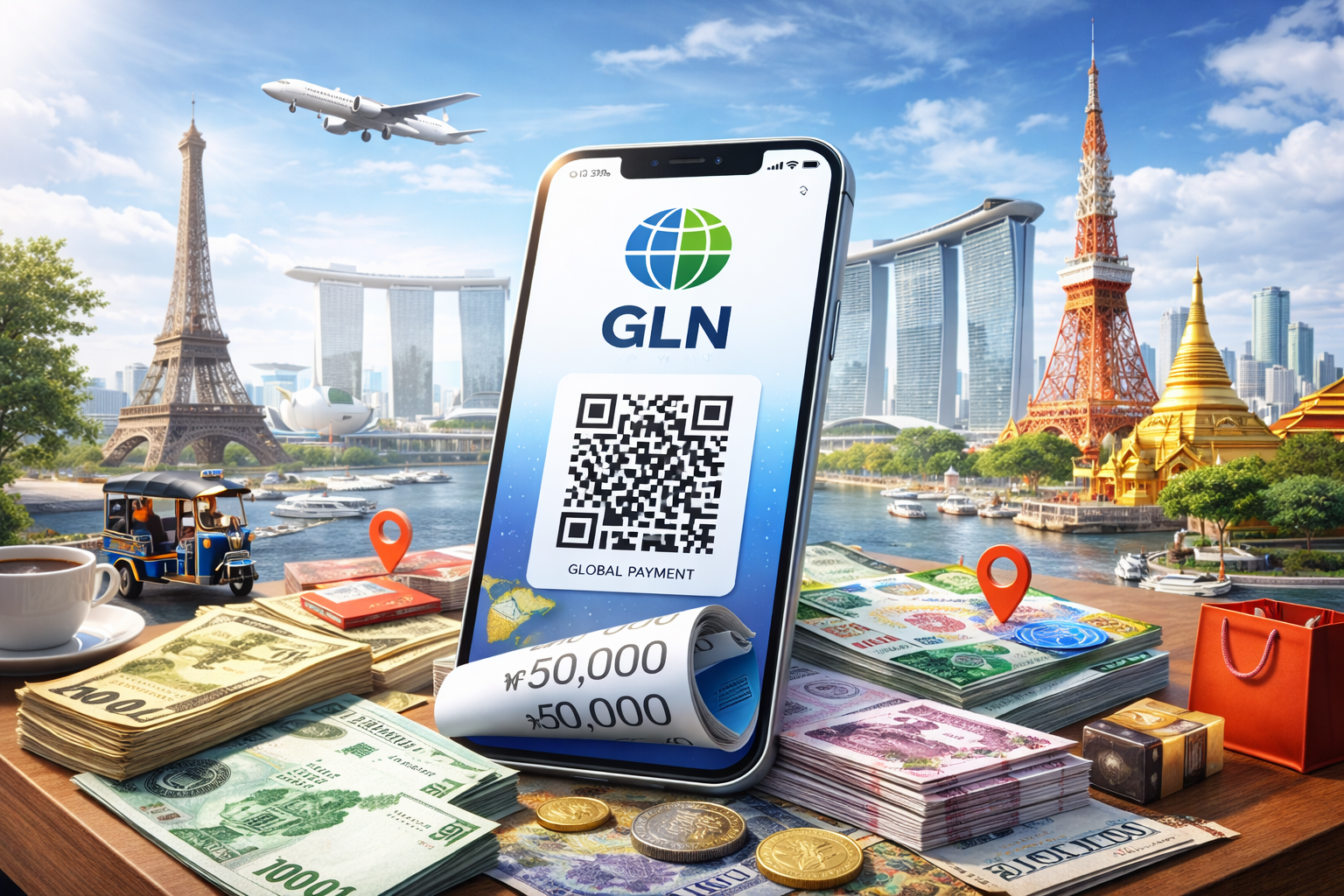
- 📍 What GLN is: A cross-border network that lets you pay at local QR merchants using your Korean-linked wallet/bank app (not a traditional card rail).
- 💸 Fee reality: Hana’s GLN payment fee is 0.3% per transaction (converted to USD basis) in supported regions. (Your app/bank may show it inside the final KRW.)
- 🔒 Safer than “card swipe” moments: You confirm each payment in-app (biometric/PIN), reducing exposure at sketchy terminals.
- 🧾 Limits matter: Typical Hana standard is ₩1,000,000 per payment / ₩2,000,000 per day (country/partner exceptions exist).
- 📶 Non-negotiable: You need live data at the moment of payment. Bring a reliable eSIM + a backup plan for outages.
“Bangkok night market. You’re holding skewers, sweating, and the vendor points at a QR sign. No coin math. No ‘card machine broken.’
You scan, confirm, done — and you walk away feeling like you belong there.”
What It Feels Like (and why travelers get addicted)
GLN feels like carrying a local wallet in countries where QR is “default.” The biggest psychological win is this:
you stop planning your day around ATMs and small bills. You pay in seconds, see the KRW conversion before you confirm,
and you’re not handing your card to a stranger behind a counter.
Why Asia made this the normal way to pay
Thailand’s PromptPay is a national payment infrastructure launched in 2016 that made low-fee digital transfers and QR-style payments mainstream.
Vietnam’s VietQR standard is designed to follow EMVCo QR standards and simplify fast transfers by scanning instead of typing bank details.
GLN sits in the middle as an interoperability layer — your familiar Korean app connects to the local QR ecosystem you’re standing inside.
Key Info (Verified basics you should memorize)
| Category | 2026 Practical Answer |
|---|---|
| Where it works (core list) | Thailand, Vietnam, Japan, Hong Kong, Laos, Taiwan, Singapore, Guam (availability depends on partner app/bank and merchant network). |
| Transaction fee | 0.3% per payment in Hana’s GLN payment service (converted on USD basis). |
| Typical limits (Hana standard) | ₩1,000,000 per payment / ₩2,000,000 per day (some country/merchant tiers differ). |
| Refund/cancellation | Cancellations can be restricted at some overseas partners/merchants. If it fails, treat it like a “merchant policy + network policy” situation and ask for a refund route in the app receipt screen. |
| How QR works | Most travel situations are merchant-presented QR: merchant shows QR, you scan with your phone, then confirm. |
GLN vs Travel Cards (Use the right tool)
| Scenario | Best Method | Why |
|---|---|---|
| Street food / night markets | GLN (QR) | QR is “default.” Vendors may not have card terminals or change. |
| Hotel deposits / car rentals | Travel Credit Card | Deposits often require pre-authorization holds that QR flows don’t support well. |
| Local ride-hailing / taxis | GLN (QR) | Avoids “no change” friction; receipts are clear in-app. |
| Big-ticket shopping | Compare | If your card has strong FX perks, compare totals; GLN is great for convenience and micro-spend. |
Step-by-Step: The “3-Day Before Flight” Setup That Prevents Chaos
- D-3: Activate GLN inside your partner app (Hana OneQ / Hana Money / Toss / KB Star Banking — availability varies). Complete KYC while you’re calm.
- D-2: Test a tiny domestic action: open the GLN screen, confirm you can reach the QR scanner and see your balance/linked funding.
- D-1: Save a backup payment method (one travel card + small cash). You’re not “failing GLN” — you’re being an adult traveler.
- Day 1 abroad: Use GLN first at a simple place (convenience store) before the chaotic night market.
In the moment (at the merchant)
- Scan: Open GLN/QR pay in your app → scan the merchant QR (most are merchant-presented QR).
- Confirm: Check amount + currency conversion → confirm with biometric/PIN.
- Receipt: Screenshot or bookmark the receipt page (especially for tours/transport).
Troubleshooting: The 6 failures travelers keep repeating
- No internet: Toggle airplane mode, switch eSIM, or move 3 meters (seriously).
- Wrong QR type: Some QR codes are for “transfer” vs “payment.” If it won’t parse, ask for the payment QR.
- Amount not set: Merchant QR sometimes requires the merchant to enter the amount on their side.
- Daily cap hit: Split payment or switch to card/cash for the remainder.
- Merchant refund confusion: Treat refunds as policy-based; rely on the in-app receipt flow and merchant confirmation.
- App lag: Close/reopen the app before scanning (it resets camera permissions and network handshake).
Pre-Trip Checklist (copy/paste this)
- ✅ GLN enabled + KYC completed
- ✅ eSIM active + fallback data method ready
- ✅ One travel card + small emergency cash
- ✅ Screenshot of your app’s “Help/Support” path
- ✅ Know your daily limit and how to split payments
Official / Trust References (worth bookmarking)
- GLN International (Official)
- Hana Bank (Official) (GLN service operates via partner apps/banks)
- Bank of Thailand: PromptPay overview
- NAPAS: VietQR code service overview
- EMVCo: QR payments explained
FAQ (Real questions travelers Google)
Is GLN actually cheaper than a travel credit card?
Which countries can I use GLN in?
What’s the daily limit?
Do I need to preload money?
Why does my scan fail at some shops?
Can I use GLN without internet?
How safe is GLN compared to cash?
What’s the fastest way to become “good” at QR payments abroad?
Must-Read Guides for Your Journey
- ➜ Entry Tips: Thailand Arrival Guide 2026
- ➜ Airport Basics: Airport Arrival Survival Guide (First 60 Minutes)
- ➜ Ride-hailing: inDrive Ride-Hailing Guide
- ➜ Vietnam Transport: Grab Vietnam Survival Tips
- ➜ Data Setup: Roamless eSIM Review 2026
Next Step
Before your next trip, do one thing: enable GLN + test one tiny payment flow while you’re still in Korea.
Your future self (hungry in a night market) will thank you.
Author Note: Updated February 2026 using official GLN/Hana service documentation and local QR network references.