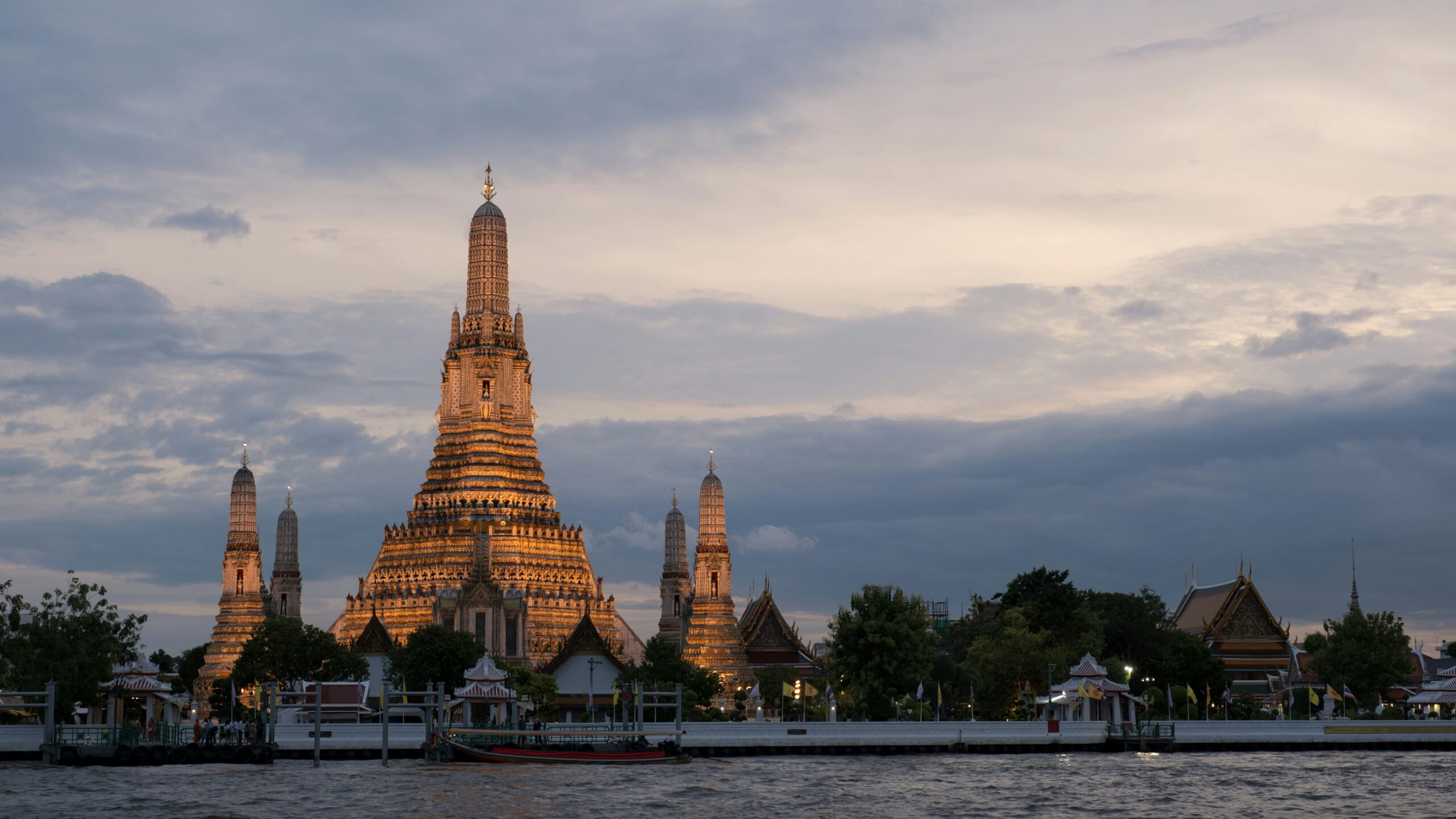
Rising gracefully along the western banks of the Chao Phraya River,
Wat Arun Temple—widely known as the Temple of Dawn—
stands as one of Bangkok’s most striking and spiritually significant landmarks.
Its radiant spires, reflective porcelain mosaics, and deep Buddhist symbolism
have captivated travelers, historians, and worshippers for centuries.
Whether visiting Thailand for the first time or returning to rediscover Bangkok,
Wat Arun offers an experience that seamlessly blends sacred tradition,
architectural brilliance, and riverside serenity.
Why Visit Wat Arun Temple
Wat Arun Temple represents far more than a visual icon.
As one of Bangkok’s oldest temples, it embodies the evolution of Thai Buddhism,
royal patronage, and artistic craftsmanship.
The temple’s central prang—rising over 70 meters high—is adorned with thousands
of porcelain fragments once carried by Chinese trading ships,
transforming global commerce into sacred art.
For travelers interested in spirituality, Wat Arun provides insight into
living Buddhist practices.
For architecture enthusiasts, it offers a rare example of Khmer-inspired design
adapted into distinctly Thai expression.
Its riverside location delivers sweeping panoramic views,
making it one of the most photogenic landmarks in Thailand.
Stepping into Wat Arun
Entering Wat Arun feels like stepping into a carefully composed spiritual landscape.
Guardian statues welcome visitors at the gates, while manicured courtyards
lead toward the towering central prang.
As sunlight shifts throughout the day, the temple’s surfaces shimmer,
creating a dynamic interplay of light, shadow, and reflection.
Visitors may climb the steep steps of the main prang for elevated views
over the Chao Phraya River and Bangkok’s historic districts.
Surrounding halls display Buddha images, sacred murals,
and rows of bronze bells whose gentle chimes enhance the temple’s tranquil atmosphere.
Monks move quietly through the grounds, reinforcing Wat Arun’s role
as an active place of worship rather than a static monument.
Key Information
| Location | 34 Arun Amarin Road, Bangkok Yai, Bangkok, Thailand |
| Official Tourism Site | https://www.tourismthailand.org |
| Managing Authority | https://www.bangkok.go.th |
| Opening Hours | Daily: 8:00 AM – 6:00 PM |
| Admission | 100 THB (subject to change) |
| Best Time | Early morning or late afternoon (Nov–Feb) |
Immersive Cultural Experiences
Wat Arun remains deeply embedded in Thai cultural life.
Visitors can observe daily chanting rituals,
participate in merit-making through incense offerings,
or quietly witness locals receiving blessings from resident monks.
These interactions provide an authentic understanding of Buddhism as a lived tradition.
Guided architecture tours explain the symbolic meaning behind the temple’s design,
including representations of Mount Meru and cosmological balance.
Climbing the prang at sunset rewards visitors with breathtaking river views,
as Bangkok’s skyline reflects centuries of continuity between past and present.
Seasonal Festivals and Ceremonies
Major Buddhist festivals transform Wat Arun into a center of communal devotion.
During Kathina, devotees present robes to monks in acts of generosity.
Loy Krathong illuminates the surrounding river with candlelit offerings,
while Songkran brings purification rituals and joyful celebrations
marking the Thai New Year.
Google Map
How to Get There
The most scenic route to Wat Arun is by boat.
From Tha Tien Pier near the Grand Palace, a short ferry crosses the river directly to the temple.
Alternatively, visitors can take the BTS Skytrain to Saphan Taksin Station
and connect to the Chao Phraya Express Boat.
Taxis and tuk-tuks are widely available, though river transport avoids traffic
and enhances the overall experience.
Nearby Attractions
- Wat Pho – Home to the Reclining Buddha and Thailand’s traditional massage school.
- Tha Tien Market – A riverside market offering authentic street food and local crafts.
Essential Travel Tips
- Dress modestly: shoulders and knees must be covered.
- Wear sturdy shoes for climbing steep temple steps.
- Visit early or late to avoid heat and crowds.
- Carry small cash for entry and donations.
What Makes Wat Arun Unique
Wat Arun Temple is distinguished by its riverside presence,
porcelain-clad architecture, and continued spiritual relevance.
Unlike more crowded royal temples,
Wat Arun offers moments of calm reflection alongside architectural splendor.
It stands as a living symbol of Bangkok—where devotion, artistry,
and daily life coexist in harmony.