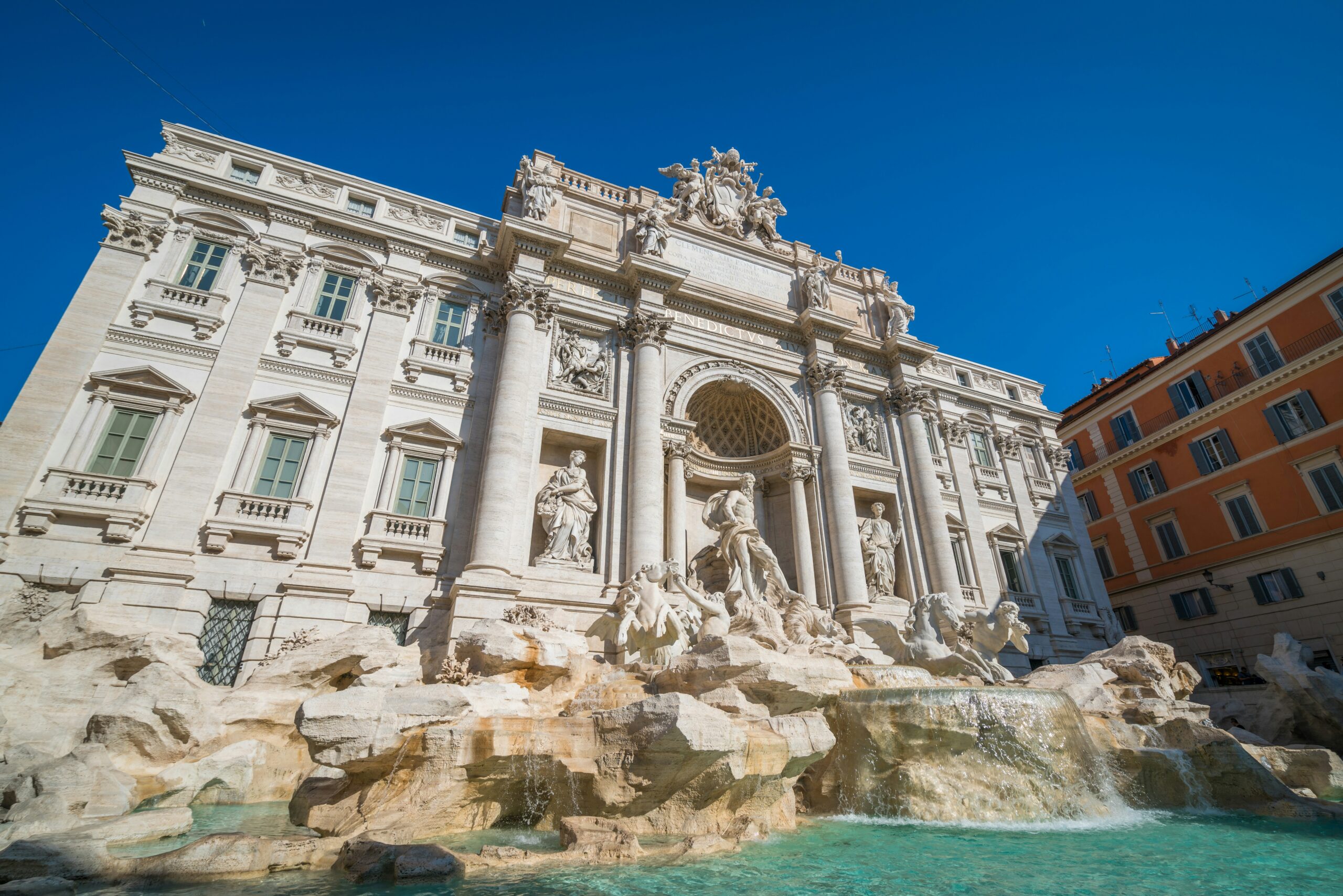
Trevi Fountain Rome is one of the most iconic landmarks in Italy and a must-see stop for anyone visiting the Eternal City. Located in the historic heart of Rome, the Trevi Fountain is far more than a decorative monument—it is a living symbol of Roman history, engineering, and tradition that continues to draw millions of visitors every year.
Known for its dramatic Baroque design and legendary coin-toss ritual, Trevi Fountain Rome combines ancient infrastructure with artistic ambition. This guide focuses on how to visit the fountain efficiently, the best times for photos, historical context, and practical tips to help you experience it without the usual crowds.
Key Information
| Opening hours | 24 hours (public square) |
| Entrance fee | Free |
| Address | Piazza di Trevi, 00187 Rome, Italy |
| Best time to visit | Early morning (7:00–8:30 AM) or late evening after 10:00 PM |
| Nearest transport | Metro Line A (Barberini), 8–10 min walk |
History of Trevi Fountain Rome
The origins of Trevi Fountain Rome trace back to 19 BCE, when Emperor Augustus commissioned the Aqua Virgo aqueduct to supply fresh water to ancient Rome. Remarkably, this same aqueduct still feeds the fountain today, making it one of the longest continuously functioning water systems in the world.
The monumental Baroque fountain visible today was designed in the 18th century by architect Nicola Salvi and completed by Giuseppe Pannini in 1762. Built against the façade of Palazzo Poli, the fountain represents the triumph of water over stone—an enduring symbol of Rome’s power and ingenuity.
Main Highlights of Trevi Fountain
Oceanus and the Central Niche
The towering statue of Oceanus dominates the fountain’s center, standing nearly six meters tall. He rides a shell-shaped chariot pulled by two wild horses, symbolizing the contrasting forces of chaos and order. Early morning light enhances the depth of the sculptures, making this the best time for photography.
Allegorical Statues and Rockwork
Flanking Oceanus are allegories representing Abundance and Salubrity. Their refined drapery and expressive gestures exemplify Roman Baroque aesthetics. Up close, visitors can see the contrast between polished marble figures and the rough artificial rock formations behind them.
The Coin Toss Tradition
Visitors toss over €1 million worth of coins each year into Trevi Fountain Rome. According to tradition:
- One coin ensures a return to Rome
- Two coins promise love
- Three coins foretell marriage
Collected coins are donated to charitable programs administered by the City of Rome.
Best Time to Visit Trevi Fountain Rome
- Early morning: Quietest time with minimal crowds
- Late night: Beautiful lighting and romantic atmosphere
- Avoid: 10:00 AM – 7:00 PM when tour groups peak
Practical Visitor Tips
- Wear sturdy shoes—cobblestones are uneven
- Keep valuables secure due to crowds
- No swimming or sitting on the fountain edge (strictly enforced)
- Bring small coins for tradition, not bills
Walking Route: Spanish Steps → Trevi Fountain → Pantheon
- Start at Piazza di Spagna (Spanish Steps)
- Walk Via dei Condotti (6 minutes)
- Turn onto Via delle Muratte to Trevi Fountain
- Continue toward Via del Corso
- Reach the Pantheon in ~8 minutes
Frequently Asked Questions
Is Trevi Fountain free to visit?
Yes. Trevi Fountain Rome is located in a public square and accessible 24 hours a day.
Can you visit Trevi Fountain at night?
Yes. Late evening visits are highly recommended for fewer crowds and better atmosphere.
Is Trevi Fountain worth visiting early in the morning?
Absolutely. Early mornings offer the best photography conditions and a quieter experience.
Final Thoughts
Trevi Fountain Rome is not just a photo stop—it is a living monument where ancient engineering, Baroque art, and modern Roman life intersect. Visiting at the right time and with a clear route transforms the experience from chaotic to unforgettable.
Google Maps
Official resources:
Official Rome Tourism – Trevi Fountain
City of Rome – Cultural Heritage