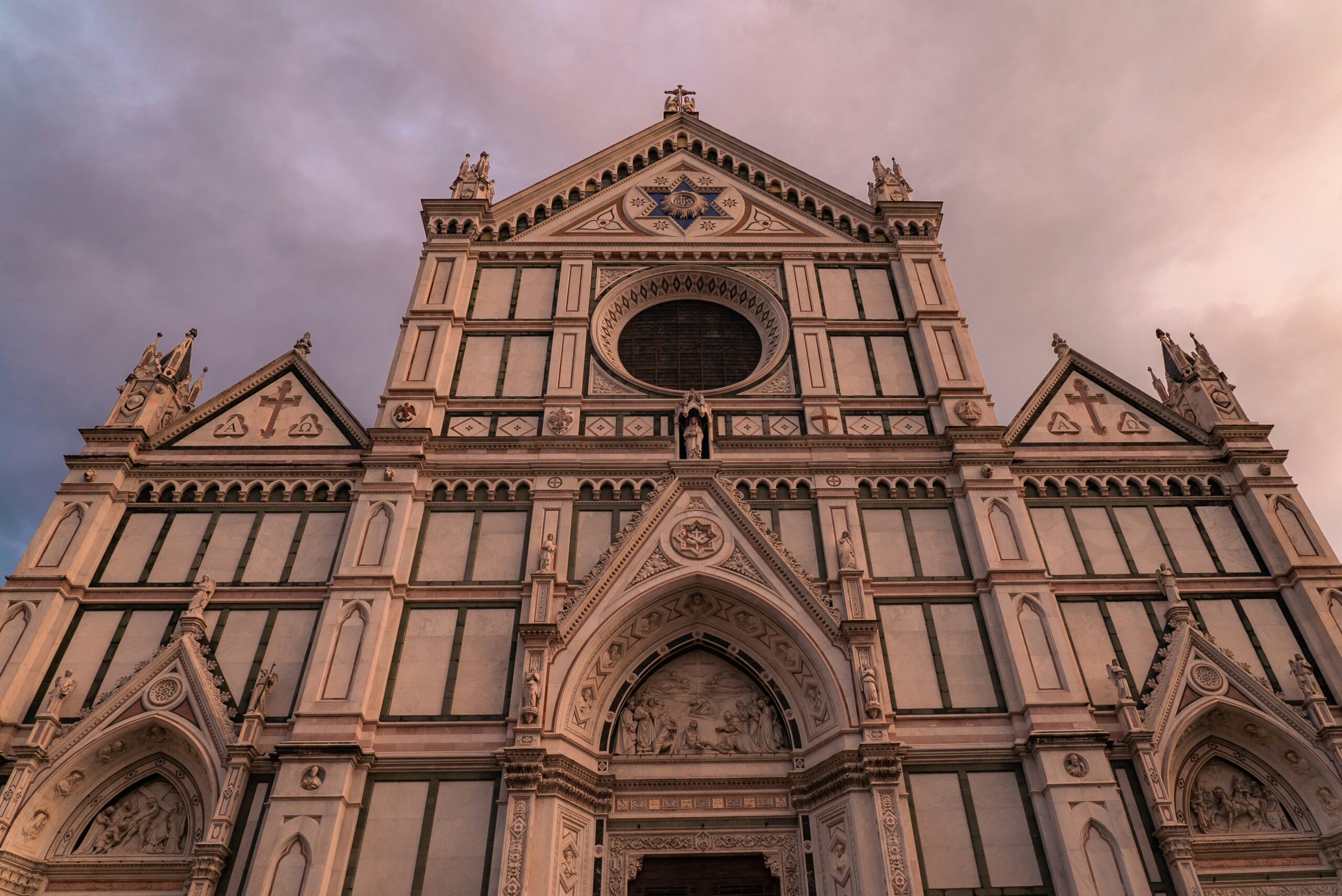
- Best time: right at opening (weekday) or late afternoon; Sundays start later.
- Must-see: Michelangelo tomb, Galileo memorial, Giotto fresco chapels, Pazzi Chapel.
- Time needed: 60–90 min quick; 2–2.5 hrs if you want the “full story”.
- Tickets: official adult ticket is typically €10 (reduced €6).
- Pro move: enter with a “loop route” so you don’t backtrack and get crowd-stuck.
What It Feels Like Inside Santa Croce
Santa Croce isn’t the kind of place where you speed-walk while snapping photos. The space is wide and calm, and the vibe is surprisingly “human” — less gold-and-glitter, more quiet gravitas.
One minute you’re looking at fresco fragments that survived floods and centuries, the next you’re standing in front of tombs that read like a who’s-who of Italian genius.
It’s the rare Florence landmark that feels like a conversation with history, not a museum queue.
If you’re into Renaissance art, you’ll come for Giotto. If you’re into big names, you’ll come for Michelangelo and Galileo.
But most people leave remembering something else: how the basilica makes Florence feel real, not postcard-perfect.
Visitor Info (Tickets, Hours, Last Entry)
| Location | Piazza di Santa Croce, 16, 50122 Florence, Italy |
|---|---|
| Official Website | santacroceopera.it |
| Opening Hours | Mon–Sat: 09:30–17:30 · Sun/holy days: 12:30–17:45 (can vary on special dates) |
| Last Entry | Typically 17:00 (some free-opening dates can differ) |
| Tickets | Adult: €10 · Reduced: €6 (common categories) · Kids 0–11: free (typical) |
| Accessibility | Wheelchair access is available for many areas; some chapels/raised zones have steps. Entry for visitors with disabilities is typically free/priority (details on official site). |
| Contact | +39 055 2466105 · booking@santacroceopera.it (official) |
Here’s the route that saves time and keeps the visit emotional instead of chaotic:
start with the main nave to get the scale, then hit the “big-name” tombs, then go chapel-by-chapel for the art.
If you do it backwards, you’ll end up weaving around tour groups and you’ll lose the vibe.
- First 10 minutes: walk the nave slowly and look up — let the space “land” before you chase details.
- Next: tombs + memorials (Michelangelo and the intellectual heavyweights).
- Then: Giotto chapels/fresco cycles (give yourself a quiet corner moment).
- Finish: the cloister/Pazzi Chapel area if it’s on your list (it’s a completely different mood).
Why Visit Santa Croce Basilica Florence
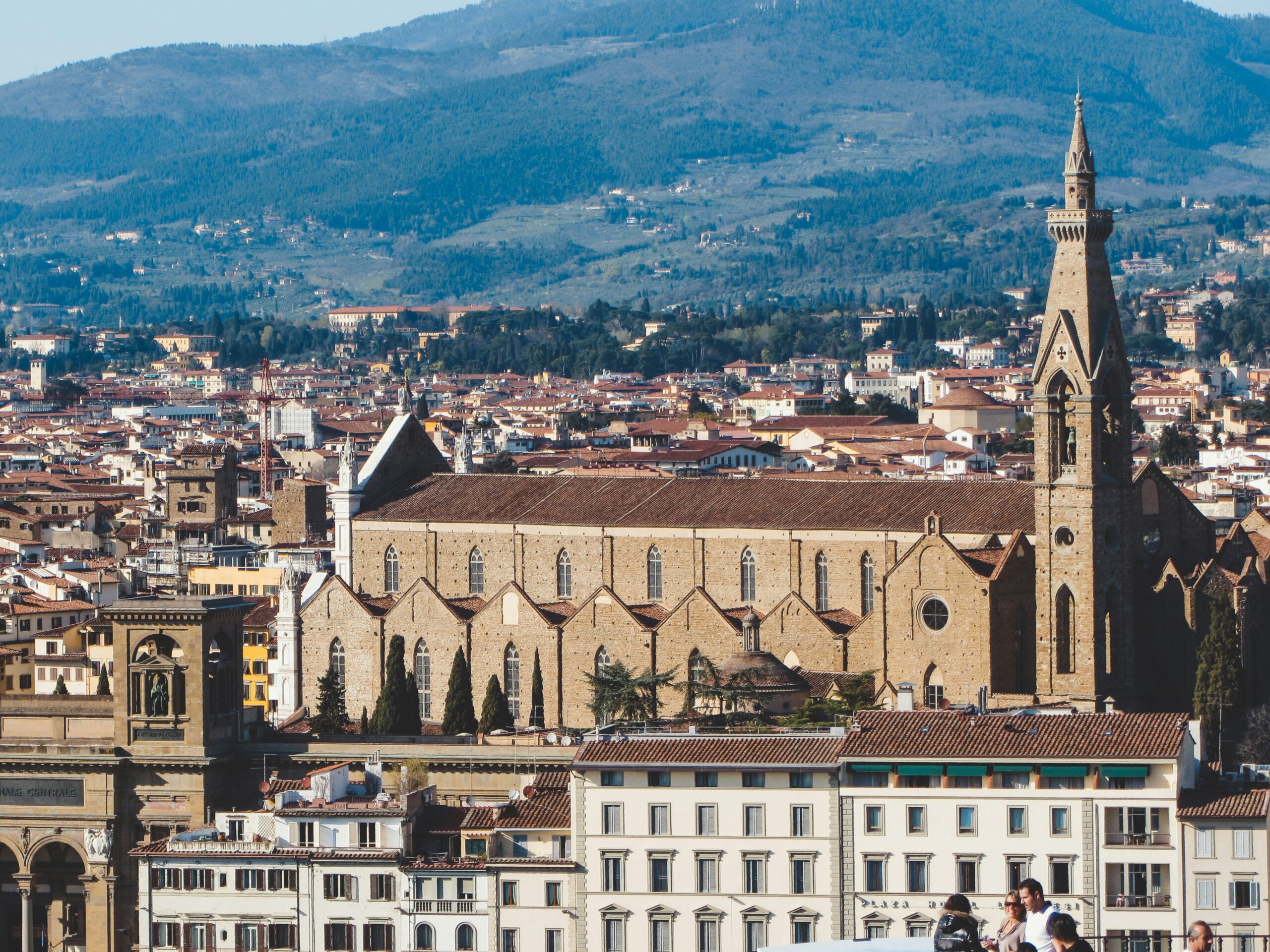
Santa Croce is one of those rare places that’s famous for the right reasons.
It’s not just beautiful — it’s culturally heavy. This basilica is often described as Florence’s “pantheon,” because it holds memorials and burials tied to the city’s intellectual identity.
- Legendary tombs & memorials that turn history into something you can actually stand in front of
- Giotto and early Renaissance storytelling through fresco cycles
- Franciscan Florence — a different spiritual tone than the big cathedral complex
- Perfect location for a walking day (Santa Croce area is a vibe on its own)
What to See (Highlights That Actually Matter)
1) The “Pantheon” feeling: tombs and memorials
Yes, you’ll hear the same names everywhere in Florence — but Santa Croce hits different because the names are embedded into the space.
Don’t just snap a photo and move on. Stand for 20 seconds and read what’s being honored — that’s when the place turns from “tourist stop” into “Florence story.”
2) Giotto chapels (the early Renaissance “cinema”)
If you’ve been museum-hopping all day, this is where you slow down. The fresco cycles are narrative — they were built to be read as visual storytelling.
The details can look subtle at first, but once your eye locks in, you’ll notice how revolutionary the human emotion feels.
3) Pazzi Chapel: calm geometry after intensity
After tombs and fresco intensity, the Pazzi Chapel gives you a reset: cleaner lines, calmer proportions, and that classic “Renaissance math” feeling.
Even if you’re not an architecture person, you’ll feel the difference in your body — it’s like stepping into quiet order.
It’s the sweet spot between “I saw it” and “I actually felt it.”
Before you walk over, check the official notices/avvisi page so you don’t feel like something is “missing.”
How to Get There (Simple, Real-World)
Santa Croce is easy because Florence is walk-friendly — but “easy” can still mean “hot + crowded + wrong turn” if you’re tired.
- From Santa Maria Novella station: about 20–25 minutes on foot (best if you’re already sightseeing in the center).
- By bus: use local routes that stop near the historic core (check current lines via the official transport site if needed).
- By taxi: fastest when your feet are done — and honestly, Florence days do that to you.
Small but important: the official visitor entrance/ticketing is typically set slightly off the “main façade photo spot,” so don’t panic if you don’t immediately see the queue.
A vs B — Santa Croce vs Florence Duomo (Which fits you?)
| Category | Santa Croce | Florence Duomo Complex |
|---|---|---|
| Best for | History + genius + quiet reflection | Iconic skyline + “must-do” Florence visuals |
| Crowds | Moderate, easier to manage | Often intense |
| Emotional payoff | High if you like stories + meaning | High if you like iconic architecture |
| Pick this if… | You want Florence’s mind + soul in one place | You want the headline landmark photo + climb experience |
Easy Walking Loop (2–3 hours around Santa Croce)
Here’s a loop that feels like a “Florence day” without turning into a checklist:
- Santa Croce Basilica (90–150 min depending on depth)
- Piazza Santa Croce for a quick sit + people-watch (10–15 min)
- Walk toward the Arno for river light (15–20 min)
- Optional: head toward Piazza della Signoria/Uffizi area if you still have energy
People rush to the famous tombs and forget to look at how the basilica teaches. Santa Croce isn’t loud; it’s layered.
Pick one chapel, stand still, and follow the visual narrative like it’s a story panel.
That one slow moment is often the difference between “nice church” and “wow, I get why Florence matters.”
Also: don’t be embarrassed to sit for a minute. The place is built for reflection. That’s not wasted time — that’s the point.
FAQ (People Actually Ask This)
Related on Trip Nexus (Internal Links)
Official & Trusted Resources
Google Map
Next Step
Save this guide, then check the official notices before you go — it’s the easiest way to avoid surprises.