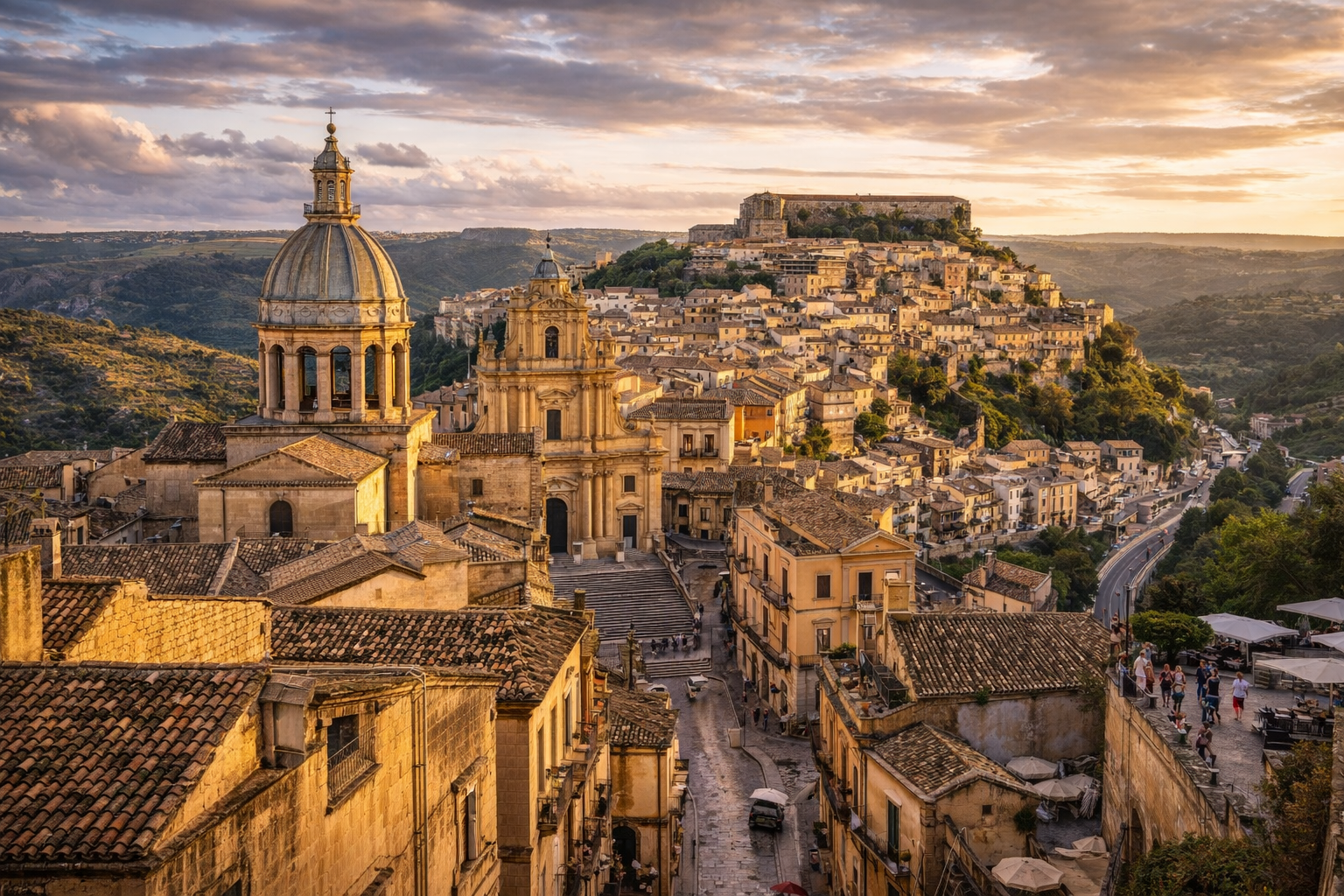
Sunlight pours over the honeyed stones of Ragusa Ibla, Sicily’s southern jewel, casting long shadows through labyrinthine lanes and Baroque facades, each telling a story centuries in the making. Ragusa Ibla is not just a destination; it’s an experience that seduces the senses, stirs the soul, and leaves travelers forever changed. Nestled atop a hill and separated from the newer Ragusa Superiore by a deep valley, Ibla’s winding streets, ornate piazzas, and echoes of ancient civilizations beckon the passionate explorer. Here, time seems to slow, inviting visitors to lose themselves in a living tapestry of history, culture, and vibrant local life.
Why Visit Ragusa Ibla
There is a magnetic pull to Ragusa Ibla, a place where past and present intertwine seamlessly. The city’s Baroque splendor is a feast for the eyes, but it’s the ambiance—the aroma of fresh pastries wafting from family bakeries, the gentle hum of conversation in sun-drenched squares, the laughter of children chasing pigeons—that lingers in memory. Ragusa Ibla offers more than architectural marvels; it promises an immersion into Sicilian warmth, resilience, and creativity. From its UNESCO-listed treasures to its hidden gardens and spirited festivals, Ibla embodies the ultimate Italian escape for lovers of beauty, history, and authenticity.
Stepping into Ragusa Ibla
Arriving in Ragusa Ibla feels like stepping onto the set of a classic Italian film. Cobbled pathways unfurl beneath your feet, leading past soaring churches adorned with intricate carvings, wrought-iron balconies bursting with geraniums, and inviting trattorias where local flavors come alive. The city’s layout, a result of centuries of rebuilding after devastating earthquakes, is a marvel of urban resilience and creativity. Every turn reveals a new vista—a hidden chapel, a panoramic overlook, a staircase carved into the hillside. The air is perfumed with orange blossoms in spring and rich with the promise of discovery year-round.
Key Information Table
| Feature | Details |
|---|---|
| Location | Ragusa Ibla, Ragusa, Sicily, Italy |
| Official Tourism Website | https://www.visitragusa.com |
| UNESCO World Heritage | Yes, part of Val di Noto’s Late Baroque Towns |
| Best Time to Visit | April–June, September–October |
| Main Sights | Duomo di San Giorgio, Giardino Ibleo, Baroque Palazzi |
| Nearest Airport | Comiso Airport (CIY) – 25 km |
| Accessibility | Hilly terrain; many steps and cobbled streets |
Immersive Cultural Experiences
Ragusa Ibla is a treasure trove for those who yearn to embrace Sicilian culture at its most authentic. Begin your day with a stroll through Giardino Ibleo, a tranquil garden offering panoramic views of the valley and dotted with centuries-old churches. Join locals at the bustling Piazza Duomo, where the majestic Duomo di San Giorgio rises in a triumph of Baroque artistry. Savor the ritual of Sicilian coffee in historic cafes, then wander into artisan workshops where lace, ceramics, and wrought iron are shaped much as they were generations ago. Foodies find paradise in Ibla’s trattorias, where recipes passed down through families come alive in dishes like scacce ragusane and cannoli filled to order. For a deeper immersion, arrange a cooking class or tasting with a local chef, and let the aroma of Sicilian herbs and olive oil transport you through time.
Seasonal Festivals and Special Events
Throughout the year, Ragusa Ibla pulses with celebrations that transform its storied streets. The Feast of San Giorgio in May dazzles with processions, fireworks, and communal feasts, painting the city in a vibrant display of faith and festivity. Summer brings open-air concerts and art exhibitions, filling the piazzas with music and laughter long into warm Mediterranean nights. In autumn, the Ibla Buskers Festival draws street performers and artists from across Europe, creating a carnival atmosphere of creativity and surprise. Each event is a window into the soul of Ragusa Ibla, where tradition and innovation dance side by side.
Google Map (NEW – fixed 6th position)
How to Get There
Ragusa Ibla is accessible yet delightfully remote, ensuring its charm remains unspoiled. The nearest airport is Comiso, a short drive through the undulating Sicilian countryside. Alternatively, Catania International Airport offers more international connections, with direct buses and trains to Ragusa. From the main Ragusa train station, local buses or taxis wind down into Ibla, but the most evocative arrival may be on foot, descending the ancient steps from Ragusa Superiore as the city unfolds below like a sunlit amphitheater. While driving is possible, parking is limited in Ibla’s core; the city is best explored on foot, allowing every secret corner and hidden vista to reveal itself.
Nearby Attractions and Local Eats
Essential Travel Tips
- Wear Comfortable Shoes: Ragusa Ibla’s beauty is best discovered on foot, but its steep streets and cobbled lanes require sturdy footwear.
- Stay Overnight: As day-trippers depart, Ibla’s magic intensifies—book a night in a local B&B for the full experience.
- Embrace Sicilian Timing: Life moves at its own pace; embrace leisurely meals and late-night strolls.
- Try Local Specialties: Don’t miss out on scacce, fresh ricotta, and locally produced wines.
- Respect Traditions: Many festivals and religious sites are central to community life—observe respectfully and ask before photographing people at events.
What Makes This Destination Unique
Ragusa Ibla is a masterclass in resilience and reinvention. After the catastrophic earthquake of 1693, the city was rebuilt in a flamboyant Baroque style, transforming tragedy into architectural poetry. Its dual identity—ancient Ibla and the more modern Ragusa Superiore—offers a striking contrast, but it is in Ibla’s intimate scale and unbroken traditions that true wonder lies. Here, you’ll find a living city, not a museum—where children play under the watchful gaze of stone saints, where artisans shape the future as they honor the past, and where every meal, festival, and sunset is a celebration of Sicilian spirit. Ragusa Ibla is not only a place to visit, but a place to feel, to savor, and to remember long after you’ve left its golden embrace.