Ortigia Syracuse Guide (2026): Best Things to Do, Easy Walking Loop, Map & Local Tips
Ortigia Syracuse greets you with salt air, honey-colored stone, and a rhythm that feels both ancient and alive. At sunrise, light spills across cobbled lanes and quiet piazzas, carrying the scent of the Ionian Sea into courtyards filled with jasmine. This small island—Syracuse’s historic heart—doesn’t feel like a checklist destination. It feels like a place you enter, then slowly let unfold: Greek foundations, medieval shadows, Baroque grandeur, and the everyday pulse of Sicily.
- Best vibe: early morning market + golden hour seaside walk.
- Car tip: Ortigia has ZTL—park outside (Talete/Marina area) and walk in.
- Ideal time: 1 full day (or 1 night) for sunrise + evening magic.
- Must-do loop: Market → Temple of Apollo → Piazza Duomo → waterfront → Castello Maniace.
- Don’t miss: slow espresso breaks, sea breeze corners, and the “soft-lit” night streets.
Why Visit Ortigia
Ortigia is a crossroads of civilizations packed into a walkable island. You can move from temple ruins to market stalls in minutes, then end the day on a seafront promenade with the sun sinking into the water. It’s perfect for travelers who want history, architecture, food, and atmosphere without long transit times.
- Deep history in a small space: Greek ruins, layered streets, and landmark piazzas.
- Walk-everywhere charm: narrow lanes, courtyards, balconies, and sea views at every turn.
- Food and daily life: markets, cafés, and trattorias that feel unmistakably Sicilian.
What It Feels Like (Real-World First Impressions)
The first thing you notice is how quiet the stone feels. Even when Ortigia is busy, there are little pockets—shaded corners, small courtyards, an alley that suddenly opens to the sea—where the island goes calm. If you arrive early, the market is alive but not chaotic: just vendors calling out, fruit stacked like color, and the sea breeze slipping between stalls.
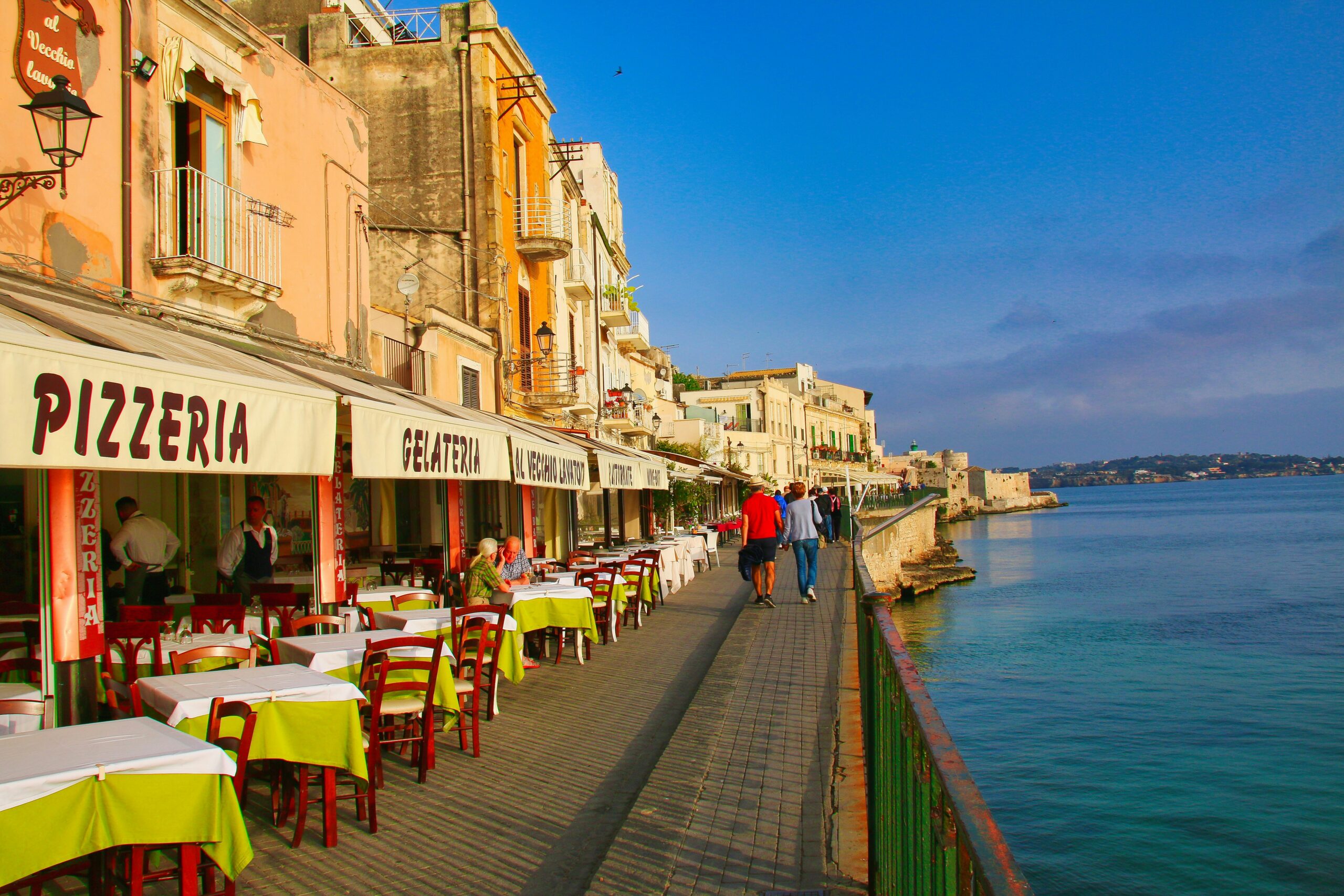
Later, when the sun drops, Ortigia doesn’t “turn off.” It softens. Lanterns warm the walls, conversations stretch late, and the island becomes less about sights and more about mood. If you only do a quick daytime loop, you’ll see Ortigia. If you stay into the evening, you’ll feel why people remember it.
Key Information (Fast Planning)

Stepping into Ortigia (Easy Walking Flow)
Most visitors enter Ortigia via Ponte Umbertino, the bridge linking the island to mainland Syracuse. The change is immediate: ochre façades, winding alleys, and glimpses of blue sea at the end of streets. Ortigia rewards slow travel—pause for details, follow the scent of espresso, and let the island guide you from piazza to piazza.
What to Do First (Low-Stress Route)
- Market first (morning): start with energy + photos while stalls are full.
- Ancient core next: Temple of Apollo area → small lanes → Piazza Duomo.
- Sea finish (golden hour): promenade + viewpoints → Castello Maniace corner.
Cultural Context (Why Ortigia Feels “Layered”)
Ortigia’s magic is its continuity: eras overlap instead of replacing one another. You might be walking past a Greek footprint, then—two turns later—standing in front of a Baroque façade, and then hearing the clink of cups from a café that’s been doing the same morning routine for decades.
The best way to enjoy it is not to “hunt landmarks” aggressively. Treat the island like a living museum with no rope lines: give yourself permission to drift, then anchor your day around only a few key points (market, Duomo area, waterfront, castle end).
Insider Hacks (Save Time + Avoid Annoying Mistakes)
“`
A vs B: Ortigia vs Taormina (Which Fits You Better?)
If you’re choosing only one “Sicily postcard town” on a tight itinerary, this quick comparison helps:
A Simple 1-Day Ortigia Itinerary (No Stress)
This route is designed for real travel days: minimal backtracking, built-in breaks, and the best light when you need it.
Morning (2–3 hours)
- Ortigia Market: coffee + quick bites + photos.
- Temple of Apollo area: short stop, then drift into lanes.
- Mini-lane wandering: pick one “no-map” stretch and enjoy it.
Midday (2–3 hours)
- Piazza Duomo: slow look, shade breaks, and a calm sit-down lunch.
- Seafront edges: choose the side with wind + views (your feet will decide).
Late afternoon to sunset (2–3 hours)
- Waterfront promenade: plan this for the warmest light.
- Castello Maniace corner: even if you don’t go in, the end-of-island views are worth it.
- After-dark stroll: 20–40 minutes with zero agenda (that’s the point).
Before You Go Checklist
- Comfort shoes: cobblestones + uneven lanes are normal.
- Car plan: assume ZTL applies and park outside unless you have permission.
- Market plan: go early for the best version of it.
- Photo plan: morning lanes + golden hour sea edges.
- Time budget: half-day = highlights; full day = atmosphere; 1 night = magic.
Nearby Add-Ons (If You Have Extra Time)
- Neapolis Archaeological Park: for Greek/Roman ruins beyond the island core.
- Castello Maniace: a dramatic sea-edge fortress experience (check current hours/tickets before you go).
- Catania day link: if you’re routing through CTA, build a half-day buffer for food/markets.
Related Trip Nexus Guides (Italy)
Official Links (Trusted Sources)
FAQ
How long do you need in Ortigia Syracuse?
Is Ortigia good for a day trip?
What’s the best season to visit Ortigia?
Where should I start my walk?
Can you drive into Ortigia?
What time should I visit Ortigia Market?
Is Ortigia family-friendly?
Do I need a guide?
What’s the single “must-do” moment?
Google Map
Final Take
As evening falls, Ortigia doesn’t fade—it softens. Lanterns warm the stone, conversations stretch late, and the sea becomes part of the soundtrack. It’s the kind of place that doesn’t just impress you once. It leaves a trace—quietly insisting you return, not only to see, but to feel it again.