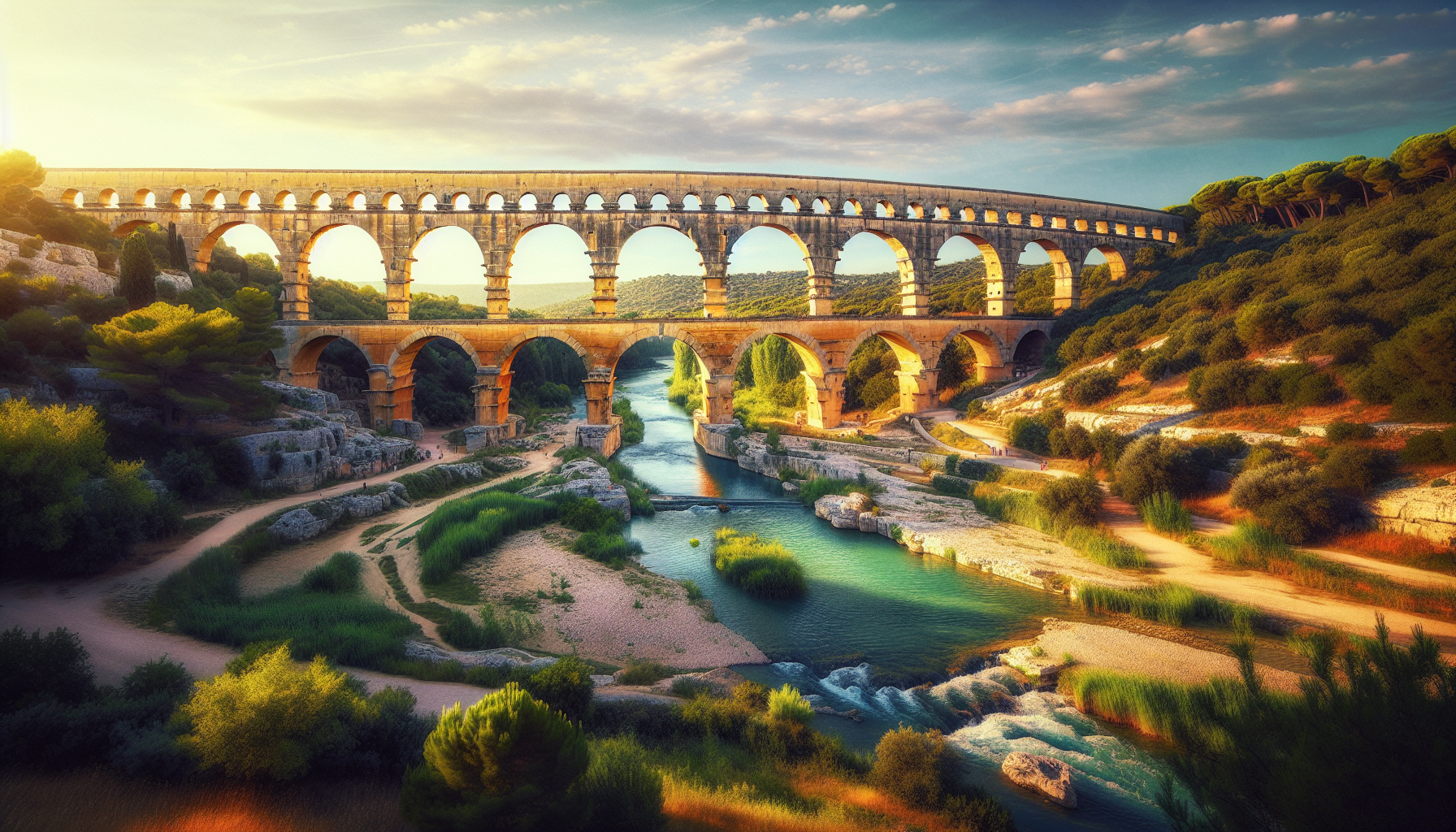
The golden arches of the Pont du Gard rise dramatically above the sparkling Gardon River, an enduring testament to the audacity and genius of ancient Rome. To stand beneath its colossal stones is to feel the pulse of 2,000 years of history, where the Provençal sun turns every block of limestone into a living, breathing monument. The Pont du Gard is not merely an aqueduct; it is a living bridge between eras, a place where the grandeur of antiquity meets the vibrant traditions of southern France. For travelers seeking both awe and authenticity, few destinations rival the magnetic allure of this World Heritage site.
Why Visit Pont du Gard
There is a rare electricity in the air at Pont du Gard—an exhilaration that pulses through every visitor who gazes up at its tiered arcades. The aqueduct, built in the first century AD, is the highest and best-preserved of its kind anywhere on earth. But its appeal is far more than architectural. Here, olive groves and wild rosemary scent the breeze, cicadas sing in the heat of summer, and the river below invites both contemplation and adventure. The Pont du Gard is a place to walk in the footsteps of Roman engineers, to picnic beneath ancient stones, to swim in crystalline waters, and to feel the irresistible spirit of Provence in every sense and sound.
Stepping into Pont du Gard
The first glimpse of Pont du Gard is unforgettable. As you approach along shaded footpaths, the aqueduct emerges from the curve of the river like a vision from another world. Its three tiers of arches soar nearly 50 meters above the Gardon, their reflection shimmering in the water. At sunrise, the stones glow with honeyed light; at dusk, they turn bronze and rose, mirrored by the tranquil current. The surrounding landscape—oak forests, garrigue scrubland, and terraced hillsides—creates a natural amphitheater for this masterpiece. Every step closer is a step deeper into the heart of Occitanie, where ancient ingenuity and natural beauty converge in perfect harmony.
Key Information Table
| Location | Vers-Pont-du-Gard, Occitanie, France |
|---|---|
| Official Website | https://www.pontdugard.fr |
| Year Built | 1st century AD |
| UNESCO World Heritage | Yes |
| Entry Fee | Varies (Adults, Children, Groups) |
| Visitor Center | Yes |
| Accessibility | Wheelchair accessible (main areas) |
| Guided Tours | Available (reserve in advance) |
| Parking | On-site (paid) |
Immersive Cultural Experiences
Pont du Gard is more than a static relic; it is a dynamic center of cultural life. The visitor center and museum offer hands-on exhibits that breathe life into the Roman era, from the tools and techniques of aqueduct construction to the everyday stories of those who built it. Local guides, passionate about their heritage, lead walking tours that reveal the myths, mysteries, and marvels of the aqueduct and its surroundings. In summer, open-air concerts and theater performances transform the arches into a stage, while artisans and food markets bring Provençal traditions to the riverbank. Paddle beneath the arches in a kayak, join a photography workshop at sunrise, or savor a glass of local Costières de Nîmes wine as the sun sets behind the golden stones—every experience here deepens the connection between past and present.
Seasonal Festivals and Special Events
The calendar at Pont du Gard is alive with celebration. Each June, the “Les Féeries du Pont” festival floods the monument with light and music, drawing visitors from across Europe for spectacular pyrotechnics and live performances. Spring brings the Fête de la Nature, when the site becomes a playground for nature walks and ecological workshops. In autumn, harvest festivals fill the air with the scent of truffles, chestnuts, and new wine. Throughout the year, temporary art installations and sound-and-light shows offer fresh perspectives on the aqueduct, ensuring that no two visits are ever the same.
Google Map
How to Get There
The Pont du Gard is remarkably accessible from across southern France. By car, it is a short drive from Avignon, Nîmes, or Uzès, with well-signposted routes leading directly to the visitor parking. Regional trains connect to Nîmes and Avignon, both of which offer bus services to Vers-Pont-du-Gard. For the adventurous, cycling routes wind through vineyards and sleepy villages, offering a scenic approach to the aqueduct. Arriving by kayak along the Gardon River is an unforgettable option—gliding beneath the arches as the Romans once did, with the Provençal landscape unfolding on either bank.
Nearby Attractions and Local Eats
Essential Travel Tips
Plan to arrive early or late in the day to avoid the midday crowds and capture the aqueduct in the most beautiful light. Wear comfortable shoes for walking the scenic trails that crisscross the site. Bring a swimsuit in warm weather—the Gardon River is perfect for a refreshing dip. Visit the museum for context, and check the official website for the latest event schedule. While summer is busiest, spring and autumn offer milder weather and a more tranquil atmosphere. For an authentic taste of the region, sample local specialties such as brandade de Nîmes, olive tapenade, and honey from the Garrigue.
What Makes This Destination Unique
Pont du Gard is unique not just for its monumental beauty but for its ability to inspire wonder across generations. It bridges worlds—the ancient and the modern, the natural and the engineered, the local and the universal. Here, you do not simply witness history; you inhabit it. The aqueduct’s grandeur is matched only by the warmth of Provençal hospitality and the richness of its surrounding landscapes. Every visit is an invitation to marvel, to learn, and to celebrate the enduring power of human creativity.
Related Posts
- Regional Tourism Office
- Destination Official Homepage
- Country Tourism Board
- City Tourism Website
- Attraction Official Website
To visit the Pont du Gard is to stand at the confluence of time and place, to feel the heartbeat of a region that reveres its past while embracing each new day with open arms. Here, the river flows as it always has, the arches rise as they always will, and every traveler leaves with a sense of wonder that endures long after the journey ends.