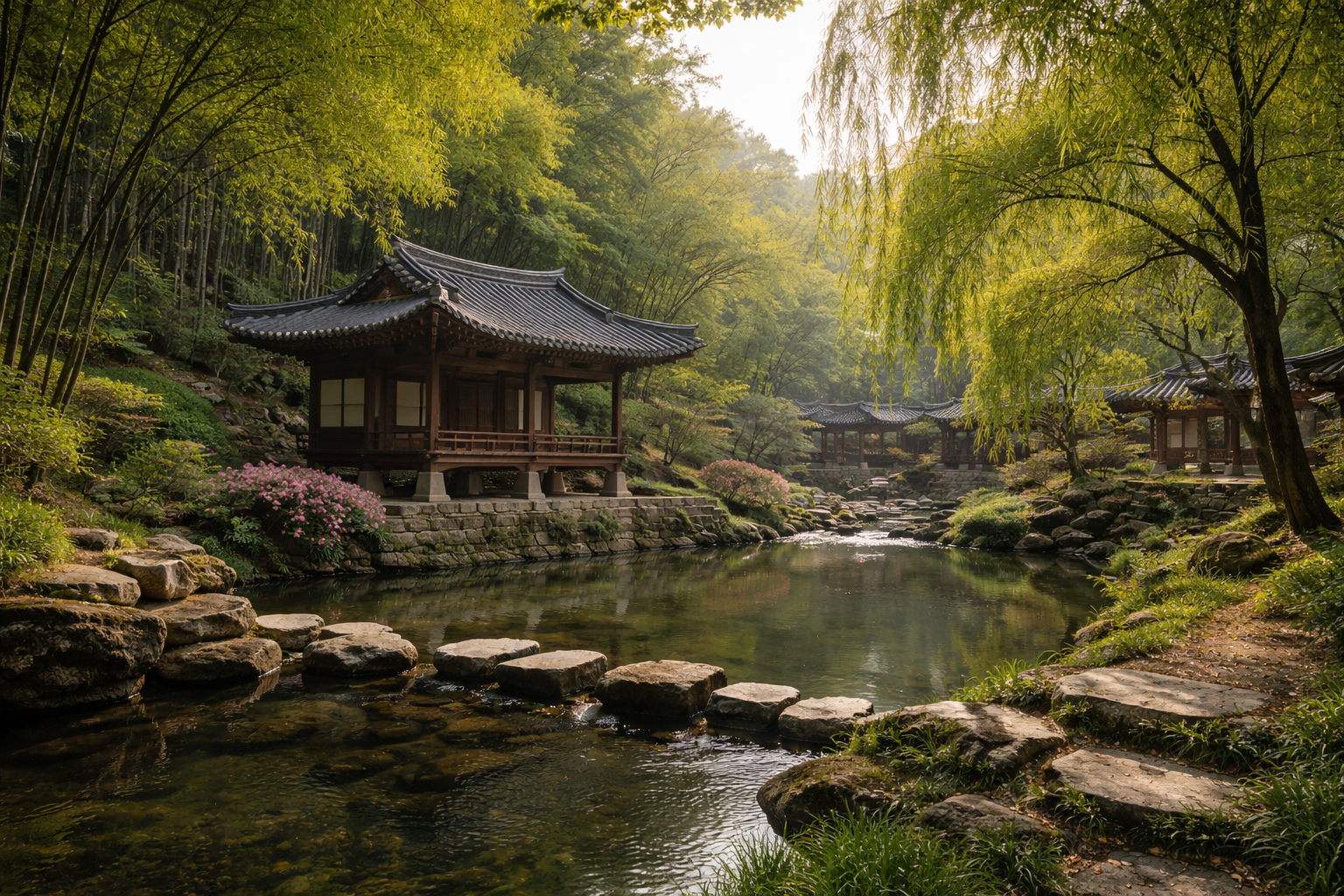
Soswaewon Garden in Damyang: A Timeless Confucian Retreat in Korea
Tucked deep within the serene countryside of Damyang, Soswaewon Garden is not merely a historic site—it is a philosophical landscape shaped by nature, scholarship, and quiet resistance to excess. Designed in the early Joseon Dynasty, this private Confucian garden reflects a way of life where harmony with nature was considered the highest form of wisdom. Even today, Soswaewon remains one of Korea’s most refined examples of traditional garden design, offering visitors an experience that is both visually calming and intellectually enriching.
Why Soswaewon Garden Matters in Korean History
Unlike royal gardens built to impress, Soswaewon was created as a retreat for scholars who valued simplicity, moral integrity, and contemplation. Every element—from the gentle stream flowing through the grounds to the placement of stones and pavilions—follows Confucian principles of balance and restraint. Visiting Soswaewon is not about spectacle; it is about slowing down and understanding how Korean philosophy shaped space, architecture, and daily life.
Walking Through Soswaewon: What to Expect
The approach to Soswaewon is intentionally subtle. A narrow path leads visitors through bamboo groves before revealing the garden’s entrance, creating a gradual transition from the outside world into a contemplative space. Inside, small pavilions sit beside flowing water, designed for reading, poetry, and philosophical debate. There is no single “highlight”—the garden encourages quiet wandering rather than guided attention.
Essential Visitor Information
| Category | Details |
|---|---|
| Location | Damyang, Jeollanam-do, South Korea |
| Official Website | https://www.namdokorea.com |
| Opening Hours | 09:00–18:00 (Mar–Oct), 09:00–17:00 (Nov–Feb) |
| Admission Fee | 2,000 KRW (Adults) |
| Best Season | Spring and Autumn |
| Address | 268 Soswaewon-gil, Damyang-gun |
| Accessibility | Partial wheelchair access |
Cultural Experiences at Soswaewon
Soswaewon is closely tied to Korea’s Confucian academy culture. On select days, visitors may observe or participate in traditional tea ceremonies held inside the pavilions. Local guides—often deeply familiar with the site’s scholarly lineage—offer insights into Joseon-era education, calligraphy, and ethical philosophy. These experiences elevate the visit from sightseeing to cultural immersion.
Seasonal Highlights
Each season transforms Soswaewon in a different way. Spring introduces soft blossoms and fresh greenery, while summer emphasizes flowing water and shade. Autumn brings dramatic foliage that contrasts beautifully with the garden’s minimalist structures. Winter, though quieter, reveals the architectural purity of the site, making it ideal for photography and reflection.
Location Map
How to Reach Soswaewon Garden
From Gwangju, take a direct bus to Damyang Intercity Bus Terminal (approximately 40 minutes). From there, local buses or taxis reach Soswaewon in under 20 minutes. Travelers who enjoy cycling can also reach the area via Damyang’s well-maintained rural bike routes.
Nearby Places Worth Visiting
- Damyang Bamboo Forest – A signature landscape of the region
- Metasequoia Road – One of Korea’s most photographed tree-lined roads
Practical Travel Tips
Visit early in the morning for the quietest experience. Wear comfortable shoes, as stone paths may be uneven. Photography is allowed, but the atmosphere encourages discretion and respect. If possible, combine Soswaewon with other Damyang cultural sites for a full-day itinerary.
Why Soswaewon Is Truly Unique
Soswaewon Garden stands apart from Korea’s more famous historical attractions by offering something rare: intentional quiet. It is a place where nature and thought coexist without competition. For travelers seeking depth rather than distraction, Soswaewon delivers an experience that lingers long after the visit ends.
Official & Reference Resources
In Soswaewon, time does not stop—it simply moves more thoughtfully. This is not a place to rush through, but one to absorb slowly, guided by water, wind, and centuries of quiet wisdom.