KR
2026 Jeju Nature Guide
Songaksan Seogwipo — A Realistic Guide to the Coastal Crater Loop
Search Intent: Planning to hike Songaksan Seogwipo in 2026? This guide cuts through the “easy walk” hype to give you the honest truth: how to manage the intense coastal gusts, why the morning light is a non-negotiable for photographers, and a strategic route that avoids the midday crowds at the trailhead.
Songaksan Seogwipo: Where Serenity Meets Volcanic Edge
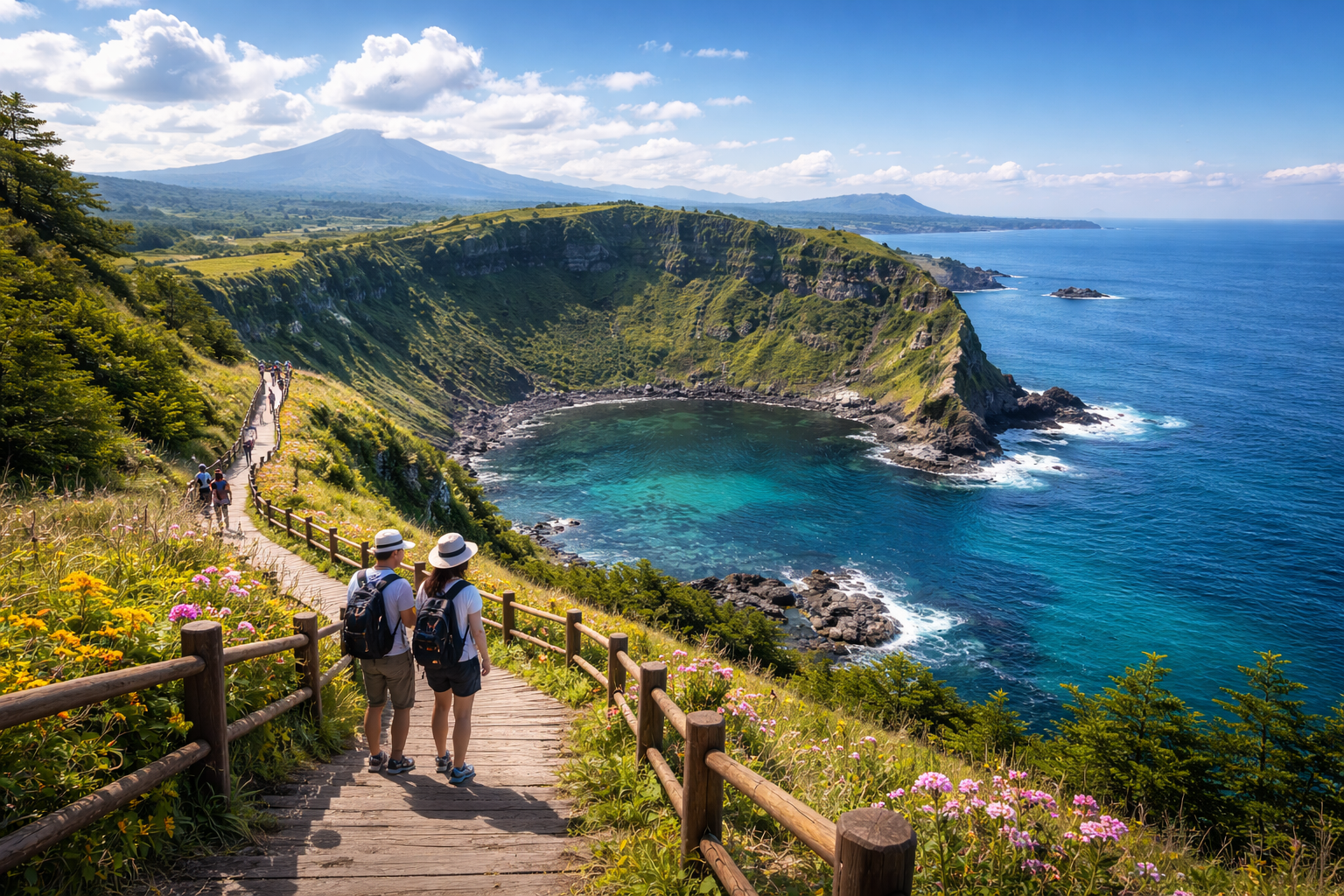
Songaksan Seogwipo is one of Jeju’s most cinematic “effort-to-reward” hikes. This double-crater formation offers a compact rim loop where rolling grasslands snap into black lava cliffs over the deep-blue Pacific. It is a rare spot where the island’s geological origin story—fire meets sea—is visible in every eroded rock layer.
In 2026, Songaksan remains a favorite for its accessibility. You can walk the entire rim in 90 minutes, yet the visual scale makes it feel like a full-day expedition. It is a hike that invites reflection rather than exhaustion, provided you are prepared for the elements that define the southern coast.
Honestly? The Wind is the Real Protagonist
The first time I stepped onto the Songaksan rim, the silence of the grasslands was misleading. As soon as the trail rounds the first bend toward the cliffs, the Pacific wind hits you like a physical wall. It’s exhilarating, yes, but it can be exhausting if you’re not wearing the right gear. I’ve seen many travelers lose their hats to the sea because they underestimated the gusts. But then you see it: the dark, jagged cliffs meeting the turquoise water, and the struggle against the wind becomes a badge of honor. It feels wild, raw, and very “Jeju”.
My Practical Advice: Don’t just stare at the ocean. Look inland toward the crater itself. The “double-crater” structure is easier to see from the southern viewpoints. Also, if you’re traveling with children, be extremely vigilant. The fences are sturdy, but the desire to lean over for that “perfect photo” of the hydrovolcanic layers can be dangerous when a sudden gust occurs. Settle for a steady pace—this isn’t a race, it’s a sensory immersion.
Logistics & Strategy (2026)
Songaksan vs. Hallasan (Which Fits Your Itinerary?)
Songaksan: 90 minutes. Best for families, photographers, and those who want maximum “view-per-minute” without the sweat.
Hallasan: 6–9 hours. Best for dedicated hikers who want a physical challenge and the prestige of the summit.
My Choice: If you only have three days in Jeju, go with Songaksan. It leaves you enough energy to actually enjoy dinner afterward.
The High-Impact Route: Step-by-Step
- 08:30 AM – Arrival: Park at the main lot. Check your footwear—gravel paths are slippery when damp.
- 09:00 AM – The Rim Ascent: Settle into a steady pace. The “Golden Hour” light is still soft on the ocean islet views.
- 09:45 AM – Cliffside Immersion: Stop at the southern lookout points to observe the hydrovolcanic rock layers.
- 10:30 AM – The Finish Line: Exit the loop and head to the nearby village for a cup of Jeju tangerine tea.
- 11:30 AM – The Add-on: Drive 15 minutes east to the **Cheonjeyeon Waterfall** to balance your coastal day with lush forest.
Google Map
FAQ (Honest Answers)
Continue Your Seogwipo Exploration
- ➜ Waterfall Escape: Cheonjeyeon Waterfall: A Forest Retreat
- ➜ Spiritual Stop: Hyangiram Hermitage (Alternative Coast)
- ➜ Immigration Q&A: Smooth Entry into Korea (Expert Guide)
Expert Final Verdict
Songaksan is a 10/10 location if you follow the **”Sunrise Strategy.”** By beating the tour buses and the afternoon heat, you transform a busy tourist spot into a private meditation between the volcanic cliffs and the ocean. Wear a windbreaker, pack a bottle of water, and move slowly to soak in the hydrovolcanic layers that most travelers rush past.
Data verified in March 2026. Source: Visit Jeju and Korea Tourism Organization.