There are few places in South Korea where history is not merely preserved, but truly lived. Naganeupseong Folk Village in Suncheon is one of those rare destinations—a fortified village where the rhythms of the Joseon Dynasty continue quietly into the present day. Surrounded by earthen walls and gentle hills, this living village offers travelers an authentic encounter with Korea’s rural heritage, far removed from the pace of modern city life.
Why Visit Naganeupseong Folk Village
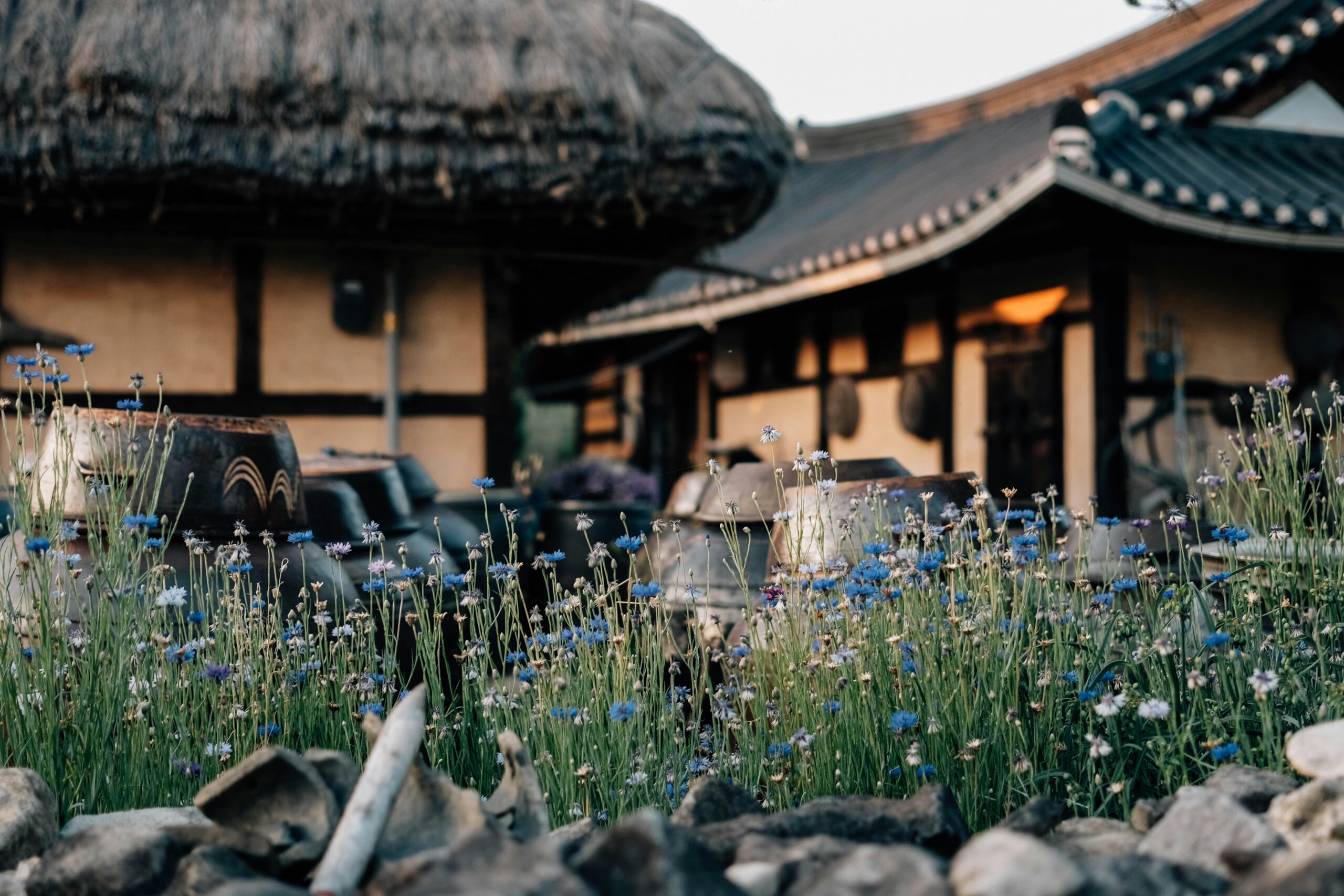
Unlike reconstructed folk parks, Naganeupseong is a genuine residential village. Families still inhabit traditional thatched-roof hanok, tend vegetable gardens, and uphold customs passed down for generations. Walking through the village feels less like sightseeing and more like stepping into a parallel timeline, where everyday life unfolds according to traditions shaped over 500 years ago.
A Walk Through a Living Joseon-Era Village
Established in the 15th century during the Joseon Dynasty, Naganeupseong was designed as both a residential settlement and a defensive fortress. The village layout reflects traditional Korean geomantic principles (pungsu-jiri), balancing harmony between humans and nature. Stone walls trace the paths, straw roofs dip low under the sky, and narrow lanes gently guide visitors past wells, shrines, and family courtyards.
As you explore, you may encounter residents weaving straw sandals, fermenting traditional foods, or quietly chatting under shaded eaves. These unscripted moments are what define the Naganeupseong experience.
Key Visitor Information
| Location | Suncheon, Jeollanam-do, South Korea |
|---|---|
| Historical Period | Joseon Dynasty (15th century) |
| Type | Living folk village & historical fortress |
| Admission Fee | Approx. KRW 4,000 (Adults) |
| Recommended Visit Time | 2–3 hours |
Hands-On Cultural Experiences
Naganeupseong invites visitors to engage rather than observe. Seasonal workshops allow guests to participate in traditional crafts such as natural dyeing, straw weaving, rice pounding, and kimchi preparation. Folk performances—including pungmul drumming and tightrope walking—are held regularly, offering insight into Korea’s communal entertainment traditions.
Many residents are happy to explain their crafts or daily routines, making the experience deeply personal and educational.
Festivals and Seasonal Atmosphere
Throughout the year, the village hosts events that align with Korea’s agricultural calendar. Spring welcomes planting festivals and folk games, summer highlights traditional weddings, autumn celebrates harvest rituals and Chuseok, and winter transforms the village into a quiet, snow-dusted tableau. Each season reveals a different emotional layer of village life.
How to Get There
From Seoul, take the KTX high-speed train to Suncheon Station (approximately 3 hours). From the station, local buses and taxis reach Naganeupseong Folk Village in about 30 minutes. Free parking is available for visitors arriving by car.
Nearby Places to Explore
- Suncheon Bay Wetland Reserve – One of Korea’s most celebrated ecological sites, known for its reed fields and migratory birds.
- Suncheon Open Film Set – A large outdoor film set recreating mid-20th-century Korean streets.
Practical Travel Tips
- Wear comfortable walking shoes; paths are uneven and unpaved.
- Arrive early to enjoy quieter moments before tour groups arrive.
- Photography is welcome, but always respect private homes.
- Light snacks and traditional drinks are available inside the village.
Why Naganeupseong Is Truly Unique
Naganeupseong Folk Village is not a performance of history—it is history continuing at its own pace. The absence of staged storytelling allows visitors to form genuine connections with the place and its people. This authenticity, combined with architectural integrity and natural surroundings, makes Naganeupseong one of Korea’s most meaningful cultural destinations.