Jeonju Nambu Market (2026 Guide): Night Market Street Food, Youth Mall & Local Culture
Jeonju Nambu Market is where Jeonju’s “food capital” reputation feels real—no museum glass, no staged vibe.
It’s noisy, steamy, snack-heavy, and strangely comforting. Come hungry, walk slow, and let the market teach you Jeonju in one afternoon.
You want the practical truth: when the night market actually feels alive, what’s worth eating (and what’s overhyped),
how Youth Mall works, how long to stay, and a simple walking route that connects Nambu Market with Hanok Village without stress.
Use WordPress Featured Image (right panel) for your main thumbnail. If you also want an in-post hero image,
place it directly under this card. (No text/typography on the image.)
Quick Summary (Save This)
- Best time: late afternoon → evening. Daytime feels “local errands,” night feels “festival snacks.”
- Don’t miss: classic Jeolla-style dishes + a few weird night-stall bites (the fun is the contrast).
- Hidden layer: Youth Mall adds modern creativity (small shops/cafés upstairs).
- Wildcard: early morning “Dawn” market vibes (if you like real wholesale energy).
- Big mistake: arriving too full or too late—popular night stalls sell out early.
Quick Planning Snapshot
| Location | Nambu Market (남부시장), near Pungnammun Gate, Wansan-gu, Jeonju |
|---|---|
| Typical hours | Varies by vendor. Many daytime shops run roughly morning → evening; night stalls peak on weekend evenings. |
| Dawn market vibe | Jeonju tourism notes a “Dawn” street market around early morning hours (roughly 4:00–10:00) in nearby areas. |
| Budget | ₩10,000–₩25,000 per person is a comfortable “2–4 snacks + drink” range. |
| Best visit length | 2–4 hours (longer if you treat it as dinner + dessert + wandering time). |
Planning note: market hours and night-stall schedules can shift by season. If your timing is tight, double-check via official Jeonju tourism resources before you go.
Why Visit Jeonju Nambu Market
Some markets feel like tourist theater. Nambu Market doesn’t. It feels like a real city feeding itself.
That’s the charm—one corner is classic Jeolla comfort food, the next corner is a younger vendor doing something playful and slightly chaotic.
If you’re trying to understand Jeonju beyond “photo spots,” this is the shortcut.
- Food is the main character: Jeonju flavors feel richer and more “generous” than many other cities.
- Night mood upgrade: after sunset, the market shifts from errands → hangout energy.
- Feels local, not curated: you’ll hear real shopping talk, not only camera clicks.
If you only have one “food-heavy” stop in Jeonju, this is the one.
Hanok Village is beautiful, but Nambu Market is where Jeonju tastes like itself.
What It Feels Like (Real Visit Mood)
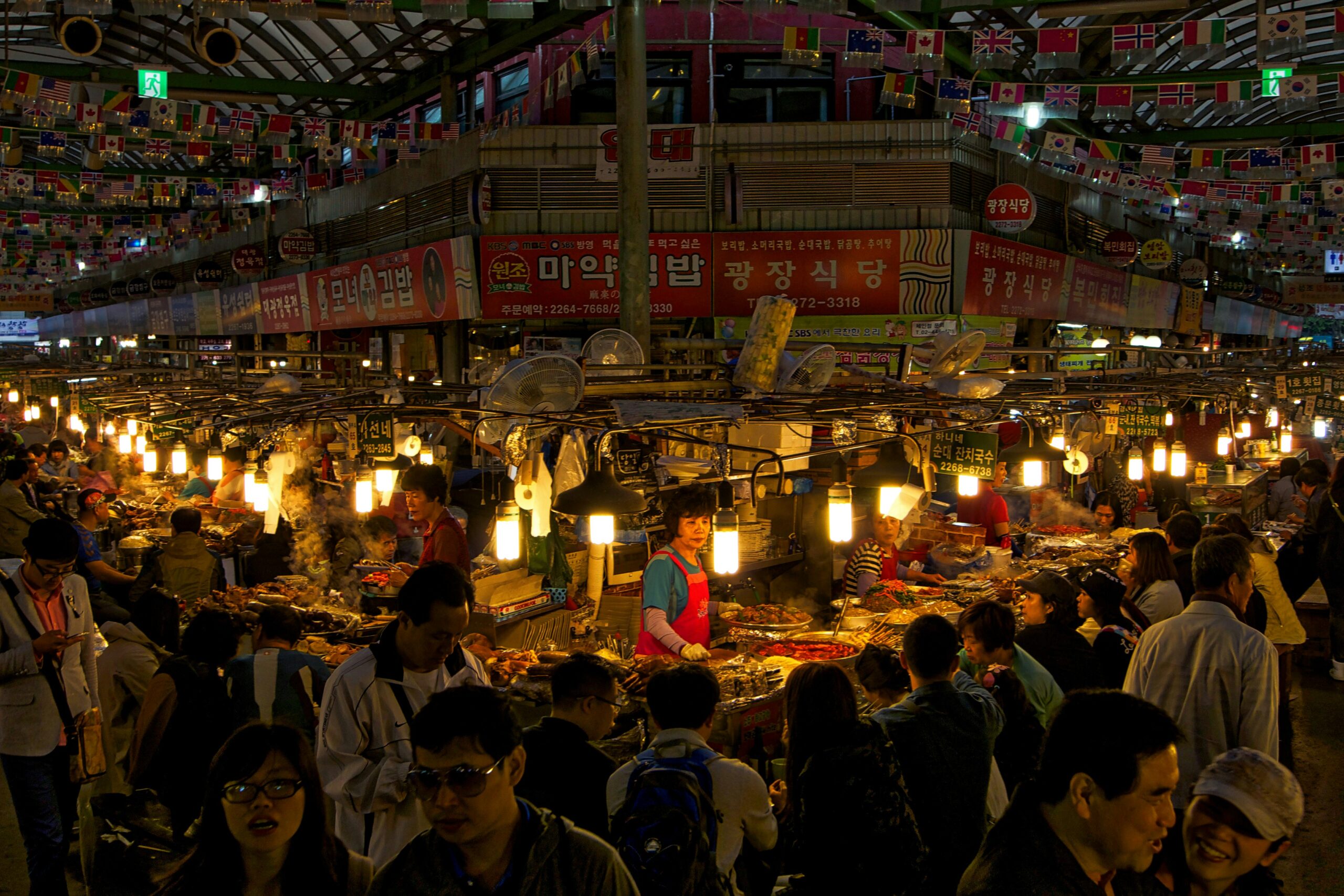
In the afternoon, it’s “daily life.” You’ll see aunties buying ingredients, vendors calling out prices, and little pockets of calm.
Then evening hits and suddenly you’re in snack-land: sizzling pans, sweet smells, lines forming, people standing around eating like it’s completely normal to have dinner in three bites.
(It is. And it’s kind of perfect.)
Don’t buy the first thing you see. Do a quick loop first—just scanning.
Your second pass will be smarter, and you’ll waste less stomach space on “meh” food.
What to Eat & Do (The Good Stuff)
1) Classic Jeonju comfort food
with something warm and simple—no hype needed.
Jeonju-style bowls, pancakes (jeon), dumplings, and rice-cake snacks are the “anchor foods” that make the rest feel like bonus levels.
If you’re overwhelmed, pick one warm dish first, then snack around.
Night stalls lean playful—fried, grilled, sauced, and shareable.
Go with a “two-bite rule”: if it looks interesting, split it with someone or buy one and share. You’ll try more without feeling wrecked.
Youth Mall is the market’s modern layer—small creative shops and youthful energy above the traditional stalls.
If the market feels “too classic,” this is where it flips into modern Jeonju.
If you like real wholesale energy—fresh ingredients, fast deals, local farmers—try the early morning market atmosphere.
It’s not polished. That’s the point. You’ll see a different Jeonju than the one in postcards.
Best Timing Plan (So It Doesn’t Feel Rushed)
- Late afternoon: arrive, do a scan loop, pick one warm “anchor” food.
- Pre-sunset: browse traditional stalls + small goods (this is the calm window).
- After dark: night stalls → 2–4 snack bites, share everything.
- Finish: slow walk toward Hanok Village streets (best digestion + best vibe).
If you only have 60–90 minutes, skip the deep browsing and do: one warm dish + two night snacks.
That alone can feel like a “real Jeonju” experience.
How to Get There (Simple)
- From Jeonju Station: taxi or local bus (roughly 15–25 minutes depending on traffic).
- From Jeonju Hanok Village: easy walk (often ~5–15 minutes depending on where you start).
- Best map pin: “Nambu Market (남부시장)” or “Pungnammun Gate” if you want a clear landmark.
If you’re coming from Hanok Village, aim for Pungnammun Gate first.
It’s an easy visual anchor, and the market area unfolds naturally from there.
Insider Tips & Warnings (Save Your Stomach)
Treat the market like a tasting menu. One big meal kills the whole experience.
Two bites here, one bite there—your future self will thank you.
If you feel like you’ve “seen everything” too fast, you probably missed Youth Mall.
It’s the mood reset—creative and modern, but still part of the market DNA.
Cards are common in Korea, but smaller stalls can still prefer cash.
Carrying ₩10,000–₩30,000 in cash keeps everything easy.
The best-looking stalls often run out earlier than you expect.
If something screams “must try,” buy it first—then keep browsing.
Weekend evenings can get crowded. If you hate queues, arrive earlier and eat the classics before the night rush.
Quick snaps are fine, but don’t block stalls or shove cameras into faces.
A small nod + a smile goes a long way here.
A vs B: Nambu Market vs Jeonju Hanok Village
| Choose based on… | Jeonju Nambu Market | Jeonju Hanok Village |
|---|---|---|
| Best feeling | Taste-first, real local rhythm, snack adventure | Photo-first, heritage streets, traditional atmosphere |
| Time needed | 2–4 hours (best with evening) | 2–6 hours (depends on museums/tea/hanbok) |
| My verdict | If you want Jeonju’s “flavor identity,” start here | If you want Jeonju’s “visual identity,” pair it after |
Quick Checklist (So You Don’t Regret Anything)
- Arrive hungry (seriously).
- Carry some cash + a card.
- Do a scan loop first, then buy.
- Go upstairs at least once (Youth Mall).
- Leave 10–15 minutes for a slow walk toward Hanok Village.
FAQ
What’s the best time to visit Jeonju Nambu Market?
Late afternoon into evening is the sweet spot—daytime feels local and calm, while evening brings the most “night market” energy.
Is the night market open every day?
Not always. Night-stall activity is strongest on weekends and can vary by season. If your visit is time-sensitive, verify via official Jeonju tourism info.
How long should I stay?
2–4 hours is ideal. If you’re combining with Hanok Village, you can do a relaxed half-day without rushing.
Do I need cash?
Bring some. Many stalls accept cards, but small vendors can prefer cash—especially for quick snacks.
Is Youth Mall worth visiting?
Yes—especially if you want a modern layer of Jeonju creativity. It’s a nice contrast after classic market aisles.
Can I walk here from Jeonju Hanok Village?
Yes. It’s one of the easiest “walk-and-eat” pairings in Jeonju. Start at Pungnammun Gate if you want a clean route.
Is it good for kids or picky eaters?
Yes—because you can sample in small bites. Start with mild pancakes, dumplings, or sweet snacks.
What’s the biggest “tourist trap” mistake here?
Buying the first flashy food without scanning. Do one loop first, then commit—your stomach budget is limited.
Related Official Resources
Next Step
If you’re doing Jeonju for the first time, build your day like this:
Hanok Village → (walk) → Nambu Market → night snacks. It’s the most “Jeonju feels like Jeonju” combo.