Jeju Folklore & Natural History Museum: Culture, History & a Smart 2-Hour Route (2026)
updated basics (hours/tickets/closures), and a fast, efficient route you can pair with nearby Jeju City spots.
Jeju Folklore & Natural History Museum is the kind of “quietly powerful” stop that makes the rest of the island land differently.
After you walk through tools, homes, beliefs, and the island’s natural story, every basalt wall and sea wind outside suddenly has context.
🏆 Quick Summary (5 lines)
- Best for: first-time Jeju visitors who want culture + nature history in one easy indoor stop.
- Time: 90–120 minutes (add 30 minutes if you read every panel).
- Must-see: folk life galleries + Jeju’s nature/marine context (don’t rush the “why Jeju is different” parts).
- Best timing: arrive before 10:30 for calmer rooms and cleaner photo angles.
- Pairing: finish with the waterfront—Tapdong Square is the easiest “reset” after a museum morning.
“This museum doesn’t hit like a checklist attraction. It hits like a lens. You walk in thinking Jeju is ‘pretty scenery,’ then you walk out
noticing wind patterns, stone fences, fishing gear, and village layout choices—like the island is explaining itself to you.”
What It Feels Like (Real Visit Vibe)
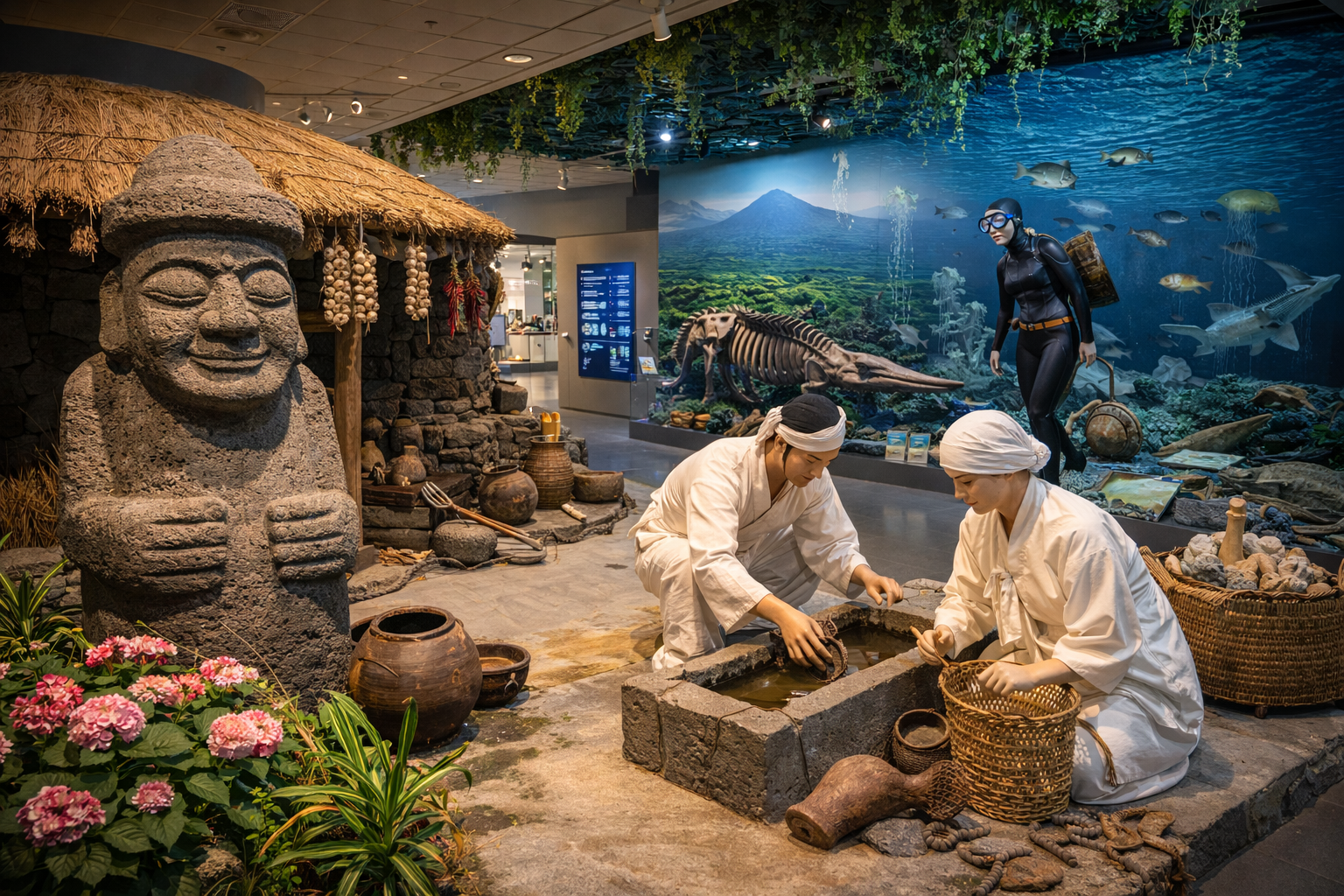
The first rooms feel calm and grounded—stone textures, warm lighting, and displays that make Jeju’s “everyday life” look quietly heroic.
Then the mood shifts: nature and marine sections remind you this island was built by fire and shaped by waves.
If you’re traveling with family, this is one of the easiest “everyone’s happy” stops in Jeju City—no hiking, no weather stress,
and lots of moments where even non-museum people suddenly lean in.
Why This Museum Works (Context That Matters)
Jeju isn’t just “Korea with beaches.” It’s a harsher ecosystem—wind, volcanic stone, and ocean livelihood—so the culture evolved with different
survival logic. This museum compresses that logic into a simple, walkable route: tools, homes, belief systems, and the natural world that shaped them.
The payoff is practical: after this visit, your later stops (coastal walks, markets, waterfalls, oreums) feel less random and more connected.
Key Information (Check Official Site for Last-Minute Changes)
| Category | Details |
|---|---|
| Address | 40 Samseong-ro, Jeju-si, Jeju-do (Jeju City) |
| Typical Hours | 09:00–18:00 |
| Common Closures | Mondays; New Year’s Day; Seollal & Chuseok (day of + day after) |
| Admission (Typical) | Adults: 2,000 KRW; Teenagers: 1,000 KRW |
| Phone | +82-64-710-7708 |
| Official Website | museum.jeju.go.kr |
💡 Insider Hacks (Small Things That Change the Visit)
- Do folklore first: once you understand daily life constraints, the beliefs/rituals section suddenly makes sense.
- Photo timing: morning light tends to feel cleaner indoors; midday crowds create “people in every frame.”
- Fast comprehension trick: pick one gallery and read deeply—better than speed-walking everything.
⚠️ Common Mistakes (Avoid These)
- Holiday trap: assuming it’s always open—double-check closures before you lock your day plan.
- Time sink: if you’re the “reads everything” type, budget closer to 2 hours.
- Wrong pacing: rushing the folklore galleries and spending all your time in the nature section—do it in order.
My Recommended Route (90–120 minutes)
- Folklore galleries (35–45 min): daily-life tools, household layouts, and Jeju-specific survival details (stone, wind, ocean).
- Belief & ritual (15–20 min): shamanic motifs and practices land harder once you’ve seen how tough island life was.
- Natural & marine exhibits (30–40 min): this is the “volcano + sea” chapter—perfect closer before you step back outside.
A vs B: Is This Museum the Right Fit?
| Option | Choose this if… | Not ideal if… |
|---|---|---|
| Jeju Folklore & Natural History Museum | You want Jeju’s culture + environment in one efficient indoor stop. | You only want “Instagram-only” visuals and zero reading. |
| Outdoor heritage-style stop (folk village) | You want open-air traditional architecture and slower wandering. | It’s rainy/windy, or your group is low-energy. |
How to Get There (Fast + Practical)
- From Jeju Airport: quick taxi ride (often easiest if you’re carrying bags).
- By bus: Jeju City routes run frequently—check the nearest stop from your accommodation.
- On foot: if you’re staying central, it can be a pleasant city walk.
Half-Day Mini Itinerary (Jeju City)
- 09:30–11:15 Museum (folklore → ritual → nature)
- 11:30–12:30 Local lunch near the city center
- 13:00–14:00 Short city stroll + coffee
- Sunset / evening Waterfront walk at Tapdong Square
Related Trip Nexus Guides (Internal Links)
- ➜ Easy waterfront pairing: Tapdong Square in Jeju
- ➜ Outdoor heritage alternative: Jeju Folk Village Museum Guide
- ➜ South-coast nature day: Cheonjeyeon Waterfall (Seogwipo) Guide
- ➜ Gentle scenic walk: Handam Coastal Trail Jeju
Official Resources (Use These Before You Go)
- 🏛️ Official Museum Site: museum.jeju.go.kr
- 🇰🇷 VISITKOREA listing: Hours / fees / holiday notes
- ✅ Korea Tourism Organization (Authority): english.visitkorea.or.kr
Google Map (Location)
Frequently Asked Questions
Final Thought
This museum is one of Jeju City’s best “meaning per minute” stops. You walk in curious—and you walk out seeing the whole island differently:
wind, stone, sea, and the people who learned to live with all three.
for the south coast (waterfalls / oreums) when you have more energy.
Author Note: Updated for 2026 planning flow + link strategy for Jeju Folklore & Natural History Museum.