Search intent: This guide is for travelers looking to understand the cultural, historical, and practical value of visiting Shuri Castle in Okinawa, including what to see, how to visit, and why it matters.
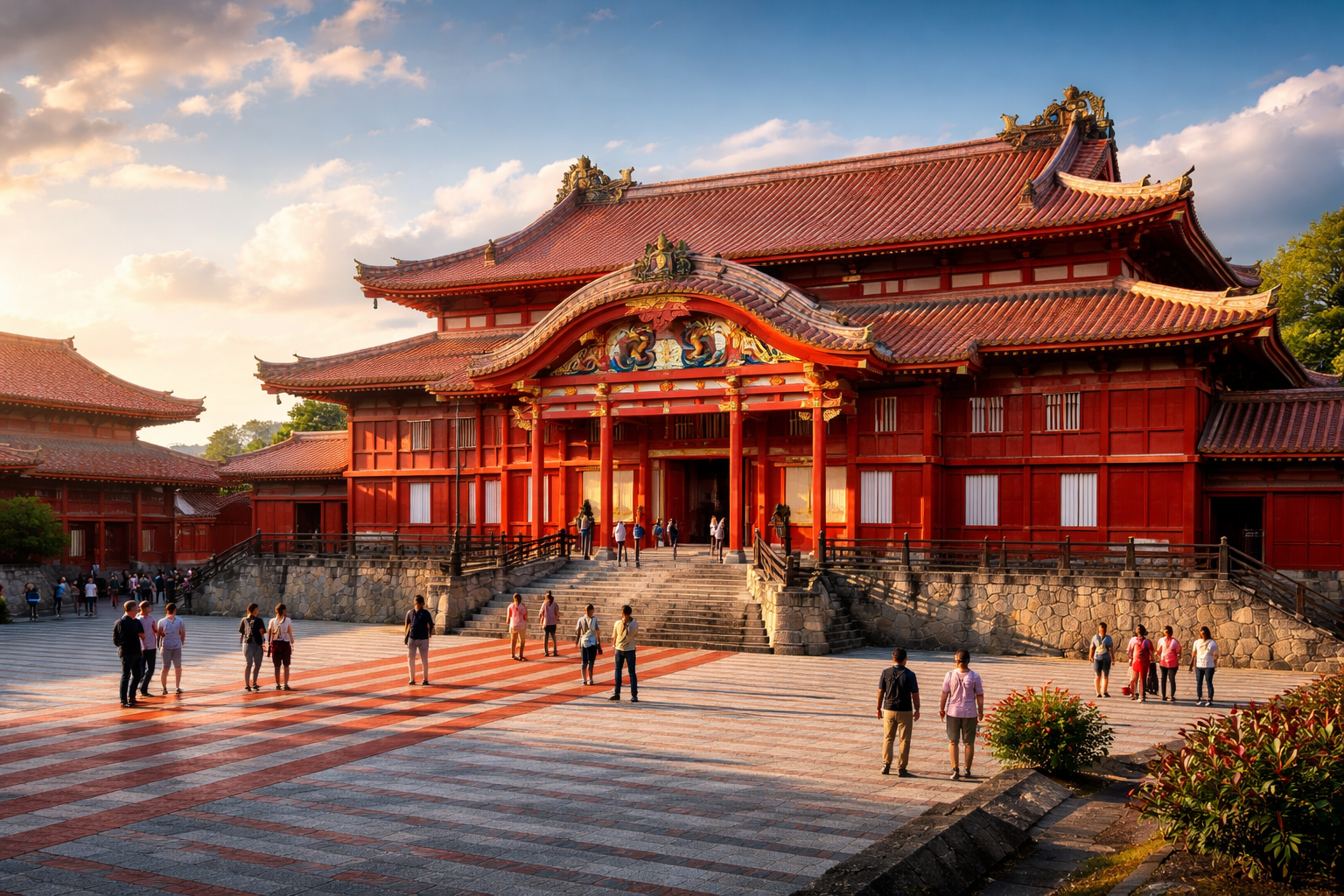
In the heart of Naha, Okinawa, where subtropical sunlight washes the city in warm tones, stands a site that transcends architecture and enters the realm of identity itself. Shuri Castle is not simply a historic structure—it is the symbolic heart of the former Ryukyu Kingdom and a living emblem of Okinawa’s resilience, culture, and pride.
Why Shuri Castle Is a Must-Visit in Okinawa
Unlike mainland Japanese castles built for warfare, Shuri Castle was the political, diplomatic, and ceremonial center of the Ryukyu Kingdom. Its design blends Chinese, Japanese, and indigenous Ryukyuan elements, reflecting Okinawa’s historic role as a maritime crossroads of East and Southeast Asia.
Even after the devastating 2019 fire, the ongoing restoration process has become part of the visitor experience—offering a rare chance to witness cultural preservation in real time.
Walking Through Shuri Castle: What to Expect
Your journey begins at the iconic Shureimon Gate, a UNESCO-recognized structure symbolizing courtesy and harmony. Passing through a sequence of gates and stone paths, visitors ascend toward the former royal compound, where the Seiden (main hall) once stood in striking vermilion splendor.
Although reconstruction continues, elevated walkways and exhibits allow visitors to understand the castle’s original layout, rituals, and political significance.
Key Visitor Information
| Location | Naha, Okinawa, Japan |
|---|---|
| Official Website | https://oki-park.jp/shurijo/ |
| Secondary Official Info | https://www.visitokinawa.jp/ |
| Opening Hours | 8:30 AM – 6:00 PM (seasonal variations) |
| Admission | Approx. ¥400 for adults |
| Accessibility | Wheelchair accessible (some zones limited) |
| Recommended Time | 2–3 hours |
Immersive Cultural Experiences
Shuri Castle is a gateway into Okinawa’s living traditions. Visitors may encounter Ryukyuan court music, classical dance performances, and rotating exhibitions that explain the kingdom’s diplomatic ties with China, Korea, and Southeast Asia.
Hands-on workshops—such as bingata textile dyeing—offer deeper engagement beyond sightseeing.
Seasonal Events and Festivals
Annual events like the Shurijo Castle Festival recreate royal processions and ceremonies, while autumn’s Mid-Autumn Banquet showcases traditional cuisine, music, and lantern-lit performances that evoke the Ryukyu court’s elegance.
Location & Map
How to Get to Shuri Castle
From Naha Airport, take the Yui Rail to Shuri Station. From there, the castle grounds are a scenic 15-minute walk uphill through historic neighborhoods. Taxis and buses are widely available.
Nearby Attractions Worth Visiting
- Tamaudun Mausoleum – Royal tombs surrounded by ancient forest
- Sonohyan-utaki Ishimon – Sacred Ryukyuan prayer site
- Makishi Public Market – Local food and Okinawan cuisine
What Makes Shuri Castle Unique
Shuri Castle is not frozen in time—it is evolving. Its reconstruction represents Okinawa’s determination to preserve identity against historical loss. Few sites in Japan so clearly embody cultural continuity, resilience, and regional pride.
Who Should Visit Shuri Castle?
- History and culture-focused travelers
- UNESCO World Heritage enthusiasts
- First-time visitors to Okinawa
- Photographers and slow travelers