Kurobe Gorge: Navigating Japan’s Deepest Alpine Chasm (2026 Guide)
Kurobe Gorge stands as one of Japan’s most cinematic alpine landscapes, an immense and rugged chasm carved by the Kurobe River in Toyama Prefecture that offers a breathtaking journey through the raw grandeur of the Northern Japanese Alps.
🏆 Quick Summary: The Kurobe Essentials
- 🚂 The Icon: Home to the Kurobe Gorge Railway, a charming retro-style train crossing dramatic bridges.
- ⏰ Best Timing: Visit from mid-April to late November; peak foliage is typically late October to early November.
- 📍 Accessibility: High-impact scenery with minimal hiking, making it perfect for families and senior travelers.
- ♨️ The Combo: Start and end your day at Unazuki Onsen, a world-class hot spring gateway town.
- 🛡️ 2026 Strategy: Arrive before 9:00 AM to secure open-air carriage seats for unobstructed 360-degree alpine views.
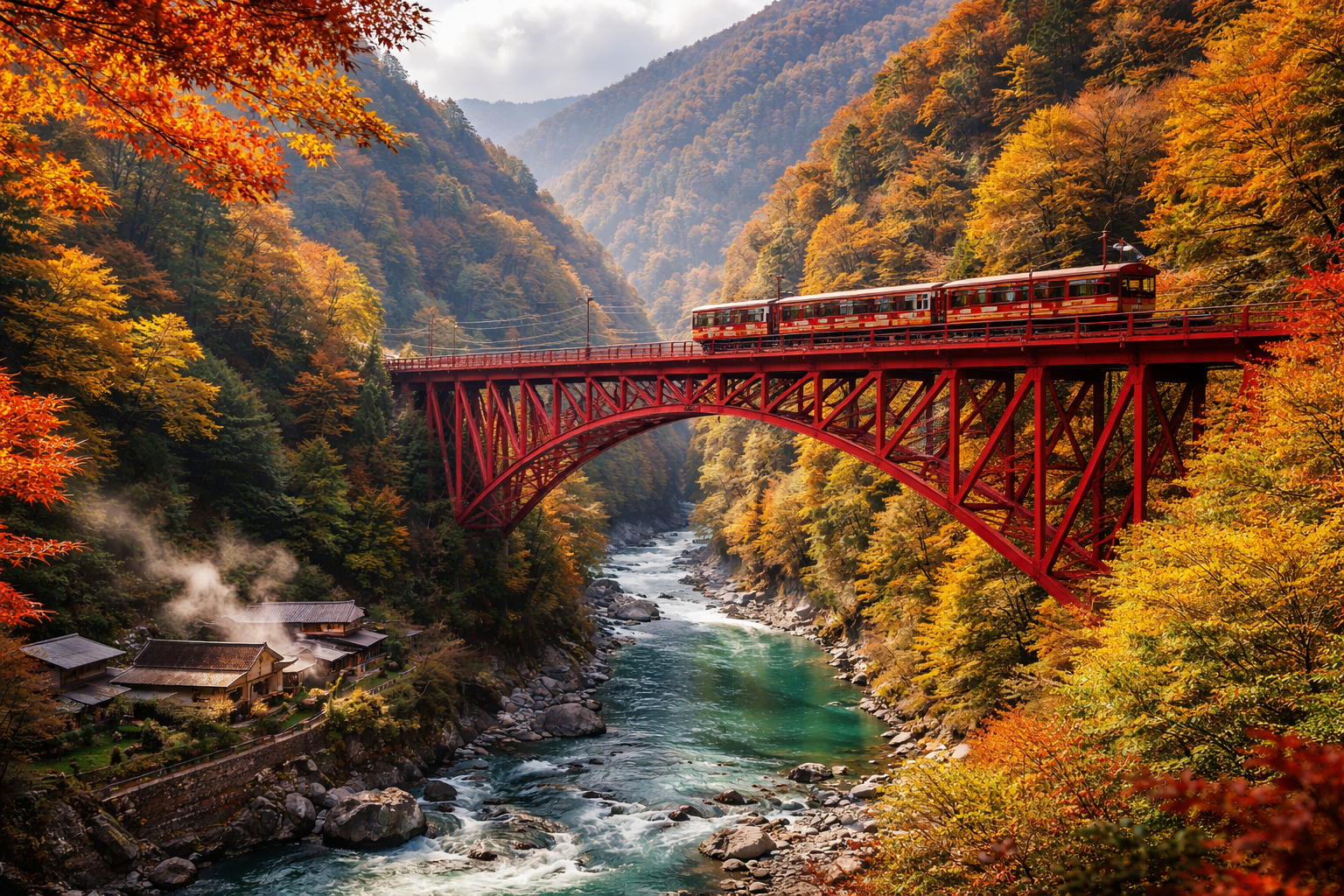
“As the Kurobe Gorge Railway clatters over the iconic bright red Shin-Yamabiko Bridge, the world outside simply transforms. The cool, crisp mountain air hits your face as you enter a realm of sheer granite cliffs and emerald-green rapids. Every tunnel exit reveals a new chapter of drama—mists drifting through ancient cedar forests and autumn leaves that ignite the valley in fiery shades of russet and gold. Here, the raw power of the Japanese Alps isn’t just a distant view; it’s a living, breathing symphony of wind, water, and stone that echoes through the deepest gorge in the country.”
A Chasm Reborn: Why Kurobe Gorge is Not “Just Another Mountain”
In 2026, Kurobe Gorge continues to defy expectations as a masterpiece of both nature and human engineering. Originally developed to facilitate the construction of power plants in this remote wilderness, the railway has evolved into one of Japan’s premier “soft adventure” destinations. Unlike the Tateyama Kurobe Alpine Route which focuses on mountain peaks, the gorge experience is about valley immersion. You are deep within the fold of the Alps, surrounded by walls that rise hundreds of meters on either side. This vertical scale creates a unique microclimate where alpine flora thrives, and the water remains a stunning crystalline turquoise even in the height of summer.
The Contextual Strategy: Beyond the Train Tracks
The “Contextual Strategy” for Kurobe Gorge involves treating the railway as a choreographed experience rather than simple transport. The route from Unazuki to Keyakidaira spans 20 kilometers, but the most significant highlights occur at the designated stops. Travelers who succeed in “beating the stress” are those who pick one or two stops to truly explore on foot. Whether it’s the riverside footbaths at Kanetsuri or the dramatic “Asobiki” lookout near Keyakidaira, the goal is to step off the clattering train and listen to the silence of the gorge.
Key Information: Kurobe Gorge (2026 Update)
| Category | Details for Travelers |
|---|---|
| Location | Kurobe City, Toyama Prefecture, Japan |
| Railway Season | Mid-April to November 30th (Closed in Winter) |
| Main Hub | Unazuki Onsen Station |
| Round Trip Time | Approx. 4-6 hours depending on stops |
A vs B: Kurobe Gorge vs. Tateyama Alpine Route
Choosing between Toyama’s two alpine giants depends on your preferred style of nature immersion. For a 2026 trip, consider this comparison.
| Metric | Kurobe Gorge | Tateyama Alpine Route |
|---|---|---|
| Perspective | Valley floor, looking up at cliffs | Mountain peaks, looking down |
| Effort | Low (Relaxed train ride) | High (Multiple cable cars/buses) |
| Key Icon | Scenic railway & red bridges | Snow walls & ropeways |
🔵 Insider Hacks: Mastering the Gorge Railway
- The “Seat Side” Secret: When heading into the gorge from Unazuki, sit on the right side of the train for the most dramatic river views. On the return trip, the left side becomes the prime spot.
- Open-Air vs. Windowed: Don’t be fooled by summer heat; the open-air carriages are fantastic for photos but can get chilly in the tunnels. Always bring a light windbreaker.
- The “Last Train” Buffer: The gorge is remote. Work backward from the last return train at Keyakidaira and build in a 45-minute buffer. Missing the last train involves expensive private alternatives.
- The “Secret” Footbath: Head to the riverbank at Kanetsuri Station. You can dig your own mini-onsen in the gravel where hot spring water naturally bubbles up into the river.
Step-by-Step High-Impact Logistics
- Arrival: Take the Shinkansen to Kurobe-Unazukionsen, then the local Toyama Chiho Railway to Unazuki Onsen Station.
- The Launch: Walk 3 minutes to the Kurobe Gorge Railway station. Buy your ticket for an open-air carriage.
- The Ride: Cross the Shin-Yamabiko Bridge. Keep your camera ready for the castle-like Unazuki Dam.
- Main Stop: Exit at Keyakidaira (the terminus). Walk to the Okukane Bridge and the “Maitake” (eating) rock formation.
- Recovery: Return to Unazuki and finish with a soak at a public onsen like “Soyu” before heading back to Toyama City.
⚠️ Warning: Common Visitor Mistakes
- Ignoring the Forecast: If heavy rain is forecast, the railway may operate with limited carriages or suspend service. Always check the official site the morning of your trip.
- Wrong Shoes: While the train ride is easy, station stops involve gravel paths and stone steps. Avoid flat sandals or heels; sneakers with good grip are essential.
- Underestimating Crowds: During peak foliage (late Oct), trains sell out by 10 AM. Book online in advance if visiting during the “Momiji” season.
Google Map: Kurobe Gorge Location
FAQ: Kurobe Gorge Damyang
Q1: Is Kurobe Gorge worth visiting in the rain?
Yes, mists often rise from the river during light rain, creating a mystical, “ink-wash painting” effect. However, use the windowed “Relax” carriages for comfort.
Q2: Can I do this as a day trip from Tokyo?
It is possible via Shinkansen (approx. 2.5 hours to Kurobe), but it makes for a long day. Staying in Toyama City or Unazuki Onsen is highly recommended.
Q3: When exactly is the foliage at its peak?
While it varies, the upper reaches (Keyakidaira) usually peak around late October, while the lower areas near Unazuki peak in early November.
Q4: Are there toilets on the train?
No. There are no restrooms on the trains themselves. Ensure you use the facilities at Unazuki, Kanetsuri, or Keyakidaira stations.
Plan Your Journey Further:
- ➜ Onsen Rituals: Master the art of bathing at Kinosaki Onsen: The Ultimate Bathing Sanctuary.
- ➜ Japanese Icons: Pair your alpine trip with a visit to the Hakone Shrine & Lake Ashi Hub.
- ➜ Connectivity: Get your Best International eSIM for Japan to navigate Toyama easily.
- 🏛️ Official Site: Kurobe-Unazuki Tourism Official Portal
Author Note: This guide was meticulously updated in February 2026 to reflect the latest visitor data and photo-timing strategies for Kurobe Gorge.