Ghibli Museum Travel Guide (2026): Tickets, Hidden Rooms & The Magic of Mitaka
A comprehensive Ghibli Museum travel guide is absolutely essential because visiting Hayao Miyazaki’s architectural masterpiece in Mitaka is not like visiting a traditional theme park. There are no roller coasters, no neon signs, and remarkably, no set path to follow. Instead, Studio Ghibli has created an immersive, tactile labyrinth of animation history, stained glass, and pure imagination. Securing a ticket is notoriously one of the most difficult tasks in Japanese tourism, but once you cross the threshold and surrender to the museum’s motto—”Let’s lose our way, together”—you enter a world where childhood wonder is completely restored.
You are planning a trip to Tokyo and Studio Ghibli is at the top of your bucket list. You are likely feeling anxious about the infamous ticketing process and need a clear, foolproof strategy for the 2026 booking system. You want to know exactly what time to log onto Lawson Tickets, how to navigate to Mitaka from central Tokyo (Shinjuku or Shibuya), what to prioritize once inside since photography is strictly forbidden, and how to successfully get a seat at the highly coveted Cafe Straw Hat before it sells out for the day.
Quick Summary (Save This)
- The Ticket Bloodbath: Tickets go on sale on the 10th of every month at 10:00 AM (Japan Standard Time) for the following month. They sell out globally in minutes. You must buy them via the official Lawson Ticket website.
- No Photos Inside: Photography and video are strictly prohibited anywhere inside the building. You are only allowed to take photos in the exterior courtyards and on the rooftop.
- The Secret Cinema: Your entry ticket is a real piece of 35mm Ghibli film. It grants you one viewing of an exclusive, museum-only short film at the Saturn Theater in the basement.
- The Cafe Strategy: If you want to eat at Cafe Straw Hat, you must queue up at least 30 minutes before it opens (usually around 10:30 AM). If you wait until lunchtime, you will stand in line for two hours.
- The Best Route: Do not just take the bus from Mitaka. Take the train to Kichijoji Station instead, grab a coffee, and take the gorgeous 15-minute scenic walk through Inokashira Park to reach the museum.
The Approach: Leaving Tokyo Behind
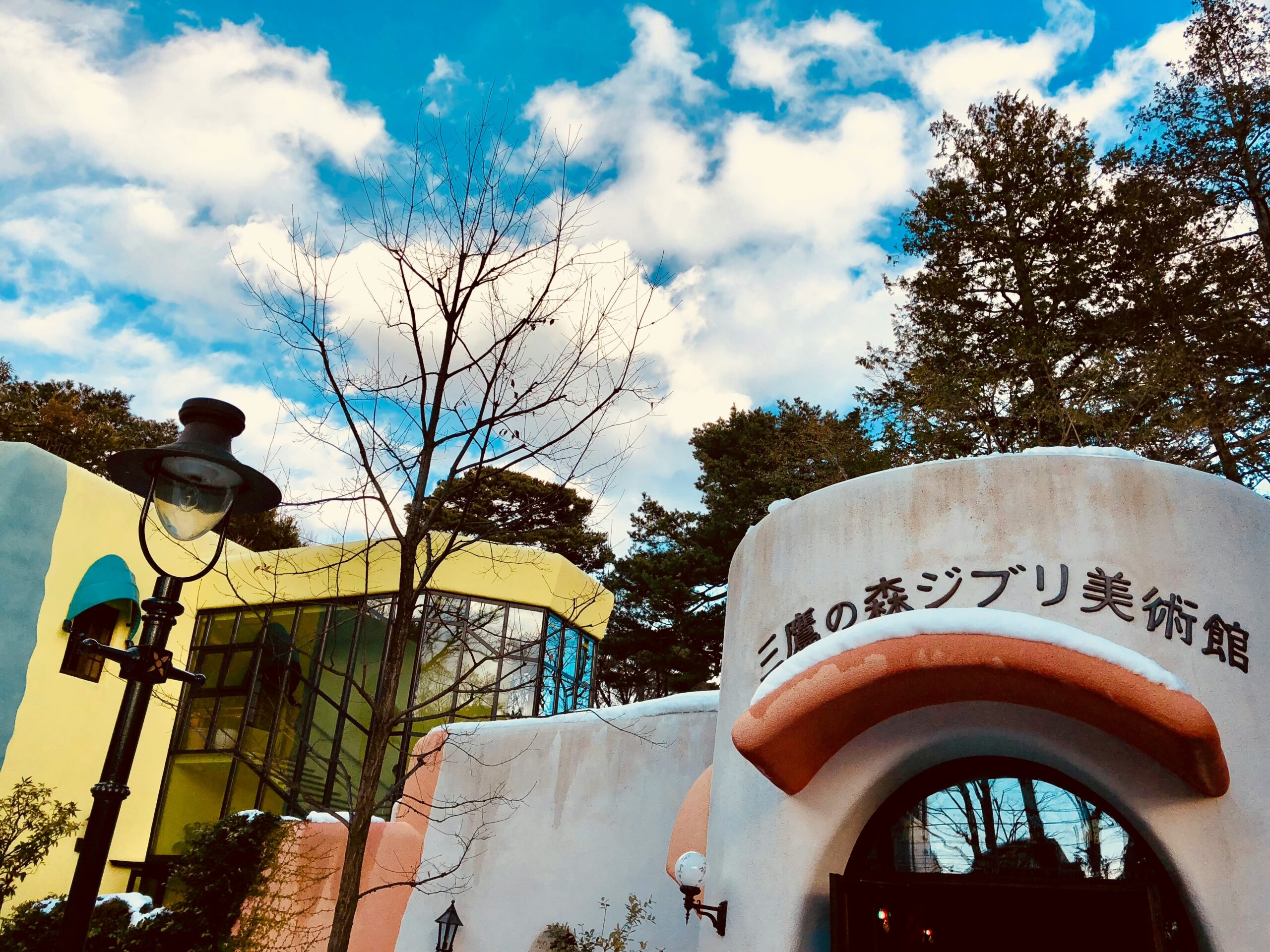
The magic of the Ghibli Museum begins long before you reach the front gate. If you approach via Inokashira Park—a massive, sprawling canopy of zelkova and cherry trees—the concrete intensity of Tokyo slowly melts away. The sound of sirens is replaced by the cawing of local crows and the crunch of gravel underfoot. As you emerge from the tree line on the southwest corner of the park, the museum reveals itself. It does not look like a corporate building; it looks like a vibrant, organic structure that naturally grew out of the earth.
Painted in warm pastel tones of yellow, green, and terracotta, the building’s edges are rounded, lacking harsh right angles. Vines crawl up the exterior walls, and a massive, life-sized Totoro sits inside a fake ticket booth to greet you, surrounded by soot sprites (Susuwatari) hiding in the portholes below. When you finally reach the real entrance and hand over your reservation QR code, the staff hands you a small, rectangular piece of actual 35mm celluloid film. This is your ticket. You hold it up to the sunlight to see which movie scene you received—perhaps a frame of Chihiro, or a sweeping shot of Howl’s Moving Castle. With that single gesture, you leave the real world behind.
What It Feels Like (The Rule of No Lenses)
Hayao Miyazaki famously mandated a strict “no photography” rule inside the museum. In our modern era, this feels shocking at first. But within ten minutes, you realize it is a profound gift. Because you cannot experience the museum through the lens of a smartphone, you are forced to use your own eyes. You begin to notice the astonishing details: the brass handles on the doors shaped like characters, the hand-painted frescoes on the ceiling featuring Nausicaä, and the custom stained glass windows that project vibrant patterns onto the wooden floors when the midday sun hits them.
The museum is deliberately confusing. There is no set path, no arrows telling you where to go next. You are encouraged to wander up narrow spiral staircases, crawl through tiny doors designed only for children, and push open heavy wooden panels. It feels like exploring a whimsical, multi-story treehouse owned by an eccentric, brilliant artist. The air smells faintly of old books and fresh pastries from the cafe. It is an incredibly tactile experience; you are meant to touch the wood, turn the cranks of the animation zoetropes, and physically interact with the space.
The Philosophy: Why This Is Not a Theme Park
Opened in October 2001, just after the monumental success of Spirited Away, the museum was personally designed by Hayao Miyazaki. He drew storyboards for the building exactly as he would for a film. His stated goal was to create a museum that “makes you feel more enriched when you leave than when you entered.” He actively rejected the Disney or Universal Studios model. There are no rides, no loud music, and no actors in mascot suits.
Instead, the museum is an educational love letter to the grueling, beautiful process of traditional hand-drawn animation. Ghibli remains one of the few studios worldwide that still relies heavily on pencil, watercolor, and paper rather than pure CGI. The museum serves to demystify this process while simultaneously elevating it to high art, showing children and adults alike that magic is not created by computers, but by human hands, observation, and relentless hard work.
A core tenet of Ghibli films is the concept of Ma—the quiet moments where nothing advances the plot, but characters simply sit, breathe, and exist in their environment. The museum architecture physically embodies Ma. There are quiet reading rooms, sunlit benches in the central atrium, and patios where you are encouraged to simply sit and absorb the atmosphere without rushing to the next exhibit.
Essential 2026 Visitor Information
| Exact Location | 1-1-83 Shimorenjaku, Mitaka, Tokyo 181-0013, Japan (Inside Inokashira Park) |
|---|---|
| Opening Hours | 10:00 AM – 6:00 PM. Closed on Tuesdays (with rare holiday exceptions). |
| Ticket Prices (2026) | Adults: ¥1,000. Ages 13-18: ¥700. Ages 7-12: ¥400. Ages 4-6: ¥100. |
| Ticket Release Date | Strictly the 10th of every month at 10:00 AM JST for the following month. |
| Official Vendor | Lawson Ticket (O-Tike) International Web Portal. No same-day sales. |
| Identification | Lead purchaser must bring their physical Passport. Names must match exactly. |
| Nearest Stations | Mitaka Station (15 min walk) or Kichijoji Station (15 min walk through park). |
Must-Do Experiences Inside the Museum
Because there is no map and no set route, it is easy to miss some of the museum’s finest details. Make sure you actively seek out these three core experiences during your visit.
Located on the first floor, this permanent exhibition is a breathtaking recreation of an animator’s studio. It looks as though Hayao Miyazaki just stepped out for a cup of tea. The desks are buried under mountains of reference books, watercolor palettes, vintage cameras, and scattered pencil sketches. The walls are plastered top-to-bottom with original concept art, storyboards, and background paintings from films like Princess Mononoke and Porco Rosso. It is a profound look into the chaotic, brilliant mind of a creator.
In the basement, you will find an 80-seat cinema with red velvet seats and a ceiling painted with a blue sky. Here, the museum screens exclusive, 15-minute original Ghibli short films that are absolutely never released on DVD, streaming, or anywhere else in the world. Films rotate monthly and include masterpieces like Mei and the Baby Catbus (a direct sequel to Totoro) or Boro the Caterpillar. Your film-strip ticket gets stamped upon entry; you only get to watch it once.
Ascend the dizzying wrought-iron spiral staircase from the second floor to reach the rooftop garden. Here, standing five meters tall, is a life-sized bronze replica of the Robot Soldier from Laputa: Castle in the Sky. He acts as the silent guardian of the museum. Because this is an exterior space, photography is finally allowed here. Walk behind the robot through the overgrown path to find a replica of the black stone control block covered in Laputan cuneiform.
Crucial Ticket & Logistics Warnings
International tickets go on sale on the 10th of the month at 10:00 AM JST. If you log in at 10:15 AM, they will be gone. You must calculate the exact time in your home timezone (e.g., this is often the 9th of the month in the US/Europe). Create a Lawson Ticket account in advance, have multiple devices ready, and expect the website server to crash repeatedly. Keep refreshing.
To combat scalping, the museum has instituted strict ID checks. The name on the ticket MUST match the physical passport of the lead traveler present at the gate. A photocopy or a driver’s license from your home country will not be accepted. If your passport does not match, you will be denied entry without a refund.
On the second floor, there is a massive, incredibly soft plush replica of the Catbus from My Neighbor Totoro that visitors can climb inside. However, prepare your teenagers: access to the Catbus is strictly limited to children aged 12 and under. Adults are not allowed inside, no exceptions.
A vs B: How to Get to the Museum
Mitaka is located in the western suburbs of Tokyo, easily accessible via the JR Chuo Line from Shinjuku. However, once you get off the train, you have two very different options for reaching the museum gates.
| Feature | Option A: Walk from Kichijoji Station (Recommended) | Option B: Bus from Mitaka Station |
|---|---|---|
| The Route | Exit Kichijoji Station (South Exit). Walk 15 minutes straight through the lush, beautiful Inokashira Park. | Exit Mitaka Station (South Exit). Catch the bright yellow, Ghibli-themed community bus at Stop No. 9. |
| Cost & Time | Free. Takes about 15-20 minutes depending on your pace. | ¥210 one-way. Takes about 5 minutes (runs every 10-20 mins). |
| The Vibe | Scenic, peaceful, and sets the perfect magical mood before arriving. You might see the park’s swan boats. | Efficient and practical. The bus is cute (decorated with characters), but you miss the park approach. |
| The Verdict | Choose this going TO the museum. It builds anticipation and is a beautiful Tokyo experience. | Choose this going BACK. After walking for 3 hours inside the museum, your feet will thank you. |
Step-by-Step: The Perfect Western Tokyo Half-Day
If you managed to secure a coveted 10:00 AM entry ticket, follow this exact chronological itinerary to make the absolute most of your morning in the Mitaka/Kichijoji area.
Step 1: The 9:00 AM Departure (Shinjuku)
Board the JR Chuo Line (Rapid) from Shinjuku Station heading west. It takes about 15 minutes to reach Kichijoji Station. Do not accidentally take the local line, which takes much longer.
Step 2: The 9:30 AM Park Stroll
Exit Kichijoji Station and walk south into Inokashira Park. Follow the signs pointing toward the Ghibli Museum. Enjoy the lake, the shrine, and the towering trees as you approach the colorful building.
Step 3: The 10:00 AM Entry & Cafe Rush
Present your passport and ticket. Receive your film-strip. Critical strategy: Bypass all exhibits immediately and walk straight outside to the patio to queue for Cafe Straw Hat. The line builds instantly. Eat an early lunch (the pork cutlet sandwich is incredible), then explore the museum stress-free.
Step 4: The 1:00 PM Mamma Aiuto! Shop
End your visit on the top floor at the “Mamma Aiuto!” gift shop (named after the sky pirates in Porco Rosso). Buy exclusive merchandise you cannot find anywhere else in Japan, including the official museum art book.
Step 5: The 1:30 PM Nakano Broadway Detour
Take the yellow Ghibli bus back to Mitaka Station. Board the JR Chuo Line heading back toward Shinjuku, but get off halfway at Nakano Station. Explore Nakano Broadway, a multi-story retro shopping mall famous for vintage anime cells, rare toys, and pop culture history.
Insider Hacks: Maximizing the Magic
- The Secret Bathroom Frescoes: Do not skip visiting the restrooms, even if you don’t need to go. The walls and ceilings are adorned with intricate, hand-painted murals and beautiful antique brass fixtures. They are exhibits in their own right.
- The Bouncing Totoro Zoetrope: In the “Bouncing Room” on the first floor, there is a massive, three-dimensional zoetrope featuring dozens of clay figures (Totoro, Mei, Satsuki). When the strobe lights hit it as it spins rapidly, the solid figures appear to come to life and jump. Stand at the very front edge for the best optical illusion.
- Exclusive Ghibli Beer: At Cafe Straw Hat, adults can order the exclusive “Kaze no Tani” (Valley of the Wind) beer. It is a rich craft beer brewed specifically for the museum, featuring gorgeous custom label art drawn by Goro Miyazaki. You cannot buy this beer anywhere else in the world.
The Ticket Battle: Preparation Checklist
Do not attempt to wing the ticketing process. You must be prepared like a general going into battle.
Frequently Asked Questions (FAQ)
1. Can I buy tickets at the door or through a concierge?
Absolutely not. There are zero same-day sales. Hotel concierges can no longer buy them for you due to strict name-matching ID policies. You must buy them online via Lawson Ticket.
2. What happens if I am late for my entry time slot?
The museum enforces a 30-minute grace period. If your ticket is for 10:00 AM, you must enter by 10:30 AM. If you arrive at 10:31 AM, you may be denied entry. Trains in Tokyo can be delayed; leave early.
3. Is there a time limit once inside?
No. While entry times are strictly staggered to control crowd flow, once you are inside the museum, you can stay until closing time (6:00 PM).
4. Are there English translations inside the museum?
Very few. The short films at the Saturn Theater have no subtitles, and most exhibit plaques are entirely in Japanese. However, Ghibli’s philosophy is visual; the art, sketches, and environments speak perfectly across language barriers.
5. Is the new Ghibli Park in Nagoya the same thing?
No. The Ghibli Museum in Tokyo is an intimate, architectural art museum focused on the animation process. The new Ghibli Park in Aichi (Nagoya) is a massive, sprawling park featuring large-scale recreations of movie sets (like Satsuki and Mei’s house).
6. Can I bring luggage or strollers inside?
Large luggage is not allowed in the galleries, but there are coin lockers available outside the entrance. Strollers must be parked in a designated area outside before entering the exhibits.
7. Can I take photos of the food at Cafe Straw Hat?
Yes! While the interior museum galleries are strictly no-photography zones, you are permitted to take photos of your food and drinks while seated at the cafe patio.
8. What if I lose my film-strip ticket?
Keep it safe! The film strip acts as your physical ticket to the Saturn Theater. If you lose it while wandering the museum, you will not be allowed to watch the exclusive short film.
9. Is the museum wheelchair accessible?
Yes. Despite its quirky architecture and spiral staircases, the museum has an elevator system allowing wheelchair users to access all main exhibition floors. The rooftop garden is also accessible.
Official Resources & Internal Travel Guides
Trip Nexus Travel Logistics Guides
Editorial Note (E-E-A-T): This Ghibli Museum guide has been rigorously fact-checked for the 2026 travel season. All ticketing protocols, entry requirements, and pricing structures have been directly cross-referenced with the official Studio Ghibli administration and the Lawson Ticket international portal to ensure maximum accuracy for travelers planning their itineraries.
Your Next Step
Stop reading and open your calendar right now. Find the month you plan to be in Tokyo, go to the prior month, and set a loud, repeating alarm for the 9th or 10th day (depending on your timezone) to ensure you are sitting at your computer the exact minute Lawson Tickets opens the server.