Kyoto is a city where tradition breathes through every cobblestone and whispering breeze, where ancient temples rise gracefully from forested hillsides. Among these revered landmarks, Kiyomizu-dera Temple stands as a profound symbol of Japan’s enduring spiritual heritage and refined artistry. The name Kiyomizu-dera, meaning “Pure Water Temple,” evokes images of clarity, devotion, and the timeless bond between humanity and nature that lies at the heart of Kyoto’s cultural identity.
Why Visit Kiyomizu-dera Temple
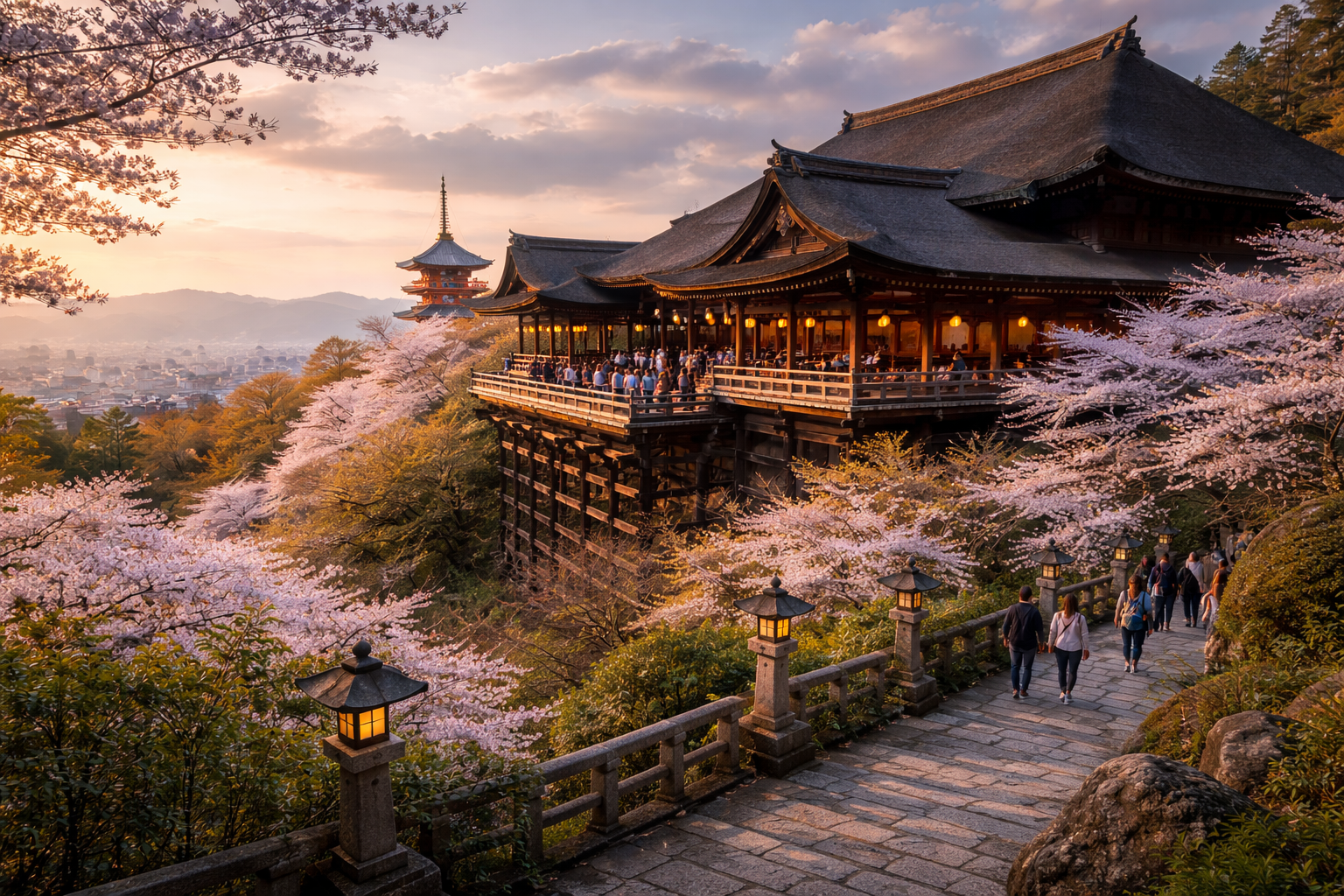
Kiyomizu-dera Temple is far more than a historic site; it is an emotional and spiritual journey into the soul of Kyoto. Dramatically perched on the wooded slopes of Higashiyama, the temple’s iconic wooden stage—supported by towering pillars and overlooking waves of cherry blossoms in spring and fiery maple leaves in autumn—invites visitors to pause, reflect, and absorb the present moment. Ancient rituals continue here as they have for centuries, seamlessly woven into modern life. With sweeping panoramic views of the city and a legacy spanning over 1,200 years, Kiyomizu-dera offers an experience that transcends sightseeing, leaving a lasting impression on every traveler who walks its sacred grounds.
Stepping into Kiyomizu-dera Temple
The journey to Kiyomizu-dera begins long before its gates appear. Ascending the lively streets of Sannenzaka and Ninenzaka, visitors move through a living portrait of old Kyoto—traditional teahouses, artisan workshops, local sweet shops, and the soft echo of temple bells drifting through the air. With each step uphill, anticipation builds. Soon, vermilion gates emerge, framing ancient pagodas and the grand main hall of Kiyomizu. Crossing into the temple grounds feels like entering another realm: the pace slows, the senses sharpen, and every footstep resonates with centuries of devotion. Constructed entirely without nails, the main hall stands as a triumph of faith and craftsmanship. From the famed wooden stage, the city unfolds below—Kyoto’s rooftops, winding rivers, and distant mountains forming a timeless, contemplative panorama.
Key Information Table
| Location | 1-294 Kiyomizu, Higashiyama Ward, Kyoto, 605-0862, Japan |
| Official Website | https://www.kiyomizudera.or.jp/en/ |
| Opening Hours | 6:00 AM – 6:00 PM (hours may vary by season) |
| Entry Fee | 400 yen (subject to change) |
| Google Maps | https://goo.gl/maps/2LJJF5gP4eQ2 |
| Contact | +81 75-551-1234 |
| Accessibility | Partial wheelchair access; some steep slopes and steps |
| Recommended Visit Duration | 2–3 hours |

Immersive Cultural Experiences
Kiyomizu-dera Temple is not merely admired—it is experienced. Throughout the year, sacred rituals unfold within its halls, unchanged for generations. Visitors may observe monks chanting sutras as incense drifts upward, or participate in the ritual of collecting “pure water” from the Otowa Waterfall, believed to bestow health, longevity, and success. Knowledgeable local guides bring the temple’s legends and folklore to life, deepening appreciation of its cultural significance. Nearby Gion offers fleeting glimpses of Kyoto’s elegant geiko and maiko, while seasonal tea ceremonies in traditional teahouses invite travelers to savor matcha and wagashi in settings steeped in refined simplicity.
Seasonal Festivals and Special Events
Each season transforms Kiyomizu-dera into a living canvas. Spring cloaks the temple in soft clouds of cherry blossoms, illuminated during enchanting nighttime viewings. Summer festivals, including Tanabata, fill the grounds with lantern light and vibrant decorations. Autumn ignites the hillside in shades of crimson and gold, drawing visitors to celebrated evening illuminations. Winter, serene and contemplative, reveals the temple’s quiet majesty beneath a dusting of snow. Special exhibitions and limited openings of inner sanctums offer rare opportunities to encounter sacred treasures, ensuring that no two visits are ever the same.
Google Map
How to Get There
Kiyomizu-dera Temple is easily reached from central Kyoto. From Kyoto Station, take city bus routes 100 or 206 to Gojozaka or Kiyomizu-michi, followed by a scenic 10–15 minute walk through historic streets. Taxis offer a convenient alternative, while travelers seeking a deeper sense of place can walk from Gion or Yasaka Shrine, discovering Kyoto’s atmospheric neighborhoods along the way.
Nearby Attractions and Local Eats
Essential Travel Tips
The most rewarding visits to Kiyomizu-dera take place early in the morning or late in the afternoon, when crowds thin and light softens the scenery. Comfortable footwear is essential due to steep stone paths. While photography is generally permitted outdoors, some inner halls restrict it—please observe posted guidelines. Accessibility is limited in certain areas, and visitors with mobility concerns should plan accordingly. Take time to explore nearby Higashiyama streets, where handcrafted ceramics, sweets, and traditional goods reflect Kyoto’s artisanal soul.
What Makes This Destination Unique
Kiyomizu-dera Temple embodies the perfect harmony of nature, spirituality, and human craftsmanship. Its dramatic wooden stage, seemingly suspended above the forest, has inspired pilgrims and poets for centuries. Beyond its architectural beauty, the temple invites visitors into a living continuum of ritual, reflection, and seasonal transformation. Though its surroundings change with the seasons, the spirit of Kiyomizu-dera remains timeless—a place of renewal, contemplation, and quiet wonder.
Related Posts
- City Tourism Website
- Attraction Official Website
- Country Tourism Board
- Regional Tourism Office
- Destination Official Homepage
Standing on the edge of the Kiyomizu-dera stage, Kyoto reveals itself below—a living tapestry woven from centuries of devotion, artistry, and fleeting beauty. Time seems to slow as the wind moves through ancient pines and temple eaves. To visit Kiyomizu-dera is to step into a living poem, carrying with you a quiet piece of Kyoto’s luminous spirit long after the journey ends.