Wat Pho: What It Actually Feels Like (Beyond the Reclining Buddha)
🛕 Reclining Buddha • Thai Massage • 2026 Updated
Wat Pho Bangkok is one of those places that feels bigger than its postcard image. Yes, most people come for the giant Reclining Buddha, but the temple complex is far more layered than that single famous room. Officially known as Wat Phra Chetuphon Wimon Mangkhalaram, Wat Pho is a historic royal temple, a center of Thai traditional medicine, and one of the most culturally dense places you can visit in Bangkok.
I thought I would spend maybe an hour here, take the classic photo, and move on to the Grand Palace area. That plan collapsed fast. The moment I stepped inside, the place felt slower, heavier, and more thoughtful than I expected. The gold surfaces are dazzling, but what stayed with me was the strange calm of the courtyards, the soft echo of footsteps, and the feeling that Wat Pho is less a single attraction than an entire intellectual and spiritual world tucked into central Bangkok.
✅ Quick Summary: The Wat Pho Essentials
Search Intent: What This Guide Helps You Decide
Why Wat Pho Still Matters in Bangkok
Wat Pho matters because it offers something many major city landmarks slowly lose: depth. Plenty of famous attractions survive on recognition alone. You visit because everyone says you should. Wat Pho has that name recognition, but it also has layers that justify the attention. It is not just photogenic. It is historically important, spiritually active, visually overwhelming, and intellectually rich all at once.
Bangkok can wear you down fast if your day becomes a constant cycle of traffic, heat, noise, and fast-moving itineraries. Wat Pho works almost like an antidote to that. Even though it sits in one of the city’s most visited historic zones, it has a distinctly different energy from the surrounding sightseeing circuit. The Grand Palace impresses through scale, ceremony, and royal drama. Wat Pho works more quietly. It pulls you inward.
That contrast is part of why it deserves serious time instead of being treated as a quick add-on. The temple is one of the most important places in Thailand for traditional medicine and massage knowledge, and it has long been associated with public learning. That educational legacy gives the complex a different atmosphere from temples that function primarily as devotional or ceremonial showpieces.
For me, the biggest surprise was how complete the experience felt. I expected a “main highlight plus a few side courtyards.” Instead, I found long visual corridors, hidden corners, detailed ceramic work, stone inscriptions, and a much stronger feeling of continuity between religion, knowledge, and daily life than I had anticipated.
What It Feels Like: An Expert Insider’s Perspective
“The air here feels different. It’s heavy with incense, sun-warmed stone, and the low hum of distant prayers. When you stand beneath the enormous feet of the Reclining Buddha, the scale of devotion feels almost physical.”
Walking into Wat Pho Bangkok feels less like entering a single building and more like crossing into a different pace of thought. Even before you reach the Reclining Buddha hall, the complex starts working on your senses. Porcelain details catch the light, bells shift lightly in the breeze, marble underfoot feels cool for a brief second before Bangkok’s heat returns, and every courtyard seems to frame gold differently.
What surprised me most was the emotional contrast. From outside, the surrounding area feels busy and strategic, full of people moving between major Bangkok landmarks. Inside, the temple feels composed. Not empty, not silent, but ordered in a way that changes your breathing. I found myself slowing down without deciding to do so. That is usually a sign that a place is doing more than just looking impressive.
The Reclining Buddha itself deserves its fame. But the real experience is not just seeing it, then leaving. It is standing close enough to understand how absurdly large it is, then noticing the detail work on the feet, the gold surface, and the way people react to it. Some take photos immediately. Others go strangely quiet. I did both. First the camera came out, then it went away, because scale eventually becomes hard to process through a screen.
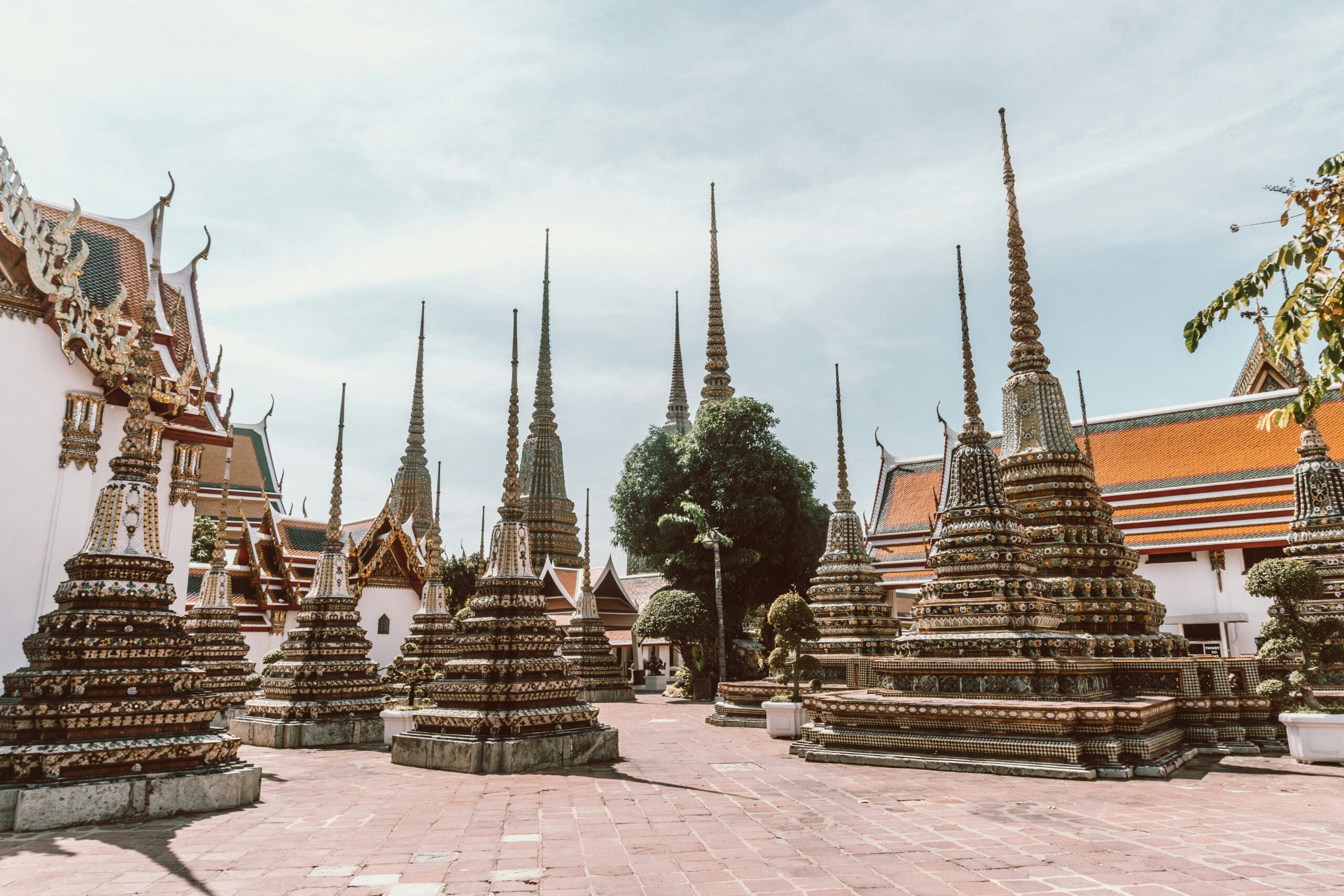
The porcelain-clad chedis are easy to underestimate in photos, but in person the texture and color work feel astonishingly detailed.
After that first famous hall, Wat Pho becomes richer, not weaker. Cloisters lined with Buddha images, quieter courtyards, and patterned stupas start building a fuller picture. The temple stops feeling like a single attraction and starts feeling like a world of repetition, learning, and ritual. That is when it becomes memorable.
Birthplace of Thai Wellness and Knowledge
Beyond the gold surfaces and temple roofs, Wat Pho carries one of the most important intellectual identities in Thailand. It is often described as Thailand’s first public university because of its role in preserving and teaching knowledge through inscriptions and public learning materials. That alone makes it different from the average “beautiful temple” stop on a tourist route.
King Rama III helped transform the complex into a vast educational space by commissioning stone inscriptions that documented medicine, history, literature, and traditional knowledge. In other words, Wat Pho did not simply shelter spiritual practice. It actively organized knowledge for public access. That makes the temple intellectually significant in a way many visitors do not fully realize before they arrive.
This is also where Nuad Thai, or traditional Thai massage, was formalized and preserved in a way that later shaped its national and international reputation. That history matters. Getting a massage here is not just a leisure extra tacked onto a sightseeing stop. It is one of the clearest ways to connect the temple’s past to its living present.
I liked that this part of Wat Pho never felt abstract once I was inside the complex. The inscriptions, the school, and the atmosphere of disciplined calm all made the wellness identity feel grounded rather than marketed. It genuinely feels like a place where physical care, education, and spiritual tradition were allowed to support each other.
Wat Pho Bangkok: Key Information
What Surprised Me Most About Wat Pho
I expected gold, grandeur, and a giant Buddha. What I did not expect was how much of Wat Pho’s charm comes from the parts that do not dominate social media. The famous chamber gets the attention, but the spaces between the highlights are where the temple became real for me.
One surprise was how architectural rhythm affects your mood. The repeated lines of stupas and Buddha images create a kind of visual meditation. After a while, you stop reacting to each object individually and start feeling the entire complex as one continuous environment. That is difficult to communicate in short-form travel content, but it is a huge part of why the temple feels so satisfying in person.
Another surprise was the balance between grandeur and intimacy. The Reclining Buddha is enormous, but certain corners of Wat Pho feel almost private even when other visitors are nearby. A small courtyard, a brief pause under shade, a line of ceramic detail catching sunlight, a cat crossing a tiled path—those tiny moments softened the monumentality and made the place feel human rather than purely ceremonial.
I was also surprised by how educational the experience felt. Even without reading every inscription in detail, you can sense that the temple was designed to teach as much as impress. That gives it a more layered identity than many “must-see” landmarks that deliver one strong photo and then flatten out.
Best Things to Do at Wat Pho
See the Reclining Buddha properly. That means more than stepping in, taking one photo, and moving on. Walk the hall slowly, look at the scale from more than one angle, and spend a minute with the mother-of-pearl feet rather than treating them as background detail.
Explore the four great chedis. They are visually striking and often photograph beautifully, but the real joy is how their colors, porcelain textures, and arrangement create rhythm within the temple grounds.
Walk the cloisters. This is one of the best ways to feel Wat Pho as a complete environment. Rows of Buddha images and quieter passageways create a more reflective experience than the headline attraction alone.
Consider a massage with realistic expectations. If you want the cultural connection and the story behind the school, it is a meaningful add-on. But plan ahead and do not assume you can simply walk in at the perfect moment.
Pair the visit intelligently. Wat Pho works especially well with a ferry crossing to Wat Arun or as a calmer counterweight to the Grand Palace area. It is one of the easiest places in central Bangkok to build into a riverside cultural half-day.
Strategic Analysis: Morning vs Afternoon
To maximize your Wat Pho Bangkok visit, timing matters more than many first-time travelers realize. Use this comparison to match the visit to your style.
If your main goal is calm, go earlier. If your main goal is atmosphere and photography, late afternoon can be rewarding. Personally, I think Wat Pho is best when you can give it enough time that the visit does not feel pinned to a single rushed window.
🦊 Insider Hacks: Expert Secrets
- Do not leave immediately after the Reclining Buddha hall. A lot of visitors peak too early and miss the quieter intellectual side of the complex.
- Keep your ticket and stay organized. Small practical details matter more than people expect in Bangkok’s heat.
- Use GLN payment strategies or cash backups intelligently. Temple-area spending is easier when you are not improvising every payment decision.
- Give the southern side of the complex time. It often feels calmer and helps balance the high-traffic zones.
- Pair Wat Pho with Wat Arun by ferry if your energy allows. It is one of the most satisfying Bangkok temple combinations.
What to Wear and Pack for Wat Pho
If I could give one simple practical recommendation, it would be this: dress for respect first, comfort second, and photos third. Too many travelers still arrive at major temples thinking they can improvise with whatever they happened to wear that day. At Wat Pho, modest clothing is part of moving through the complex without stress.
Shoulders and knees should be covered, and breathable fabric matters because Bangkok heat builds quickly. I would also bring water, tissues, and a bag light enough that you are not constantly adjusting it in crowded areas. Shoes that slip on and off easily can also make the visit feel smoother depending on where you pause and how you sequence the rest of your day.
A hat is useful outside, but the more important item for me was patience. Wat Pho is best when you stop treating it like an efficiency test. If you enter already rushed, the whole temple feels smaller. If you enter prepared, it opens up.
Step-by-Step Transit Simulation
- Take the BTS Skytrain to Saphan Taksin Station if you are starting from a river-accessible Bangkok base.
- Follow signs to the river pier and board the Chao Phraya Express Boat.
- Disembark at Tha Tien Pier and walk the short distance toward Wat Pho.
- Enter with enough time to explore beyond the main Reclining Buddha hall.
- After your visit, consider the short ferry connection to Wat Arun if you want a powerful architectural contrast on the same riverside route.
Who Should Visit Wat Pho—and Who Might Prefer Something Else
Wat Pho is ideal for you if you like places that combine beauty with meaning. It is especially rewarding for travelers who enjoy architecture, religion, wellness history, and slower observational travel rather than pure spectacle.
You will also probably love it if you want a temple that feels more reflective than performative. The Grand Palace may impress you more immediately, but Wat Pho often stays with people longer because it feels inhabitable rather than merely ceremonial.
You may struggle here if you are only interested in quick highlight collecting or dislike religious spaces that ask for modest dress and slower pacing. In that case, you might appreciate Wat Arun’s more silhouette-driven drama or other Bangkok experiences that deliver faster visual payoff.
For me, Wat Pho became meaningful precisely because it was not trying to overwhelm me every second. It left room for attention, and that made it richer.
FAQ: Wat Pho Bangkok
Is Wat Pho worth visiting if I only have one temple slot in Bangkok?
Yes, especially if you want a temple that offers both a famous highlight and deeper cultural value. It is one of the strongest all-round temple visits in the city.
How much time should I spend at Wat Pho?
Give it at least 1.5 to 2 hours if you want more than a rushed pass through the Reclining Buddha hall. Longer is better if you want massage, photography, or paired temple planning.
What is the best time to visit Wat Pho?
Earlier visits often feel calmer and cooler. Late afternoon can be beautiful for light and mood, but planning depends on your broader Bangkok itinerary.
Can I combine Wat Pho and Wat Arun in one trip?
Yes, and it is one of the best Bangkok combinations. The ferry connection makes the pair feel natural and visually complementary.
Is the massage at Wat Pho worth it?
If you value the cultural context and the historical connection to Thai wellness, yes. Just do not assume availability will perfectly match your timing.
What should I wear to Wat Pho?
Wear respectful clothing that covers shoulders and knees. Lightweight breathable fabrics work best in Bangkok heat.
Is Wat Pho better than the Grand Palace?
They deliver different experiences. The Grand Palace feels grander and more ceremonial; Wat Pho feels calmer, more layered, and often more emotionally accessible.
What is the biggest mistake first-time visitors make?
Rushing in for the Reclining Buddha photo and leaving too fast. The wider complex is a major part of what makes Wat Pho worth visiting.
Explore More of Thailand
Wat Pho works best as part of a broader Bangkok and Thailand route. If you plan well, you can connect temple culture, riverside transit, markets, and arrival logistics into one smoother trip.
Final Verdict: Should You Visit Wat Pho?
Yes—especially if you want one Bangkok temple visit that feels both iconic and substantial. Wat Pho gives you a globally recognized visual highlight, but it also gives you something rarer: intellectual and emotional depth beyond the famous room.
If you arrive expecting only a quick golden-photo stop, you might undersell what the complex can offer. If you arrive prepared to walk slowly, notice detail, and treat the place as more than a checklist item, Wat Pho becomes one of the most rewarding historic spaces in Bangkok.
Give it enough time, dress respectfully, do not rush the cloisters, and let the temple reveal itself beyond the Reclining Buddha. That is when Wat Pho feels less like a stop and more like a complete experience.
Author Note: This guide was expanded and refined for execution-level SEO structure, traveler usability, and longer-form reading flow. Most importantly, the incorrect Ha Long Bay map was replaced with a proper Wat Pho embed.