Sanbangsan Area in Seogwipo Guide: Grotto Climb, Yongmeori Coast & Timing Tips (2026)
Search Intent: Sanbangsan looks peaceful from afar—until you start climbing. This guide moves past the generic brochures to give you the real story. I’ll show you how to handle the steep stone stairs to Sanbanggulsa Grotto, time your arrival to beat the tour buses, and why checking the tide for Yongmeori Coast is a non-negotiable step before you even leave your hotel.
Sanbangsan Area in Seogwipo: Where Ancient Lava Meets Living Spirit
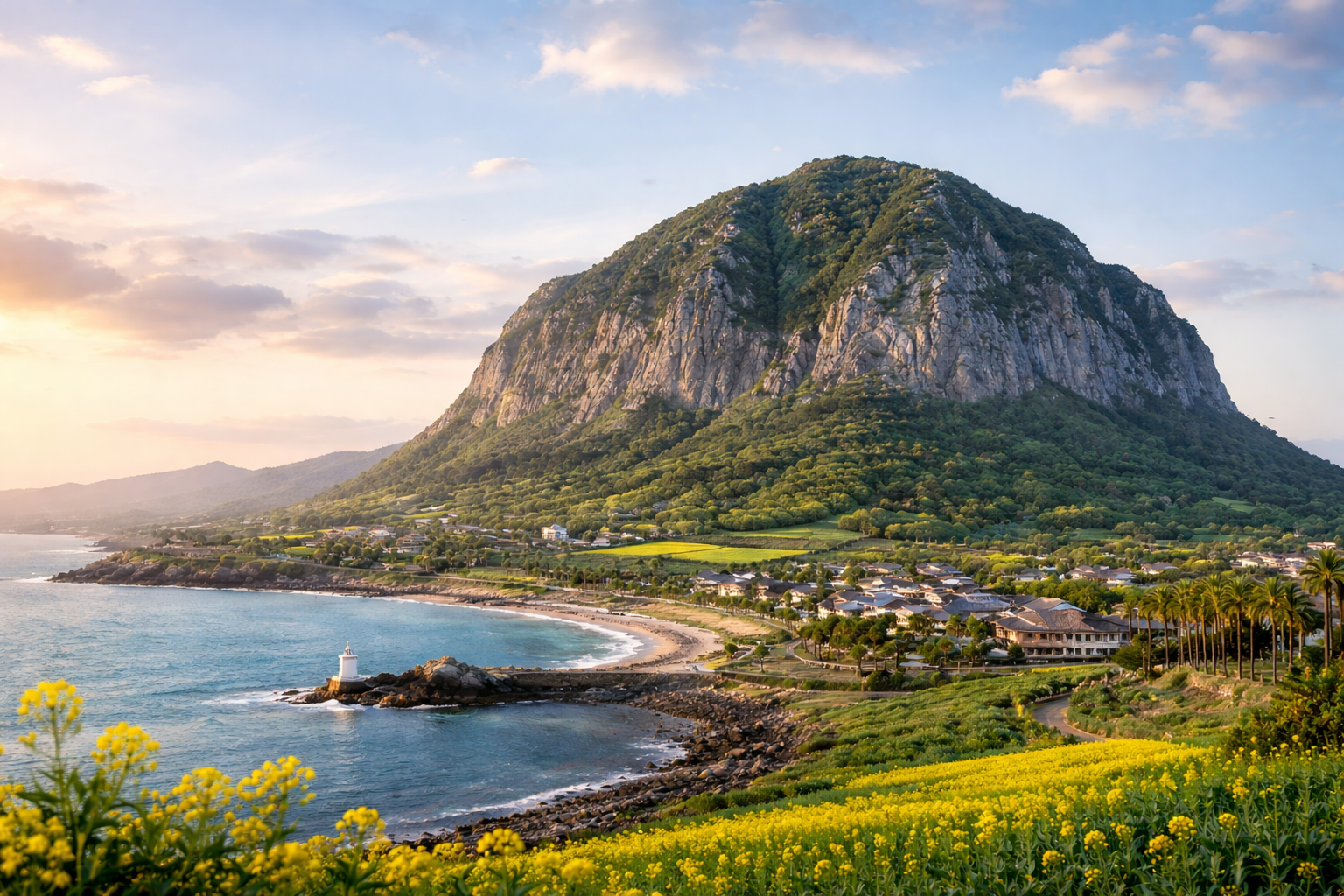
Sanbangsan Area in Seogwipo is one of the few places on Jeju where the island’s tectonic violence feels strangely peaceful. This bell-shaped trachyte dome, formed roughly 800,000 years ago, stands like a giant guardian over the southwestern coast. Unlike the rolling hills of the east, Sanbangsan is vertical, jagged, and draped in dense, emerald forest.
In 2026, the area remains a centerpiece for those seeking both geological wonder and spiritual immersion. Walking the paths toward the Sanbanggulsa Grotto, you pass stone statues weathered by Pacific winds and hear the distant rhythm of the waves crashing against the dragon-head cliffs below. It is a rare destination that forces you to slow down—mostly because the stairs demand it.
Honestly? It’s a Short Pilgrimage with High Impact
The first time I climbed toward the grotto, I underestimated the Jeju sun. Even with the ocean breeze, those stone steps are no joke. But once you enter the natural rock tunnel and emerge at the grotto entrance, the temperature drops instantly. You’ll see natural spring water dripping from the ceiling—traditionally called the “tears of the mountain’s goddess”. Drinking a small cup of that cool water while incense curls into the air is one of the most grounding experiences I’ve had in Korea. It’s not a long hike, but it is a deep one.
My Practical Advice: Do not just rush to the mountain. The real “magic” shot is from the roadside canola fields just 500 meters west. For KRW 1,000, you can enter the private fields for a photo where the yellow blooms frame the massive grey mountain dome perfectly. Also, keep in mind that the wind on the coast can be aggressive—carry a light windbreaker even if the Seogwipo city center feels warm.
Insider Strategy (The Tide Check): If you want to see the Yongmeori Coast, call the administrative office or check the Jeju Tourism App before you even start your car. I’ve seen countless frustrated travelers arrive only to find the coastal path submerged by the tide. If it’s closed, pivot your morning to the temples on the mountain slope first.
Reality Check (Footwear): Please, leave the flip-flops in your car. The volcanic stone paths around the mountain and the coastline are jagged, uneven, and incredibly slippery if there was even a light drizzle that morning. Sturdy sneakers are the only way to avoid a ruined afternoon.
Vital Logistics (2026)
Sanbanggulsa Grotto vs. Yongmeori Coast (Which Choice Today?)
The Grotto (Spiritual): A meditative, shady climb with panoramic ocean views and sacred spring water. Open year-round regardless of weather.
The Coast (Geological): An exhilarating walk along millions of years of rock layers. High risk of closure due to tides—check first!.
My Winning Strategy: If the tide is out, do Yongmeori Coast first. The physical effort is higher there. Then, cool down with the meditative ascent to the grotto afterward.
The High-Impact Sanbang Loop: Step-by-Step
- 08:30 AM – The Early Arrival: Park at the main Sanbangsan lot. Explore the colorful **Bomunsa Temple** at the base before the sun gets too high.
- 09:15 AM – The Sacred Ascent: Tackle the 15-20 minute stair climb to the cave. Stop at the mid-way platform for the best view of Gapado Island.
- 10:15 AM – The Coastal Pivot: Walk down to the **Yongmeori Coast** entrance. If the tide allows, this 30-minute shoreline walk is world-class.
- 11:30 AM – The Local Fuel: Find a “Haenyeo House” at the base. You *must* try the fresh sea urchin soup caught that morning.
- 12:30 PM – The Tea Reset: Finish your loop at a local tea house in Andeok-myeon for a cup of Jeju green tea before heading to your next stop.
Google Map
FAQ (Honest Answers)
Explore More of Seogwipo’s Heart
I have personally navigated these stone stairs and reviewed this 2026 planning guide based on current visitor flow and temple regulations.
Next Step
After finding peace at Sanbanggulsa, head 15 minutes east to the
Cheonjeyeon Waterfall
to witness the island’s water spirits at play. It’s the perfect nature-themed bookend to your day.
Cheonjeyeon Waterfall
to witness the island’s water spirits at play. It’s the perfect nature-themed bookend to your day.