Search Intent: If you are planning to explore the Matera Sassi in 2026, you need more than a simple map. This exhaustive guide provides an insider’s roadmap through the labyrinth of Basilicata. We cover the grueling reality of its vertical geography, the strategic mastery of ZTL parking zones, the best-kept secrets of rupestrian cave churches, and a detailed walking simulation that ensures you don’t miss the haunting, golden blue-hour glow of one of humanity’s oldest settlements.
Quick Summary (The Matera Truths)
The Heritage Scale: Matera is a UNESCO World Heritage site consisting of two main districts (Barisano and Caveoso) with over 9,000 years of continuous habitation.
The Essential Stay: You must stay at least one night in a properly restored “Cave Hotel” to feel the silent power of the limestone once the day-trippers depart.
Physical Reality: This is a vertical city. Expect to climb over 5,000 steps daily; high-traction footwear is more vital than high fashion.
Logistical Alert: The ZTL (Restricted Traffic Zone) is enforced by automated cameras. Never drive into the historic center; use the secure garages in the modern city.
Optimal Window: April to June and September to October offer the perfect balance of mild weather and soft, golden lighting for photography.
1. The Rebirth of a Cave City: Why Matera Matters in 2026
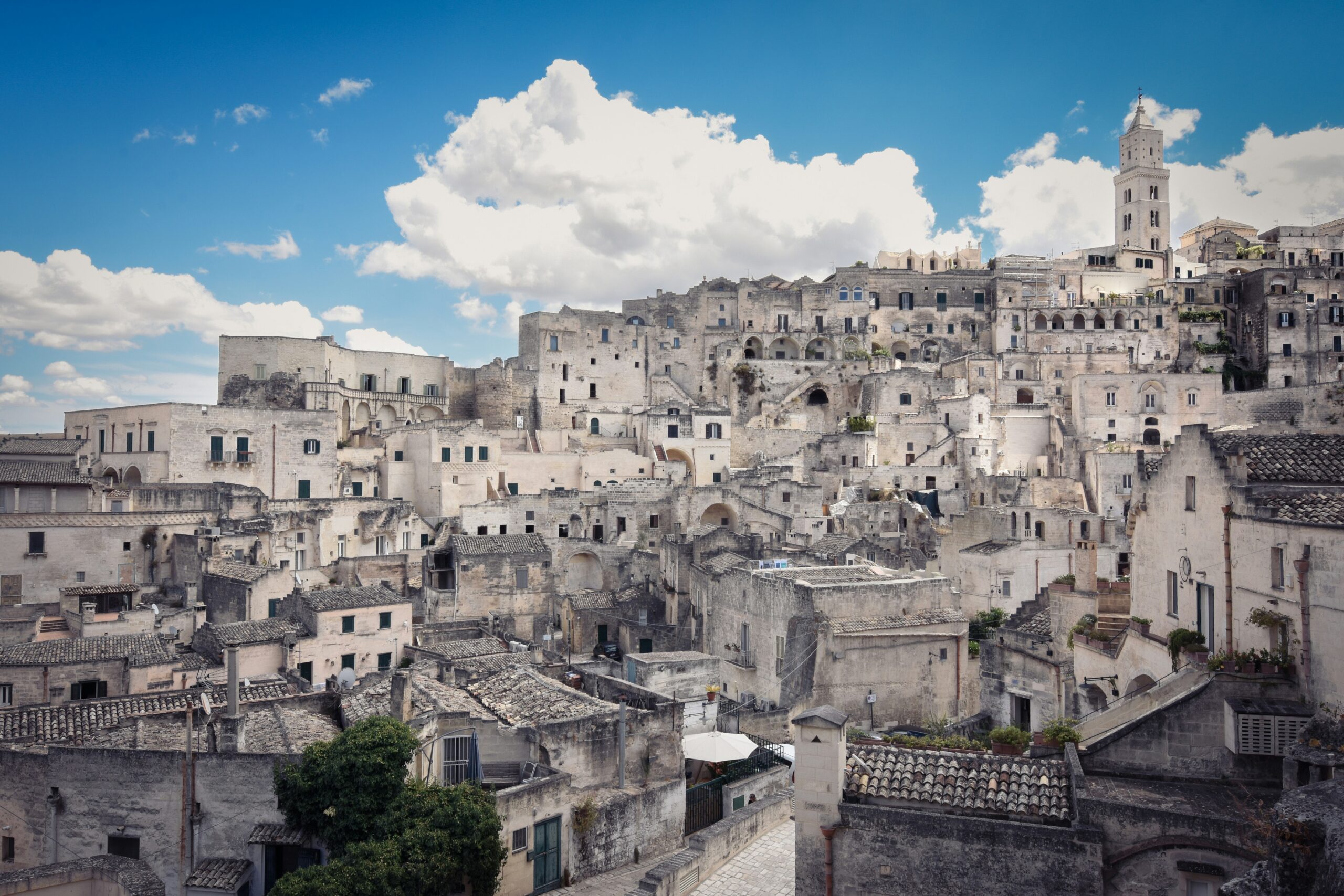
Matera Sassi is a destination that demands you lower your voice. It feels older than history itself, because it is. Carved into the pale, sun-baked limestone of the Basilicata region, the city forms a living, breathing labyrinth that has witnessed the entire arc of human civilization.
To understand Matera in 2026, you must first understand its emotional scars. Post-WWII, the Sassi were known as the “shame of Italy”—a place where families lived in damp, dark caves alongside their livestock with no electricity or plumbing. The forced evacuations of the 1950s left the city a hollowed-out ghost town. However, the last few decades have seen a miraculous reversal. Visionaries have transformed these “shameful” caves into high-end boutique hotels and subterranean dining rooms that compete with the best in Europe. Today, Matera sits in a rare, perfect equilibrium: it offers modern luxury while maintaining the haunting, raw textures of its prehistoric past.
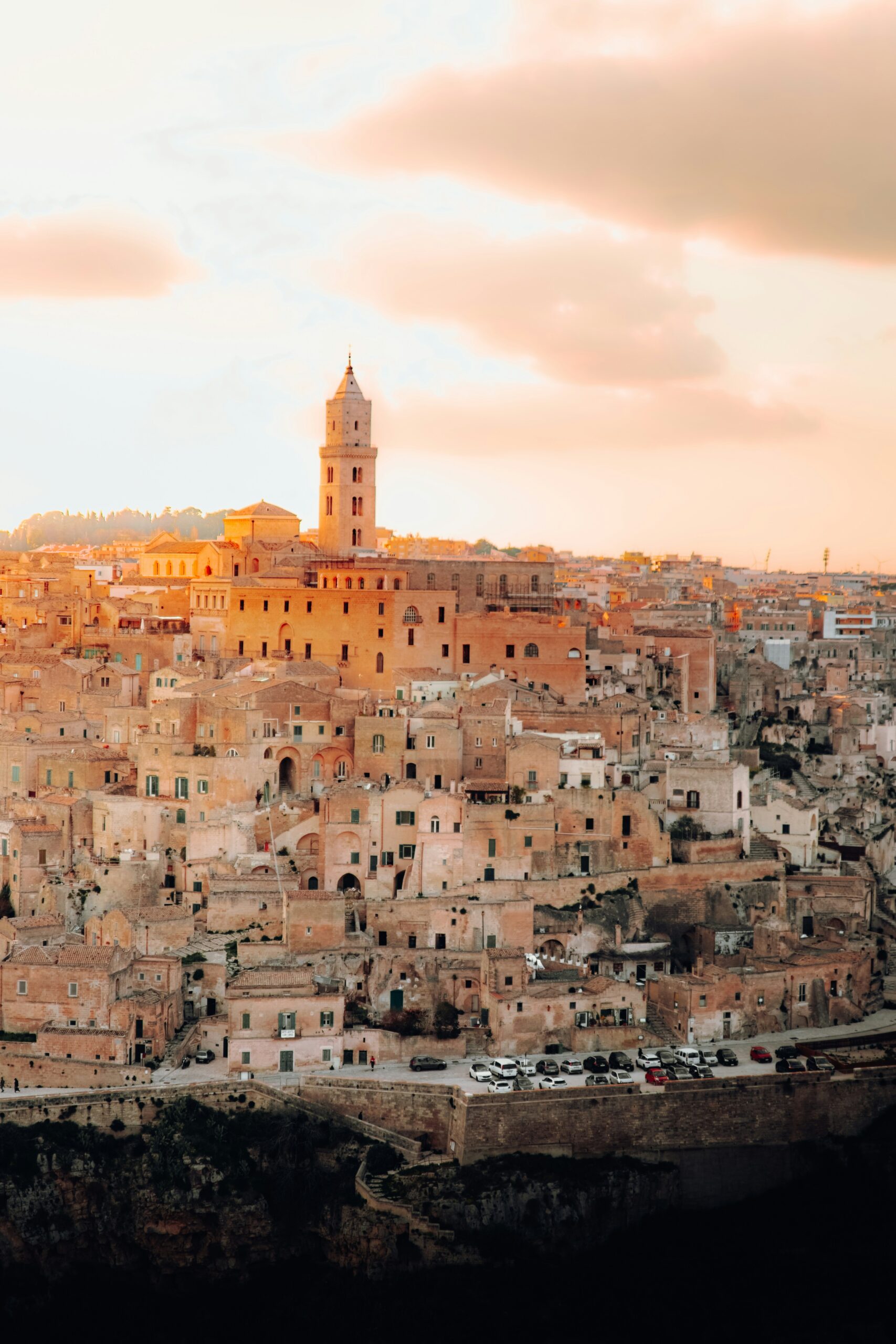
Golden hour over Matera Sassi — the moment the ancient cave city turns into a glowing stone labyrinth.
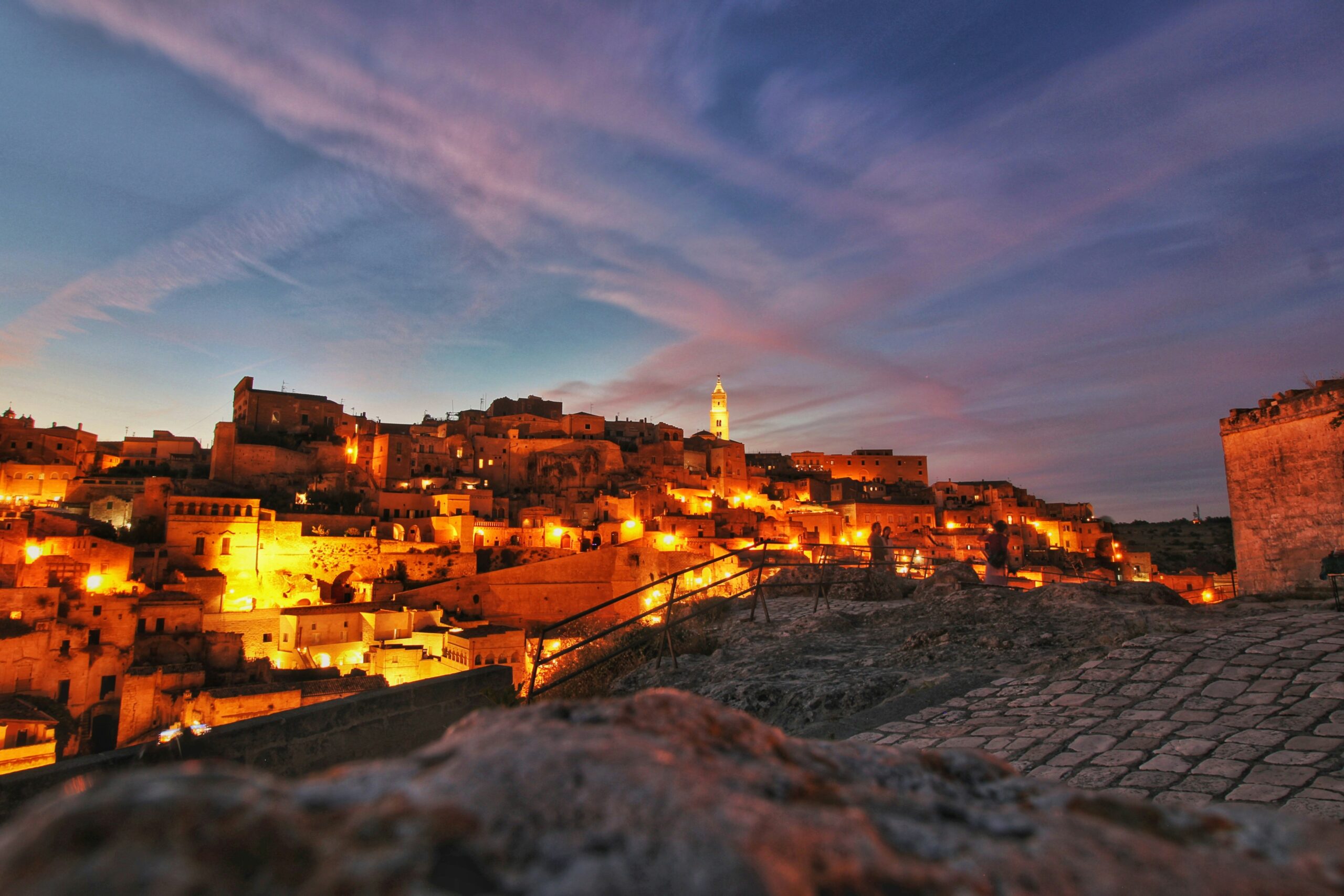
“Descending into the Sassi feels less like entering a city and more like walking into the earth’s collective memory. The air carries the scent of dry stone and woodsmoke. As twilight falls and the amber lights flicker on from within the caves, the gorge transforms into a mirror of the night sky. The silence here is heavy, ancient, and absolute—broken only by the echo of your own footsteps on limestone that has been polished smooth by 9,000 years of human movement.”
2. Honestly? Matera is a Physical Test of Endurance
The visual awe of Matera is undeniable, but the physical toll is the part the brochures often skip. I clearly remember my first hour in Sasso Caveoso; I spent more time staring at my feet than at the views because the limestone is so polished it feels like ice, even when dry. Google Maps is effectively useless here. It tries to route you through walls because it cannot understand that the street you are standing on is literally the roof of a three-story house below. I’ve seen many travelers arrive with large, rolling suitcases looking utterly broken after the first 100 meters of vertical stairs. Matera does not have elevators or escalators; it only has your legs and your resolve.
My Insider Advice: Do not attempt to “conquer” Matera in a few hours. The city is best experienced through a series of short, tactical bursts. Between 11 AM and 4 PM, the heat radiates off the limestone like a kiln, and the day-trip crowds from Puglia make the narrowest alleys feel claustrophobic. My strategy is simple: explore the deep caves and rock churches at sunrise, retreat to your cool cave hotel during the peak heat, and only emerge again after 5 PM when the stone turns a deep cinematic gold. The “Blue Hour” in Matera is the single most beautiful 60 minutes in all of Italy.
3. The Strategy: Sasso Barisano vs. Sasso Caveoso
Matera is divided into two distinct natural amphitheaters. Choosing where to anchor your trip defines your daily experience. Most travelers walk through both, but your accommodation choice matters immensely for accessibility and atmosphere.
Factor
Sasso Barisano (The Lively)
Sasso Caveoso (The Ancient)
Vibe
More renovated, bustling with artisan shops, and feels like a structured village.
Raw, steep, and hauntingly quiet. It feels like stepping back 1,000 years.
Terrain
Easier walking; fewer extreme drop-offs and more “flat” street sections.
Extreme verticality. Endless stairways and unpaved limestone paths.
Nightlife
Social and vibrant. Great for aperitivo bars and late-night dining.
Mysterious and cinematic. Perfect for solitary, meditative night walks.
4. Insider Hacks: Navigating the Stone Labyrinth
🛡️ Expert Survival Hacks
The ZTL Camouflage: Matera’s ZTL (Zona Traffico Limitato) is ruthless. Do not trust your GPS if it tells you to turn into the Sassi. Park at **Parcheggio Cesare Firrao** in the modern town. It’s a 10-minute walk to the rim, and you’ll avoid the €150 fine that arrives in your mailbox months later.
The Tibetan Bridge Pivot: Most people just look at the ravine from the viewpoint. Instead, hike down to the bottom of the gorge and cross the **Ponte Tibetano**. The climb up the other side into the Murgia Materana Park provides the single greatest panoramic view of the city—it’s where they filmed the famous Bond chase in *No Time to Die*.
The Rock Church Rule: If you only visit one, make it **Santa Maria de Idris**. It is carved into a massive rock spire in the center of the Caveoso. The Byzantine frescoes inside are incredibly preserved despite centuries of humidity.
Culinary Peasant Wisdom: Skip the tourist menus. Look for *Crapiata*—a hearty, ancient legume soup that was the fuel of the cave dwellers for centuries. Pair it with the IGP-protected *Pane di Matera*, famous for its unique shape representing the local mountains.
5. The Master Walking Route: Step-by-Step
Because of the layered architecture, this route is designed to maximize visual awe while minimizing unnecessary uphill lunges. Allocate 3 to 4 hours for this loop.
Phase 1 (The Reveal): Start at **Piazzetta Pascoli** in the modern town. Stand by the railing. This is the “Grand Reveal” where the entire Sasso Caveoso opens up beneath you like a stone amphitheater.
Phase 2 (The Descent): Walk down the stairs behind the viewpoint. Follow the winding paths into the heart of the Caveoso. Pay attention to the doorways; notice how the front is stone block but the rear is carved into the mountain.
Phase 3 (The Spiritual Core): Visit the **Church of San Pietro Caveoso** on the edge of the ravine. Then, climb the rock spire to Santa Maria de Idris for the view back toward the Cathedral.
Phase 4 (The Civita Summit): Begin the climb up the central ridge (the Civita). This is the oldest part of the city. Reach the **Matera Cathedral** (Duomo) for a dual panorama: Barisano to the left, Caveoso to the right.
Phase 5 (The Twilight Loop): Descend into Sasso Barisano as the sun sets. Find a wine bar on *Via Fiorentini*, order a glass of Aglianico, and watch as the city’s warm amber lights transform the limestone into gold.
Matera after sunset — when the entire cave city glows like fire carved into stone.
6. Vital Statistics & Logistics (2026)
Professional Travel Metrics
Region
Basilicata, Southern Italy (Fly into Bari)
Walking Intensity
High; ~500m elevation change per loop
Entry Cost
Free walking; ~€20 for a “Cave Pass” for multiple churches
Honestly, it is a nightmare for strollers. You will spend 90% of your time carrying the stroller up and down steep stone steps. A wearable baby carrier is an absolute necessity.
Can I visit as a day trip from Rome?
No. It’s a 5-6 hour journey each way. Matera requires at least one overnight stay to be worthwhile. It is best paired with a trip to Puglia (Bari, Alberobello).
Is it safe to walk at night?
Matera is incredibly safe regarding crime. However, the physical danger of slipping on polished limestone in dim light is real. Stay on the main illuminated paths.
What is the “Shame of Italy” history?
In the 1950s, the extreme poverty in the Sassi became a national scandal. Residents were forcibly moved to modern apartments to improve hygiene, leaving the Sassi abandoned for decades.
Matera is not a city you simply look at; it is a city you descend into. To truly experience its soul, you must accept its physical demands. Pack light, wear shoes with serious traction, and leave your car in the modern town. Stay for the night, witness the transformation of the stone under the stars, and let the silence of the limestone remind you of the immense depth of human resilience.
Data verified in March 2026. Source: APT Basilicata, UNESCO Heritage Center, and local Matera Municipality records.