Centre Pompidou Paris Guide 2026: Best Time, Route Strategy & Skyline View Tips
1. The Machine in the Marais: Why Pompidou Matters in 2026
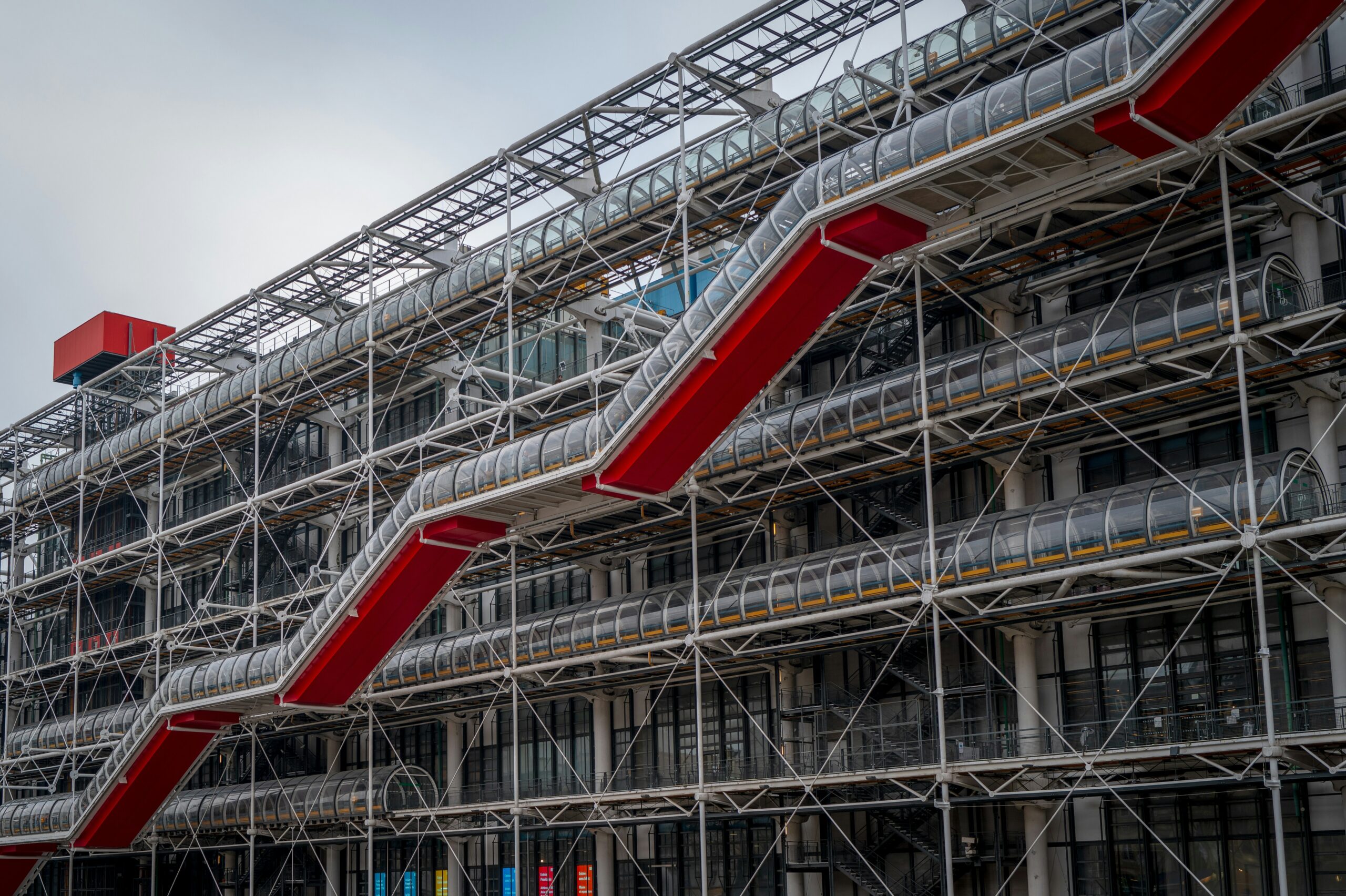
Centre Pompidou doesn’t “fit” Paris—and that is exactly why it is indispensable. When it opened in 1977, it was called a “gasworks” and a “monstrosity.” Today, its primary-colored pipes (blue for air, green for water, yellow for electricity) serve as the beating heart of the Beaubourg district.
In 2026, the museum holds one of Europe’s most significant contemporary collections, featuring giants like Picasso, Matisse, and Kandinsky. But the real value of Pompidou is its refusal to be a static temple of art. It is a place of movement and provocation. However, with the upcoming 5-year closure for total renovation looming over the city, 2026 represents one of your last chances to experience this architectural icon in its original, raw state.
“Stepping into the glass escalator tube is like entering a slow-motion cinematic tracking shot. As you ascend, the grey zinc roofs of Paris drop away, and the Sacré-Cœur begins to hover on the horizon. The air inside the museum feels industrial, vast, and slightly rebellious. It’s the only place in Paris where the building argues with you as much as the art on the walls does. When the sun sets and the primary-colored pipes glow under the floodlights, the museum feels less like a building and more like a modern miracle parked in a medieval square.”
2. Honestly? The Labyrinth Can Be Exhausting
3. The Strategy: The Opening Dash vs. The Evening Glow
Your timing determines whether you feel like an art critic or a commuter in a crowded station. In 2026, the evening hours are the ultimate insider “win.”
4. Insider Hacks: Mastering the Beaubourg Loop
🛡️ Professional Visit Hacks
- The “View Only” Ticket: If you are tired of art but want the photo, you can often buy a significantly cheaper “Panorama” ticket that allows access only to the 6th-floor terrace and the escalator. It’s the best €5 you’ll spend in Paris.
- The Stravinsky Pivot: After exiting, don’t walk straight back to the Metro. Head to the **Stravinsky Fountain** on the right side. The mechanical, primary-colored sculptures by Tinguely and Niki de Saint Phalle are the perfect outdoor “dessert” to the museum’s industrial “main course”.
- The Atelier Brancusi: Located in the square outside, this reconstruction of the sculptor’s studio is completely free to enter and almost always quiet. It’s a meditative palate cleanser after the sensory overload of the main building.
- Bag Policy Scrutiny: Security is aggressive. Anything larger than a standard backpack must be checked in the cloakroom downstairs. The Hack: Don’t join the cloakroom line *after* you’ve waited for tickets. Check your bag first, then join the security queue.
5. The “Skyline & Soul” Route: Step-by-Step
This route is designed to maximize your energy and ensure you get the “hero shots” before gallery fatigue sets in. Allocate 3 hours for this loop.
- Phase 1 (The Vertical Ascent): Enter through the main piazza (Piazza Beaubourg). Head straight to the escalator bank. Do not stop at the ground floor gift shop—it’s a time sink. Ride the “Caterpillar” all the way to the 6th floor.
- Phase 2 (The Panoramic Lock-in): Spend 15 minutes on the 6th-floor terrace. From here, the Eiffel Tower, Notre Dame (restored), and Montmartre form a perfect 360-degree view. Take your photos now while your hair still looks good and the light is fresh.
- Phase 3 (The Modernist Core): Descend to the 5th Floor. This is the heavy-hitter floor: Matisse, Picasso, and the Fauves. Follow the circular route around the exterior to keep the Paris view in your peripheral vision.
- Phase 4 (The Contemporary Reset): Descend to the 4th Floor. This is the experimental zone. If something looks like a pile of trash, it might be! Spend 40 minutes here; it’s the most thought-provoking part of the visit.
- Phase 5 (The Marais Soft-Landing): Exit via the back stairs toward the Stravinsky Fountain. Finish with a coffee in the nearby Marais district to process the avant-garde madness you just witnessed.
6. Vital Statistics & Logistics (2026)
Google Map Location
Expert FAQ (The Honest Answers)
Continue Your Paris Stack
- ➜ Classical Counterpart: Petit Palais: The Elegant Side of Art
- ➜ Green Escape: Buttes-Chaumont: The Local’s Hidden Park
- ➜ Immigration Q&A: Smooth Entry into France (2026 Expert Guide)