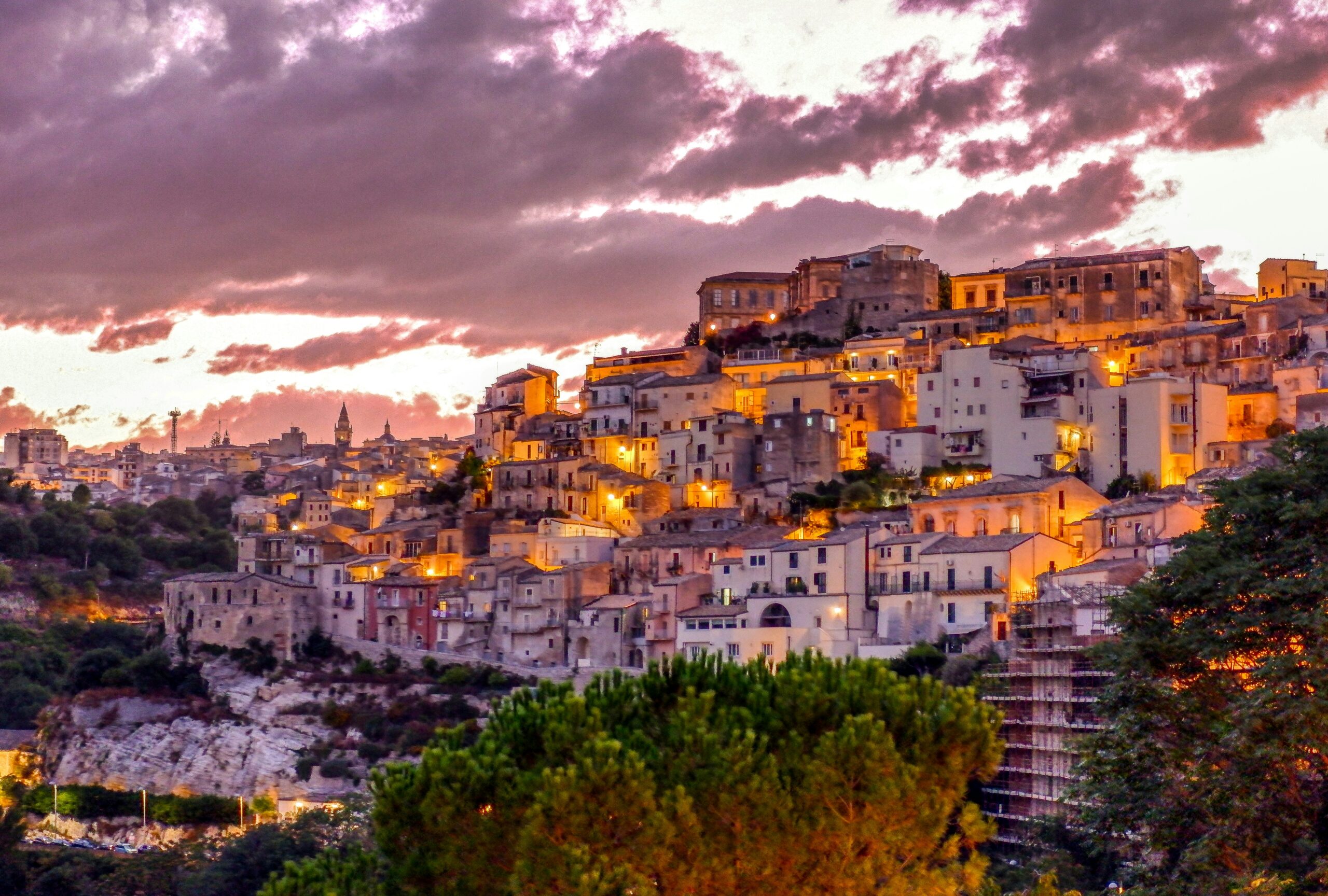
what to eat, how to handle steep streets + parking, and how to time your visit so Ibla feels magical—not exhausting.
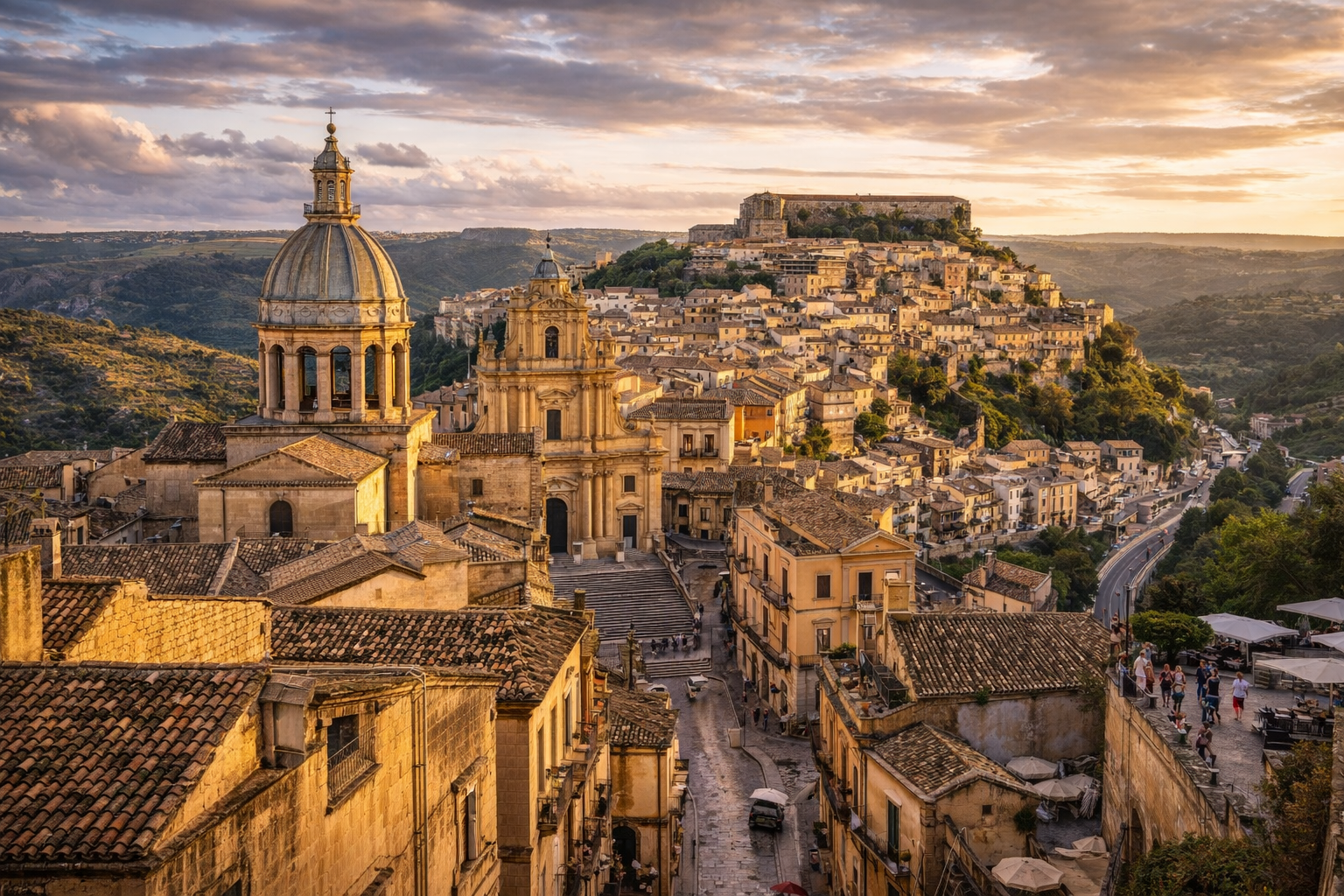
- Best vibe: late afternoon → sunset → dinner, when the stone turns gold and day-trippers fade.
- Must-do: Duomo area + a slow loop to Giardino Ibleo for the “deep exhale” viewpoint.
- Reality check: Ibla is steep—plan stairs like you’d plan a hike (shoes + water + breaks).
- Food move: try scacce ragusane and a cannolo filled to order; don’t rush the coffee ritual.
- Smart logistics: park above the core, then commit to walking—Ibla rewards surrender.
Essential Info at a Glance
| Feature | Details |
|---|---|
| Location | Ragusa Ibla (historic center), Ragusa, Sicily, Italy |
| UNESCO context | Part of the UNESCO-listed Late Baroque Towns of the Val di Noto (SE Sicily). |
| Best time | April–June, September–October (best light + fewer crowds) |
| Top sights | Duomo di San Giorgio, Piazza Duomo, Giardino Ibleo, baroque palazzi + lanes |
| Nearest airport | Comiso Airport (CIY) ~25 km; Catania (CTA) for wider connections |
| Terrain | Hilly + stair-heavy; plan for cobbles and long descents/ascents |
What Ragusa Ibla Feels Like (Real Traveler Lens)
The first thing you notice is the sound: footsteps on stone, a distant clink of plates, a scooter somewhere far below.
Then the light does its thing—especially near golden hour—turning buildings into something that looks almost edible.
The second thing you notice is the stairs. Not in a “this is annoying” way, but in a “my legs are having a conversation with me” way.
Ibla is a slow city. If you try to power-walk it, you’ll miss the whole point. If you let it slow you down, you’ll leave feeling oddly reset.
My favorite moment? That subtle shift after sunset—when the day is done, the heat softens, and the lanes feel like they belong to locals again.
That’s when Ragusa Ibla stops being “a place to visit” and becomes “a place you keep replaying.”
Why Visit Ragusa Ibla
Ragusa Ibla is a rare mix: a historic center that’s visually dramatic and still lived-in. You’re not walking through a museum—
you’re walking through a place where laundry dries on balconies, kids cut across piazzas, and someone’s grandmother is absolutely judging your espresso order (lovingly).
The Baroque look isn’t random decoration. It’s the result of rebuilding and reinvention after Sicily’s catastrophic 1693 earthquake, which reshaped this entire corner of the island.
That “rebirth” story is part of why the Val di Noto towns are UNESCO-listed—and why Ibla feels like beauty with backbone.
If you’re deciding fast:
- Come for: golden stone streets, dramatic churches, slow evenings, and photogenic viewpoints.
- Skip if: you hate hills/stairs or want a flat “easy stroll” destination (Ibla makes you earn it).
- Best for: couples, solo wanderers, photographers, architecture lovers, slow-travel foodies.
The Best Walking Route (Half-Day Plan That Actually Works)
This is my “don’t overthink it” Ragusa Ibla plan. It’s designed around light, energy, and slope—because Ibla is gorgeous,
but it’s also a workout if you zigzag without a plan.
If you’re driving, park above the tight core and walk down gradually. If you arrive by bus/taxi from Ragusa Superiore,
take five minutes to orient yourself, then commit: today is a walking day.
Approach Piazza Duomo slowly. The dramatic staircase and the Duomo’s facade hit harder if you don’t rush. Step inside if open,
then sit outside and people-watch—this is Ibla’s “living room.”
Give yourself permission to get “mildly lost.” Keep a soft goal: drift toward quieter streets, look up at balconies,
and follow any staircase that promises a viewpoint. Ibla’s magic is in the in-between.
This is where you pause. Shade, open views, and a calmer pace. If you’re visiting in warmer months, this stop is non-negotiable:
it’s your built-in “cool down” and the place your photos start looking like postcards.
Finish with a late lunch or dinner in Ibla. Don’t schedule something immediately after. The best Ragusa Ibla souvenir is time.
Experience note (route timing):
Top Sights (What’s Worth Your Energy)
The headline act. The staircase is part of the drama—don’t treat it as an obstacle. If you’re a photo person, come twice:
once in daylight, once at dusk when the stone glows.
A calm, green counterbalance to all the stone. It’s also your best “pause point” if Ibla’s stairs start negotiating your surrender.
Yes, “lanes” is vague—because the best ones aren’t on lists. Look for carved faces, ironwork, and tiny courtyards.
The “wow” is often above eye level.
What to Eat (Sicily’s Comfort, Ibla Edition)
Ragusa Ibla is the kind of place where food isn’t a “meal slot.” It’s a small ceremony. The trick is to eat like locals do:
simple, seasonal, and unhurried.
- Scacce ragusane (folded flatbread, often with tomato/ricotta/eggplant)
- Cannoli filled to order (ask if they fill fresh—worth it)
- Granita on hot days (pace yourself; Sicily is serious about it)
- Local olive oil + simple antipasti (this is where “simple” becomes unforgettable)
Eat your “big meal” later than you think. Use the late afternoon for walking and viewpoints, then settle into dinner
when the town cools down and feels more local than touristic.
Insider Tips & Warnings (Save Your Trip)
Start high and drift down. If you do Ibla “randomly,” you’ll accidentally climb the same steep section twice and wonder why you’re suddenly tired at 3pm.
If you can stay one night, do it. Ibla after sunset feels calmer, more intimate, and less like a checklist. Morning light is also quietly spectacular.
After rain (or even early morning dew), some stone steps get slippery. Wear shoes with real grip.
This is the one “boring” choice that prevents a trip-ruining ankle moment.
Ragusa Ibla vs Modica (Which One Should You Prioritize?)
If you’re building a southeast Sicily loop, these two pair beautifully. But if you only have time for one,
here’s the honest breakdown.
| Category | Ragusa Ibla | Modica |
|---|---|---|
| Vibe | Elegant Baroque labyrinth + cinematic viewpoints | Chocolate town energy + dramatic hillside streets |
| Best for | Slow walkers, photographers, piazza people-watchers | Food-focused travelers, chocolate lovers, market wanderers |
| Icon moment | Piazza Duomo + golden-hour stone glow | Traditional cold-processed chocolate shops |
| If you only choose one… | Choose Ibla for architecture + atmosphere | Choose Modica for food culture + chocolate story |
Seasonal Festivals & When Ibla Feels Electric
Ragusa’s calendar changes year to year, but a few patterns are reliable: spring is gentle and photogenic,
summer is late-night piazza energy, and autumn often brings cultural events that make the streets feel like a stage.
One of the most famous cultural moments in Ragusa: street performers, music, and a “city-as-theater” vibe.
Dates vary by edition—always confirm on the official festival site before you book.
Expect processions, fireworks, and a strong community feeling. Even if you’re not religious, the tradition is part of the town’s identity—observe respectfully.
Think open-air concerts, late dinners, and a slower pace that only makes sense after you’ve lived a few Sicilian nights.
How to Get There (Without Stress)
Ragusa Ibla is accessible, but it rewards a little planning. Your two main air gateways are Comiso (CIY) for proximity
and Catania (CTA) for broader routes. From Ragusa’s main station or upper town, you can bus/taxi down into Ibla.
- Driving: possible, but the core is tight and parking is limited. Park outside the most congested lanes and walk.
- Public transport: workable if you’re flexible; schedules can be seasonal. Always double-check same-day times.
- Best arrival experience: enter on foot from above as Ibla “reveals itself” below—like a sunlit amphitheater.
A Simple Ibla Checklist (So You Don’t Forget the Good Stuff)
- Comfortable shoes with grip
- Water (especially April–October)
- Light layer for night breeze
- Phone battery (photos + maps eat it fast)
- Duomo area at least once in golden hour
- Giardino Ibleo for a quiet reset
- One intentional “get lost” hour
- Long dinner, no rush schedule after
Mini itinerary (easy mode):
Overnight: do the same, but add sunrise/early morning walk when streets are empty and the city feels yours.
Frequently Asked Questions
How much time do you need in Ragusa Ibla?
Is Ragusa Ibla walkable?
What’s the best time of day to visit?
Is Ragusa Ibla part of a UNESCO site?
Can you visit Ragusa Ibla without a car?
What should you eat in Ragusa Ibla?
Is Ragusa Ibla good for families?
What’s the best nearby pairing with Ragusa Ibla?
Do you need tickets for Ragusa Ibla?
Related Trip Nexus Guides
If you’re building an Italy (or Sicily) route, these guides pair naturally with Ragusa Ibla.
Official & Authoritative Resources
- Official (Destination / Local): visitragusa.com
- Official (Municipality): comune.ragusa.it
- Official (Festival): iblabuskers.it
- Authoritative (UNESCO): whc.unesco.org
- National tourism (Italy): italia.it
Google Map
That’s the moment this place stops being a checklist and becomes a memory.