You need the real on-the-ground answer for Bologna Piazza Maggiore: what is actually free, what requires booking, how San Petronio works in practice, whether the airport connection is worth it, where to pause without overpaying, and how to structure a visit that feels smooth instead of rushed.
1. Why Piazza Maggiore Still Matters in 2026
Bologna Piazza Maggiore is not just a square in the middle of town. It is the place where Bologna stops feeling like a checklist city and starts feeling inhabited. I felt that almost immediately: not in a dramatic cinematic way, but in the very practical sense that everything important in the historic center seems to pull toward this open stone stage.
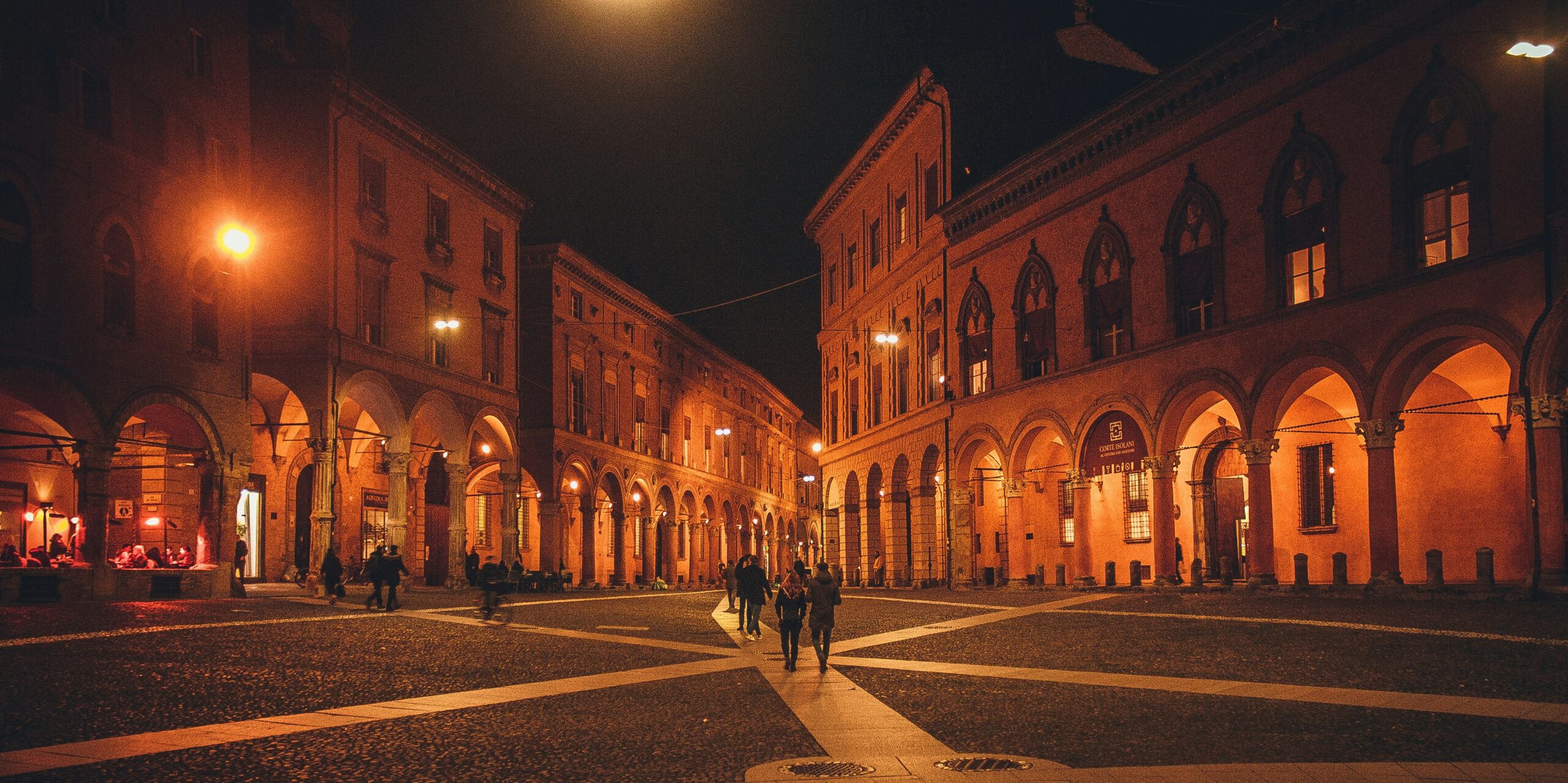
You have government buildings here, one of the city’s defining churches, one of the most satisfying urban perspectives in northern Italy, and a constant stream of students, workers, day-trippers, and locals passing through. Some Italian squares look beautiful but feel curiously sterile by late morning. Piazza Maggiore does not. It has grandeur, but it also has friction, chatter, footsteps, and enough civic energy to prevent it from turning into a postcard set.
That is exactly why it works so well for travelers. Even if you spend nothing, the square gives you architecture, atmosphere, people-watching, orientation, and access to multiple major sights within a few minutes on foot. If you do spend a little, the Clock Tower and surrounding cultural sites reward you with one of the best “understand-the-city” experiences in Bologna.
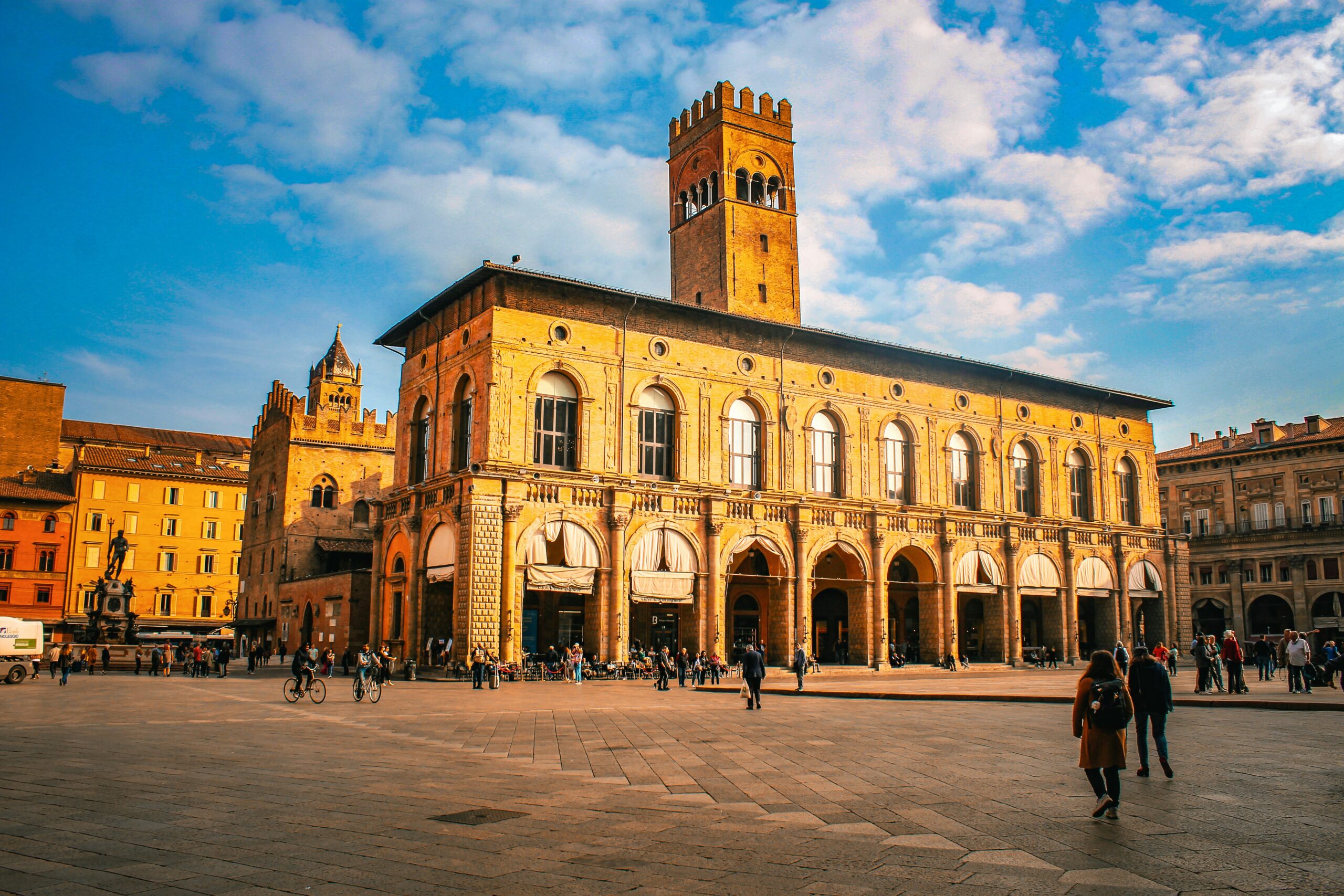
🇮🇹 What It Feels Like
I noticed the smell first: coffee, warm stone, and a faint dusty heat coming off the paving when the day builds. Early in the morning, the square can feel almost too calm for such a major place. Then the rhythm breaks. Chairs scrape. Church doors open. A tour group clusters near the steps. Someone is photographing Neptune from too close. By late morning the piazza feels more like a civic living room than a monument, and that is exactly when it becomes memorable.
2. The Unfinished Giant, the Palace Front, and the Civic Core
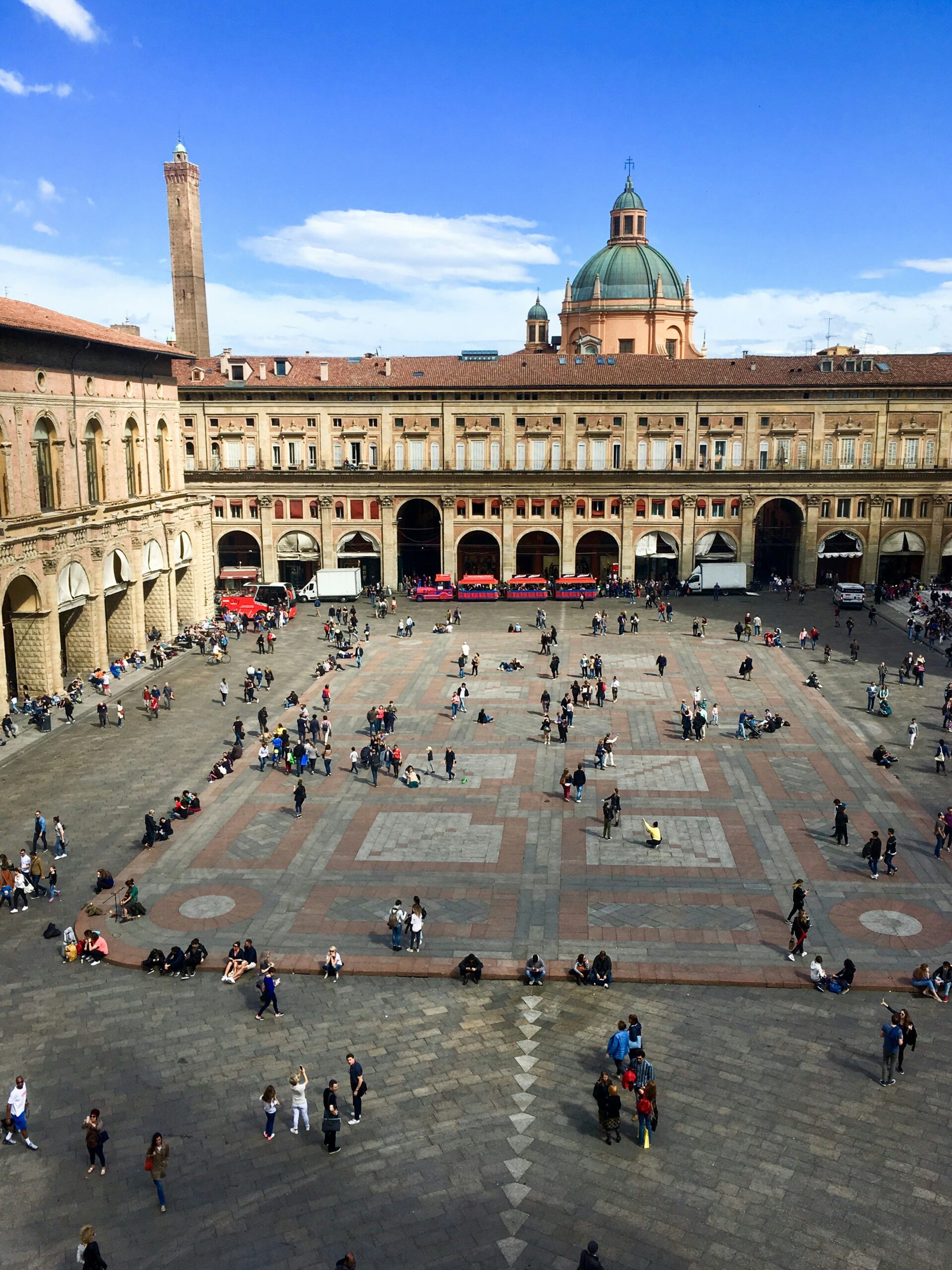
The visual anchor is still the Basilica di San Petronio, whose famously unfinished facade feels less like a flaw and more like a permanent reminder that cities are never fully complete. You do not have to care about architectural history to feel its weight. It dominates the square without flattening it. Across and around it, the surrounding palaces keep the piazza from becoming a one-building experience.
Palazzo d’Accursio, with the Clock Tower, is not simply decorative background. It still represents the city’s political and administrative life, which is one reason Piazza Maggiore never feels like a dead heritage zone. Nearby, the Palazzo del Podestà and Palazzo Re Enzo preserve the medieval power geometry of the square. The city may now belong to cafés, students, and event screens as much as to magistrates and clerics, but the original message of authority is still legible in stone.
That mix matters. Some travelers come only for photographs of San Petronio. Others do a quick pass en route to the food lanes. The better approach is to read the square as one connected urban composition: church, palace, civic arcades, Neptune, market spillover, and open stone surface all working together.
3. San Petronio: Free, Important, and Less Casual Than It Looks
One common mistake is assuming that because San Petronio sits right on the square and is free, it can be treated like an always-open drop-in. In reality, church access has a different rhythm from public square access. Religious spaces are still religious spaces, and Bologna has not turned this one into a frictionless tourist funnel.
You should expect opening hours, possible mid-day interruptions, and restrictions tied to worship. I would not build a tight schedule around a casual “we’ll just pop in later” assumption. That is how people lose their ideal photography light, their tower slot, and their patience in one sweep. Clothing matters too. Covered shoulders and clothing that respects the setting remain the safer choice. A light overshirt or scarf solves most problems and takes almost no luggage space.
Inside, the scale is larger and more serious than many first-time visitors expect. The exterior dominates the square, but the interior gives you the real sense of why this church matters to Bologna. Do not rush it. Even ten calm minutes inside changes the pace of your visit in a good way.
If the Clock Tower matters to you, do not “see how the day goes” first. Reserve it early, then plan coffee and basilica time around it. The tower is one of those experiences that feels minor until it sells out or no longer fits your window.
I made the mistake once of assuming a quiet lunch window would be a good time to “catch up” on the square. It was not. The light turned harsh, the paving radiated heat, and the best interior stop I wanted had already shifted into its own timetable. Early morning is simply cleaner.
4. Getting Here from the Airport Without Overcomplicating It
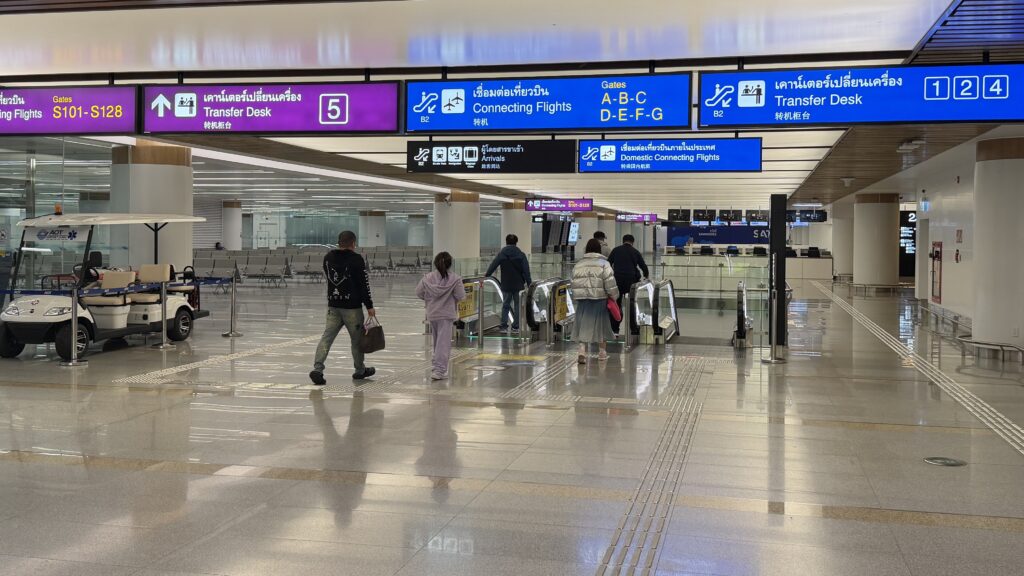
For most visitors landing at Bologna Airport, the Marconi Express remains the most logical first move. It links the airport and Bologna Centrale, and the ride itself is very short. From there, the final stretch into Piazza Maggiore is an easy central walk for many travelers.
The detail that matters in 2026 is not whether the service exists; it does. The detail that matters is that service patterns and maintenance alerts can change temporarily. Official notices currently show that temporary replacement bus arrangements may be used during scheduled works. So the best evergreen advice is this: use the Marconi Express as your default plan, but check the operator’s live alert page before you land if your timing is tight, especially for early departures, late arrivals, or train connections.
If you are traveling with minimal luggage, the train-station-to-centre walk is part of the pleasure of arriving in Bologna. If you have heavy bags, summer heat, or mobility limits, build in a simpler final transfer instead of forcing the romantic version of arrival.
5. Piazza Maggiore vs. the Two Towers
INSIDER HACKS Smarter Ways to Use the Square
-
1Use the square to orient, not just admireStand still for three minutes before moving on. Watch where locals actually flow. You will instantly understand where the market lanes, church entrance, Neptune area, and palace side pull foot traffic.
-
2The Palazzo del Podestà whisper test is still funIt is one of those tiny spatial tricks that breaks the “serious monuments only” mood and makes the square feel interactive again.
-
3Do not sit just anywhere for coffeeThe most obvious perimeter seats can be the least satisfying value. I prefer to treat the square as the place to walk, look, and orient, then sit just off it for a calmer and often better-priced break.
6. A Practical Half-Day Route That Actually Works
Phase 1: Arrive early. Aim for the square before the late morning density builds. This is when the proportions of the piazza feel clearest and your photographs are least interrupted by crowd clusters.
Phase 2: Enter San Petronio while your energy is high. Do the church early rather than pushing it into a vague later slot. It is easier, calmer, and far less frustrating.
Phase 3: Use your booked Clock Tower entry. The tower gives you the most clarifying overview of the square and the palace complex. It also turns the rest of Bologna into a readable map rather than a maze of beautiful facades.
Phase 4: Shift into the Quadrilatero. This is the moment to reward yourself with food, shade, and slower movement. If the square feels too exposed, this transition feels perfect.
Phase 5: Return to Piazza Maggiore later if an event or evening mood matters to you. Piazza Maggiore is one of those places that can feel almost like two different destinations between morning and evening.
📋 2026 Packing and Visit Checklist
- ✔ A light layer or scarf for San Petronio
- ✔ Comfortable shoes for stone paving and city walking
- ✔ Pre-booked Clock Tower ticket if this is a priority
- ✔ A water bottle for warmer months
- ✔ A screenshot or saved link for Marconi Express service updates
- ✔ Enough flexibility in your schedule to avoid forcing the midday heat window
7. Who Should Prioritize Piazza Maggiore?
Prioritize Piazza Maggiore if you like urban atmosphere more than pure museum accumulation. This is the right stop for travelers who want architecture but also want friction, movement, and context. It is also one of the best places in Bologna for first-time visitors because it teaches the city quickly.
If you dislike open, sun-exposed spaces at peak hours, you will want to manage your timing carefully. That is probably the square’s biggest practical weakness. It is magnificent, but it does not always forgive bad timing. On a hot day, it can feel harsher and more reflective than people expect from photographs.
8. Official Resources and Trust Signals
- Bologna Welcome: bolognawelcome.com
- Basilica di San Petronio: basilicadisanpetronio.org
- Marconi Express: marconiexpress.it
- Emilia-Romagna Tourism: emiliaromagnaturismo.it
9. Geographic Context
10. Expert FAQ
Is Piazza Maggiore free to visit?
Is the Clock Tower worth paying for?
What should I wear for San Petronio?
How do I get from Bologna Airport to Piazza Maggiore?
Is Piazza Maggiore good at night?
Is it a good stop for travelers with limited mobility?
Can I catch cultural events here?
Ready for Bologna?
Treat Piazza Maggiore as your orientation point, not just a photo stop. Book the tower if it matters, enter San Petronio early, and let the square teach you the rest of the city.
Continue Your Italy Journey
- ➜ Rialto Bridge Venice: The Spellbinding Allure of Crossing the Grand Canal
- ➜ Bridge of Sighs Venice: What the Name Hides Behind the Beauty
- ➜ Dolomites Tre Cime Travel Guide: Italy’s Most Iconic Alpine View
- ➜ Schengen Entry: Immigration Questions and Best Answers
- ➜ Best eSIM for Italy and Europe Travel in 2026
Field Data Verified: March 17, 2026 • Checked against Bologna Welcome, Basilica di San Petronio, Marconi Express, and Emilia-Romagna tourism sources.