SWhat It Feels Like to Stand on the Edge of Gorges du Verdon
Gorges du Verdon is one of the most dramatic landscapes in France and one of the most unforgettable natural destinations in Europe. Carved by the Verdon River through pale limestone, the canyon stretches for roughly 25 kilometers and reaches depths of around 700 meters in places, which is why it is so often called Europe’s Grand Canyon. The official Provence-Alpes-Côte d’Azur tourism site describes it as the biggest canyon in Europe and highlights its 25-kilometer length and impressive depth. Official Verdon Gorges tourism page
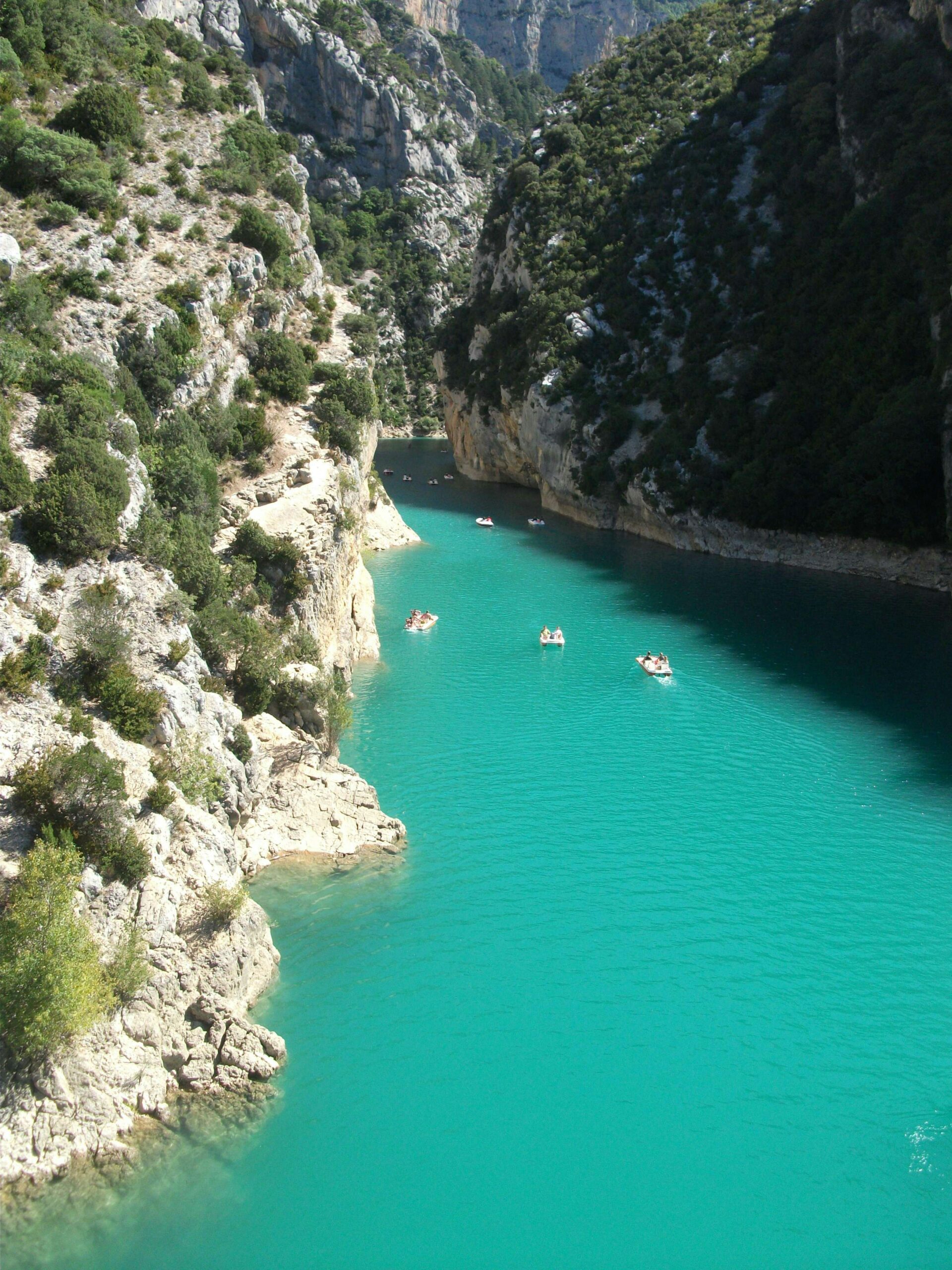
But scale alone is not what makes the place memorable. What stays with most visitors is the color. The water shifts between emerald, turquoise, and deep blue depending on light and season. The cliffs feel huge, but the river below has a surprising delicacy to it. The whole place has that rare quality of feeling both cinematic and strangely calming at the same time.
The first time you really see the canyon open up, it does not feel like a normal sightseeing stop. It feels like the landscape suddenly drops away and reveals a world that had been hidden just beyond the next bend. That feeling is a big part of the appeal.
Search Intent
Travelers searching for Gorges du Verdon usually want to know where the best viewpoints are, whether kayaking is worth it, when the water looks most vivid, which villages to base themselves in, and whether the canyon is better explored by car, on foot, or from the river.
Quick Summary
- Location: Provence-Alpes-Côte d’Azur, southeastern France
- Known for: Europe-scale canyon scenery, turquoise river, scenic drives, kayaking, hiking
- Best season: Late spring to early autumn for outdoor activities
- Best bases: Moustiers-Sainte-Marie, Castellane, Aiguines
- Ideal pace: One full day minimum, two days much better
Why Visit Gorges du Verdon
Gorges du Verdon works for different kinds of travelers because it is not a one-note destination. If you want adrenaline, there is kayaking, climbing, and hiking. If you want scenic ease, there are roads that trace the rim and reveal overlook after overlook. If you want something slower, the surrounding villages and lavender-scented roads give you a version of Provence that feels quieter and more elemental than the coast.
The regional tourism board also emphasizes how the Verdon sits within a larger protected landscape of lakes, cliffs, and preserved nature, with hiking, canoeing, and panoramic touring among its major draws. Verdon Regional Natural Park information
What I like most is that the canyon still feels genuinely large in an era when so many destinations feel over-explained before you even get there. Pictures help, but they do not fully prepare you for the scale of the drop or the clarity of the water near the lower sections toward Lac de Sainte-Croix.
What It Feels Like on the Ground
Approaching the Verdon from Moustiers-Sainte-Marie or Aiguines, the landscape does not reveal itself all at once. That is part of the pleasure. The roads wind through Provençal hills, dry stone, low vegetation, and open sky. Then suddenly the land tears open. The river appears below in impossible color, and the limestone walls become the dominant fact of the day.
Down at the water, the mood changes. The canyon feels less panoramic and more intimate. On the lake side, paddle boats and kayaks drift into the entrance of the gorge, and people who looked tiny from the rim become part of the scene. If you only drive the viewpoints, you understand the scale. If you get on the water, you understand the texture.
I think the best Verdon days combine both. Start high, end low. Begin with the big viewpoints, then move toward the water where the canyon stops being abstract and starts feeling physical.
Key Information
| Category | Details |
|---|---|
| Region | Provence-Alpes-Côte d’Azur, France |
| Canyon length | About 25 km according to official regional tourism information |
| Maximum depth | Up to around 700 m in places according to official regional tourism information |
| Best for | Kayaking, scenic drives, hiking, swimming, canyon viewpoints |
| Official tourism source | Provence-Alpes-Côte d’Azur Tourism |
Google Map
How to Get There
The most practical way to explore Gorges du Verdon is by car. Public transport exists in a limited and seasonal form, but the region is far easier to understand with your own schedule and the freedom to stop at viewpoints. Nice, Aix-en-Provence, and Marseille are common approach cities, though drive times vary depending on which side of the canyon you are targeting.
If you want official planning support before going, the regional tourism board and local Verdon tourism office both provide multilingual information and practical visitor resources. Intense Verdon official tourism page and Verdon tourist office information
Nearby Villages and Smart Pairings
Moustiers-Sainte-Marie is the prettiest choice if you want charm, ceramics, and a more polished village atmosphere. Castellane is often the practical choice for outdoor access and a more adventure-centered base. Aiguines is excellent if you want proximity to viewpoints and Lac de Sainte-Croix. The official tourism material regularly highlights these villages as gateways into the Verdon landscape. Official Verdon route information
If you are building a wider France itinerary around scenery and culture, these Trip-Nexus internal guides fit naturally with the Verdon: Villefranche-sur-Mer Old Town, Cap-Ferrat Coastal Path Côte d’Azur Guide, Juan-les-Pins Beach, Château des Ducs de Bretagne Nantes Guide, and Place des Vosges.
Official Resources in Context
For regional planning, the strongest official source is the Provence-Alpes-Côte d’Azur tourism site. For country-level inspiration and wider France travel planning, the most reliable national source is France.fr. For broader Provence ideas beyond the canyon itself, the official regional destination material is much more useful than generic blog roundups because it stays closer to actual logistics and visitor infrastructure. France.fr Provence page
FAQ
Is Gorges du Verdon worth visiting?
Yes. It is one of the most dramatic natural destinations in France and offers a rare balance of scenic drives, water access, and outdoor activity.
How many days do I need?
One full day is the minimum, but two days gives you a much better experience.
What is the best base?
Moustiers-Sainte-Marie, Castellane, and Aiguines are the most common and useful bases depending on your priorities.
Is it better to drive or use public transport?
Driving is much more practical for most visitors because transport options are limited and spread out.
When is the water most beautiful?
Late spring through early autumn usually gives the most vivid conditions, though weather and light always matter.
Can I swim there?
Yes, in suitable areas around the lakes and access points, but always follow local safety guidance.
Is kayaking essential?
Not essential, but highly recommended if you want to experience the canyon from inside rather than only from above.
Is it family-friendly?
Yes, especially around Lac de Sainte-Croix and the more accessible viewpoint areas, though some activities are better suited to adults or older children.
Final Thoughts
Gorges du Verdon is one of those landscapes that can make ordinary travel habits feel too small. It asks you to look longer, drive slower, and give the place enough time to reveal itself properly.
If you want a France itinerary that includes not only cities and museums but also raw scale, luminous water, and the feeling of standing somewhere genuinely immense, Verdon deserves a serious place on your map.