What It’s Really Like to Walk Hwaseong Fortress in Suwon
Hwaseong Fortress Suwon is one of the best historical walks in South Korea, blending fortress walls, command posts, city gates, royal history, and panoramic views into one of the country’s most rewarding day trips from Seoul.
Built between 1794 and 1796 under King Jeongjo and inscribed on the UNESCO World Heritage List in 1997, Suwon Hwaseong is celebrated for combining military planning, urban vision, and philosophical meaning in a way that still feels alive when you walk it today.
Why this guide helps
This guide is for travelers who want more than a short description. It covers what makes Hwaseong special, what it feels like to walk the walls, how to plan the route, which gates and viewpoints matter most, what to pair with the fortress nearby, and whether it is worth doing as a half-day or full-day trip from Seoul.
Quick Summary
- Location: Suwon, Gyeonggi-do, South Korea
- Built: 1794–1796 during King Jeongjo’s reign
- UNESCO status: World Heritage Site since 1997
- Wall length: about 5.7 km around central Suwon
- Best experience: walk part or all of the fortress loop with Hwaseong Haenggung Palace nearby
Why Hwaseong Fortress Matters
Many historic fortresses are impressive from a distance but lose some of their power once you arrive. Hwaseong Fortress Suwon feels different because it still shapes the rhythm of the city around it. The walls, gates, bastions, pavilions, and command spaces are not isolated behind an artificial historical boundary. They rise directly above neighborhoods, roads, markets, and daily life, so the past and present sit next to each other in a way that feels unusually vivid.
The fortress was created as part of King Jeongjo’s broader political and symbolic project. It was tied to his filial devotion to Crown Prince Sado, but it was also connected to administrative ambition, urban planning, and new ideas about defense and governance. UNESCO recognizes Hwaseong for its late-18th-century military architecture and for the way it integrated both traditional East Asian and newer practical engineering approaches.
That blend is what makes the site memorable for travelers today. You are not just looking at old stone. You are walking through a place designed with vision: a fortress that had defensive strength, civic meaning, ceremonial function, and aesthetic grace at the same time.
What It Feels Like to Walk the Walls
I think this is where Hwaseong becomes much better than it looks in a standard brochure. The first thing I notice about the walk is not pure grandeur but rhythm. The route keeps changing its mood. One stretch feels calm and residential, another opens into a broad view, and then a gate or pavilion suddenly gives the whole walk a sense of ceremony again.
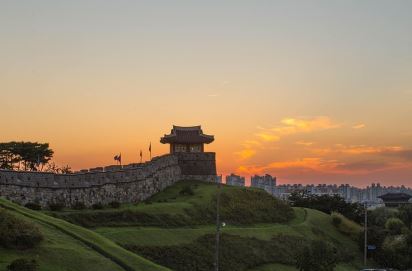
On clear days, the contrast is striking. The old stone walls trace the curves of the hills while modern Suwon spreads out below in glass, concrete, traffic, and apartment blocks. That contrast could have felt jarring, but here it makes the fortress more dramatic. You can actually see how the structure once dominated the landscape and still commands attention now.
There is also a surprising gentleness to parts of the route. This is not a harsh mountain hike. Some sections rise steadily, but the walk is usually manageable for casual visitors if you pace yourself. I would still wear proper shoes, because some inclines and stone stretches can feel more tiring than they first appear. One easy mistake is assuming this is a flat city stroll. It is not difficult, but it is definitely more rewarding when you are dressed for walking rather than just sightseeing.
If you only have limited time, do not try to rush every segment. A shorter walk around one or two major gates plus Seojangdae often feels more satisfying than speed-walking the full loop just to say you completed it.
History and Cultural Context
Hwaseong Fortress was constructed from 1794 to 1796 during the reign of King Jeongjo of the Joseon Dynasty. Its story is deeply tied to the king’s father, Crown Prince Sado, whose tragic death left a lasting mark on royal politics and family memory. Jeongjo moved his father’s tomb to the Suwon area and developed the city with larger political intentions as well.
The fortress was not only meant to defend the area south of the capital. It also represented reformist ambition and a more modern urban concept. Official descriptions of the site emphasize how the design brought together military function, commerce, civic space, and symbolic power. That helps explain why Hwaseong feels broader in purpose than a purely defensive castle wall.
Another reason the site is so valuable today is documentation. Detailed construction records preserved how materials, techniques, and structural ideas were used, which helped later restoration and conservation. This is one reason the fortress remains one of the most coherent and intelligible historical sites in Korea for visitors who want to understand not just what existed, but how it was conceived.
Highlights You Should Not Miss
Janganmun
The north gate is among the most iconic parts of the fortress and is widely described as the largest city gate in Korea. It delivers exactly the kind of visual impact many travelers hope for: a substantial stone base, elegant wooden pavilion, and a commanding presence that anchors the surrounding wall.
Paldalmun
The south gate has a different energy. Where Janganmun feels monumental, Paldalmun feels more embedded in urban life. It gives you a stronger sense of how the fortress connected to circulation, trade, and the movement of ordinary people through the city.
Seojangdae Command Post
For many visitors, this becomes the emotional high point of the walk. The elevated position opens up broader views over Suwon, and the site helps you imagine the fortress as an active command landscape rather than a decorative ruin.
Banghwasuryujeong and nearby wall sections
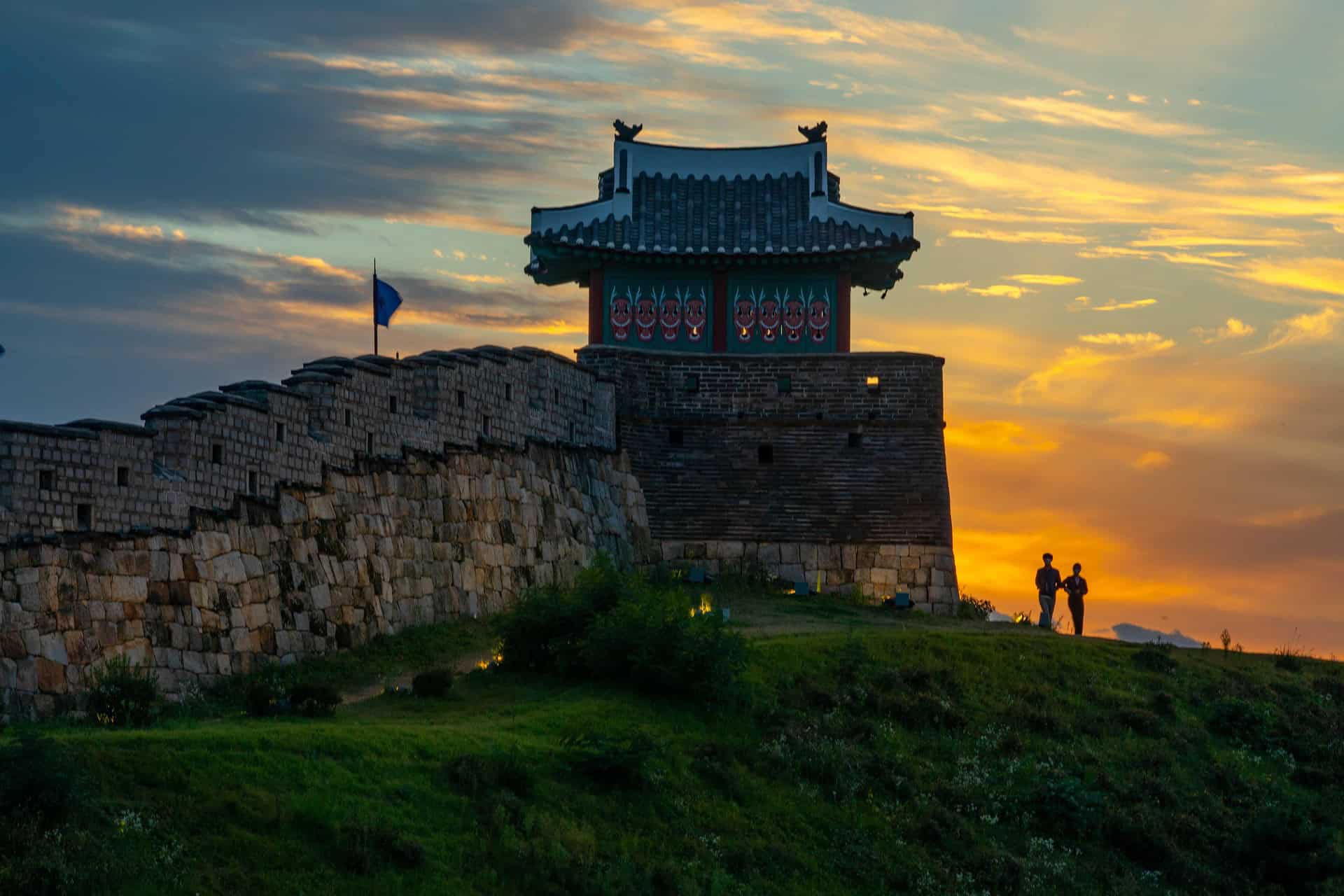
This pavilion area is one of the most photogenic parts of Hwaseong, especially when the light softens in late afternoon. It combines water, stone, elegant rooflines, and layered views in a way that feels distinctly Korean and visually balanced.
Late afternoon is especially good for photos because the walls, pavilions, and skyline gain more depth and the fortress feels less flat than in harsh midday light.
Key Visitor Information
| Category | Details |
|---|---|
| Location | Suwon, Gyeonggi-do, South Korea |
| Construction period | 1794–1796 |
| UNESCO inscription | 1997 |
| Wall length | About 5.7 km |
| Fortress access | Open year-round; the fortress wall itself is generally free to walk |
| Best seasons | Spring and autumn for comfortable walking and better visibility |
| Best companion site | Hwaseong Haenggung Palace |
The Cultural Experience Beyond the Walls
What makes this destination stronger than many other fortress sites is the way it connects to a broader cultural landscape. Hwaseong Haenggung Palace is nearby, and together the fortress and palace help you understand the political and ceremonial meaning of Suwon in King Jeongjo’s vision. If you only look at the walls, you see engineering. If you combine the walls with the palace and nearby urban fabric, you start seeing statecraft, memory, and the making of a symbolic city.
Seasonal performances and cultural events are another layer worth noting. Official tourism sources regularly describe performances, festival programming, and other heritage activities associated with the fortress area. That means the experience can feel more animated than a purely static monument visit, especially during active seasons.
I also think the area rewards slower observation. Sometimes the most memorable parts are not the textbook highlights but smaller transitions: looking down a quiet wall section, noticing how the fortress bends with the terrain, or watching local life move beneath a structure that has already witnessed centuries.
Travel Tips and Honest Warnings
Start early or arrive in late afternoon. The lighting is better, the walk feels less rushed, and warmer months can feel much easier outside peak midday heat.
Pair the fortress with Hwaseong Haenggung Palace instead of treating them as separate trips. The combined experience gives the site much more meaning.
If walking the full route feels too much, choose a scenic segment around one major gate and one elevated viewpoint. You still get the essence without overcommitting.
Do not underestimate the route just because it is in a city. Some sections are hilly enough to feel tiring if you came in casual fashion shoes.
Bad weather changes the mood quickly. On windy or rainy days, exposed sections feel less pleasant and some photo viewpoints lose their impact.
A common planning mistake is allocating too little time. Even a “quick” visit can easily stretch if you stop for palace visits, viewpoints, and food nearby.
How to Visit Hwaseong Fortress from Seoul
Suwon is one of the easiest historic day trips from Seoul. Travelers commonly reach Suwon by Seoul Subway Line 1 or other regional rail connections, and then continue by local bus, taxi, or short onward movement depending on which section of the fortress they want to start from.
For many visitors, starting around Hwaseong Haenggung Palace makes the most sense because it gives you immediate historical context and easy access to nearby wall sections. Another practical strategy is to choose a specific gate or viewpoint first, especially if you are interested in photography or only have a partial day.
There is also an official tourist trolley / tourist train service in the Hwaseong area, which can help visitors who want to cover major points with less walking. It is useful for mixed itineraries or for travelers who want the atmosphere without committing to a full loop on foot.
Suggested Walking Route
- Begin at Hwaseong Haenggung Palace to understand the royal and ceremonial background.
- Move toward a nearby wall section and settle into the walking rhythm rather than rushing for landmarks.
- Prioritize one main gate such as Janganmun or Paldalmun for architectural impact and historical orientation.
- Climb toward Seojangdae if you want the best commanding viewpoint and a stronger sense of the fortress as a military landscape.
- Pause at one scenic pavilion area to absorb the relationship between wall, hill, and city.
- Finish with food or a local street stop nearby so the day feels like a complete Suwon experience rather than just a monument visit.
Nearby Attractions
Hwaseong Haenggung Palace is the essential companion stop. It deepens the story of King Jeongjo and makes the fortress feel like part of a living royal urban system rather than an isolated wall.
Suwon Chicken Street adds a very different energy to the day. After walking the fortress, the area is a fun reminder that Suwon is not only historical but also deeply local and social.
If you are building a wider Korea itinerary, Suwon works well as a cultural counterpoint to coastal and nature-focused destinations. A fortress day here pairs nicely with beach, market, and volcanic landscape stops elsewhere in the country.
Hwaseong Fortress vs Other Korea Day Trips
| Type | Hwaseong Fortress Suwon | Better choice if you want… |
|---|---|---|
| Historic city walk | Excellent | Architecture, walls, gates, and urban history |
| Nature scenery | Moderate | Choose Jeju or mountain destinations for pure landscape focus |
| Easy Seoul day trip | Very strong | Short travel time with meaningful cultural payoff |
| Family-friendly walk | Good | Best when you do partial sections instead of the full loop |
| Deep heritage context | Excellent | Ideal for travelers who enjoy history with real physical scale |
Who Should Visit Hwaseong Fortress
This destination is especially good for travelers who enjoy walking through history rather than just checking landmarks off a list. It is ideal for visitors who like architecture, urban views, UNESCO heritage sites, or places that still feel connected to everyday life.
It is also a strong choice for first-time Korea itineraries because it adds depth without requiring long travel logistics. If your schedule is packed and you want a cultural day trip from Seoul that feels substantial but manageable, Hwaseong is one of the smartest picks.
On the other hand, if you want only dramatic nature or a completely relaxed, low-effort sightseeing day, parts of the walk may feel more demanding than expected. For me, that is not a weakness, but it is worth being honest about.
FAQ
Is Hwaseong Fortress worth visiting from Seoul?
Yes. It is one of the most rewarding and realistic day trips from Seoul if you want history, walking, and a UNESCO site without complicated transport.
How long does it take to walk Hwaseong Fortress?
That depends on your pace and how many stops you make, but many travelers spend anywhere from a partial half day to most of a day when combining the walls with the palace and nearby attractions.
Is Hwaseong Fortress free?
The fortress wall itself is generally free to access, while nearby facilities such as Hwaseong Haenggung Palace may have separate ticketed admission.
What is the best part of Hwaseong Fortress?
Many visitors highlight the gates, elevated viewpoints like Seojangdae, and scenic pavilion sections where the wall, landscape, and city views come together most clearly.
Can I visit Hwaseong Fortress and Hwaseong Haenggung on the same day?
Yes, and that is actually the best way to do it. The palace adds crucial historical context and makes the fortress visit feel complete.
When is the best time to visit Hwaseong Fortress?
Spring and autumn are usually the most comfortable seasons. Late afternoon is particularly good for atmosphere and photography.
Is the full walk difficult?
It is manageable for many travelers, but it is not completely flat. Some sections are hilly, so comfortable shoes and realistic timing make a big difference.
More Korea Guides on Trip Nexus
Official and Authoritative Sources
Google Map
Final Thoughts
Hwaseong Fortress Suwon is one of those places that feels larger after you leave than it does when you first arrive. At first, it may seem like a well-preserved historical wall. But once you walk it, climb its slopes, stop at its gates, and watch the modern city spread beneath it, the fortress begins to feel like a living argument about memory, planning, and identity.
I would recommend it to almost anyone building a serious Korea itinerary, especially travelers who want one day that combines UNESCO heritage, meaningful walking, and an atmosphere that still feels rooted in everyday life instead of preserved behind glass.
If you want a Korea destination that blends royal history, architecture, open-air exploration, and a genuine sense of place, Hwaseong Fortress remains one of the strongest choices in the country.