What It Actually Feels Like to Walk Through Baekdamsa Temple in Seoraksan
Baekdamsa Temple Inje is one of Korea’s most peaceful mountain temple destinations, combining forest immersion, spiritual atmosphere, and a slow valley approach that feels completely different from the faster rhythm of most popular sightseeing stops.
Tucked into the wider Seoraksan landscape of Gangwon Province, Baekdamsa is not just a temple you “arrive at.” It is a place you gradually enter through pine air, water sounds, and a long transition away from noise. That makes it ideal for travelers who want a quiet Korea experience built around reflection, scenery, and a more grounded pace.
Search Intent
This guide is for travelers planning a calm, nature-forward visit to Baekdamsa Temple Inje, with practical details on how to get there, what the walking approach feels like, the best seasons to visit, what to do respectfully on-site, and which nearby Seoraksan-area stops pair well with the trip.
Planning a Visit to Baekdamsa Starts With the Right Expectation
Baekdamsa Temple is one of those places that can easily be misunderstood if you approach it with the wrong mindset. Travelers looking for a quick landmark photo stop may leave wondering what was special. Travelers who arrive ready to slow down, walk gently, and let the valley set the tone usually understand very quickly why the place has such a lasting reputation. The experience is not built around spectacle in the usual sense. It is built around atmosphere, distance from noise, and the feeling of entering a quieter state of mind.
I think that difference matters. A lot of famous travel spots reward speed: arrive, photograph, tick the box, move on. Baekdamsa does not really work like that. The temple is at its best when you treat the route, the air, the water, and the silence as part of the destination. The approach through Baekdam Valley gives the whole visit its emotional logic. By the time the temple roofs appear, you already feel different from when you first started.
That is why Baekdamsa Temple Inje works especially well for travelers who want quiet Korea rather than only high-energy city highlights. It is also a strong choice for people building a more layered Seoraksan itinerary, because it adds culture, reflection, and spiritual atmosphere to a region better known internationally for mountain scenery and hiking.
Why Visit Baekdamsa Temple in Inje
Baekdamsa draws visitors for three strengths that do not often come together so naturally in one destination. The first is nature immersion. The valley approach is lined with forest, cool streams, stone edges, and mountain air that instantly changes your pace. Even before you reach the temple complex, the environment has already started doing its work.
The second is the living monastery atmosphere. This is not a preserved shell of a spiritual site that now exists only for tourists. You can feel that it remains an active religious space, and that changes the emotional tone of the visit. The halls, courtyards, and quieter corners all feel used rather than staged.
The third is its role as a calmer Seoraksan side trip. Compared with busier gateways to the national park, Baekdamsa often feels more contemplative and less performative. That makes it ideal for photographers, reflective travelers, slow-travel itineraries, and anyone who wants a more grounded experience of Korean mountain culture.
What It Feels Like to Walk to Baekdamsa
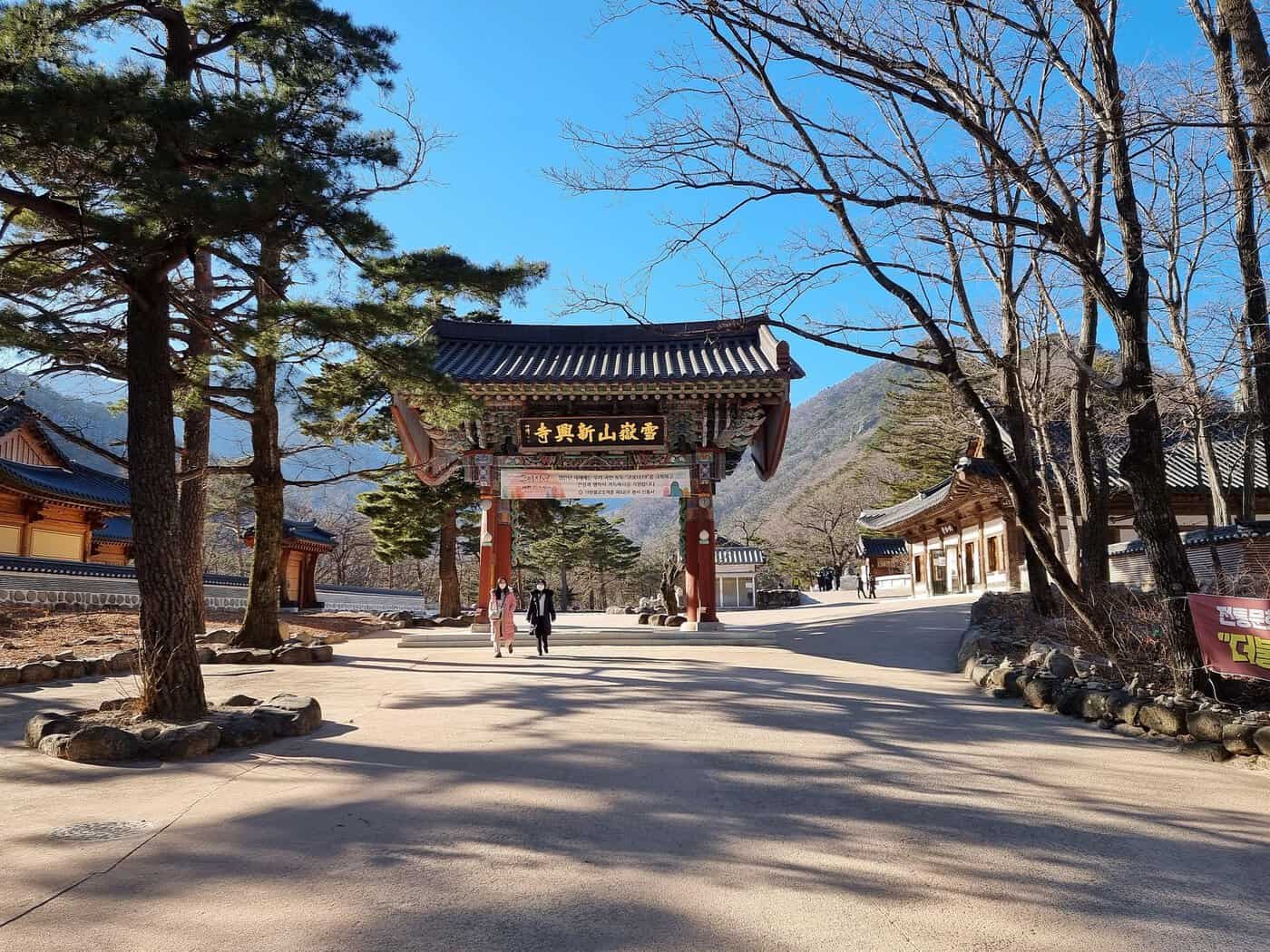
The approach is almost a small pilgrimage of its own. As you move along the valley route, the scenery gradually shifts from the practical mood of arrival into something quieter and more inward-facing. The forest closes in a little. The sound of water stays with you. Patches of sunlight hit the path, then disappear under shade. The walk does not feel dramatic in an aggressive way, but it becomes deeply absorbing if you let yourself settle into it.
I remember thinking that the best part was not a single viewpoint, but the slow accumulation of details: colder air near the water, the soft smell of pine, the sense that conversations naturally become quieter without anyone being told to lower their voice. By the time the temple complex comes into view, it feels naturally placed rather than imposed on the mountains. That is one of the most beautiful things about Baekdamsa. The architecture does not fight the landscape. It seems to belong to it.
Once you arrive, do not rush only toward the most obvious central structures. The main courtyard and halls are important, but some of the most memorable moments are often found at the edges: a stone detail, a line of eaves under forest light, a quieter corner where the sounds of the valley still reach you. That is usually where the atmosphere settles in most fully.
Key Information
Immersive Cultural Experiences at Baekdamsa
If you want more than a scenic walk-and-photo stop, Baekdamsa is especially rewarding when you engage with it slowly and respectfully. The easiest starting point is quiet observation. Sit near the main hall area for ten or fifteen minutes and let the place settle around you. In fast travel routines, we often move before a place has even had time to register. Baekdamsa is one of those destinations that improves when you give it a little stillness.
There is also the question of temple etiquette, which shapes the visit more than many first-time travelers expect. Keep voices low, avoid interrupting any ceremonies, and enter prayer halls respectfully if access is permitted. Even simple choices like not dominating the space with constant photos can change the entire tone of the experience for both you and the people around you.
For travelers who want deeper immersion, the official templestay program is the most meaningful route. These programs typically include a temple tour, meditation or Seon practice, tea meditation, and formal monastic-style meal experience. That kind of visit can transform Baekdamsa from a scenic destination into a personal memory with much more depth.
History and Cultural Context
Baekdamsa has a long history of rebuilding, continuity, and renewal, which is common in Korean temple culture, especially in mountain regions where weather, time, and conflict have shaped structures across generations. That long rhythm of rebuilding is part of the temple’s identity rather than a weakness in its story. It reflects a tradition in which sacred meaning survives through continuity of practice, not only through original materials.
The temple is also known in modern Korean history because former South Korean president Chun Doo-hwan stayed at Baekdamsa from 1988 to 1990 after leaving office. That association gives the temple an additional layer of public memory beyond its spiritual and scenic significance. Still, for most travelers today, the dominant feeling on-site is not political but contemplative. The historical context is real, but the atmosphere remains shaped most strongly by mountain quiet and monastic rhythm.
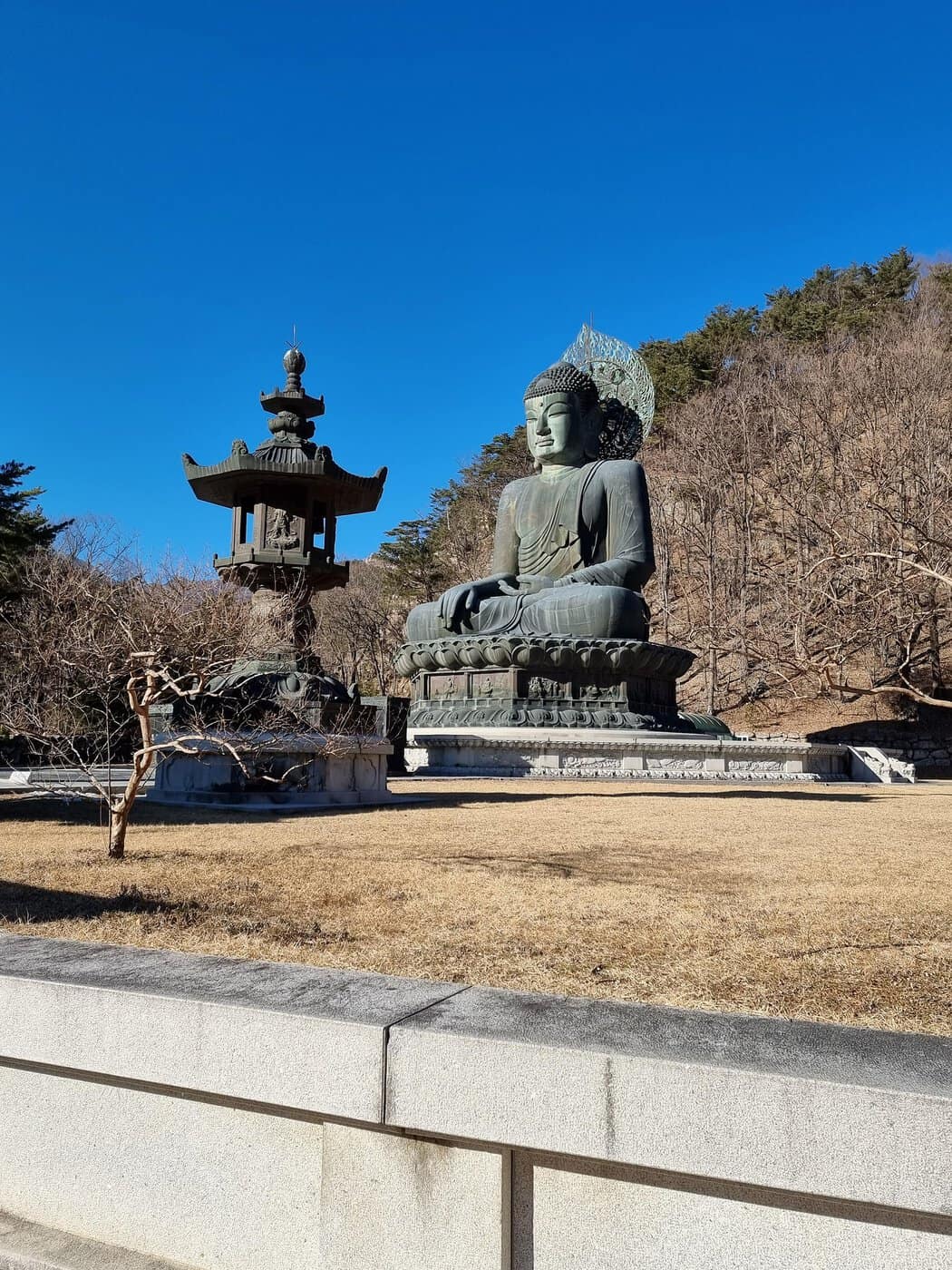
Best Time to Visit Baekdamsa
Spring is one of the most balanced times to visit. Fresh greens, cool air, and lighter humidity make the valley walk especially enjoyable. The landscape feels newly awake, and the entire route has a clean, restorative quality that suits the temple atmosphere very well.
Autumn is the most visually dramatic season and probably the most memorable for many travelers. The approach through Baekdam Valley becomes far more than a pleasant walk. It turns into a corridor of color, texture, and colder mountain light that makes the temple arrival feel even more cinematic and emotionally satisfying.
Winter has a stark beauty that can be very powerful, especially for travelers who like quiet, minimal landscapes. But it is also the season that demands the most conservative planning. Paths can be icy, air temperatures can drop quickly, and the mood becomes much more austere. Beautiful, yes, but not casual.
Summer can still be rewarding because the valley provides shade and water-cooled air, but humidity and weather changes may affect comfort. If I had to recommend one season to most first-time visitors, I would still say autumn first, spring second.
How to Get There
Getting to Baekdamsa Temple Inje is straightforward in principle, but it takes planning because the destination sits deep in the Seoraksan-Inje mountain zone rather than in a dense urban center. From Seoul, travelers usually head toward the Inje or Seoraksan area by intercity bus and then continue by local transport to the Baekdam trailhead zone. From there, the route continues into the valley.
If you are driving, the most practical strategy is to reach the Baekdam area parking or trailhead first and then continue with the valley approach. This is one of those destinations where the final segment matters emotionally, so even practical visitors tend to remember the last stretch far more than the highway portion that came before it.
If you are combining this visit with broader Seoraksan sightseeing, it helps to plan the day around energy rather than distance alone. A cable car outing, a major hike, and Baekdamsa can technically belong to the same region, but they create very different moods. Baekdamsa works best when you leave enough time for the approach and do not compress it into an overpacked checklist day.
What to Do Once You Arrive
Start in the central courtyard and main hall area, but do not stop there. The first instinct for many travelers is to photograph the most obvious architectural view and move on. Instead, give yourself time to circle outward. Look for smaller shrine spaces, quieter edges of the complex, and sightlines where the roofs meet the mountains. Baekdamsa becomes more memorable when you move beyond the “main shot.”
If you enjoy photography, this is a place for textures rather than only grand panoramas: wooden surfaces, painted details, stone elements, filtered forest light, and the way the temple sits within its valley frame. If you enjoy reflective travel, simply sit down and do less. That sounds obvious, but it is also the exact thing many people forget to do at peaceful places.
For cultural travelers, read the atmosphere as much as the structures. Observe how people move, how quiet is maintained, and how the temple remains part of living tradition rather than a frozen heritage site. That makes the visit richer than a purely visual stop.
Pros, Cons, and Who It Is Best For
Pros
- One of the most peaceful temple-and-nature combinations in the region
- The approach walk feels meaningful rather than just functional
- Strong choice for slow travel, photography, and reflective itineraries
- Excellent cultural contrast if your Korea trip has been mostly city-based
Cons
- Requires time, especially when the approach and return are both counted properly
- Not ideal for travelers who need full wheelchair accessibility
- Mountain weather can change faster than visitors expect
- Less suitable for travelers looking only for quick, high-energy sightseeing
Recommended for
- Travelers who want a calm cultural stop inside a mountain itinerary
- Photographers drawn to forest, water, rooftops, and seasonal textures
- Visitors seeking reflection, quiet Korea, or templestay-style atmosphere
Baekdamsa vs Busier Seoraksan Stops
Nearby Stops Worth Adding
Baekdam Valley itself deserves attention, not just as a route but as a destination texture. In autumn, it becomes one of the strongest visual reasons to visit the area. Broader Seoraksan planning resources can also help if you are building a full mountain day around multiple stops, while Inje tourism information is useful for travelers who want a wider regional plan instead of treating Baekdamsa as a single-point outing.
If you prefer combining sacred sites with scenic approaches, this temple works especially well in an itinerary that mixes waterfalls, mountain viewpoints, and coastal or urban contrasts elsewhere in Korea.
More Korea Guides You May Like
Official Resources
FAQ
Is Baekdamsa Temple worth visiting if I am not Buddhist?
Yes. The site is rewarding for nature lovers, photographers, slow travelers, and anyone who appreciates quiet places with cultural depth.
How difficult is the approach to Baekdamsa?
It is more about time and pace than extreme difficulty. Comfortable shoes and realistic expectations make a big difference.
What is the best season for Baekdamsa Temple Inje?
Autumn is the most dramatic visually, while spring offers excellent walking conditions and fresh mountain greenery.
Can I do a templestay at Baekdamsa?
Yes. Baekdamsa participates in Korea’s official templestay network for visitors who want deeper cultural immersion.
Is Baekdamsa crowded like some main Seoraksan spots?
It generally feels calmer and more contemplative than busier gateway areas, which is one of its biggest strengths.
Who should skip or rethink this trip?
Travelers who want only a very quick stop, minimal walking, or fully barrier-free access may find Baekdamsa less convenient than other attractions.
Google Map
Final Thoughts
The best way to visit Baekdamsa Temple Inje is to stop treating it like a checklist destination. Walk gently. Stay quiet. Let the valley route do what it has always done: pull your attention away from noise and back toward something slower.
In a country full of dynamic cities, famous viewpoints, and fast-moving itineraries, Baekdamsa offers something rarer and, for many travelers, more memorable: a calm encounter with Korea’s mountain spirituality, one step at a time.