Bukchon Hanok Village Guide (2026): Best Photo Spots, Etiquette, and When to Visit
Bukchon Hanok Village is one of Seoul’s most remarkable cultural destinations, where centuries-old hanok houses, sloping alleys, and everyday local life still create one of the most memorable traditional neighborhoods in South Korea.
Search Intent
If you are planning a Seoul itinerary and want to know whether Bukchon Hanok Village is actually worth visiting, this guide explains what it feels like, how to get there, when to go, how to behave respectfully in a residential area, what cultural experiences to expect, and which nearby spots pair best with your visit.
Quick Summary
- Bukchon Hanok Village is Seoul’s most iconic traditional residential hanok district.
- It sits between Gyeongbokgung Palace and Changdeokgung Palace, making it easy to combine with palace sightseeing.
- Early morning or late afternoon is the best time for quieter lanes and softer light.
- The village is beautiful, but it is also a living neighborhood, so quiet voices and respectful behavior matter.
- Visit for atmosphere, architecture, views, tea houses, workshops, and one of the strongest old-meets-new contrasts in Seoul.
Why Bukchon Hanok Village Matters
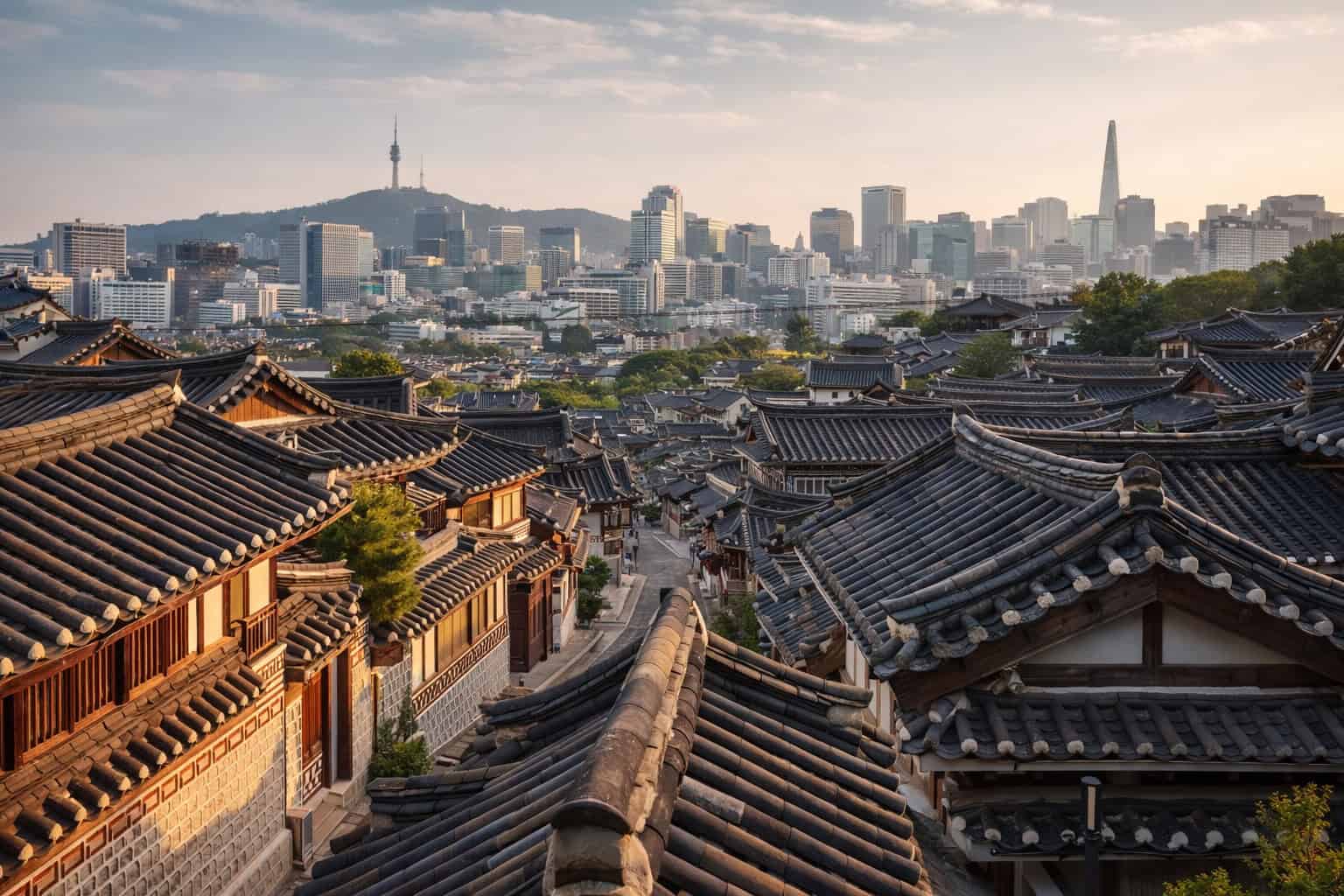
There are many places in the world that preserve old buildings, but Bukchon Hanok Village feels different because history is not separated from daily life here. This is not a closed museum zone built for tourists alone. It is a place where traditional Korean houses still define the shape of the streets, where tiled roofs still ripple across the hills, and where visitors walk through a neighborhood that has carried layers of Seoul’s identity for generations.
That is what gives Bukchon its emotional weight. It is not only beautiful; it is meaningful. The area shows how Seoul’s past can survive inside one of Asia’s fastest-moving modern capitals. Glass towers and dense traffic are never far away, yet once you step into Bukchon’s narrower lanes, the rhythm changes. The city becomes slower, more textured, and more intimate.
For many travelers, Bukchon Hanok Village becomes the moment when Seoul starts to feel personal rather than simply impressive. It is where Korean architectural form, neighborhood memory, and human scale all come together in one walkable experience.
What It Feels Like to Walk Through Bukchon
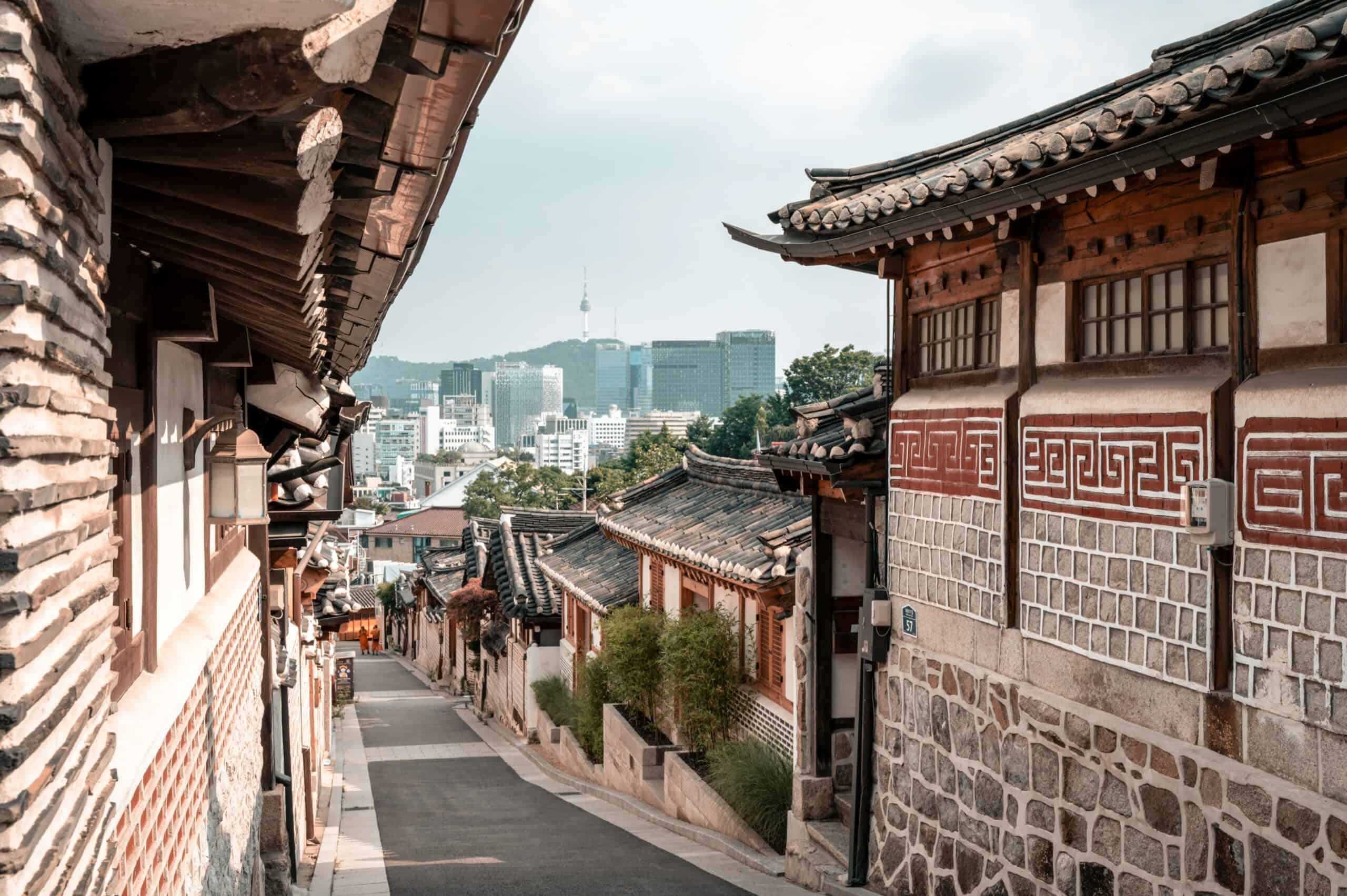
The first thing I would honestly tell anyone is this: Bukchon feels steeper and quieter than most photos suggest. Online images often flatten the neighborhood into a pretty postcard, but the real experience is more physical. You are constantly moving up and down gentle slopes, turning corners, and catching sudden rooftop views that reveal just how layered this district is.
As you walk beneath dark tiled roofs and curved wooden eaves, the textures start to matter. Stone underfoot, wooden gates, old brick walls, trimmed courtyards, and the occasional rustle of leaves all combine into a strangely calm sensory rhythm. On a clear day, the light settles beautifully on the rooftops, and for a few moments it can feel like the city has exhaled.
I also think Bukchon is one of those places where silence changes the whole experience. The area rewards slower travelers. If you rush through it like a checklist stop, you will see nice houses and move on. But if you pause, notice the angles of the lanes, and look past the obvious photo spots, you start to feel the neighborhood’s emotional depth. There is dignity in the architecture, but there is also vulnerability because people still live here.
That living-neighborhood reality is part of what makes Bukchon special. It also means there is a tension: visitors want atmosphere and photos, while residents want peace and privacy. I think that tension is worth acknowledging directly because respectful behavior is not just polite here; it is part of the ethical experience of visiting Bukchon properly.
History and Cultural Context
Bukchon literally means “northern village,” referring to its position north of Cheonggyecheon and Jongno in the historical core of Seoul. Traditionally, the area was associated with upper-class residences during the Joseon period, and over time it developed into one of the city’s most distinctive hanok neighborhoods. That historic identity still shapes the experience today.
What makes Bukchon especially important is that it helps visitors understand hanok architecture as lived space rather than abstract heritage. Hanok design is not only about visual beauty. It reflects climate, material culture, courtyard life, social hierarchy, and the relationship between interior and exterior space. Rooflines, gates, maru floors, and wood-framed structure all tell part of that story.
Bukchon also reveals that preservation in Seoul is rarely simple. The neighborhood has changed over time, and modern urban pressures have always existed around it. Yet the district still preserves a recognizable traditional character, giving travelers a rare chance to experience how old Seoul continues to survive inside the modern city.
Highlights of Bukchon Hanok Village
- Traditional hanok streets: The biggest draw is simply walking through lanes lined with historic Korean homes and tiled rooftops.
- Seoul skyline contrasts: Some viewpoints reveal the layered contrast between old hanok roofs and the modern city beyond.
- Craft and culture: Museums, galleries, workshops, and traditional culture spaces deepen the visit beyond photography.
- Hanbok-friendly atmosphere: Visitors often pair Bukchon with hanbok rental for a more immersive experience.
- Central location: Bukchon works extremely well in a same-day route with Anguk, Insadong, Samcheong-dong, and nearby palaces.
Key Visitor Information
| Area | Bukchon Hanok Village, Jongno-gu, Seoul |
|---|---|
| Nearest Subway | Anguk Station (Seoul Subway Line 3), then walk toward Bukchon |
| Admission | Free to walk through the neighborhood streets |
| Visit Style | Self-guided walking, photography, culture stops, nearby museum and cafe hopping |
| Best Time | Early morning or late afternoon for softer light and fewer people |
| Important Note | This is a residential neighborhood, so keep voices low and respect private homes |
Cultural Experiences Worth Trying
Bukchon is best when you treat it as more than a photo district. If time allows, look for cultural stops that help you understand the craftsmanship and living traditions connected to hanok architecture. Small workshops, galleries, tea spaces, and traditional culture centers can completely change the depth of your visit.
Hanbok rental is one popular option, especially if you plan to continue to nearby palace areas afterward. Tea culture experiences can also slow the visit down in a good way. Instead of moving from lane to lane collecting pictures, you allow the area to become immersive. That shift matters. Bukchon is much stronger as a lived atmosphere than as a checklist location.
I would also recommend keeping expectations flexible. Some visitors arrive expecting a giant curated heritage complex full of open interiors. That is not really what Bukchon is. The reward here is the neighborhood texture itself: the alleys, the rooflines, the soundscape, and the feeling of walking through a preserved urban fabric that still has residents and local routines.
Travel Tips That Actually Help
One mistake some visitors make is assuming every quiet lane is fair game for loud photo sessions. It is not. That is probably the biggest practical insight to keep in mind. Bukchon is beautiful because people still live there, but that also means visitors need to help protect the atmosphere that makes the area worth seeing in the first place.
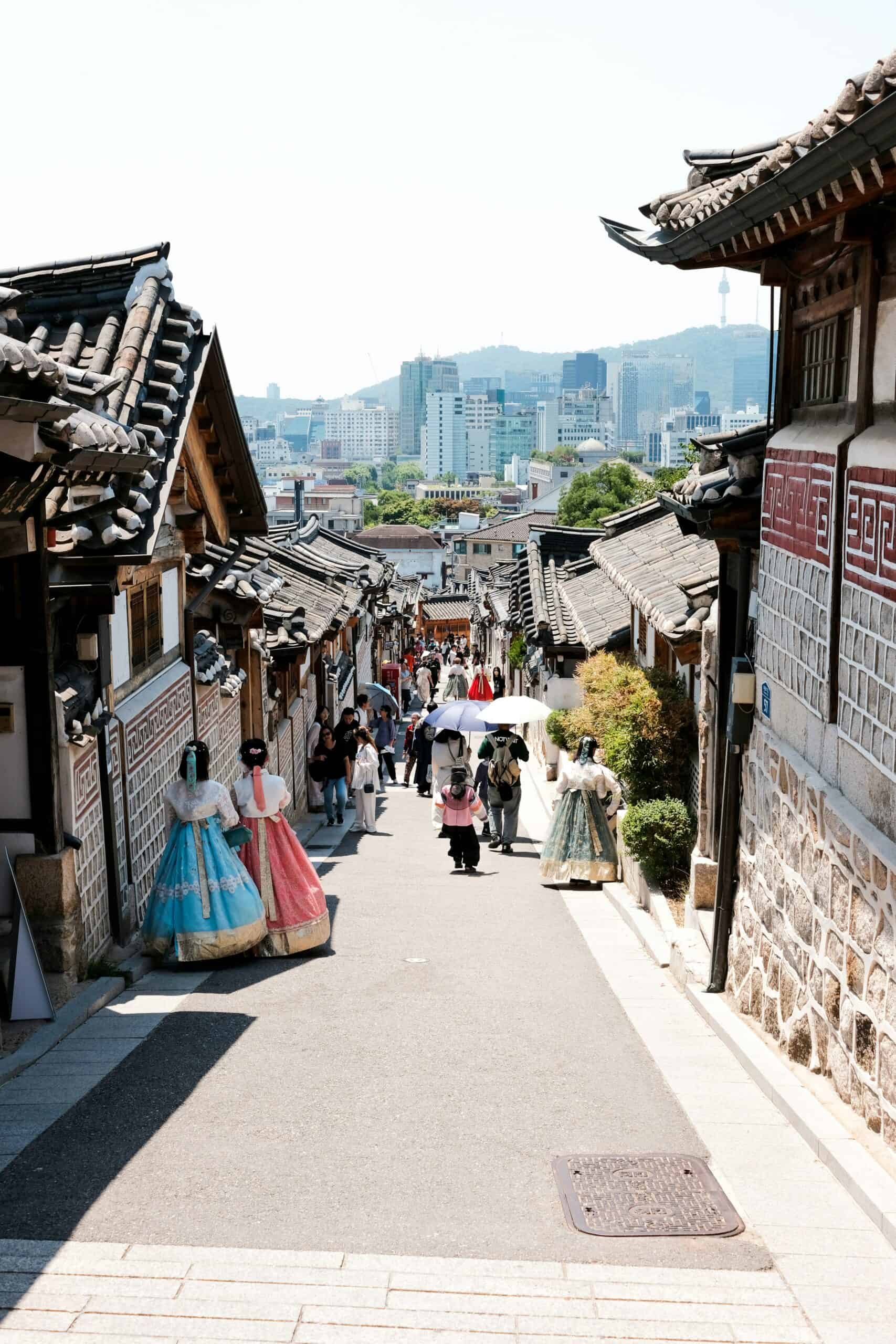
A second honest note: Bukchon can feel crowded at the most famous viewpoints. If you only chase the most photographed corner, the experience can become frustrating. Some of my favorite impressions of Bukchon come from the less obvious stretches between the iconic spots, where the neighborhood feels more human and less performative.
How to Visit Bukchon Hanok Village Smoothly
- Start at Anguk Station: This is the most convenient subway entry point for most travelers.
- Walk in with low expectations for “attractions” and high expectations for atmosphere: Bukchon rewards observation more than spectacle.
- Take your time in the lanes: Do not rush to only one viewpoint and leave.
- Add one cultural stop: A tea house, workshop, or small museum can make the visit more memorable.
- Continue to nearby neighborhoods: Insadong and Samcheong-dong are natural next stops.
If you are doing a palace-heavy day in Seoul, Bukchon works especially well between major landmarks because it changes the pace. Instead of moving from one formal attraction to another, you experience the connective tissue of historic Seoul itself.
Nearby Attractions to Combine with Bukchon
Insadong: Great for traditional tea houses, crafts, snacks, and souvenir browsing after a quieter Bukchon walk.
Samcheong-dong: A stylish area where galleries, cafes, and boutique storefronts give you a softer, design-focused side of Seoul.
Gyeongbokgung Palace: Ideal if you want a larger-scale royal architecture experience before or after Bukchon.
Changdeokgung Palace: Especially appealing if you love refined palace atmosphere and historical depth.
Putting these together creates one of the best traditional-urban walking days in Seoul. Bukchon is rarely the loudest part of that route, but it is often the part people remember most vividly later.
Bukchon Hanok Village vs Nearby Cultural Areas
| Place | Best For | Atmosphere |
|---|---|---|
| Bukchon Hanok Village | Traditional architecture, scenic walking, quiet heritage atmosphere | Residential, historic, intimate |
| Insadong | Shopping, tea houses, tourist-friendly culture street | Livelier, commercial, accessible |
| Samcheong-dong | Cafes, design, boutique strolling | Stylish, modern-traditional blend |
If you want the strongest sense of historical texture, choose Bukchon. If you want shopping and easy browsing, Insadong is easier. If you want a trendy aesthetic with softer heritage influence, Samcheong-dong wins. For most travelers, the best answer is not choosing only one; it is walking all three in sequence.
Who Should Visit Bukchon Hanok Village
- Travelers who enjoy slow walking, architecture, and neighborhood atmosphere.
- First-time Seoul visitors who want at least one strong traditional culture stop.
- Photographers looking for layered rooflines, alleys, and old-meets-new city contrasts.
- Couples and solo travelers who like reflective, aesthetic urban walks.
- Visitors combining palace, tea house, and hanbok experiences in one day.
Bukchon may be less satisfying for travelers who only enjoy highly interactive attractions or expect large open interior access everywhere. The magic here is subtle. If you value atmosphere, it will likely stay with you. If you only want fast entertainment, it may feel too quiet.
FAQ
Is Bukchon Hanok Village free to visit?
Yes. Walking through the village streets is free, although some nearby museums, workshops, or cultural programs may charge separate fees.
What is the best time to visit Bukchon Hanok Village?
Early morning is usually the best for a quieter experience, while late afternoon often gives you the nicest light for photos.
How long do you need in Bukchon?
Around 1 to 2 hours works for most travelers, though you can easily stretch it longer if you add tea, hanbok, museums, or nearby neighborhoods.
Is Bukchon Hanok Village still residential?
Yes. That is one of the most important things to remember. People still live here, which is why quiet and respectful behavior matters.
How do you get to Bukchon Hanok Village?
The easiest way is usually via Anguk Station on Line 3, then walking into the Bukchon area.
Can you visit Bukchon with Gyeongbokgung or Changdeokgung on the same day?
Absolutely. Bukchon sits between those palace zones and is one of the easiest historic Seoul areas to combine into a single route.
Is Bukchon worth it if you have limited time in Seoul?
Yes, especially if you want one place that expresses Seoul’s traditional architectural identity without leaving the city center.
Related Korea Travel Guides
Official and Authoritative Links
Google Map
Final Thoughts
Bukchon Hanok Village is not the kind of place that overwhelms you with scale. It stays with you for a different reason. The slopes, the rooflines, the quiet corners, and the feeling that people still genuinely inhabit this historic space all give Bukchon a rare emotional texture. That is why it lingers.
If you visit thoughtfully, Bukchon becomes more than a Seoul photo stop. It becomes a place where the city’s past feels close enough to touch. For travelers who value atmosphere, architectural character, and a slower encounter with Korean heritage, Bukchon Hanok Village is one of the most rewarding walks in Seoul.
Plan it slowly, arrive respectfully, and let the neighborhood reveal itself one alley at a time.